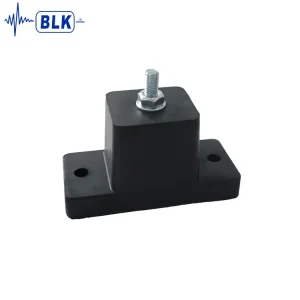
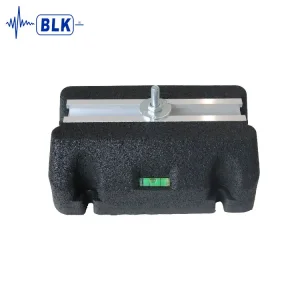
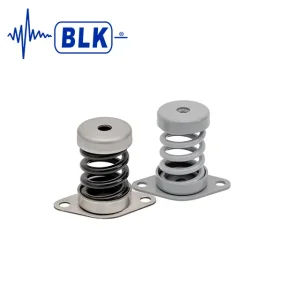
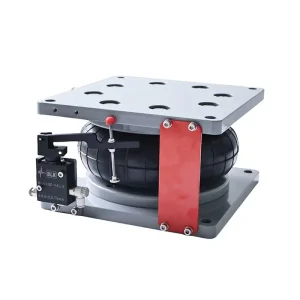
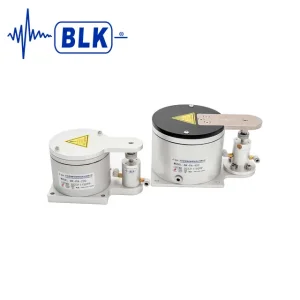
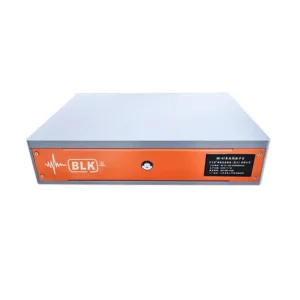
Precision Dynamic Control Products: Standard & Custom Series
Engineered for high damping performance, structural longevity, and multi-directional isolation across extreme excitation environments.
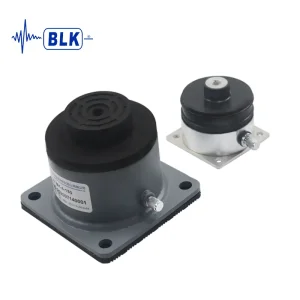

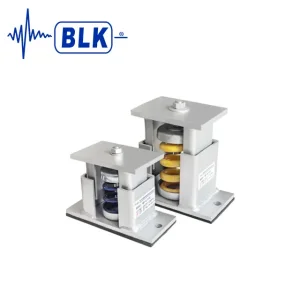
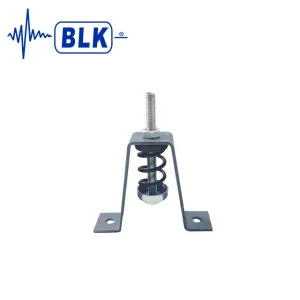
Evolution of Bushing Vibration Dampers in High-Stakes Engineering
From passive mechanical isolators to finite-element optimized, multi-axial elastomeric damper bushings.
Nonlinear Viscoelastic Formulations
Traditional natural rubber bushings struggle with frequency dependence and thermal degradation. Modern engineered bushings incorporate cross-linked synthetic elastomers (HNBR, EPDM, and specialized fluoroelastomers) combined with nano-silica fillers to achieve consistent loss factor (tan δ) over broad temperature spectra (-40°C to +120°C).
Multi-Axis Decoupling & FEA Modeling
Industrial machinery does not vibrate in a single plane. Current bushing vibration damper design relies on non-linear hyperelastic material models (Mooney-Rivlin, Ogden) mapped through high-fidelity finite element analysis (FEA) to provide asymmetric radial, axial, and torsional stiffness tailoring within a single compact envelope.
Sub-Component NVH Optimization
As electric vehicles, variable-frequency drives, and automated factories proliferate, high-frequency excitation (500 Hz to 2 kHz) has become the dominant cause of structural acoustic noise. Next-generation bushings feature internal fluid-filled cavities (hydro-bushings) to introduce secondary resonant damping traps.
Global Sourcing Demands & Bushing Vibration Damper Price Factors
A transparent breakdown of cost variables, tooling expenditures, and batch economics for enterprise supply chains.
Elastomer Compound Grade
Base raw material selection dictates up to 35% of unit cost. Standard NR/SBR blends remain cost-effective for static HVAC and general industrial equipment, whereas dynamic HNBR or silicone-polymer matrixes command higher premiums due to extreme chemical and thermal tolerances.
Sleeve Metallurgical Treatment
Inner and outer sleeve sleeves require CNC precision tolerance (+/- 0.01mm) and advanced anti-corrosion finishes. Options range from standard zinc electroplating to high-durability Dacromet coatings capable of surviving 900+ hours of ASTM B117 salt spray environments.
Tooling Amortization & Mold Complexity
Transfer molding versus multi-cavity injection molding defines setup capital. While custom progressive stamping and multi-stage injection molds require an upfront tooling cost ($1,500 - $8,000), they dramatically lower per-unit cost on production runs exceeding 5,000 units.
Dynamic Testing & Validation
Enterprise procurement teams in defense, rail, and heavy automotive require full dynamic characterization reports, including static-to-dynamic stiffness ratio tests (Kd/Ks), destructive push-out force tests, and 2-million cycle endurance validation certifications.
| Bushing Damper Category | Typical Elastomer Compound | Dynamic Stiffness (Kd/Ks) | Corrosion Resistance | Approximate OEM Price Tier (USD) |
|---|---|---|---|---|
| Industrial Standard Bushing | Premium Natural Rubber (NR) | 1.2 - 1.4 | Zinc Plating (120h Salt Spray) | $3.50 - $12.00 / unit |
| Heavy Equipment Arm Bushing | High-Damping Polyurethane / SBR | 1.4 - 1.8 | Dacromet Coating (500h Salt Spray) | $14.00 - $38.00 / unit |
| Extreme Climate / Chemical Damper | Hydrogenated Nitrile (HNBR) / EPDM | 1.3 - 1.6 | Dacromet / Geomet (900h+ Salt Spray) | $22.00 - $65.00 / unit |
| Precision Hydraulic Bushing | Glycol Fluid-Filled + Synthetic Elastomer | Tunable Resonance Peak | Electrophoretic Paint + Zinc Nickel | $45.00 - $120.00 / unit |
China Industry 4.0: Modern Manufacturing Infrastructure
Combining robotic automation, in-house metallurgical testing, and agile prototyping to ensure 100% batch repeatability.
Fully Integrated Modern Facility
Spanning 2,000+ m² of smart production space in Kunshan, China, our advanced facility synchronizes automatic rubber desulfurization, robotic CNC machining, and automated shot-blasting to establish flawless bonding surface preparation for metal sleeves.
Automated Chemosil Bonding Control
Delamination between the elastomer core and outer steel sleeve is the most critical failure mode in bushing dampers. Our automated adhesive spray lines apply micro-meter accurate dual-coat silane/phenolic bonding agents, verified via 100% automated visual inspection.
Rapid 1:1 Customization Turnaround
Leveraging 37 registered patents (including 16 national invention patents), our engineering team executes complete non-standard custom development—from initial dynamic load calculations to 3D CAD, tooling fabrication, and first-article validation—in as fast as 3 working days.
Mission-Critical Application Scenarios & Engineering Practices
Targeted dynamic damping solutions delivering operational stability across high-reliability operating conditions.
Heavy Commercial & Off-Highway
Suspension pivot links, cab mounts, and powertrain subframes subject to severe shock impacts up to 5G. Bushings mitigate torsional articulation stresses while isolating high-amplitude road disturbances.
Industrial Pumps & Rotary Compressors
Rotational imbalances induce continuous sinusoidal vibrations. Precision rubber bushing dampers prevent fatigue failure across rigid piping connections, ensuring fluid conveyance integrity.
HVAC Plants & Chiller Assemblies
Mitigates structure-borne acoustic transmission within modern commercial architecture. High-efficiency damping materials eliminate low-frequency harmonic hum from entering concrete floor slabs.
Rail Rolling Stock & Bogies
Primary and secondary suspension dampening demanding severe compliance with EN 45545 fire safety and dynamic endurance over millions of oscillating track-load cycles.
Frequently Asked Questions on Bushing Vibration Dampers
Direct technical answers from application engineers covering selection calculations, material compatibility, and factory direct customization.
How is the dynamic-to-static stiffness ratio (Kd/Ks) calculated for a custom bushing damper?
What specific parameters are mandatory to formulate a custom bushing mold?
How does your factory prevent elastomer-to-metal bonding failures?
What is the typical lead time for custom samples versus mass production?
Why choose Dacromet surface treatment over traditional zinc electroplating?
Precision Dynamic Control Products: Advanced Dampers & Platforms
Engineered to handle specialized mechanical shock, high-frequency structural vibration, and precision metrology stabilization.