
Dynamic Vibration Isolation Series (Catalog Part I)
Engineered for low natural frequencies, high shock absorption, and long-term mechanical reliability across industrial applications.

High-Quality MB Type Anti-vibration Spring Mounts Factory, Manufacturer
View Product Specs
High-Quality MD Type Anti-vibration Spring Mounts Factory, Manufacturer
View Product Specs
Custom BKVD Type Rubber Mounts Factories, Manufacturer
View Product Specs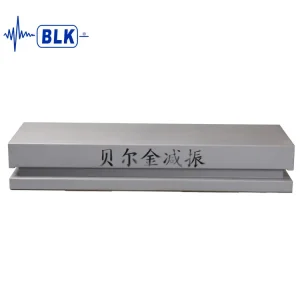
High-Quality BK-MT Type Matrix Anti-vibration Mount Manufacturers
View Product Specs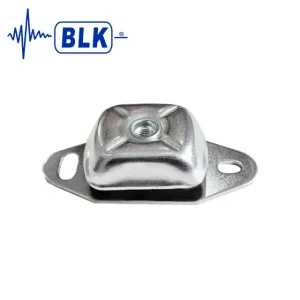
Custom BKM Type Rubber Mounts Factories, Manufacturers
View Product Specs
High-Quality CPB type Inertia Bases & Pump Supports Manufacturers
View Product Specs
High-Quality BK-PF Type Precision Air Mounts Factories, Manufacturer
View Product Specs
Low Price HR Type Rubber Hangers Factory, Factories
View Product SpecsThe Paradigm Shift in Dynamic Vibration Isolation Engineering
From passive isolation mats to active-ready, multi-degree-of-freedom dynamic damping systems in modern industrial environments.
Kinetic Dynamics & Resonant Frequency
Dynamic vibration isolation systems differ fundamentally from static load bearings. By manipulating system mass ($m$), dynamic stiffness ($k$), and damping coefficient ($c$), modern isolators achieve lower natural frequencies ($f_n$), protecting infrastructure from resonant harmonic amplification.
Pneumatic & Active Hybrid Solutions
For sub-micron precision toolings—such as lithography equipment, electron microscopes, and laser metrology—pneumatic air mounts achieve extremely low natural frequencies down to 1.7 Hz, dynamically dampening micro-seismic floor tremors.
Fatigue Resistance & Material Science
Modern dynamic vibration factories utilize advanced polychloroprene formulations, high-tensile chrome-vanadium steel alloys, and Dacromet surface treatments capable of exceeding 900 hours of continuous salt-spray corrosion tests.
Mathematical Mechanics of Vibration Transmissibility ($T_r$)
Vibration isolation performance is governed by the non-dimensional transmissibility ratio equation:
$T_r = \sqrt{ \frac{1 + (2\zeta r)^2}{(1 - r^2)^2 + (2\zeta r)^2} }$
where $r = f_d / f_n$ (frequency ratio of disturbing frequency to natural frequency) and $\zeta$ is the damping ratio. Effective isolation occurs only when $r > \sqrt{2} \approx 1.414$. Premium OEM custom manufacturing targets optimal ratios $r \ge 3$, driving isolation efficiency beyond 95% to 99%.
Procurement Drivers Across High-Tech Industrial Sectors
Strategic purchasing managers and mechanical design engineers require verified dynamic response data, robust certification compliance, and flexible OEM customization capability.
Semiconductor & Electronics
Extreme precision requirements in wafer fabrication cleanrooms demand optical-grade desktop isolation platforms and zero-settling-time active pneumatic isolators to prevent nano-scale displacement errors.
HVAC & Commercial Real Estate
Increasingly stringent municipal acoustic codes require inertia bases, spring hangers, and matrix anti-vibration mounts for chillers, large-scale air handling units (AHUs), and roof-mounted cooling towers.
Power Transmission & Transformers
Low-frequency humming and magnetic structural resonance in electrical power transformers require specialized anti-vibration transformer mounts capable of sustaining extreme weight while mitigating ground-borne noise transmission.
Manufacturing Efficiency & Supply Chain Resilience
How state-of-the-art Chinese manufacturing clusters combine robotics, FEA modeling, and rapid prototyping to deliver global cost advantages without quality compromise.
Automated Robotic Production
Integration of robotic welding cells, CNC spring-coiling machines, and automated elastomeric vulcanization lines ensures ultra-precise tolerances ($\pm 0.05\text{ mm}$) and uniform spring rate performance across massive production runs.
Rapid 1:1 OEM Customization
Leveraging modular tooling systems and in-house Finite Element Analysis (FEA), Chinese specialized factories turn complex non-standard custom drawings into physical test prototypes within 3 to 5 business days.
Complete Supply Chain Ecosystem
Located in key industrial hubs like Kunshan (Jiangsu Province), manufacturers benefit from immediate regional proximity to high-grade steel mills, rubber synthesis labs, and international deep-water logistics ports.
Dynamic Isolator Types & Operating Characteristics
Match your equipment dynamics, operating speeds (RPM), and site environmental constraints with the optimal isolation mounting technology.
| Isolator Technology | Natural Frequency ($f_n$) | Optimal Operating Speed | Primary Application Areas | Environmental Durability |
|---|---|---|---|---|
| Spring Vibration Mounts (MB / MD) | 3.0 Hz - 5.0 Hz | > 500 RPM | Chillers, Cooling Towers, Pumps, Gensets | High (Dacromet / Hot-Dip Galvanized) |
| Pneumatic Air Mounts (BK-PF / BK-PA) | 1.7 Hz - 2.5 Hz | Micro-vibration (< 300 RPM / Floor Tremors) | Semiconductor Probing, Optical Benches, CMMs | Medium (Requires Clean Dry Air Supply) |
| Matrix & Rubber Mounts (BKVD / BKM) | 8.0 Hz - 15.0 Hz | > 1200 RPM | Motors, Compressors, Small Fans, Marine Engines | High Oil & Chemical Resistance |
| Inertia Bases (CPB Type) | Customized with Springs | Variable Speed Drive Equipment | Heavy Industrial Pumps, Reciprocating Compressors | Heavy-Duty Structural Concrete Base Frame |
| Desktop Isolation Platforms (BK-AT / BK-RT) | 2.0 Hz - 4.0 Hz | Precision High-Frequency Scanning | Analytical Balances, Atomic Force Microscopes | Lab Cleanroom Compliant |
High-Performance Isolation Mounts & Platforms (Catalog Part II)
Explore specialized damped rubber mounts, desktop isolation systems, polymer pads, and precision pneumatic platforms.

Low Price BK-PM Type Polymer Damping Pad Factories, Manufacturers
View Product Specs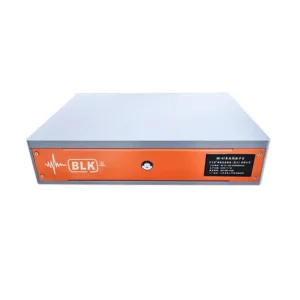
Custom BK-AT Type Desktop Vibration Isolation Platform Price
View Product Specs
Custom BK-DSR Type Damped Rubber Mounts Factories, Manufacturer
View Product Specs
High-Quality BKVE Type Rubber Mounts Factory, Factories
View Product Specs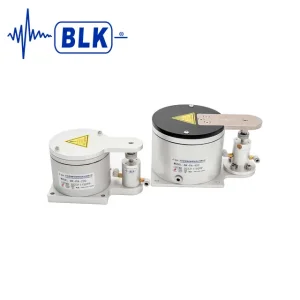
High-Quality BK-PA Type Precision Air Mounts Manufacturers
View Product Specs
Custom BKDE Type Rubber Mounts Factory, Manufacturer
View Product Specs
High-Quality BK-RT Type Damped Platform Manufacturers
View Product Specs
High-Quality MC Type Anti-vibration Spring Mounts Manufacturer
View Product SpecsEngineering Solutions for Demanding Operating Environments
Field-proven installation methods and dynamic mounting configurations designed to eliminate structure-borne noise and structural stress.
Cleanroom Semiconductor Lithography
Challenge: Floor vibrations generated by nearby automated guided vehicles (AGVs) caused sub-micron patterning distortions in 7nm wafer exposure tools.
Solution: Installation of BK-PF Series Precision Air Mounts integrated with active leveling valves, cutting environmental floor vibration transmission by over 98.5% at 3.5 Hz.
Commercial Rooftop HVAC Retrofit
Challenge: Excessive low-frequency harmonic hum from a 1,200-ton centrifugal chiller transmitted through concrete slabs into executive office spaces below.
Solution: Custom engineered CPB Type Inertia Bases paired with MD Type High-Deflection Spring Mounts lowered system center of gravity and reduced vibration transmissibility to under 1.2%.
Substation Power Transformer Decoupling
Challenge: 110kV power transformer magnetostriction caused 100Hz/200Hz tonal noise complaints in a suburban residential zone.
Solution: Application of heavy-duty BK-MT Matrix Anti-Vibration Mounts designed for high temperature resistance, achieving a 18 dB(A) structure-borne noise reduction at the perimeter boundary.
Frequently Asked Questions by Sourcing & Engineering Teams
In-depth answers covering sizing formulas, custom OEM manufacturing lead times, anti-corrosion standards, and warranty policies.
How do engineers determine whether to use spring, rubber, or pneumatic isolators?
- Spring Mounts (fn 3-5 Hz): Ideal for low-frequency equipment like chillers, pumps, cooling towers, and HVAC fans operating at 500-1800 RPM.
- Rubber Mounts (fn 8-15 Hz): Best suited for high-speed machinery (>1200 RPM) such as small motors, air compressors, and electrical cabinets where moderate damping is required.
- Pneumatic Air Mounts (fn 1.7-2.5 Hz): Essential for sensitive micro-vibration applications including optical tables, semiconductor inspection tools, CMMs, and laser laboratories.
What key technical data is needed for a 1:1 dynamic isolation calculation?
- Equipment operating weight and Center of Gravity (CoG) location.
- Number and layout geometry of support mounting points.
- Operating speed range (RPM) or forcing frequency (Hz).
- Installation location (ground floor, elevated structural steel, roof deck, or suspended ceiling).
- Environmental conditions (indoor, outdoor coastal, cleanroom, exposure to oil or chemical vapors).
How long is the typical service life of custom dynamic vibration isolators?
What is the lead time for OEM non-standard custom isolator manufacturing?
Are factory inspection reports and third-party certifications provided?
How does an Inertia Base improve vibration isolation performance?
1. Lowers the overall Center of Gravity, drastically reducing equipment rocking motion during startup and shutdown transitions.
2. Increases the overall system mass ($m$), which lowers the calculated natural frequency ($f_n = \frac{1}{2\pi}\sqrt{\frac{k}{m}}$), resulting in higher isolation efficiency.
3. Maintains precise alignment between pumps and driving motors, extending mechanical seal and bearing life.