
Precision Electrical & Industrial Vibration Control Mounts
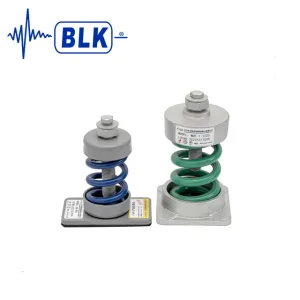
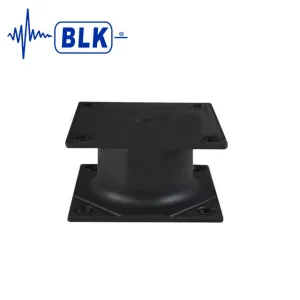
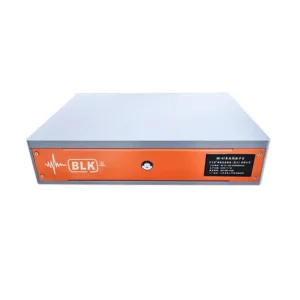
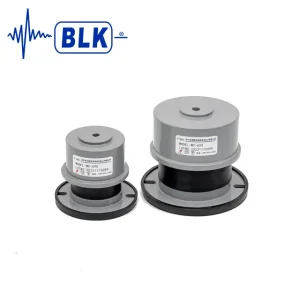
Featured shock absorbing systems engineered for control cabinets, transformers, and heavy-duty electrical enclosures.
Structural Damping in Electrical Panels: Engineering Principles & Industry Dynamics
A comprehensive study on mitigating micro-vibrations, structural fatigue, and contact degradation in industrial control systems.
1. The Hidden Physics: Harmonic Resonance in Electrical Distribution Infrastructure
Electrical control panels, Medium Voltage (MV) switchgear, Motor Control Centers (MCC), and Programmable Logic Controller (PLC) cabinets represent the neurological core of modern industrial and commercial facilities. However, these enclosures are perpetually subjected to dynamic dynamic forces generated both externally (by mechanical rotating equipment such as HVAC chillers, compressors, and diesel generators) and internally (through electromagnetic hum, high-current busbar interactions, and operational switching transients).
When external disturbance frequencies match the structural natural frequency of an electrical cabinet, harmonic resonance occurs. Unmitigated resonance causes catastrophic micro-motion, which leads to several severe points of failure:
- Contact Resistance Degradation: Continuous micro-vibrations loosen bolted terminal connections and busbar joints, increasing electrical contact resistance, causing localized overheating, and triggering disastrous arc flash incidents.
- Relay and Circuit Breaker Tripping: Transient shock loads and steady-state vibrations induce mechanical chatter in protective relays, smart meters, and digital circuit breakers, leading to costly unprompted power trips.
- Solder Joint Fatigue in Microelectronics: Modern digital switchboards house delicate IoT sensors, PLCs, and micro-processing boards. High-frequency micro-vibrations cause shear failure in surface-mount solder joints, rendering digital monitoring systems useless.
Information Gain Insight: According to IEEE industrial safety studies, over 34% of unexplained electrical panel component failures in heavy manufacturing facilities are directly traceable to unmanaged structural vibration rather than electrical overcurrent or thermal stress.
2. Macro-Industry Vibration Isolation Solutions
To establish continuous operational efficiency across critical sectors, custom engineering of electrical panel vibration isolators must address site-specific operational dynamic profiles:
Power Generation & Substations
Isolation systems for transformer control cabinets and turbine control panels must absorb continuous low-frequency electromagnetic hum (50Hz/60Hz and harmonics) while offering high shear stability under seismic events.
Offshore & Marine Sector
Electrical cabinets mounted on ships, FPSO platforms, and offshore wind turbines face multi-axis dynamic loads. Isolators require marine-grade 316 stainless steel housings and vulcanized fluoropolymer elastomers resistant to saltwater spray and oil fumes.
Data Centers & Hi-Tech Fabs
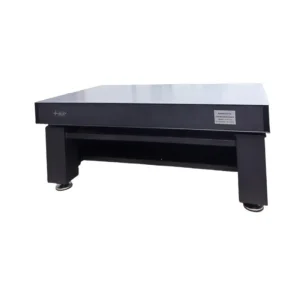
Microvibration control platforms protecting UPS switchboards and semiconductor cleanroom control panels, achieving isolation efficiency up to 99% down to frequencies as low as 1.7 Hz.
Regulatory Frameworks & Commercial Economic Impact
Analyzing global engineering standards and the financial return on investment of engineered electrical damping systems.
As industry standards transition toward smart grid technologies and uncrewed industrial operations, regulatory mandates regarding structural integrity and vibration damping for electrical enclosures have tightened across global jurisdictions.
| Standard / Standard Body | Target Scope & Application | Vibration / Seismic Compliance Requirement | Bellking Engineered Solution |
|---|---|---|---|
| IEEE 693 | Substation Electrical Equipment & Panels | High seismic shake-table testing, dynamic amplification control | BKDE & MD Series spring/elastomer hybrid isolators with 3-axis snubbing |
| IEC 60068-2-6 / 64 | Environmental Testing: Sinusoidal & Random Vibration | Continuous endurance testing from 10 Hz to 150 Hz at specified G-levels | BK-PM Polymer Damping Pads & custom elastomer feet with pre-calculated loss factor |
| IBC 2024 / ASCE 7 | International Building Code Seismic Restraints | Component Importance Factor (Ip = 1.5) qualification for emergency power panels | Seismically restrained spring mounts with integrated fail-safe steel retainers |
| ISO 2017-1 | Mechanical Vibration and Shock Isolators | Verification of dynamic stiffness ($K_d$) and loss factor ($\eta$) under full load | 100% factory dynamic characterization and full batch testing reports |
Financial Economics: Downtime Mitigation ROI
In modern process industries (petrochemicals, semiconductor manufacturing, automated automotive plants), unplanned downtime costs average between $22,000 to $150,000 per hour. Installing custom-engineered electrical panel vibration isolators during initial cabinet integration represents less than 0.5% of total panel assembly cost while extending switchboard lifecycle by up to 15 years and preventing catastrophic line halts caused by vibration-induced trips.
Mathematical Isolation Physics & FEA Modal Simulation
How Bellking engineers calculate dynamic transmissibility and design tailored damping matrices.
3. Sizing Formulation: Transmissibility & Damping Ratios
Selecting an isolator requires careful matching of the equipment excitation frequency ($f_d$) to the isolator's natural frequency ($f_n$). Transmissibility ($T$), defined as the ratio of force transmitted to the cabinet versus force generated by the disturbance source, is governed by the single-degree-of-freedom equation:
Where:
- r = fd / fn is the Frequency Ratio (Disturbance Frequency over Natural Frequency).
- ζ (Zeta) is the Damping Ratio of the isolator elastomer or viscous damper element.
The Engineering Criterion: Effective vibration isolation ONLY occurs when r > √2 (r > 1.414). To achieve greater than 90% isolation efficiency for electrical enclosures subjected to 50 Hz structural vibration (3000 RPM equipment), the isolator's natural frequency ($f_n$) must be engineered below 5 Hz to ensure a frequency ratio of r ≥ 10.
4. Material Selection Taxonomy for Custom Electrical Panel Mounts
Bellking leverages three distinct material technologies based on thermal, environmental, and mechanical static load profiles:
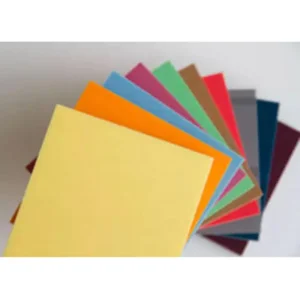
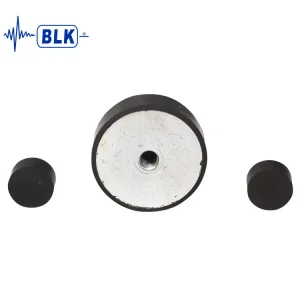
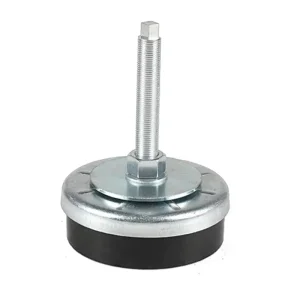
- High-Damping Synthetic Elastomers (BK-PM & BKDE Series): Engineered for compact electrical cabinets where space is restricted. Polymer formulations provide excellent resistance to mineral oils, UV radiation, and ozone while maintaining consistent static spring rate under ambient temperatures ranging from -40°C to +120°C.
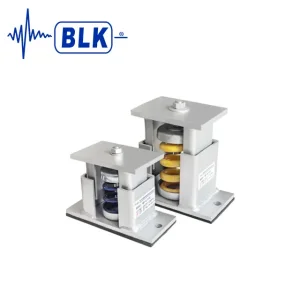
- Multi-Axis Steel Spring Assemblies (MD & MC Series): Utilizing fatigue-resistant, high-tensile alloy steel coated with Dacromet anti-corrosion finish. Ideal for heavy floor-standing power distribution cabinets requiring large deflections and extremely low natural frequencies (3 Hz – 5 Hz).
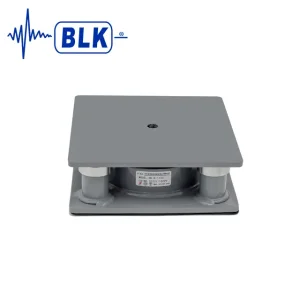
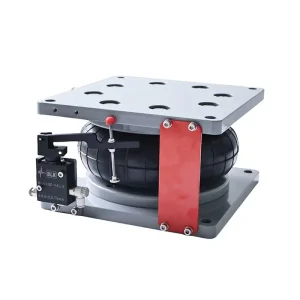
- Active-Ready Pneumatic Isolation Systems (BK-R & BK-PF Series): Incorporates dynamic height-sensing leveling valves paired with reinforced rubber air chambers. Capable of achieving natural frequencies down to 1.7 Hz, perfectly suited for sensitive cleanroom distribution units and high-precision metrology panels.
Localized Application Scenarios & Engineering Case Studies
Real-world integration examples demonstrating custom electrical panel vibration control across complex environments.
Scenario A: Roof-Mounted HVAC Control Cabinets
Challenge: Heavy variable-refrigerant-flow (VRF) units on a commercial skyscraper roof transmitted continuous 28 Hz vibration directly into adjacent main electrical panels, causing trip faults in smart meters.
Solution: Retrofitted with Bellking MD-Type Spring Mounts with internal viscous dampers, reducing transmissibility by 94.6% and stabilizing control metrics.
Scenario B: Offshore Wind Substation MV Switchgear
Challenge: High salt spray, continuous wave impact, and wind turbine resonance causing severe contact chatter in medium-voltage control enclosures.
Solution: Custom BKDE 316 Stainless Steel Rubber Mounts with Dacromet-coated fasteners passed 900-hour salt spray certification and eliminated resonance trips.
Scenario C: Semiconductor Cleanroom MCC Cabinets
Challenge: Micro-vibrations from nearby vacuum pumps disrupted ultra-precise lithography tools via floor-propagated structural pathways.
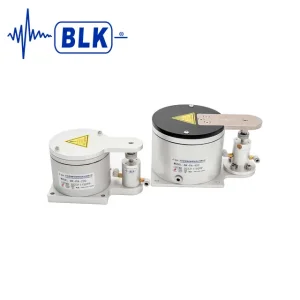
Solution: Installation of BK-RT Damped Isolation Platforms beneath the Motor Control Centers, dampening structural wave propagation down to 2.2 Hz.
Factory Certification, Testing Protocols & Customization Workflow
How Bellking delivers ISO 9001 quality assurance and fast-track OEM engineering support globally.
Founded in 2013 in Kunshan, China, Bellking Vibration Reduction Equipment Manufacturing Co., Ltd. operates a 2,000 m² state-of-the-art facility equipped with robotic welding, CNC machining centers, dynamic spectrum analyzers, and tension-compression fatigue test rigs. As a National High-Tech Enterprise holding 37 patents (including 16 national invention patents), we back our products with complete quality documentation.
100% Quality Traceability
Every dynamic isolator batch undergoes rigorous static stiffness testing, dynamic loss factor verification, and dimensional accuracy checks prior to factory dispatch.
3-Day Custom Prototyping
Send your cabinet weight, center of gravity, support point layout, and frequency constraints; our engineering team produces custom CAD designs and FEA reports within 24 hours.
Dacromet Corrosion Protection
Proprietary metallic zinc and aluminum flake coating tested over 900 continuous hours in salt spray chambers without red rust formation, exceeding standard galvanizing by 5x.
Technical Roadmap: Smart Damping & Next-Gen Vibration Isolators
Forecasting the integration of IoT monitoring, magnetorheological fluids, and sustainable elastomer matrices.
The industrial landscape over the next decade demands intelligent, self-adaptive vibration control systems that integrate seamlessly with Industry 4.0 predictive maintenance frameworks.
1. IoT-Enabled Active Vibration Sensing Mounts
Bellking’s R&D roadmap includes embedded MEMS tri-axial accelerometers integrated directly into industrial rubber mounts and pneumatic platforms. These smart isolators continuously beam real-time dynamic spectral data to edge-computing control units, alerting maintenance technicians to abnormal bearing wear or structural looseness before panel failure occurs.
2. Magnetorheological (MR) Adaptive Damping Systems
For mission-critical switchgear subjected to variable operational speeds (such as marine propulsion switchboards), future isolators will utilize magnetorheological fluid dampers. By varying an electromagnetic field, the isolator automatically adjusts its damping coefficient in real-time within milliseconds, maintaining optimal damping across shifting disturbance frequencies.
Frequently Asked Questions by Electrical Engineers & Specifiers
Expert answers addressing sizing, dynamic selection, seismic compliance, and installation best practices.
How do I choose between spring isolators, rubber mounts, and pneumatic air platforms for an electrical cabinet?
What technical data is required to size a custom electrical panel vibration isolator?
How does vibration isolation prevent electrical arc flashes and thermal hot spots?
Can Bellking isolators resist harsh outdoor, marine, or corrosive chemical environments?
What warranty, lead times, and factory test documentation are provided?
Additional Industrial Damping & Isolation Platforms
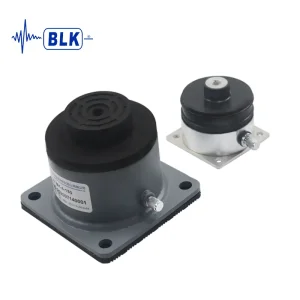
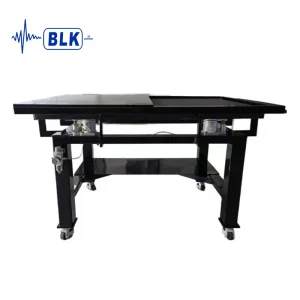
Explore our complete range of specialized vibration control products for factory and industrial infrastructure.


Need a Custom Electrical Panel Isolation Plan?
Send us your cabinet weight, dimensions, operating frequency, and environmental requirements. Bellking application engineers return an optimized sizing layout within 24 hours.