Precision Vibration Control Assemblies
Engineered for low natural frequencies, heavy load capacities, and multi-axis shock attenuation. Explore our core standard and customizable mount series.
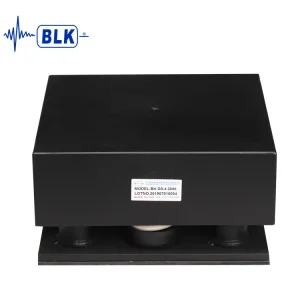
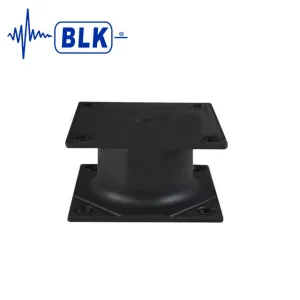
Macro Dynamics in Industrial Vibration Isolation & Damping Engineering
An authoritative analysis of structural mechanics, dynamic response control, and high-frequency noise mitigation for modern manufacturing infrastructure.
Structural Physics & Transmissibility Fundamentals
In modern high-speed manufacturing, HVAC, energy distribution, and sub-nanometer metrology, unattenuated mechanical vibrations lead to premature structural fatigue, dimensional inaccuracy, severe acoustic pollution, and costly operational downtime. A custom mechanical vibration isolator serves as a tuned dynamic barrier engineered to shift system resonant frequencies away from forced disturbance frequencies.
The mathematical efficacy of an isolation barrier is defined by its Transmissibility Ratio ($T_r$), representing the fraction of dynamic force transferred to the supporting substrate:
Where $r = f_d / f_n$ is the frequency ratio between forced disturbance frequency ($f_d$) and system natural frequency ($f_n$), and $\zeta$ denotes the damping ratio. Effective isolation requires $r > \sqrt{2}$, with peak performance (>95% dynamic force reduction) achieved when $r \ge 3$.
Global Macro Landscape & Industry Driver Analysis
The global demand for specialized mechanical vibration isolators, inertia bases, and precision pneumatic platforms is undergoing a rapid evolution driven by four key macro industry shifts:
- Semiconductor & Photolithography Expansion: Sub-micron fabrication processes require micro-vibration mitigation operating below 1.7 Hz natural frequency thresholds.
- Urban Decarbonization & Heavy HVAC Retrofits: Modern high-rise commercial structures require high-deflection spring isolators to contain low-frequency humming from large chillers and pumps.
- Grid Modernization & Power Transformers: Power substations located near residential zones require specialized elastomer-matrix isolators engineered for high dielectric breakdown resistance and oil-immersed thermal stability.
- High-Speed Rail & Advanced Mobility: Structural track isolation pads and onboard vehicle suspension dampers demand strict compliance with ISO 10816 vibration standards.
Technical Engineering Taxonomy of Vibration Isolators
Selecting the optimal isolation technology requires matching dynamic mass, rotational velocities, stroke limits, and environmental factors.
| Isolator Category | Primary Mechanics | Natural Frequency ($f_n$) | Damping Ratio ($\zeta$) | Ideal Application Scenario |
|---|---|---|---|---|
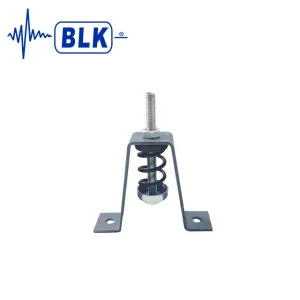
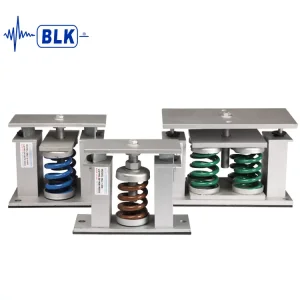
| Open & Housed Spring Mounts | Helical steel coils under axial compression; linear stiffness response. | 2.5 Hz – 5.0 Hz | 0.01 – 0.05 (Low) | HVAC chillers, cooling towers, heavy reciprocating compressors, inertia bases. |
| Viscous Damped Spring Mounts | Helical springs combined with internal silicone fluid shear chambers. | 3.0 Hz – 4.5 Hz | 0.15 – 0.25 (Medium-High) | Variable frequency pumps, emergency generators, seismic zone installations. |
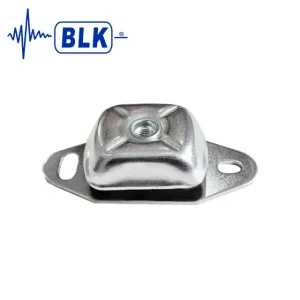
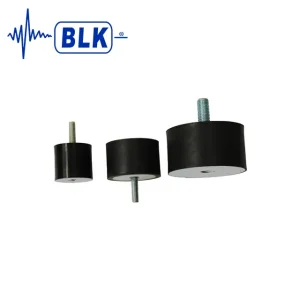
| High-Damping Elastomer / Rubber Mounts | Viscoelastic polymer matrix under combined shear and compression loading. | 6.0 Hz – 15.0 Hz | 0.10 – 0.20 (Moderate) | Electric motors, cabinet electronics, high-RPM fans, automotive test benches. |
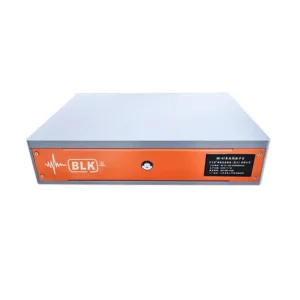
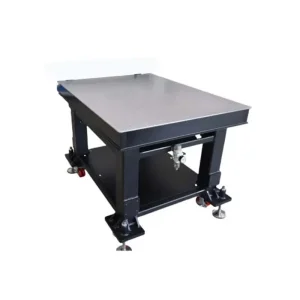
| Pneumatic Air Mounts | Pressurized air diaphragm chambers with active/passive leveling controls. | 1.2 Hz – 2.5 Hz | 0.05 – 0.12 (Adjustable) | Semiconductor CMM inspection, optical benches, laser alignment platforms. |
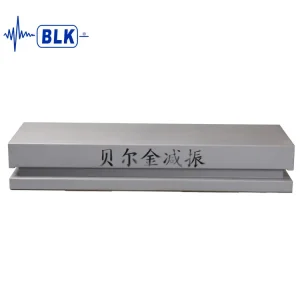
| Heavy-Duty Concrete Inertia Bases | Mass addition (structural concrete) supported by lower spring isolator sets. | 2.0 Hz – 4.0 Hz | System Dependent | End-suction pumps, high-pressure blowers, asymmetric load distribution systems. |
Helical Spring Dynamics
Fabricated from high-tensile alloy spring steel (e.g., 60Si2MnA / ASTM A228), helical springs provide predictable linear deflection across broad temperature ranges. Engineered with a minimum 50% horizontal-to-vertical stiffness ratio ($k_x / k_y$) to guarantee lateral stability under wind loads or dynamic start-up torque without requiring external guides.
Viscoelastic Polymer Science
Elastomeric isolators convert dynamic kinetic energy into molecular thermal dissipation via molecular chain shear movement. Utilizing custom formulated Neoprene, Natural Rubber, or EPDM blends, these mounts exhibit high damping ratios ($\zeta \approx 0.15$), preventing transient resonance during machine acceleration and deceleration phases.
Inertia Base Mass Stabilization
Inertia bases utilize heavy-gauge structural steel perimeter frames filled with high-density reinforced concrete. By increasing total equipment mass by 1.5x to 3.0x, inertia bases lower the combined center of gravity, restrict total dynamic displacement during start-up transients, and provide rigid support for pipe elbow connections.
Custom Manufacturing, FEA Simulation & Metallurgy
From initial finite element analysis (FEA) to robotic welding and automated surface coating, our manufacturing infrastructure delivers rigorous quality controls.
Engineering Simulation & Prototype Development
Custom vibration isolator manufacturing requires comprehensive pre-production validation. Our R&D center utilizes non-linear Finite Element Analysis (FEA) and Computational Fluid Dynamics (CFD) to evaluate stress concentration zones, multi-axis harmonic deflection, and fluid-structure interaction in damped assemblies.
- Modulus Tuning: Precise tailoring of Shore A hardness (30 to 80 Durometer) for elastomer components.
- Spring Fatigue Lifecycle Simulation: Stress spectrum analysis to guarantee >10,000,000 full compression cycles without permanent structural set.
- Transient Dynamic Shock Response: Simulating 3G to 5G sudden impact acceleration events for military and seismic applications.
- 3D Rapid Prototyping: Accelerating design sign-off to delivery within 3 to 5 business days for non-standard mount geometry.
Dacromet & Surface Corrosion Coating Chemistry
Standard paint coatings degrade rapidly under exposure to humidity, saltwater spray, and airborne chemical fumes. Bellking spring and steel assemblies undergo multi-stage surface passivation followed by non-electrolytic Dacromet zinc-chromate coating.
• Passed 900+ Hours ASTM B117 Neutral Salt Spray Test without red rust formation.
• Zero hydrogen embrittlement risk during high-tensile spring plating.
• Thermal resistance surviving up to 300°C continuous operational temperatures.
Localization Support & Regional Regulatory Compliance
Ensuring global equipment builders meet strict municipal building codes, acoustic regulations, and international industrial safety frameworks.
North America (US & Canada)
Full compliance with ASHRAE 170 guidelines for HVAC vibration control, International Building Code (IBC) Seismic Restraint Standards, and AHRI 370 acoustic testing procedures. Snubber-restrained spring mounts are certified to hold lateral dynamic loads up to 2.0g.
European Union (EU Framework)
Adherence to CE Machinery Directive 2006/42/EC, ISO 10816 Mechanical Vibration Evaluation, alongside strict environmental compliance with EU RoHS 3 Directive (2015/863) and REACH SVHC hazardous substance mandates.
Asia-Pacific & Middle East
Qualified under JIS B 0907 (Japanese Industrial Standard for mechanical vibration of rotating machinery), GB/T 50040 dynamic foundation design standards, and extreme ambient temperature specs (+80°C desert UV resilience) for Gulf Region projects.
Targeted Application Scenarios & Engineering Case Briefs
Custom vibration isolation solutions tailored to demanding industrial, power, and scientific operating environments.
Scenario A: Critical HVAC Rooftop Chillers in Commercial Towers
The Challenge: A 40-story financial center experienced intense structural resonance (31.5 Hz harmonic humming) across top-floor executive suites due to rooftop multi-compressor centrifugal chillers.
Engineering Solution: Installation of Bellking custom-designed 50mm deflection caged spring isolators (BK-DS Type) integrated with concrete inertia bases. The high deflection reduced the system natural frequency down to 3.2 Hz, achieving a 97.4% dynamic force isolation efficiency and completely eliminating structure-borne noise transmission.
Scenario B: Semiconductor Metrology Cleanrooms
The Challenge: Sub-nanometer coordinate measuring machines (CMM) were suffering measurement drift caused by low-frequency footfall vibrations (2 Hz – 8 Hz) transmitted through elevated cleanroom access flooring.
Engineering Solution: Deployment of Bellking pneumatic low-frequency isolation platforms (BK-DT Series) featuring fast-acting automatic leveling mechanical valves. The system dropped natural frequency to 1.7 Hz, maintaining optical stability under micron-level motion tolerances.
Scenario C: High-Voltage Electrical Substation Transformers
The Challenge: Core magnetostriction in 110kV oil-immersed power transformers caused persistent 100 Hz/120 Hz hum, exceeding municipal acoustic thresholds in adjacent suburban residential developments.
Engineering Solution: Customized implementation of oil-resistant, high-damping elastomeric matrix pads (BK-MT Series) beneath transformer support wheels. Resulted in a 14 dB(A) drop in structural noise emission and extended transformer foundation life.
Scenario D: Reciprocating Diesel Power Generators
The Challenge: Emergency backup generators in a hospital data center exhibited heavy multi-directional dynamic roll during sudden electrical load acceptances, threatening nearby fuel pipeline joints.
Engineering Solution: Caged spring isolators with built-in viscous damping chambers and integrated omni-directional seismic snubbers, offering structural restraint against 4G dynamic surge forces.
Technology Roadmap: Next-Generation Vibration Mitigation
Previewing upcoming advancements in active piezoelectric damping, smart IoT monitoring, and sustainable bio-polymer isolation mediums.
1. IoT-Enabled Active Condition Monitoring
Integration of wireless MEMS tri-axial accelerometer sensors embedded directly within spring isolator top-plates. Real-time FFT spectral analysis streams isolator health data to cloud dashboards, predicting elastomeric degradation or coil fatigue before structural failure occurs.
2. Magnetorheological (MR) Adaptive Damping
Development of hybrid mechanical-electromagnetic isolators utilizing MR fluids whose yield strength changes millisecond-by-millisecond in response to variable magnetic fields, adjusting damping ratios dynamic-time to machinery speed changes.
3. Zero-VOC Bio-Derived Viscoelastic Polymers
Transitioning rubber pad formulations to renewable, castor-oil derived bio-polyurethanes and recycled polymer blends that lower carbon footprint by 45% while offering superior oil, ozone, and chemical degradation resistance.
Frequently Asked Questions by Procurement & Plant Engineers
In-depth responses covering dynamic sizing calculations, environmental compliance, installation protocols, and lifecycle maintenance.
How do I accurately calculate required spring static deflection for an HVAC chiller?
$f_n \approx 5 / \sqrt{\delta_{st} \text{ (in cm)}}$
For equipment running at 1,750 RPM (29.1 Hz excitation frequency), targeting a 90%+ isolation efficiency requires a system natural frequency under 4.5 Hz. Substituting $f_n = 4.5$ into the equation yields a required static spring deflection of approximately 25mm (1 inch). For lower-speed equipment (e.g., 720 RPM fans), deflections of 50mm to 75mm are necessary to maintain adequate dynamic force attenuation.
When should an engineering project specify an Inertia Base over direct mounting?
1. Asymmetric Equipment Mass: When center of gravity is offset, concrete inertia bases normalize corner loading across all mounting points.
2. High Operating Torque: End-suction water pumps create intense starting torque that causes un-based isolators to rock violently.
3. Flexible Piping Strain: Concrete inertia bases keep pump flanges aligned with connecting pipes, preventing premature joint leakage.
4. Elevated Structural Floors: Adding mass lowers overall system vibration amplitude on thin upper floor concrete slabs.
5. Low Stiffness Frames: Lightweight sheet-metal machinery bases require a rigid concrete platform to prevent frame twisting.
What is the operational lifespan of Dacromet coated spring isolators versus standard powder coating?
Can elastomeric rubber mounts handle continuous oil immersion or outdoor UV exposure?
What parameters must be provided to Bellking engineers to receive a custom OEM mount quote?
• Total operating wet weight of the machine frame.
• Number and dimensional layout of mounting support points.
• Minimum operating RPM or excitation frequency spectrum (Hz).
• Location of center of gravity (CG) relative to support points.
• Installation environment conditions (indoor, outdoor, marine, cleanroom, oil exposure).
• Seismic restraint or wind load force requirements (if applicable under regional building codes).
How do Bellking seismic restrained isolators work during an earthquake?
Advanced Damping & Precision Mount Assemblies
Explore our specialized range of high-performance rubber mounts, desktop platforms, spring hangers, and multi-layer dampers.