
High-Performance Anti-Vibration Products (Part I)
Explore our top-tier industrial vibration isolators, precision rubber mounts, and polymer damping pads tested under rigorous dynamic load conditions.
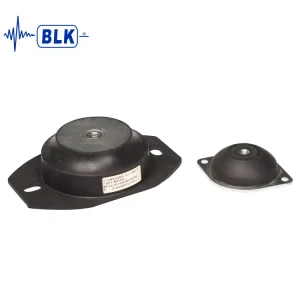
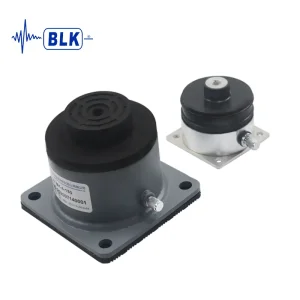
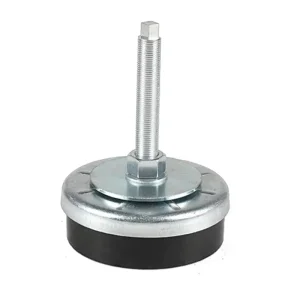


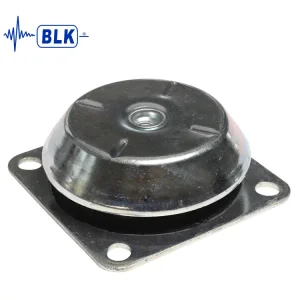
Global Industrial Status of Rigorously Tested Anti-Vibration Mounts
Navigating structural dynamics, acoustic compliance, and micro-vibration mitigation across high-precision global manufacturing ecosystems.
In the contemporary global manufacturing ecosystem, mechanical vibration is no longer treated as a mere maintenance nuisance; it is recognized as a fundamental threat to operational efficiency, structural integrity, machine tolerance, and environmental health. As heavy industrial equipment operates at higher rotational speeds and semiconductor metrology demands sub-nanometer accuracy, the market for custom rigorously quality-tested industrial anti-vibration mounts has evolved into a highly specialized technical discipline.
Global industrial expansion in North America, Europe, and Asia-Pacific has heightened regulatory standards governing environmental noise pollution and structural fatigue. Facilities utilizing heavy HVAC centrifugal chillers, industrial power transformers, high-speed stamping presses, and automated CNC machinery are required to isolate dynamic forces at the source. Unmitigated vibration propagates through concrete foundation slabs, creating structure-borne noise and triggering resonance in adjacent sensitive equipment.
From a macroeconomic perspective, the global demand for advanced elastomeric and pneumatic mounts is accelerating due to the surge in semiconductor fabrication plants (fabs), gigafactories, and urban power distribution centers. In semiconductor fabs, floor vibration criteria (VC curves) are routinely specified down to VC-E or VC-G thresholds. Reaching these levels requires precision air isolators with integrated active or passive pneumatic damping, while power substations require heavy-duty rubber-metal bonded mounts capable of dampening continuous 100 Hz/120 Hz transformer hum without experiencing elastomeric creep over decades of exposure.
Rigorous Quality Testing Protocols & FEA Verification
Why factory testing, dynamic loss factor analysis, and finite element modeling separate certified industrial isolators from commercial commercial-grade rubber pads.
Dynamic Stiffness Testing
Measurement of dynamic vs. static stiffness ratio ($K_d / K_s$). Premium elastomeric compounds maintain low $K_d / K_s$ ratios (typically 1.2 to 1.5), guaranteeing consistent isolation efficiency across varying operational frequencies.
Fatigue & Tensile Endurance
Elastomer compounds undergo multi-million-cycle dynamic fatigue testing under full rated load. This guarantees structural resilience against permanent set (creep deformation) over extended operational lifespans.
Environmental & Salt Spray
Metal housings and structural baseplates feature advanced Dacromet coating or hot-dip galvanization, withstanding over 900 hours of continuous salt spray testing (ASTM B117) for offshore and coastal installations.
Finite Element Analysis (FEA) & Elastomer Vulcanization Dynamics
The manufacturing process of high-performance anti-vibration mounts relies heavily on precise rubber-to-metal bonding technology and hyperelastic material behavior analysis. Non-linear Finite Element Analysis (FEA), using Mooney-Rivlin or Ogden material models, allows engineers to simulate stress distribution under combined shear, compression, and torsional loading conditions prior to mold production.
During the vulcanization stage, high-grade natural rubber (NR), neoprene (CR), nitrile (NBR), or fluoroelastomers (FKM) are bonded to carbon steel or stainless steel inserts via specialized chemlok adhesive agents under high pressure and temperature. A rigorous quality-tested factory evaluates the tear strength, elongation at break, and shore A hardness tolerances of every compound batch, preventing premature delamination under high dynamic force spikes.
| Elastomer Material Type | Durometer (Shore A) | Operating Temp Range | Key Performance Characteristics | Primary Application Scenarios |
|---|---|---|---|---|
| Natural Rubber (NR) | 40 - 70 Shore A | -40°C to +80°C | High mechanical resilience, superior tensile strength, excellent dynamic damping properties. | General HVAC equipment, industrial fans, internal engine mounts, transformer pads. |
| Neoprene (CR) | 45 - 75 Shore A | -30°C to +100°C | Moderate resistance to ozone, weather, oils, and chemical exposure; flame retardant qualities. | Marine propulsion machinery, outdoor chillers, oilfield pumps, coastal power plants. |
| Nitrile Rubber (NBR) | 50 - 80 Shore A | -25°C to +110°C | Exceptional resistance to petroleum-based fluids, lubricants, grease, and hydraulic oils. | Hydraulic power units, automotive gearboxes, industrial oil pumps, machine tools. |
| Polymer & High-Damping Silicone | 30 - 65 Shore A | -50°C to +180°C | Extreme thermal stability, low outgassing, high dampening coefficient, chemically inert. | Semiconductor cleanrooms, aerospace metrology, medical imaging equipment, optical stages. |
China Manufacturing Efficiency & Supply Chain Dominance
How localized manufacturing clusters, automated vulcanization, and vertical supply chains enable rapid customization, scalable output, and cost savings for international B2B buyers.
Vertical Industrial Integration
Located in core manufacturing hubs such as Kunshan, Jiangsu, our facility leverages immediate access to high-grade spring steel, raw rubber refining, precision CNC stamping, and automated plating facilities within a 30-mile radius.
Rapid Custom Prototyping
While traditional Western manufacturers require 8 to 12 weeks for non-standard mold tooling, our in-house toolmaking center delivers fully functional custom prototypes engineered to exact load and deflection specs in 72 hours.
ISO 9001 Factory Quality Control
Automated batch processing ensures precise chemical compound mixing and uniform vulcanization times. Every production batch undergoes strict shore hardness testing, dynamic stiffness validation, and tensile shear inspections.
The efficiency of specialized Chinese factories extends beyond lower direct labor costs. It is rooted in unmatched supply chain agility and technical manufacturing maturity. Advanced robotics in cold-coiling spring machinery, coupled with fully automated multi-day vulcanization presses, allow for seamless production transitions between high-volume standard rubber feet (such as BKAL types) and highly customized matrix anti-vibration damping systems (such as BK-MT types).
Furthermore, international procurement logistics are optimized through direct proximity to major global deep-water ports (Shanghai and Ningbo). B2B buyers benefit from streamlined export documentation, standardized CE/RoHS compliance certificates, and factory-direct wholesale pricing models that eliminate intermediary distributor markups.
Targeted Field Applications & Case Scenarios
Detailed analysis of how specialized anti-vibration mounts protect critical infrastructure across precision optical, power generation, HVAC-R, and industrial automation fields.
Semiconductor Lithography & Metrology
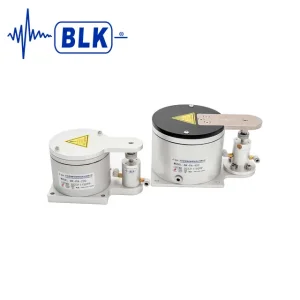
Pneumatic isolators (BK-PA and BK-A types) provide natural frequencies down to 1.7 Hz. They decouple nanometer-level coordinate measuring machines (CMM) and laser optical tables from seismic floor disturbances and ambient plant vibrations.
Power Transformers & Electrical Substations
Heavy oil-immersed and dry-type electrical transformers generate persistent low-frequency core hum (100 Hz/120 Hz harmonics). Damped polymer pads (BK-PM) and matrix rubber isolators isolate structural noise transmission into urban grid buildings.
HVAC-R Centrifugal Chillers & Cooling Towers
Large-scale commercial roof-mounted chillers and cooling towers produce dynamic multi-directional forces. Combination spring-rubber isolators with viscous dampers prevent structural resonance while resisting outdoor weather exposure.
Heavy Stamping Presses & Machine Tools
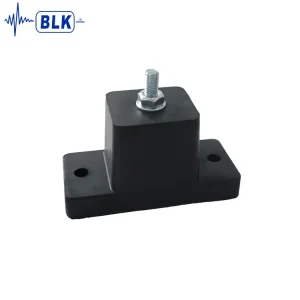
High-tonnage mechanical stamping presses create extreme dynamic shock impacts. Multi-layer dampers (BKSWA series) and heavy-duty BKH mounts dissipate shock impulse kinetic energy rapidly, extending machine tool tooling life.
B2B Buyer's Guide: Sourcing Industrial Anti-Vibration Mounts
A structured engineering checklist for procurement professionals, OEM designers, and EPC project managers evaluating OEM factory credentials.
Key Technical Sourcing Parameters
When selecting a factory supplier for custom vibration isolators, procurement teams must look beyond unit price. An incorrectly specified or low-grade rubber mount can result in catastrophic equipment downtime, premature fatigue failure, or failure to pass acoustic field audits. Evaluate these key technical criteria during vendor selection:
- Static Deflection ($\delta_{st}$): Verify that the mount delivers sufficient static deflection under actual equipment dead load. Higher deflection generally corresponds to a lower natural frequency ($f_n \approx 5 / \sqrt{\delta_{st} \text{ in mm}}$).
- Dynamic-to-Static Stiffness Ratio ($K_d / K_s$): Request dynamic test reports. Cheaper synthetic rubber blends often exhibit high stiffness hardening under dynamic excitation, severely degrading isolation performance.
- Creep Rate & Compression Set: Ensure the elastomer formulation resists long-term vertical settlement under continuous compression load.
- Damping Ratio ($\zeta$): Ensure the mount provides sufficient internal damping (typically 0.05 to 0.15 for elastomers, higher for viscous-damped units) to control amplitude spikes during equipment startup and shutdown resonance transits.
- Environmental Resistance: Ensure the housing, fasteners, and rubber matrix match site conditions (UV exposure, oil splashing, chemical ozone, or extreme outdoor temperatures).
High-Performance Anti-Vibration Products (Part II)
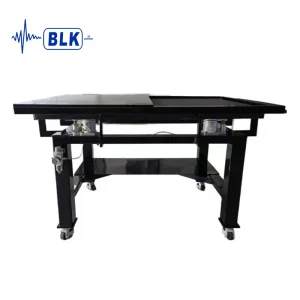
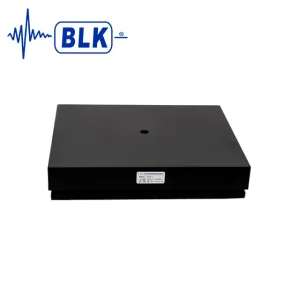
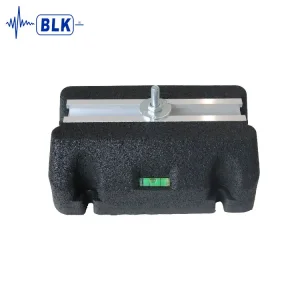
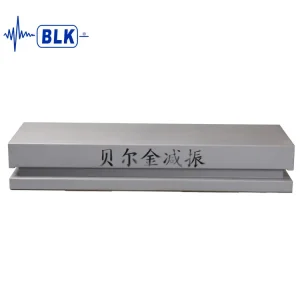
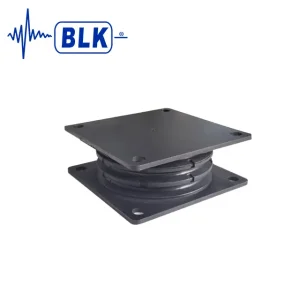
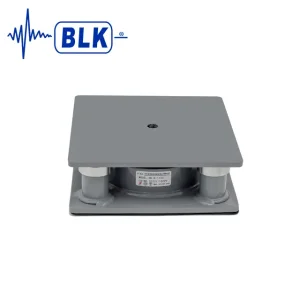
Advanced vibration platforms, matrix damped mounts, and specialized multi-layer isolators engineered for heavy industrial and laboratory installations.
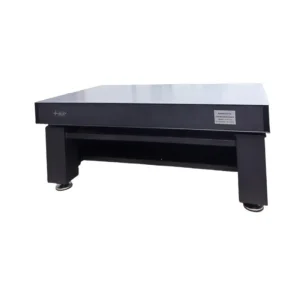

Future Industry Trends in Industrial Vibration Control
How Industry 4.0 integration, smart sensors, and eco-compliant elastomers are reshaping modern vibration attenuation systems.
Smart IoT-Integrated Mounts
Next-generation isolators incorporate embedded MEMS accelerometers and wireless temperature/strain sensors. These "smart mounts" stream real-time dynamic health metrics directly to factory SCADA systems for predictive maintenance.
Active-Passive Hybrid Systems
Combining traditional passive pneumatic air springs with fast-response electromagnetic or piezo-electric actuators. This provides instantaneous counter-forces against high-speed transient motion in semiconductor tools.
Sustainable Eco-Elastomers
Regulatory frameworks such as EU REACH and RoHS drive the adoption of bio-based elastomer formulas and fully recyclable synthetic compounds, eliminating harmful heavy metal vulcanization accelerators.
Frequently Asked Questions (Technical & Commercial)
In-depth answers to critical technical questions regarding selection, testing, installation, and custom manufacturing of industrial anti-vibration mounts.
How do I calculate the correct natural frequency required for my equipment isolator?
To calculate the required isolator natural frequency ($f_n$), first identify the lowest disturbing frequency ($f_d$) generated by your equipment, typically determined by its operating RPM ($f_d = \text{RPM} / 60$). To achieve effective isolation (>80%), the frequency ratio ($r = f_d / f_n$) should be at least 2.5 to 3. For critical applications targeting >95% efficiency, aim for $r \ge 4$.
For example, if a pump operates at 1,750 RPM, $f_d = 29.16 \text{ Hz}$. Choosing an isolator with a natural frequency of 5 Hz yields a ratio of $r = 5.83$, delivering over 96% isolation efficiency according to the transmissibility equation: $$T = \sqrt{\frac{1 + (2\zeta r)^2}{(1-r^2)^2 + (2\zeta r)^2}}$$
What is the difference between rubber mounts, spring isolators, and pneumatic air mounts?
Each type addresses specific operational frequency bands and load profiles:
- Rubber Mounts (e.g., BKP, BKH, BKVV): Best suited for higher operational frequencies (>15-20 Hz) such as motors, small compressors, and electrical cabinets. They provide high internal damping and compact support, but offer lower static deflection.
- Spring Isolators: Ideal for medium-to-low operational frequencies (5-15 Hz) found in HVAC chillers, cooling towers, and heavy generator sets. They offer larger static deflections (25mm to 75mm) with natural frequencies around 3-5 Hz.
- Pneumatic Air Mounts (e.g., BK-PA, BK-A): Engineered for ultra-low frequency applications (<3 Hz) such as semiconductor lithography tools, laser optics, and CMM inspection benches where sub-nanometer stability is essential.
What specific factory quality control tests are performed on custom mounts?
Our ISO 9001 quality system subjects production lots to comprehensive testing protocols:
- Rheology & Hardness Verification: Verifying raw compound cure rate and Shore A durometer (±5 tolerance).
- Static & Dynamic Load Deflection: Testing load vs. deflection curves using hydraulic universal testing machines to confirm spring rate ($K$).
- Rubber-to-Metal Bond Shear Testing: Destructive shear testing to confirm Chemlok bonding integrity exceeds elastomer tear strength.
- Salt Spray Corrosion Chamber: Testing metal housing coatings (Dacromet/Electro-galvanized) up to 900 hours per ASTM B117 standards.
How long does a custom anti-vibration mount mold engineering process take?
For standard modifications (such as altering bolt-hole configurations, baseplate dimensions, or rubber durometer hardness), production can begin within 3 to 5 working days. For fully custom geometric designs requiring new vulcanization mold tooling, our in-house CNC toolmaking facility completes mold fabrication, sample casting, and dynamic laboratory testing within 12 to 15 working days.
What environmental factors degrade rubber mounts, and how can they be mitigated?
Elastomers undergo chemical degradation when exposed to UV light, ozone, petroleum oils, strong acids, or extreme temperatures (above 80°C). To mitigate these risks, select the appropriate compound during the engineering stage: Neoprene (CR) for outdoor weather and ozone resistance; Nitrile (NBR) for continuous exposure to industrial oils and fuels; or Silicone/Fluoroelastomer (FKM) for high-temperature and cleanroom applications. Protective metal shrouds can also shield rubber inserts from direct UV exposure and fluid dripping.
What export documentation and certifications are provided for international shipments?
Every commercial export order includes a full Quality Compliance Package: Factory Acceptance Test (FAT) Reports, Material Test Certificates (MTC for raw steel and rubber compounds), RoHS and REACH Compliance Declarations, ISO 9001 Inspection Certificates, and standardized Certificate of Origin (CO) documents for preferential tariff clearance.