
Featured Industrial Vibration Isolator Mounts
Engineered elastomeric and hybrid isolation units designed for demanding structural and OEM equipment applications.
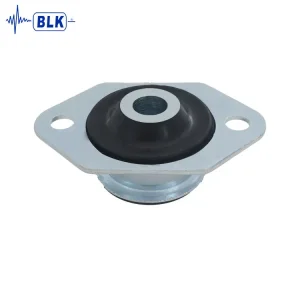
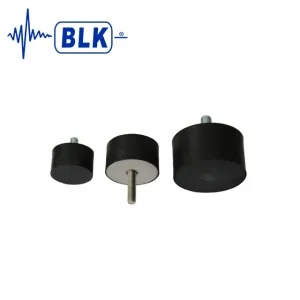





Global Macro-Industrial Landscape for Elastomeric Vibration Isolation
How modern industrial automation, stringent acoustic regulations, and high-frequency machinery drive the demand for custom rubber mount manufacturing.
High-Frequency Dynamic Damping
As rotational machinery speeds scale beyond 3,600 RPM in modern HVAC chillers, power generation turbines, and industrial centrifuges, structure-borne noise transmission creates catastrophic structural fatigue. Custom rubber vibration isolators provide critical high-frequency attenuation unattainable by bare metallic coil springs.
Custom Compound Chemistry
Standard commodity off-the-shelf rubber mounts rapidly degrade under chemical exposure, ozone weathering, and thermal spikes. Premier OEM manufacturing facilities utilize engineered blends of High-Damping Natural Rubber (HDNR), Neoprene (CR), Nitrile (NBR), and Ethylene Propylene Diene Monomer (EPDM) tailored to target durometers (30 to 80 Shore A).
Regulatory Acoustic Compliance
Municipal noise ordinances, ISO 10816 mechanical vibration limits, and ASHRAE equipment isolation guidelines mandate strict acoustic performance. Modern engineering facilities must deliver dynamic stiffness verification, continuous deflection testing, and FEA static-to-dynamic ratio analytics for every production lot.
Physics of Elastomeric Damping & Transmissibility
Mathematical modeling of mechanical vibration isolation using elastomeric mounts, static deflection dynamics, and hysteresis damping principles.
fn = (1 / 2π) * √(g / δ) = 15.8 / √(δ_mm) [Hz]
// Transmissibility (T) Ratio with Material Damping Ratio (ζ):
T = √[ (1 + (2*ζ*r)²) / ( (1 - r²)² + (2*ζ*r)² ) ]
Where: r = fd / fn (Forcing Frequency / Natural Frequency)
| Isolator Material / Design | Natural Frequency ($f_n$) | Damping Ratio ($\zeta$) | High-Frequency Attenuation | Acoustic Bridging Control |
|---|---|---|---|---|
| Natural Rubber (NR - Shore 45A) | 5 Hz – 12 Hz | 0.05 – 0.10 | Superior | Eliminates structure-borne hum |
| High-Damping Rubber (HDR - Shore 60A) | 6 Hz – 15 Hz | 0.15 – 0.22 | Excellent | Prevents resonant amplification |
| Neoprene Elastomer (CR) | 8 Hz – 18 Hz | 0.07 – 0.12 | Very Good | Resists oil and ambient heat degradation |
| Steel Coil Spring (Un-damped) | 2 Hz – 5 Hz | < 0.01 | Poor (Passes sound frequencies) | Requires rubber acoustic pads |
Global OEM Procurement & Total Cost of Ownership (TCO)
Strategic evaluation criteria for procurement directors, OEM buyers, and structural engineering contractors sourcing custom rubber mounts globally.
Direct Factory vs. Intermediary Trading Risk
Sourcing anti-vibration mounts from third-party broker firms exposes OEM production lines to chemical formulation inconsistencies, unverified dynamic stiffness drift, and batch-to-batch polymer variations. Partnering directly with a dedicated manufacturing factory ensures direct engineering oversight, mold tooling ownership, traceability from raw polymer compounding to final vulcanization, and ISO 9001 quality audits.
- Raw Compound Verification: Spectrographic rubber polymer confirmation (RoHS/REACH compliant).
- Bonding Integrity Testing: High-shear load testing of elastomer-to-metal vulcanized plates.
- Dynamic Creep Resistance: Long-term compression set analysis under continuous thermal load.
Total Cost of Ownership (TCO) Breakdown
While initial unit cost is a primary procurement metric, low-grade sub-tier rubber mounts incur exponential secondary costs through premature elastomeric cracking, equipment bearing wear, unexpected downtime, and noise compliance failure fines.
A precision-molded custom mount with optimized Shore A hardness and corrosion-resistant metal plates extends connected equipment service life by up to 300%.
Sector-Specific Engineering Isolation Solutions
Custom elastomeric vibration mount configurations designed for diverse global industrial sectors.
Power Generation & Transformers
Electrical transformers generate core magnetostrictive hum at 50 Hz / 120 Hz. Specialized transformer rubber mounts and high-damping pads isolate low-frequency hum, preventing structural sound propagation across substation slabs and commercial building foundations.
HVAC, Pumps & Fluid Handling
Chillers, cooling towers, and end-suction water pumps generate dynamic imbalance during startup and continuous operation. Cone mounts, cylindrical rubber buffers, and custom inertia base mounts absorb transient shock loads and stabilize piping connection stresses.
Semiconductor & Precision Optics
Metrology instruments, CMM inspection stations, and semiconductor lithography platforms demand sub-micron micro-vibration mitigation. Precision pneumatic air mounts combined with high-damping rubber buffers prevent floor ambient micro-seismic disturbances from disrupting nanometer processes.
1:1 Customization & Manufacturing Execution Roadmap
How our engineering factory transforms customer equipment parameters into certified elastomeric vibration mounts in as fast as 3 working days.
Stage 1: Parameter & FEA Modeling
Our engineering team analyzes machine weight distribution, center of gravity (CG), support point matrix, excitation frequency (RPM), and site environmental factors. Finite Element Analysis (FEA) simulates stress concentration and deflection lines under maximum dynamic shear and compression loading.
Stage 2: Tooling Design & Vulcanization
Precision CNC steel molds are engineered with exact shrink-rate tolerances. Metal insert substrates undergo automated sandblasting, chemical priming, and high-pressure hot compression molding / transfer vulcanization to achieve chemical bonding strengths exceeding the tear strength of the rubber compound.
Stage 3: Verification & QC Sign-Off
Finished mounts undergo rigorous batch testing: durometer hardness verification (ASTM D2240), tensile strength and elongation (ASTM D412), compression set resistance under heat (ASTM D395), and 900-hour salt spray corrosion testing for metal hardware (Dacromet / electro-galvanized finish).
Technical Roadmap & Next-Gen Elastomeric Technologies
Pioneering material science breakthroughs in smart damping, eco-compliant elastomers, and adaptive vibration control.
Magnetorheological & Active Elastomers
Next-generation dynamic control utilizes Magnetorheological Elastomers (MREs) embedded with micro-iron particles. By applying a localized magnetic field, the complex shear modulus ($G^*$) and dynamic stiffness of the rubber mount adjust instantly in real-time, responding dynamically to variable RPM machinery loads.
Bio-Based & Thermoplastic Vulcanizates (TPV)
Addressing corporate ESG mandates and global zero-carbon goals, our material research roadmap incorporates high-performance Thermoplastic Vulcanizates (TPVs) and bio-based EPDM compounds. These materials offer full recyclability at end-of-life while maintaining superior tensile resilience, low hysteresis degradation, and extreme temperature tolerance (-40°C to +130°C).
Global Compliance & Regulatory Standard Framework
All custom rubber mounts and isolators manufactured in our facility adhere to strict international mechanical, environmental, and structural standards.
| Standard Code | Governing Body / Scope | Technical Compliance Criteria |
|---|---|---|
| ISO 10816 / ISO 20816 | International Organization for Standardization | Evaluation of mechanical vibration on non-rotating structural components and machinery. |
| DIN 4150-3 | Deutsches Institut für Normung (Germany) | Structural vibration in buildings; effects on structures and sensitive equipment. |
| MIL-STD-810H | US Department of Defense Standard | Shock absorption, environmental vulnerability, dynamic fatigue, and salt spray exposure. |
| ASTM D2000 | American Society for Testing & Materials | Standard classification system for rubber products in automotive and industrial applications. |
| RoHS 3 / REACH | European Union Environmental Directives | 100% free of heavy metals, restricted phthalates, polycyclic aromatic hydrocarbons (PAHs). |
Frequently Asked Questions by Purchasing & Engineering Teams
Direct insights from our technical engineering department on custom rubber vibration isolator mounts.
How do I determine whether my application requires rubber isolators or steel springs?
What is the dynamic-to-static stiffness ratio ($K_d / K_s$) and why is it important?
How does Shore A durometer hardness affect vibration isolator performance?
Can custom rubber vibration mounts withstand outdoor, oil, or high-chemical environments?
What parameters are required for custom mold tooling and sizing?
How does vulcanized bonding strength prevent metal-elastomer plate separation?
What is the typical lifespan of industrial elastomeric vibration isolator mounts?
What lead times and certifications are provided for custom OEM orders?
Explore Additional Industrial Vibration Mitigation Units
High-performance spring hangers, polymer damping pads, and precision pneumatic air mounts for advanced shock isolation.





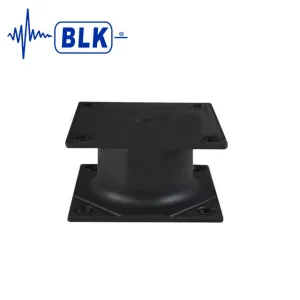


Verified Factory Production Metrics
Engineering excellence backed by ISO 9001 certified manufacturing infrastructure in Kunshan, China.