
High-Efficiency Vibration Absorbing Rubber Mounts & Pads
Engineered for industrial machinery, HVAC chillers, transformers, and high-precision electronic equipment requiring low transmissibility and maximum fatigue life.


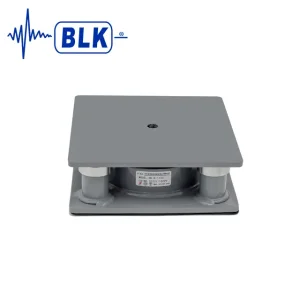
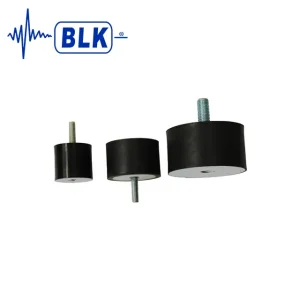

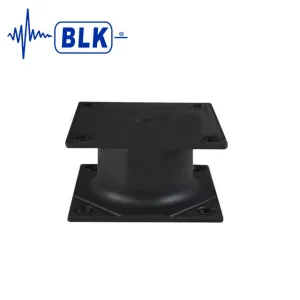

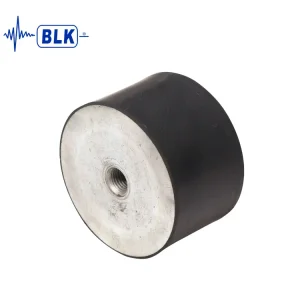
Engineering Fundamentals of Custom Vibration Absorbing Rubber Components
A comprehensive study on viscoelastic properties, elastomer hysteresis, dynamic-to-static stiffness ratios, and industrial procurement criteria.
Viscoelastic Damping Dynamics
Unwanted structural vibration causes accelerated mechanical wear, fatigue fractures, acoustic noise pollution, and operational downtime. Custom vibration absorbing rubber mounts function through viscoelastic energy dissipation. When subject to dynamic excitation loads, the high-polymer elastomer chains convert kinetic energy into harmless heat energy via internal molecular friction.
Key physics metrics evaluated during rubber compounding include the Loss Factor (tan δ), which represents the damping ratio, and the Dynamic-to-Static Stiffness Ratio ($K_d / K_s$). Achieving an optimal $K_d / K_s$ ratio between 1.2 and 1.6 guarantees that the elastomer maintains structural load stability under static weight while delivering superior isolation efficiency against high-frequency dynamic disturbance harmonics.
Durometer Precision & Load Alignment
The vibration isolation response depends strictly on aligning the system disturbing frequency ($f_d$) with the isolator natural frequency ($f_n$). Isolation begins only when the frequency ratio exceeds $\sqrt{2}$ ($f_d / f_n > 1.414$), with optimal attenuation achieved at ratios between 3.0 and 5.0.
Our OEM factory formulates synthetic and natural rubber compounds spanning Shore A durometers from 30° to 80° Shore A. By leveraging Finite Element Analysis (FEA) dynamic strain simulation, Bellking engineers customize pad geometry, shear cone profiles, and internal metal plate bonding interfaces to eliminate localized strain concentrations and extend component operational service life beyond 15 years.
Why Partner with a Direct Custom Rubber Factory in China?
Vertical supply chain integration, internal compound formulation, state-of-the-art vulcanization, and optimized cost structures.
Vertical Compound Customization
Unlike third-party assembly firms, our Kunshan production facility manages polymer blending in-house. We formulate custom recipes utilizing Natural Rubber (NR), Nitrile (NBR), EPDM, Silicone (VMQ), Fluorocarbon (FKM), and Polyurethane. Whether your environment requires oil resistance, ozone stability, or extreme temperatures (-40°C to +150°C), our material science team optimizes the exact elastomer elastomer matrix.
Advanced Mold Tooling & Rapid Prototyping
Precision tooling determines the dimensional consistency and fatigue life of bonded metal-rubber isolators. Operating high-speed CNC machining centers and 3D FEA simulation software, we transform custom customer CAD drawings into functional metal vulcanization molds in as fast as 3 to 5 business days, drastically shortening your project R&D development cycle.
Unbeatable Factory-Direct Pricing
By eliminating intermediary distribution agents and leveraging direct access to regional raw material refineries in China, Bellking delivers tier-1 quality at factory-direct pricing. Bulk procurement contracts benefit from scaled compression molding automation, offering 30% to 50% cost reductions compared to European or North American domestic suppliers.
ISO 9001 & Quality Assurance Protocol
Every batch of custom vibration absorbing rubber mounts undergoes rigorous laboratory testing before dispatch, including tensile strength testing (ASTM D412), tear resistance (ASTM D624), compression set under load (ASTM D395), and dynamic shear modulus testing. Certificates of Analysis (CoA) and full RoHS/REACH compliance documentation are included with every delivery.
Key Industry Trends Driving Elastomeric Damping Technologies
Analyzing global shifts in industrial noise control, EV electrification, green building codes, and semiconductor manufacturing demands.
1. EV Powertrains & Transportation NVH Engineering
The rapid shift toward Electric Vehicles (EVs) and high-speed rail transportation has transformed Noise, Vibration, and Harshness (NVH) requirements. Without combustion engine masking noise, secondary structural micro-vibrations from electric drive units, battery cooling pumps, and HVAC compressors become highly noticeable. Custom molded rubber buffers and cone mounts with precise Shore A durometers are now required to isolate high-frequency acoustic ripples above 1,000 Hz.
2. Ultra-Precision Semiconductor Cleanrooms
As semiconductor wafer fabrication moves toward nanometer node dimensions, sub-micron ambient floor vibrations degrade photolithography yields. The market is shifting from conventional rubber pads to hybrid isolation systems—integrating precision low-frequency rubber air mounts and pneumatic platforms that achieve resonance frequencies as low as 1.7 Hz.
3. Decarbonization & Green Building Standard Compliance
Modern architectural acoustic standards (e.g., LEED v4, WELL Building Standard) enforce stringent decibel limits on HVAC chillers, cooling towers, and booster pumps installed in commercial skyscrapers. Elastomer isolators are replacing un-damped metal coil springs to prevent high-frequency structure-borne sound transmission into upper-floor residential or office spaces.
4. Sustainable Bio-Based Elastomer Compounding
Global procurement teams prioritize ESG compliance. Leading rubber factories are developing eco-friendly compounding recipes incorporating recycled rubber crumb, bio-based plasticizers, and low-carbon silica filler substitutes while maintaining critical mechanical tensile strength and hysteresis damping parameters.
Macro Industrial Application Scenarios & Solution Matrix
Tailored elastomeric mounting configurations engineered for harsh operating environments across diverse global industries.
| Industry Sector | Typical Disturbing Source | Recommended Rubber Compound | Ideal Durometer Range | Primary Target Metric |
|---|---|---|---|---|
| HVAC & Refrigeration | Chillers, Pumps, Air Handlers (1,200–3,600 RPM) | High-Grade Natural Rubber / Neoprene | 45° – 60° Shore A | High Deflection, >95% Attenuation |
| Semiconductor & Optics | Micro-vibrations, Floor Seismic Wave Motion | High-Damping Silicone / Air Mount Rubber | 35° – 50° Shore A | Ultra-low Natural Freq ($f_n < 3.0$ Hz) |
| Electrical Power & Transformers | Magnetostrictive Hum (100 Hz / 120 Hz) | Oil-Resistant NBR / Weatherable EPDM | 55° – 70° Shore A | Low Creep, High Dynamic Damping |
| Heavy Machine Tools | Stamping Presses, Forging Hammers, Compressors | Composite Multi-Layer Rubber + Steel Pad | 60° – 80° Shore A | Extreme Shock Resistance (>5G Impact) |
| Marine & Offshore | Propulsion Engines, Auxiliary Gensets | Seawater & Oil-Resistant FKM / Fluorosilicone | 50° – 65° Shore A | Corrosion, Ozone & Fuel Resistance |
HVAC Structural Noise Isolation
Variable refrigerant flow (VRF) units, rooftop air-handling units (AHUs), and centrifugal water pumps located in multi-story installations generate continuous low-frequency structural vibration. Standard installation practices utilize BKDJ-type waffle rubber pads or BKH-type shear mounts underneath equipment bases. These mounts decouple the machinery frame from the concrete slab, stopping acoustic hum before it propagates through the building structure.
Electrical Transformer Damping
Distribution transformers installed in indoor substations emit low-frequency core magnetostriction noise at 100 Hz to 120 Hz. Special high-damping polymer pads mounted underneath transformer footings effectively attenuate core vibration, reducing ambient sound levels by up to 12 dB(A) while enduring transformer oil leaks and sustained static loading over 20-year operational cycles.
Understanding Custom Rubber Mount Pricing & Cost Factors
A transparent breakdown of direct material costs, mold amortization, durometer tolerances, and volume price breaks.
1. Polymer Compound Selection
Raw material resin pricing significantly impacts unit cost. Commercial Natural Rubber (NR) and Styrene-Butadiene (SBR) offer the most economical baseline price. Specialized synthetic polymers such as Fluorocarbon (FKM) or Fluorosilicone carry higher material raw costs, suitable for mission-critical applications subject to high heat and aggressive chemical exposure.
2. Steel Insert Bonding & Surface Finish
High-performance vibration mounts feature bonded threaded steel studs or plates. Standard zinc electroplating provides basic indoor protection, while heavy-duty industrial installations require Dacromet coating capable of enduring 900-hour salt spray testing, slightly adjusting unit production costs while maximizing long-term outdoor longevity.
3. Tooling Amortization & Order Volume
For custom mold geometry, tooling investment costs are amortized across production units. Ordering higher batch quantities (e.g., 1,000+ units) drops per-unit prices dramatically. For standardized shapes (BKDJ, BKSW, BKVV types), our factory maintains existing inventory tooling, eliminating initial setup charges.
Direct B2B Pricing Structure Formula
Total Unit Price = (Raw Polymer Cost + Metal Insert Cost + Compression Vulcanization Cycle Time + Surface Finish Treatment) / Order Volume + [Amortized Tooling Cost]
For immediate factory pricing estimates, provide our engineering team with your required part dimensions, static load weight per mounting point, working temperature range, and estimated annual order quantity.
Frequently Asked Questions by Technical Procurement & Engineers
Direct answers from senior application engineers regarding isolation calculations, compound selection, and custom orders.
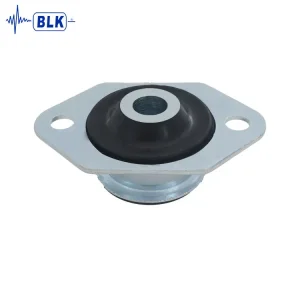
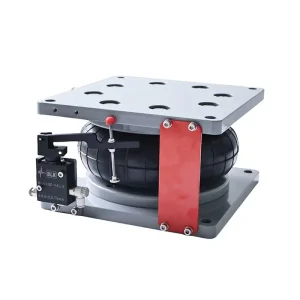
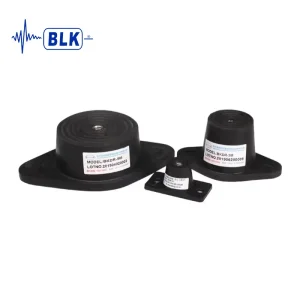
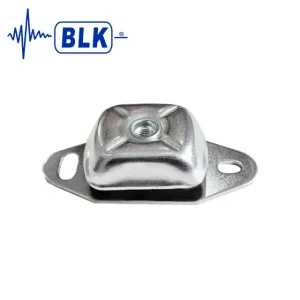
Comprehensive Vibration Control & Damping Product Line
Explore our complete product range including cone mounts, polymer damping pads, air platforms, and multi-layer anti-vibration dampers.




Request a Customized Vibration Control Engineering Proposal
Send us your equipment drawing, static load distribution, and target operating RPM. Bellking application engineers will provide a verified vibration calculation report and direct factory quotation within 24 hours.
Consulting Application Engineer Now