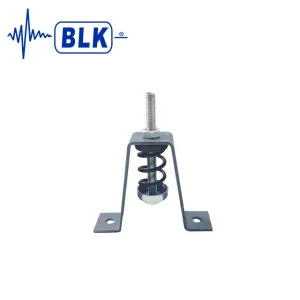
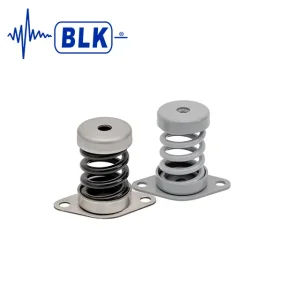
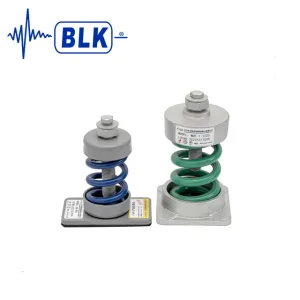
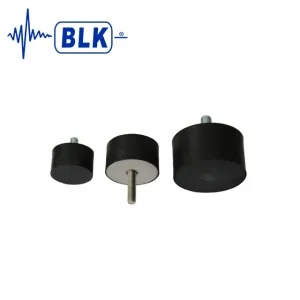
Precision Anti-Vibration Mounts & Damping Systems
Explore our premium industrial vibration isolators, engineered with state-of-the-art materials for extreme durability, ultra-low resonance frequency, and high transmissibility suppression.

1. Material Physics & Viscoelastic Science in Anti-Vibration Engineering
A comprehensive examination of dynamic stiffness, mechanical hysteresis loss, material shear modulus, and life-cycle mechanical behavior under cyclic harmonic loads.
Dynamic Stiffness vs. Static Deflection
In structural dynamics, an anti-vibration mount's dynamic stiffness ($K_d$) dictates its real-world isolation efficiency under operating excitation frequencies ($f_d$). Unlike static stiffness ($K_s$), which governs initial mechanical sag, $K_d$ accounts for rate-dependent polymer chain strain. Bellking engineers optimize the dynamic-to-static ratio ($K_d/K_s$) down to a range of 1.2–1.4 for natural rubber compounds, minimizing harmonic energy transfer to host structures.
Viscoelastic Hysteresis & Loss Factor
Energy dissipation within synthetic elastomers relies on loss factor ($\eta = \tan\delta$). During cyclical compression and shear, molecular chains slide, converting kinetic vibration into non-destructive thermal energy. Premium formulations—such as High-Damping Rubber (HDR) and engineered Nitrile/Neoprene matrix blends—provide critical loss factors exceeding $\eta = 0.15$ to $0.25$, dramatically flattening resonance amplitude peaks during equipment startup and coast-down phases.
Metallurgical Alloy Selection for Springs
Heavy-duty helical spring mounts require exceptional fatigue resistance to endure $10^7+$ continuous loading cycles. Bellking utilizes premium 60Si2Mn and 55CrSi chromium-vanadium spring steel wire, cold-coiled and subjected to precise double-tempering shot peening. Coating the spring steel with a electrochemically bonded Dacromet corrosion barrier ensures long-term resistance exceeding 900 hours of continuous salt spray testing (ASTM B117).
Key Engineering Rule of Thumb: Isolation efficiency ($\epsilon$) begins only when the ratio of disturbing frequency to natural frequency ($f_d / f_n$) exceeds $\sqrt{2} \approx 1.414$. For industrial equipment operating at 1,500 RPM (25 Hz), target an isolator natural frequency ($f_n$) between 3 Hz to 5 Hz to achieve an isolation efficiency exceeding 95% to 98%.
Comparative Matrix: Elastomer & Substrate Materials for Vibration Isolators
| Material Type | Shore A Hardness | Dynamic/Static Ratio ($K_d/K_s$) | Loss Factor ($\tan\delta$) | Thermal Range (°C) | Oil & Chemical Resistance | Primary Industrial Application |
|---|---|---|---|---|---|---|
| Natural Rubber (NR) | 40 – 70 | 1.2 – 1.4 | 0.05 – 0.10 | -40 to +80 | Moderate / Low | HVAC chillers, fans, general machinery isolators |
| Neoprene (CR) | 45 – 75 | 1.4 – 1.6 | 0.10 – 0.15 | -35 to +100 | High (Oils & Weather) | Marine mounts, outdoor HVAC, rooftop plant rooms |
| Nitrile (NBR) | 50 – 80 | 1.5 – 1.8 | 0.08 – 0.12 | -30 to +110 | Excellent (Petroleum/Fuel) | Engine mounts, hydraulic pumps, industrial gearboxes |
| Fluoroelastomer (FKM) | 60 – 85 | 1.8 – 2.2 | 0.12 – 0.20 | -20 to +230 | Extreme Acid / Solvent | Chemical processing plants, high-temp exhausts |
| Silicone Rubber (VMQ) | 30 – 70 | 1.2 – 1.5 | 0.15 – 0.30 | -60 to +200 | Good Weathering / Low Oil | Medical instruments, cleanrooms, aerospace avionics |
| Microcellular Polyurethane | 35 – 65 | 1.3 – 1.7 | 0.20 – 0.35 | -30 to +80 | High Abrasion / Good Oil | Railway ballast mats, heavy press foundation pads |
2. Sourcing Economics: Anti-Vibration Mount Pricing Structure
Understanding cost drivers in B2B procurement: raw material formulation purity, tooling complexity, dynamic testing compliance, and total cost of ownership (TCO).
Elastomeric Compound Purity
The primary cost variance in rubber mounts stems from pure virgin rubber polymer ratio versus reclaimed rubber fillers. Cheap mounts contain up to 40% high-ash calcium carbonate fillers, leading to rapid micro-cracking and loss of isolation elasticity within 12–18 months. Bellking uses 100% high-grade virgin polymers, ensuring stable dynamic properties across a 15+ year operational lifespan.
Metal-to-Elastomer Bonding Metallurgy
Premature failure occurs when rubber detaches from steel plates under shear stress. High-quality manufacturing involves shot-blasting, ultrasonic degreasing, two-coat chemlok solvent priming, and high-pressure compression vulcanization at 160°C. This guarantees a cohesion bond strength exceeding 12 MPa, ensuring the rubber tears internally before the bond line fails.
Dynamic Testing & Serialization
Off-the-shelf commoditized mounts lack dynamic stiffness certification. Precision pricing reflects rigorous batch testing—including static load-deflection curve tracking, hysteresis loss measurement, and vertical/horizontal stiffness validation. Certified products prevent costly site resonance retrofit projects.
Global B2B Price & Performance Benchmarking
| Mount Type Class | Est. Unit Price Range (USD) | Core Material Specification | Expected Life Cycle | Deflection Range | Value Proposition / Risk Profile |
|---|---|---|---|---|---|
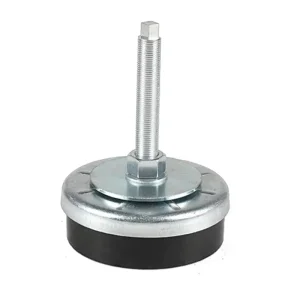
| Standard Industrial Rubber Feet | $1.50 – $8.00 | SBR / Standard Natural Rubber, Zinc Plated Steel | 2 – 5 Years | 2mm – 8mm | Low cost; ideal for lightweight non-critical auxiliary equipment. Higher long-term creep. |
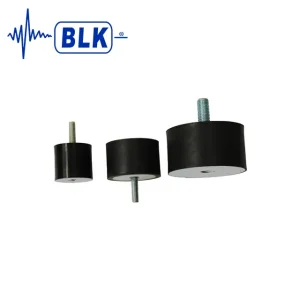
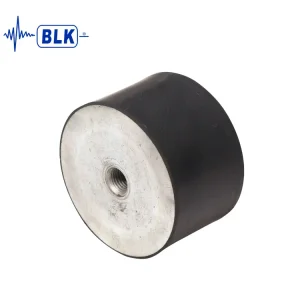
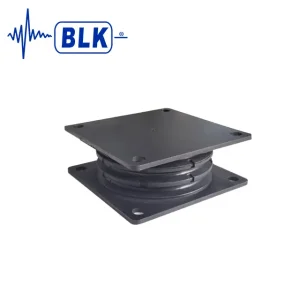
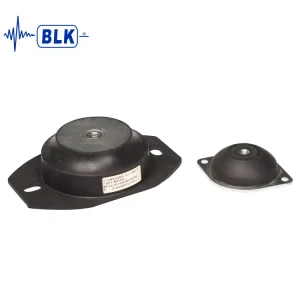
| Heavy Duty Cylindrical / Bobbin Mounts | $6.00 – $25.00 | High-Purity NR / Neoprene, Grade 8.8 Fasteners | 8 – 12 Years | 5mm – 15mm | Balanced pricing for compressors, pumps, and engine generator sets. Excellent shear stability. |
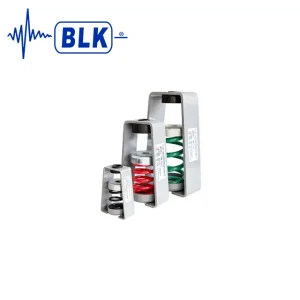
| Enclosed Spring Vibration Isolators | $22.00 – $95.00 | 60Si2Mn Alloy Steel Spring, Dacromet Coating, Ductile Iron Housing | 15+ Years | 25mm – 50mm | High efficiency (>98%) for low speed HVAC chillers, cooling towers, and heavy rotating units. |
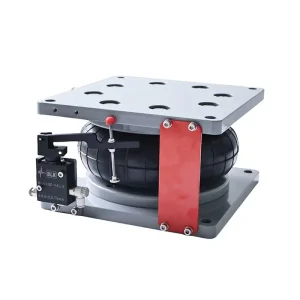
| Precision Pneumatic Air Springs | $120.00 – $450.00 | Multi-Layer Reinforced Elastomeric Diaphragm, Auto-Level Valves | 6 – 10 Years | Leveling Control (±0.01mm) | Premium tier. Natural frequency down to 1.7 Hz. Designed for semiconductor metrology & CMMs. |
3. Field Application Scenarios & Engineering Case Implementations
Real-world integration strategies across cleanrooms, high-voltage power grids, industrial HVAC, and heavy manufacturing foundations.
Semiconductor FABs & Nanometer Metrology
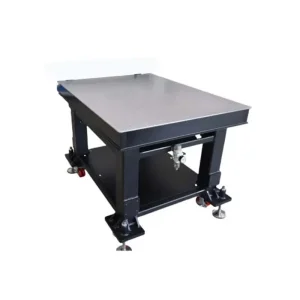
In microelectronics fabrication, floor vibrations as subtle as VC-E criterion (3.12 micrometers/sec) ruin photolithography alignment and scanning electron microscope (SEM) imaging. Bellking's pneumatic air mounts (BK-PF series) utilize ultra-low stiffness chambers paired with active level feedback control valves, reducing ambient floor vibration by up to 99.2% at frequencies above 3 Hz.
High-Voltage Power Transformers & Substations
Electrical transformers emit persistent 100Hz/120Hz magnetostrictive hum that propagates through transformer foundations into surrounding residential or commercial structures. Bellking custom transformer anti-vibration mounts feature oil-resistant Nitrile/Fluoroelastomer compounds combined with internal limit stops to suppress low-frequency structure-borne noise, achieving a 15–22 dB sound level reduction.
Central HVAC Plant & Rooftop Chillers
Large centrifugal chillers, cooling towers, and end-suction water pumps create large dynamic unbalanced forces. Installing open spring mounts with viscous damping pads allows controlled movement during startup transients while maintaining 95%+ dynamic isolation during continuous duty. Inertia concrete bases are integrated to lower equipment center-of-gravity and reduce pipe connection strain.
4. China (Kunshan) Manufacturing Excellence & Supply Chain Resilience
Why sourcing directly from Bellking in Kunshan delivers superior cost efficiency, rapid OEM engineering, and uncompromised structural quality.
Vertical Raw Material Ecosystem
Situated in the Kunshan precision manufacturing hub, Bellking benefits from immediate access to premium steel mills, specialized synthetic rubber polymer refiners, and advanced surface treatment facilities. This localized cluster eliminates intermediate supply delays, reducing manufacturing lead times by up to 50% compared to Western competitors.
Automated Robotic Manufacturing
Our 2,000 m² production facility houses robotic welding stations, automated rubber injection molding presses, and CNC turning centers. Automated processing ensures precise dimensional control (±0.05mm) across every bolt thread, mounting hole, and rubber bonded flange.
25% – 40% Total Cost Advantage
By streamlining high-throughput automated manufacturing, rigorous ISO 9001 internal quality management, and direct factory-gate logistics, Bellking delivers world-class anti-vibration mounts at 25% to 40% lower landed procurement cost without compromising structural safety factors.
5. Technical Roadmap & Future Outlook (2025–2035)
The next generation of vibration control: IoT smart telemetry, active magnetorheological damping, and eco-certified sustainable elastomers.
IoT-Enabled Smart Mounts
Integrating embedded piezoelectric sensors and tri-axial MEMS accelerometers into rubber mounts allows continuous real-time telemetry. Industry 4.0 predictive maintenance platforms track dynamic stiffness degradation, peak acceleration spikes, and structural thermal stress, notifying plant managers long before catastrophic bearing failure occurs in connected rotating machinery.
Active Magnetorheological (MR) Isolation
For applications experiencing unpredictable variable frequency excitation, magnetorheological fluid mounts adjust dynamic damping within milliseconds. By modulating an internal magnetic field, the fluid viscosity changes instantly, shifting the loss factor ($\eta$) dynamically to lock down harmonic movement across broad RPM ranges.
Sustainable Bio-Based Elastomers
Addressing global ESG requirements, Bellking R&D is pioneering bio-based silica reinforcers derived from rice husk ash and plant-based plasticizers to replace petroleum-derived carbon black. These eco-certified compounds maintain full mechanical performance while reducing manufacturing carbon footprint by up to 35%.
6. Global Sourcing Compliance & Regulatory Verification
Ensuring full alignment with international engineering specifications, environmental protection directives, and building codes.
ASTM D2000 & ISO 3302 Rubber Classification
Every Bellking elastomeric compound is formulated and batch-verified according to ASTM D2000 specifications (e.g., M4GE610 B14 EO14 EO34). Dimensional tolerances strictly comply with ISO 3302-1 Class M2 for precision molded rubber goods.
RoHS & REACH SVHC Environmental Compliance
All materials undergo third-party XRF and chemical analysis confirming total compliance with EU RoHS Directive 2011/65/EU and REACH Regulation (EC) No 1907/2006. Products are guaranteed free of polycyclic aromatic hydrocarbons (PAHs), heavy metals, and restricted phthalates.
Seismic & Wind Restraint Certification
For rooftop HVAC and critical infrastructure installations in high-seismic zones, Bellking supplies restrained spring mounts engineered in accordance with ASHRAE standards and international building code (IBC) seismic criteria, withstanding lateral force acceleration vectors up to 2.0g.
7. Frequently Asked Questions (FAQ) for Engineering & Sourcing Teams
In-depth technical answers addressing common dynamic isolation challenges, sizing calculations, material selection, and installation best practices.
How do I correctly calculate the required load capacity for an anti-vibration mount?
What is the fundamental difference between rubber mounts and spring vibration isolators?
Why is dynamic stiffness ratio ($K_d/K_s$) critical when evaluating rubber mount materials?
How does environmental ambient temperature impact elastomer life and damping performance?
What causes rubber-to-metal bond separation, and how does Bellking prevent it?
Can Bellking provide 1:1 custom non-standard anti-vibration mount prototypes?
What testing documentation is provided with wholesale export shipments?
How do spring hangers mitigate structure-borne noise in suspended piping networks?
Precision Leveling & High-Deflection Isolation Mounts
Explore our specialized adjustment feet, precision air mounts, high-deflection spring hangers, and heavy-load structural vibration isolators.