
Featured Anti-Vibration Products & Mount Assemblies
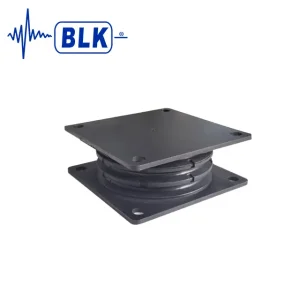
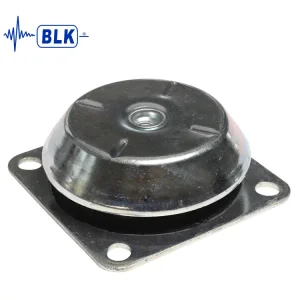
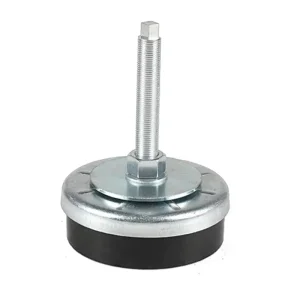
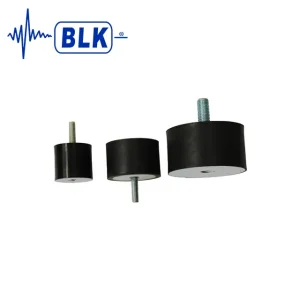
Precision-engineered elastomeric damping sheets, multi-layer rubber pads, spring hangers, and vibration isolators direct from ISO 9001 certified manufacturing facilities.
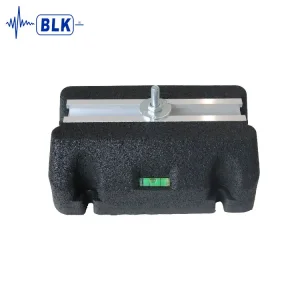
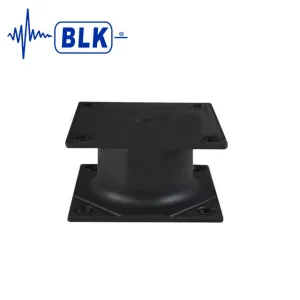
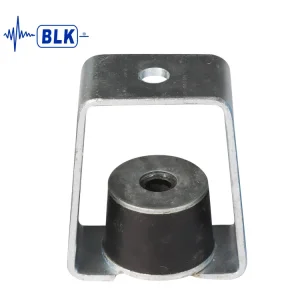
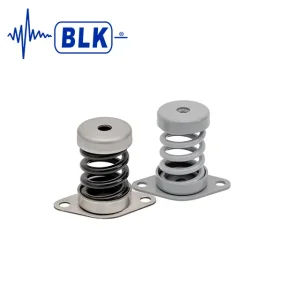
Global Enterprise Procurement Demand & Sector Solutions
Analyzing structural mechanical demands across high-precision and heavy manufacturing sectors requiring custom-molded anti vibration rubber sheet solutions.
Semiconductor & Precision Metrology
Modern semiconductor fabrication plants (Fabs) require stringent micro-vibration isolation down to VC-E and VC-G standards. Custom anti vibration rubber sheet compounds act as secondary high-frequency decoupling layers beneath marble motion platforms, CMM metrology stations, and sub-floor pedestals to absorb micro-seismic disturbances and equipment harmonics.
HVAC Systems & Building Acoustics
Commercial high-rises, data centers, and hospital infrastructure utilize heavy-duty ribbed or waffle-patterned elastomeric rubber pads under chillers, cooling towers, and large end-suction water pumps. By dampening structure-borne noise and mechanical shear, these sheets mitigate acoustic resonance across architectural concrete slabs.
Heavy Stamping & Power Transformers
Power utility substations and industrial forging operations experience violent dynamic shock forces. High-durometer (70-80 Shore A) specialized nitrile and chloroprene rubber sheets prevent physical anchorage fatigue, absorb repetitive impact forces exceeding 3–5 G acceleration, and isolate low-frequency electromagnetic transformer humming.
Polymer Formulations & Elastomeric Damping Science
Understanding how viscoelastic properties, dynamic shear modulus, and matrix geometry dictate anti vibration rubber sheet performance.
The effectiveness of an anti vibration rubber sheet lies within its dynamic complex modulus ($G^* = G' + iG''$), where the storage modulus ($G'$) reflects elastic energy storage, and the loss modulus ($G''$) dictates energy dissipation through internal molecular friction. Choosing the correct polymer blend ensures structural stability without undergoing excessive creep compression under static dead loads.
T_v = \sqrt{ \frac{1 + (2 \zeta \cdot f/f_n)^2}{(1 - (f/f_n)^2)^2 + (2 \zeta \cdot f/f_n)^2} }
Where: f = Disturbing Frequency, f_n = System Natural Frequency, \zeta = Damping Ratio
To achieve high structural isolation, the ratio of forced disturbing frequency to system natural frequency ($f / f_n$) must strictly exceed $\sqrt{2} \approx 1.414$. Premium anti vibration rubber sheet manufacturers design textured surface profiles—such as cross-ribbed, stud-patterned, or multi-layer sandwich laminates with steel interlayers—to convert volumetric compression into lateral shear deflection, dramatically lowering $f_n$.
Comparative Elastomer Formulation Matrix
| Elastomer Base | Shore Hardness | Temperature Range | Oil & Chemical Resistance | Primary Application Zone |
|---|---|---|---|---|
| Natural Rubber (NR) | 40–70 Shore A | -40°C to +80°C | Moderate / Fair | High resilience, low-frequency motor & pump mounts. |
| Neoprene (CR) | 50–80 Shore A | -35°C to +100°C | High Flame & Oil Resistance | HVAC equipment pads, outdoor substations, structural bearings. |
| Nitrile Rubber (NBR) | 50–90 Shore A | -30°C to +120°C | Exceptional Hydrocarbon Resistance | Industrial power plants, hydraulic press machinery isolation. |
| EPDM Terpolymer | 45–80 Shore A | -45°C to +150°C | Outstanding Ozone & UV Resistance | Outdoor air handling units, extreme climate roof installations. |
| Fluoroelastomer (FKM) | 60–90 Shore A | -20°C to +200°C | Extreme Chemical & Solvent Resistance | Semiconductor cleanroom chemical baths & high-temp lines. |
Step-by-Step Anti Vibration Sheet Sizing Framework
Follow this technical roadmap to prevent structural resonance, over-specification, or unexpected compression set failure.
Determine Total Dead & Dynamic Load
Calculate total operating mass ($M$), including liquid weight in chiller tubes or pump casings. Map out support points to calculate exact load distribution ($W_i$) at each bearing location.
Identify Excitation Frequency (f_d)
Read motor nameplate RPM values. Convert RPM to Hertz ($f = \text{RPM} / 60$). For 1,750 RPM equipment, disturbing frequency $f_d = 29.16 \text{ Hz}$.
Select Surface Profile & Thickness
Determine required static deflection ($\delta_{st}$). For higher static deflection without structural instability, specify stacked multi-layer laminated sheets (e.g., BKSWA type dampers) interleaved with steel plates.
Verify Shape Factor & Creep
Calculate the Shape Factor ($S = \text{Loaded Area} / \text{Free Perimeter Area}$). Ensure shape factor alignment prevents excessive lateral bulging while maintaining structural longevity.
Rigorous Testing & International Standards
Factory-direct compliance designed to withstand rigorous site audits and harsh operational environments worldwide.
ISO 9001:2015 & Full Traceability
Every anti vibration rubber sheet batch undergoes strict raw material rheology testing, tensile strength evaluation (ASTM D412), and compression set verification (ASTM D395). Full mill test reports (MTR) are provided with every factory shipment.
Corrosion & Salt Spray Resistance
Bonded metal-to-rubber vibration isolation assemblies receive advanced Dacromet or hot-dip galvanized surface treatment, proven to withstand up to 900 hours of continuous salt spray exposure under ISO 9227 testing conditions.
REACH, RoHS & UL Fire Compliance
All compound formulations comply with European REACH and RoHS regulations, excluding toxic heavy metals and plasticizers. Flame-retardant neoprene and silicone formulations meet UL94-V0 flammability specs for enclosed spaces.
Precision Vibration Isolators & Base Supports
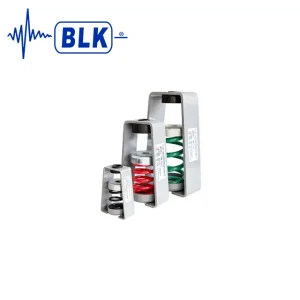
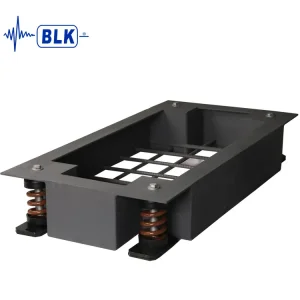
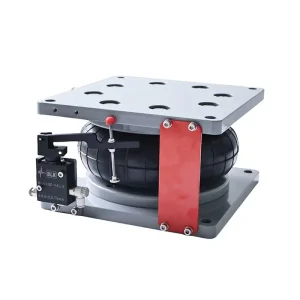
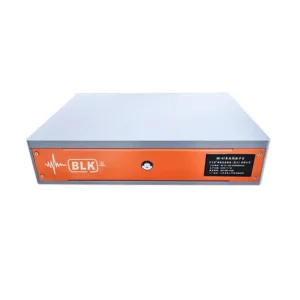
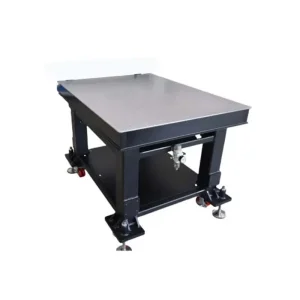
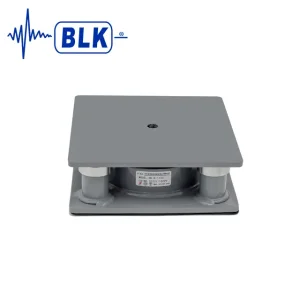
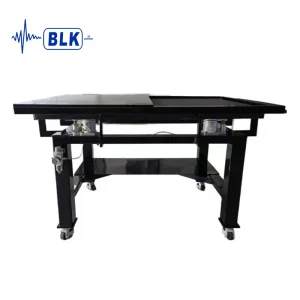
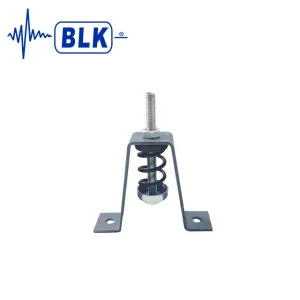
Explore our complete range of spring hangers, optical isolation platforms, inertia base supports, and air mounts manufactured in Kunshan, China.
Frequently Asked Engineering & Procurement Questions
Detailed technical insights from our senior application engineers regarding anti vibration rubber sheets and mounting systems.
How do I choose between standard anti vibration rubber sheets, spring isolators, and pneumatic mounts?
Selection depends directly on your equipment's disturbing frequency ($f_d$) and required vibration isolation efficiency:
- Anti Vibration Rubber Sheets & Pads: Ideal for high-frequency vibration isolation (>20 Hz / >1,200 RPM) such as high-speed rotary pumps, electric motors, and small compressors. They provide dynamic shear damping with minimal installation height.
- Spring Vibration Isolators: Essential for medium-to-low frequency equipment (3 Hz – 10 Hz / 300 RPM – 1,200 RPM) like chillers, large air handling units, and emergency diesel generators where larger static deflections are required.
- Pneumatic Air Mounts: Required for ultra-low frequency micro-vibration mitigation down to 1.7 Hz, servicing optical metrology equipment, semiconductor wafer steppers, and ultra-precise laboratory granite stages.
What is the shape factor (S), and why is it critical for rubber sheet performance?
Because rubber is virtually incompressible in volume (Poisson's ratio $\nu \approx 0.5$), it deforms under compressive loads by bulging laterally along its unconstrained side walls. The Shape Factor ($S$) represents the ratio of one loaded surface area to the total lateral area free to bulge:
Formula: $S = \frac{\text{Length} \times \text{Width}}{2 \times \text{Thickness} \times (\text{Length} + \text{Width})}$
A higher shape factor yields a stiffer effective modulus ($E_c$), reducing deflection. Proper calculation ensures that the anti vibration rubber sheet achieves sufficient spring deflection without exceeding maximum shear stress thresholds.
How do environmental factors like oil, temperature, and UV affect rubber sheet life expectancy?
Standard Natural Rubber (NR) degrades rapidly when exposed to petroleum lubricants, strong sunlight (UV), or ambient temperatures exceeding +80°C. For industrial machinery operating in oily sumps, Nitrile Rubber (NBR) or Neoprene (CR) must be specified. For outdoor roof-top chillers or transformer yards, EPDM or high-grade Chloroprene provides superior ozone and weathering resistance, maintaining effective dampening properties for over 15 years.
Can Bellking manufacture custom non-standard anti vibration rubber sheets and laminated pads?
Yes. Bellking operates a 2,000 m² production center equipped with CNC precision cutting, automatic compression molding presses, and custom metal vulcanization bonding systems. We manufacture customized multi-layer rubber-steel composite sheets, ribbed waffle patterns, and specialized durometer formulations (30 to 90 Shore A) in as little as 3 working days based on your engineering drawings.
What technical documentation is provided for global procurement orders?
All factory direct shipments include comprehensive quality verification documentation, including ISO 9001 quality compliance certificates, Raw Material Test Reports (MTR), ASTM D395 compression set test results, Shore A durometer verification reports, and optional 900-hour salt spray corrosion test reports for attached structural metal hardware.