
Featured Industrial Rubber Dampers & Isolation Mounts
Explore our flagship OEM/ODM elastomer dampening components, engineered for superior energy dissipation, minimal resonance transmission, and extended mechanical service life.

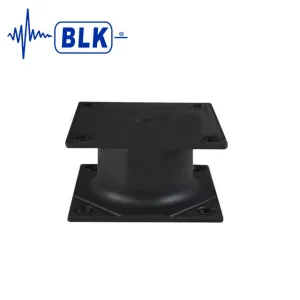
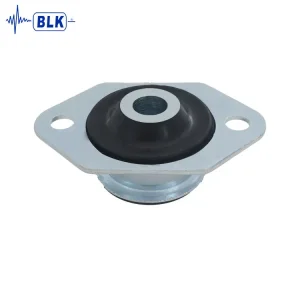




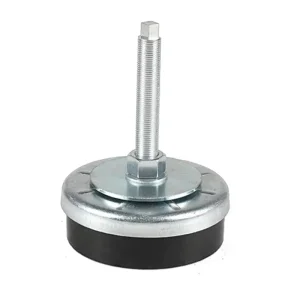
Executive Technical Whitepaper: Industrial Viscoelastic Elastomer Isolation
In modern high-precision manufacturing, heavy-duty HVAC installations, rail transit networks, and energy transformation facilities, uncontrolled mechanical vibration presents a critical threat to structural integrity, operational tolerances, and system acoustic compliance. Commercial-Quality Rubber Dampers serve as the primary defensive interface, transforming kinetic excitation energy into harmless thermal dissipation through internal polymer hysteresis loss.
Selecting the optimal vibration isolation platform requires moving beyond basic static load capacities. Precision engineering demands a comprehensive understanding of viscoelasticity, dynamic stiffness ratios ($K_d/K_s$), loss factors ($\tan \delta$), non-linear shear deformation under multi-axial stress, and environmental degradation factors. This technical whitepaper establishes the operational standard for sourcing commercial rubber dampers from premier manufacturing hubs, bridging high-level polymer physics with real-world enterprise procurement strategy.
Material Science & Polymer Engineering Roadmap
The performance profile of any commercial rubber damper is fundamentally constrained by its underlying chemical formulation, vulcanization density, and nanofiller dispersion dynamics. Advanced commercial damper manufacturing utilizes tailorable polymer matrices customized for specific operational envelopes.
Natural Rubber (NR) Blends
Exhibits exceptional tensile strength (up to 25 MPa), high tear resistance, and superior mechanical resilience. NR matrices yield extremely low natural frequencies, making them ideal for heavy machinery isolation where high dynamic strain flexibility is paramount.
EPDM & Nitrile (NBR) Matrices
Engineered specifically for harsh environmental exposure. EPDM offers unmatched resistance to ozone cracking, UV exposure, and thermal oxidation up to 150°C. NBR provides superior resistance to hydrocarbon fuels, industrial oils, and hydraulic fluids.
Nanocomposite Reinforcement
By integrating functionalized carbon black, nano-silica, or graphene nanoplatelets, engineers manipulate the Payne Effect and Mullins Effect within the elastomer matrix. This enables custom damping coefficients ($\tan \delta = 0.15$ to $0.65$) without sacrificing durability.
Comprehensive Elastomer Matrix Selection Guide
| Elastomer Base | Hardness Range (Shore A) | Loss Factor ($\tan \delta$) | Thermal Window (°C) | Oil & Solvent Resistance | Primary Industrial Use |
|---|---|---|---|---|---|
| Natural Rubber (NR) | 30 – 80 | 0.05 – 0.15 | -40 to +80 | Poor | High-resilience HVAC, Spring-dampers, Engine Mounts |
| Neoprene (CR) | 40 – 90 | 0.10 – 0.25 | -35 to +100 | Moderate | Marine Dampers, Structural Expansion Joints, Pipe Hangers |
| Nitrile (NBR) | 40 – 85 | 0.15 – 0.30 | -30 to +120 | Excellent | Industrial Pumps, Compressors, Hydraulic Equipment |
| EPDM Rubber | 40 – 80 | 0.10 – 0.20 | -50 to +150 | Poor (Good for Acids) | Outdoor Chillers, Transformers, Solar & Wind Facilities |
| Silicone / Fluororubber | 30 – 80 | 0.20 – 0.50 | -60 to +230 | Outstanding | Cleanroom Semiconductor, Aerospace, High-Temp Exhaust |
Macro-Level Industry Solutions & Structural Applications
Commercial-quality rubber dampers serve tailored engineering roles across vastly different operating environments. Below are turnkey implementations solving specific sector challenges.
HVAC & Commercial Mechanical Plant Rooms
Large-scale centrifugal chillers, cooling towers, and primary water pumps generate destructive low-frequency harmonic vibrations (10 Hz – 30 Hz). Integrating high-deflection spring mounts fitted with molded neoprene acoustic pads eliminates structure-borne noise propagation through concrete floor slabs, achieving up to 98% isolation efficiency in commercial real estate.
Semiconductor & Metrology Nanofabrication
Sub-micron lithography and Coordinate Measuring Machines (CMMs) require complete isolation from ambient footfall and building vibration. Custom pneumatic air mounts combined with high-damping rubber buffers deliver low natural frequencies down to 1.7 Hz, creating ultra-stable micro-vibration platforms compliant with VC-E and VC-G acoustic criteria.
Power Generation & Transformer Isolation
Electrical transformers radiate relentless 100 Hz / 120 Hz magnetostrictive hum. High-durability elastomeric transformer mounts engineered for low creep under heavy static deadweight absorb harmonic humming, prevent localized soil resonance, and protect substation structural foundations from long-term dynamic fatigue.
China Industry 4.0: Supply Chain Resilience & Manufacturing Edge
Procuring commercial-quality rubber dampers from advanced Chinese manufacturing hubs provides global OEMs with an unmatched balance of technological sophistication, scalable capacity, and cost optimization.
Automated Vulcanization & Rheology Control
Modern Chinese manufacturing facilities leverage fully automated vacuum compression molding systems paired with real-time Moving Die Rheometers (MDR). This guarantees consistent cross-linking density across every production batch, keeping durometer variations within a tight $\pm 3$ Shore A tolerance.
In-House Tooling & Rapid FEA Prototyping
Integrated CNC machining centers and Finite Element Analysis (FEA) software allow engineers to simulate strain distribution, stress concentration, and non-linear rubber deformation prior to physical production. Custom mold tooling lead times are reduced from months to under 10 business days.
Dacromet & Eco-Compliant Surface Coatings
Metal insert bonding processes utilize advanced shot-blasting, chemlok adhesive application, and environmental-grade Dacromet zinc-aluminum coatings capable of exceeding 900 hours of continuous salt spray testing without red rust formation.
Global Enterprise Procurement Framework & Quality Audit Standard
Engineering procurement teams must evaluate OEM factory partners against strict mechanical verification and compliance frameworks to mitigate risk in mission-critical deployments.
| Audit Dimension | Evaluation Parameter | Acceptance Benchmark | Verification Method |
|---|---|---|---|
| Mechanical Testing | Static & Dynamic Stiffness Ratio ($K_d / K_s$) | Ratio $\le 1.4$ for high-isolation mounts | Dynamic Servo-Hydraulic Test Rig (ISO 10846) |
| Durability & Fatigue | Cyclic Fatigue Life | > 2,000,000 cycles at 100% rated load | Resonant Mechanical Fatigue Tester |
| Environmental Safety | Chemical Compliance | RoHS 3.0 & REACH SVHC certified | Third-party GC-MS Laboratory Analysis |
| Adhesion Quality | Elastomer-to-Metal Bond Strength | Rubber tearing prior to bond failure (> 10 MPa) | 90-degree Peel Test (ASTM D429 Method B) |
| Quality System | Process Capability Index ($C_{pk}$) | $C_{pk} \ge 1.33$ for critical dimensions | Statistical Process Control (SPC) Audit |
Localized Engineering Support & Compliance Assurance
Global enterprise partnership relies on seamless technical communication, international regulatory alignment, and proactive post-installation field support.
24/7 Technical Application Support
Our dedicated acoustic and structural engineering desk offers rapid 24-hour turnaround on initial sizing queries, CAD model generation, and full site-specific vibration spectra analysis.
International Regulatory Matrix
Products are manufactured in ISO 9001:2015 and ISO 14001 certified facilities, strictly matching global building code mandates including ASHRAE isolation guidelines, DIN 4150 structural vibration thresholds, and CE directives.
On-Site Field Testing & Diagnostics
Equipped with multi-channel FFT spectrum analyzers and tri-axial accelerometers, local field technical representatives assist in pre-installation ambient vibration audits and post-commissioning validation.
Deep Technical FAQ & Application Engineering
Detailed answers to the most rigorous technical queries submitted by structural designers, HVAC consultants, and OEM procurement managers.
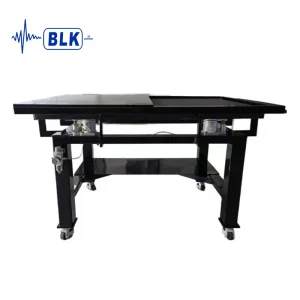
Complete Industrial Vibration Isolation Product Line
Browse our additional catalog of specialized anti-vibration spring mounts, precision platforms, dynamic adjustment feet, and high-damping buffers.







Partner with a Premier Commercial Rubber Damper Manufacturer
Whether you require standard stock vibration isolation mounts or fully customized high-damping elastomeric components engineered to exact structural specifications, our team delivers certified performance, global compliance, and rapid turnaround.
Request Engineering Sizing & Quote