
Precision Vibration Isolation Platforms & Rubber Mounts
Explore our top-tier engineered anti-vibration components designed for HVAC systems, optical benches, heavy machinery, and industrial plants.

High-Quality BK-RT Type Damped Vibration Isolation Platform
Inquire Factory Price
Custom BKDR Type Rubber Mounts Factories, Price
Inquire Factory Price
Custom BK-VT Type Vibration Isolation Platform
Inquire Factory Price
Low Price BKP Type Rubber Mounts Manufacturers
Inquire Factory Price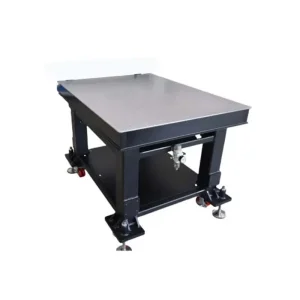
BK-DT Low-Frequency High-Damping Optical Platform
Inquire Factory Price
Low Price BK-PM Type Polymer Damping Pad Factories
Inquire Factory Price
Low Price HR Type Rubber Hangers Factory
Inquire Factory Price
Low Price BKVV Type Rubber Mounts Factories
Inquire Factory PriceIndustrial Equipment Vibration Control: Global Commercial Overview
Modern industrial plants, commercial real estate, and microelectronics facilities operate under intense structural dynamic stress. Controlling harmonic displacement is no longer an afterthought—it is a core engineering requirement.
In high-performance industrial environments, mechanical shock and low-frequency vibration represent silent threats to operational efficiency, structural integrity, and equipment longevity. Unchecked mechanical oscillations generated by high-tonnage HVAC chillers, rotating compressors, power distribution transformers, and semiconductor manufacturing units propagate through building foundations as structure-borne noise and kinetic stress. Over time, this dynamic force induces material fatigue, premature bearing wear, alignment failure, and costly operational shutdowns.
The global market for industrial equipment vibration isolators has experienced a paradigm shift. Buyers are moving away from commodity rubber pads toward scientifically validated, custom-engineered vibration control systems. Modern procurement teams prioritize suppliers that offer full technical transparency, proven transmissibility curves, certified material compositions, and direct factory-to-site supply chain resilience.
HVAC & Acoustic Retrofits
Eliminating structure-borne hum in commercial towers and hospital cleanrooms. High-deflection spring isolators absorb 95–99% of low-frequency vibrations generated by roof-mounted chillers and air handlers.
Precision Microelectronics
Nanometer-scale stabilization for sub-micron lithography and optical metrology. Low-frequency pneumatic air mounts reduce natural frequency to 1.7 Hz, insulating tools from ambient floor motion.
Power & Transformers
Heavy-duty elastomeric and damped spring mounts built to handle 100 Hz/120 Hz magnetostrictive hum in electrical substations, extending transformer tank life and meeting strict decibel limits.
Engineering Physics: Dynamic Transmissibility & Natural Frequency
Selecting an isolator based solely on weight static capacity leads to resonance failure. Effective vibration control requires precise calculations of natural frequency, damping ratio, and excitation frequency.
The core mathematical goal of equipment isolation is to maximize the frequency ratio ($f_d / f_n$) between the disturbing operating frequency ($f_d$) of the machine and the natural frequency ($f_n$) of the isolator support system. Transmissibility ($\tau$), which measures the fraction of vibratory force transmitted into the supporting structure, is governed by the single-degree-of-freedom (SDOF) equation:
$\tau = \sqrt{ \frac{1 + (2 \zeta r)^2}{(1 - r^2)^2 + (2 \zeta r)^2} }$
Where r = f_d / f_n is the frequency ratio, and ζ is the viscous damping ratio of the isolator material.
When the disturbing frequency equals the natural frequency ($r = 1$), the system enters resonance, magnifying vibration forces exponentially. Isolation occurs only when $r > \sqrt{2} \approx 1.414$. For industrial HVAC applications, targeting a frequency ratio of $r \ge 3.0$ yields an isolation efficiency ($\eta = 1 - \tau$) exceeding 88–95%.
Isolation Efficiency vs. Frequency Ratio Matrix
| Frequency Ratio ($r = f_d / f_n$) | Transmissibility ($\tau$) | Isolation Efficiency ($\eta$) | Performance Zone | Recommended Isolator Type |
|---|---|---|---|---|
| r < 1.0 | > 1.0 (Amplified) | 0% (Force Amplification) | Danger Zone (Resonance) | Unacceptable Sizing |
| r = 1.414 ($\sqrt{2}$) | 1.0 (100% Passed) | 0% Net Isolation | Break-even Threshold | Transition Boundary |
| r = 2.0 | 0.33 (33% Transmitted) | 67.0% Isolation | Moderate Damping | Rubber Mounts (High RPM) |
| r = 3.0 | 0.125 (12.5% Transmitted) | 87.5% Isolation | Standard Industrial Target | Open / Enclosed Spring Mounts |
| r ≥ 5.0 | < 0.04 (< 4% Transmitted) | 96.0% - 99.0% Isolation | Precision & Critical Zones | Pneumatic Air Mounts / Damped Platforms |
China Factory Cluster Advantages & B2B Sourcing Economics
Why sourcing vibration control equipment directly from tier-1 specialized factories in Kunshan, China delivers unparalleled price-to-performance efficiency for global OEMs and EPC contractors.
Procuring industrial isolators internationally requires evaluating more than unit costs. It demands supply chain stability, high-grade raw material traceability, advanced surface treatment capabilities, and scalable production capacity. The Yangtze River Delta manufacturing hub—centered around Kunshan, Jiangsu—houses the world's most dense cluster of precision mechanical and elastomeric engineering facilities.
Through vertical integration, direct China factory sourcing provides three decisive strategic advantages:
1. Raw Material Economy of Scale
Direct sourcing of high-tensile 60Si2Mn spring steel and premium synthetic NBR/EPDM elastomeric compounds reduces material acquisition costs by 35–45% compared to Western regional fabricators, passing savings directly to global buyers.
2. Robotic Fabrication & Testing
Automated continuous welding centers, CNC spring coiling, and dynamic load spectrum testing ensure zero-defect quality. Units undergo 900-hour salt spray Dacromet surface treatments for extreme durability.
3. Agile OEM Customization
Fast turnaround times for non-standard mounting plates, severe seismic restraint snubbers, and low-profile height adjusters—delivering tailored engineering blueprints within 24 hours.
Engineered to Performance Extremes
Track record of technical quality across global HVAC, nuclear energy, semiconductor fab, and industrial infrastructure projects.
Technology Roadmap: Next-Gen Vibration Control
The evolution from purely passive mechanical damping to intelligent, sensor-driven hybrid vibration isolation systems.
As advanced manufacturing processes push spatial resolution requirements into sub-nanometer regimes (such as EUV semiconductor lithography and high-power laser optics), traditional passive isolation reaches physical constraints. The industry roadmap demands adaptive technology integration:
Active Electro-Pneumatic Levitation
Integrating fast-response piezoelectric actuators and proportional solenoid valves with closed-loop digital controllers. Active feedback counteracts sudden mass displacement in motion stages in real time (response speed < 10 ms).
Smart MEMS Diagnostic Sensors
Embedding IoT tri-axial MEMS accelerometers directly inside isolator housing bodies. Enables continuous predictive maintenance monitoring, alerting facility engineers to structural fatigue before breakdown occurs.
Magnetorheological (MR) Dampers
Utilizing smart fluids whose viscosity changes instantaneously under applied magnetic fields. Provides continuously variable damping ratios ($\zeta$ from 0.05 to 0.45) to suppress startup transient resonance seamlessly.
Field Applications & Global Building Standard Compliance
Meeting seismic restraint criteria, ASHRAE sound isolation guidelines, and international building safety codes worldwide.
Industrial isolators must comply with rigorous international construction codes and environmental standards. Deployment across different geographic zones demands precise engineering compliance:
- ASHRAE HVAC Guidelines: Meeting strict insertion loss and deflection parameters for chillers, cooling towers, and inline fans mounted adjacent to noise-sensitive office spaces.
- IBC Seismic Restraint Standards: Incorporating heavy-duty steel seismic snubbers capable of resisting lateral and vertical wind shear/earthquake shock forces (up to 3.0g acceleration).
- ISO 9001 & CE Certified Manufacturing: Every production batch undergoes standardized static load deflection checks, durometer testing for rubber elements, and spring rate calibration.
Frequently Asked Questions (Technical B2B Procurement)
Detailed answers to crucial engineering, pricing, and installation questions asked by mechanical engineers and procurement officers.
How do I calculate the exact natural frequency required for my equipment?
What factor determines whether to select spring isolators vs. elastomeric rubber mounts?
How are wholesale prices structured for OEM factory isolator orders?
Why is viscous damping critical in spring isolation mounts?
What custom parameters are needed to request a 1:1 OEM engineering quote?
Spring Mounts, Damped Platforms & Air Isolators
Industrial-grade anti-vibration dampers, spring hangers, and low-frequency pneumatic air mounts engineered to international standards.

Custom BKSWA Type Multi-Layer Antivibration Dampers
Inquire Factory Price
Custom BKVD Type Rubber Mounts Factories
Inquire Factory Price
Low Price BK-DS Type Damped Spring Mounts Factory
Inquire Factory Price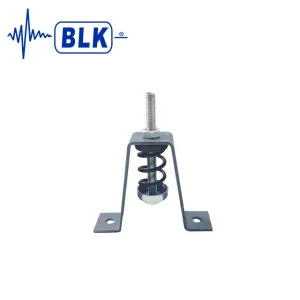
High-Quality HV Type Spring Hangers Manufacturers
Inquire Factory Price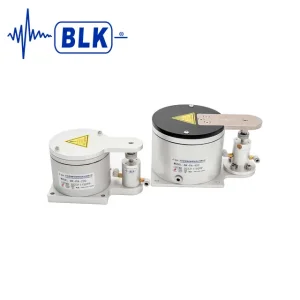
High-Quality BK-PA Type Precision Air Mounts
Inquire Factory Price
High-Quality MC Type Anti-vibration Spring Mounts
Inquire Factory Price
High-Quality MD Type Anti-vibration Spring Mounts
Inquire Factory Price