High-Performance Fan Damping Solutions (Part 1)
Engineered for high CFM industrial blowers, rooftop AHUs, and heavy centrifugal exhaust fans.

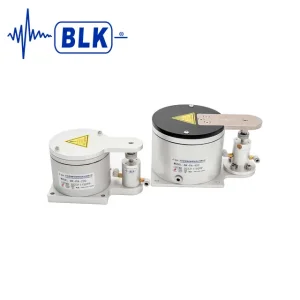
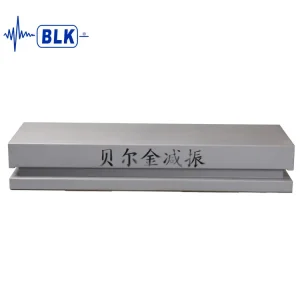
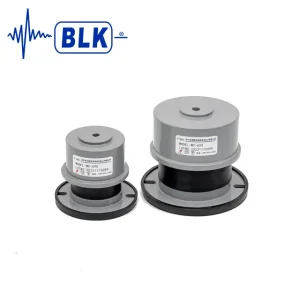
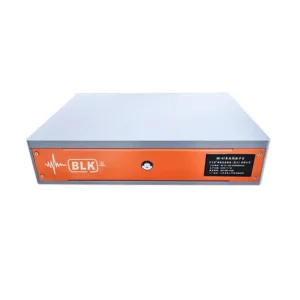
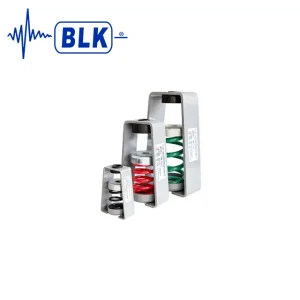
Global Industrial Fan Vibration Dynamics & Structural Mitigation Analysis
In modern industrial manufacturing, high-capacity air-handling systems, centrifugal blowers, induced draft (ID) fans, and axial ventilation arrays constitute the mechanical backbone of HVAC systems, cleanroom environments, power plants, and heavy industrial processing facilities. However, rotational unbalance, aerodynamic turbulence, blade-pass frequency (BPF) excitation, and acoustic resonance generated by industrial fans present severe engineering challenges. Uncontrolled kinetic energy transferred into building foundations or structural steel skids leads to premature bearing failure, dynamic metal fatigue, structural cracking, elevated noise pollution, and costly operational downtime.
Industrial fan vibration dampers—also engineered as anti-vibration spring mounts, elastomer dampening pads, and pneumatic isolators—serve as critical dynamic decouplers. By inserting engineered flexibility and viscous energy dissipation between the rotating machinery and the support substrate, dampers shift the system’s fundamental natural frequency ($f_n$) far below the operating disturbing frequency ($f_d$), achieving attenuation efficiencies exceeding 95% to 99%.
The Core Physics of Vibration Isolation
Effective vibration isolation requires that the frequency ratio ($f_d / f_n$) exceeds $\sqrt{2}$ (1.414). To achieve high-efficiency attenuation (>90%), elite engineering practice demands an operating ratio of $f_d / f_n \ge 3.0$. Operating near a ratio of 1.0 creates catastrophic resonance, multiplying dynamic forces by orders of magnitude.
Rotational Unbalance Mitigation
Counters centrifugal dynamic forces caused by mass eccentricity on fan impellers, protecting motor shafts and precision bearings from cyclic loading.
Structure-Borne Noise Attenuation
Prevents low-frequency humming and acoustic structure-borne vibration from propagating through ductwork, floor slabs, and adjacent administrative areas.
Seismic & Wind Load Restraints
Integrated limit stops and housing enclosures withstand severe lateral wind shear on outdoor rooftop fans and transient seismic forces without mechanical binding.
Vibration Damper Classification & Sizing Parameters
Selecting the precise vibration mount depends on equipment operating RPM, static load, center of gravity location, and environmental exposure.
| Damper Category | Natural Frequency Range ($f_n$) | Static Deflection ($\delta$) | Isolation Efficiency Range | Primary Industrial Fan Applications |
|---|---|---|---|---|
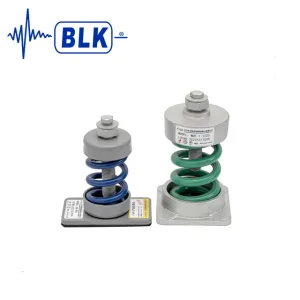
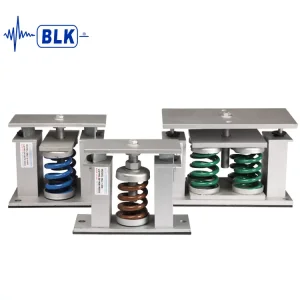
| Open & Enclosed Spring Isolators (e.g., MA, MD, MC) | 2.5 Hz – 5.0 Hz | 25 mm – 50 mm (1" – 2") | 92% – 99% | Low-speed centrifugal blowers (<1200 RPM), large cooling tower fans, HVAC AHUs, rooftop exhaust. |
| Viscous Damped Spring Mounts | 3.0 Hz – 4.5 Hz | 25 mm – 75 mm | 95% – 99% | Variable frequency drive (VFD) fans passing through resonance zones during warm-up/cool-down cycles. |
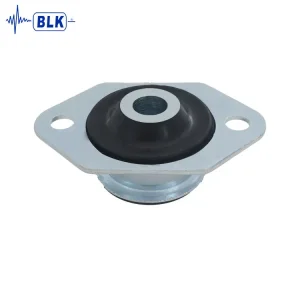
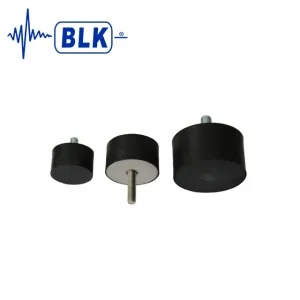
| Neoprene / Elastomer Rubber Mounts (e.g., BKDD, BKM, BKHQ) | 6.0 Hz – 12.0 Hz | 3 mm – 10 mm | 80% – 92% | High-speed small fans (>1800 RPM), compact inline blowers, cabinet ventilation units. |
| Pneumatic Air Mounts (e.g., BK-PA Series) | 1.2 Hz – 2.5 Hz | Self-Leveling Air Chamber | 98% – 99.8% | Ultra-cleanroom Semiconductor Fan Filter Units (FFU), optical lab exhaust, high-precision environments. |
| Heavy-Duty Concrete Inertia Base Assemblies | Engineered System | Custom Calibrated | 96% – 99.5% | High-power industrial ID/FD fans (>200 kW), unstable high-center-of-gravity centrifugal blowers. |
System Sizing Calculation Workflow
To accurately calculate required damper static deflection, professional mechanical engineers utilize the relation between static deflection ($\delta$ in mm) and natural frequency ($f_n$ in Hz):
Transmissibility ($T$), defined as the ratio of force transmitted to the foundation versus force generated by the fan, is governed by:
When operating a fan running at 1,200 RPM ($f_d = 20 \text{ Hz}$), employing a Bellking spring mount with a $25 \text{ mm}$ static deflection ($f_n \approx 3.16 \text{ Hz}$) yields a frequency ratio of $20 / 3.16 = 6.33$. Plugging this into the transmissibility equation yields $T = 1 / |1 - (6.33)^2| = 0.0256$, translating to a 97.44% Vibration Isolation Efficiency.
China Factory Efficiency & Bellking Advanced Production Infrastructure
Combining complete vertical supply chain integration with ISO 9001 certified precision manufacturing in Kunshan, China.
Full In-House Manufacturing Lifecycle
From alloy spring coiling, shot peening, and stress-relieving heat treatment to robotic laser welding and elastomer vulcanization, Bellking maintains 100% quality control across all production stages.
900-Hour Salt Spray Dacromet Coating
Industrial fans installed on coastal offshore platforms or rooftop cooling towers require extreme corrosion protection. Our heavy-duty steel housings pass rigorous 900-hour salt spray testing.
3-Day Rapid Custom Engineering
Non-standard fan mounting hole patterns, specialized dynamic load ranges, or severe seismic wind-restraint constraints are calculated, modeled in 3D CAD, and prototype-manufactured within 72 hours.
Global Industrial Fan Damping Deployments & Case Analysis
1. Commercial High-Rise & Hyperscale Data Center HVAC Systems
Rooftop Air Handling Units (AHUs) and massive condenser fans operate continuously above critical workspace or server hall floors. Unmitigated low-frequency rumble causes structural acoustic discomfort and violates commercial noise ordinances. Bellking’s MA and MD Type Spring Isolators installed underneath fan frames prevent structural dynamic coupling, isolating noise down to NC-30 acoustic curve compliance.
2. Heavy Industrial Processing: Steel Mills, Cement Plants & Mining Ventilation
Large Induced Draft (ID) and Forced Draft (FD) fans utilize heavy impellers that suffer from rapid abrasive material buildup, leading to progressive dynamic imbalance. Dynamic forces can reach several tons during operation. Bellking’s Viscous Damped Spring Mounts and Concrete Inertia Base Assemblies provide high dynamic stability, absorbing dynamic shocks up to 5G acceleration while maintaining precise fan alignment.
3. Semiconductor Cleanrooms & Micro-Electronics Fabrication
Semiconductor photolithography and metrology tools demand sub-micron structural stability. Fan Filter Units (FFUs) mounted on cleanroom ceilings generate continuous ambient vibration. Utilizing BK-PA Series Pneumatic Air Mounts featuring natural frequencies as low as 1.7 Hz guarantees zero micro-vibration transmission through floor slabs, protecting wafer yield integrity.
Emerging Trends in Industrial Vibration Control & Predictive Monitoring
How IoT integration, eco-friendly damping polymers, and advanced acoustic metamaterials are redefining industrial fan vibration control.
IoT Smart Sensor Integration
Next-generation spring isolators incorporate embedded piezoelectric sensors and wireless transmitters, streaming real-time deflection, dynamic load, and FFT vibration spectra directly to factory SCADA networks for predictive maintenance.
High-Temperature & Chemical Elastomers
Development of eco-friendly, non-degasing polymer formulations resistant to ozone, UV, hydraulic fluids, and elevated flue gas temperatures up to 220°C in chemical processing fan exhaust channels.
Compact Low-Frequency Geometry
Advanced non-linear spring geometries and negative-stiffness magnetic hybrid dampening systems achieving <1.5 Hz isolation in ultra-compact vertical footprints.
Global Enterprise Purchasing Checklist for Fan Vibration Dampers
When sourcing industrial fan vibration dampers from overseas manufacturers, engineering procurement leads should evaluate supplier capabilities against five non-negotiable technical criteria:
- Spring Solid Load & Overload Reserve: Ensure springs possess a minimum 50% overload capacity beyond rated load without reaching solid height ($H_{solid}$). Spring outer diameter ($D$) should be at least 80% of operating height ($H_{op}$) to prevent lateral buckle instability.
- Surface Protection Standard: Verify hot-dip galvanizing, electro-powder coating, or Dacromet plating specifications against ISO 12944 atmospheric corrosivity categories (C3 to C5 Industrial/Marine).
- Dynamic Stiffness & Damping Ratio: Confirm the damper's loss factor ($\eta$) or damping ratio ($\zeta$). For variable-speed blowers, internal viscous fluid dampening or elastomer inserts are mandatory to restrict amplification at resonant startup.
- Seismic & Wind Restraint Certification: Require structural calculation sheets proving compliance with ASCE 7, IBC (International Building Code), or local seismic code requirements for unrestrained dynamic uplift.
- ISO 9001 Factory Quality Documentation: Demand batch mill test reports for spring steel, durometer test certificates for elastomer rubber components, and 100% factory height-versus-load deflection test curves.
Industrial Fan Vibration Control FAQ
Detailed technical answers provided by Bellking's Senior Application Engineers.
How do I choose between spring isolators and rubber mounts for an industrial fan?
Why is an inertia base necessary for certain heavy industrial fan installations?
What is the risk of selecting a vibration damper with excessive load rating?
How do Bellking dampers handle wind loads on outdoor rooftop fan mounts?
What is the typical operating lifespan of Bellking industrial fan dampers?
Can Bellking provide customized mounting brackets for non-standard fan frames?
High-Performance Fan Damping Solutions (Part 2)
Explore specialized platforms, polymer pads, cone mounts, and rubber isolator variants.