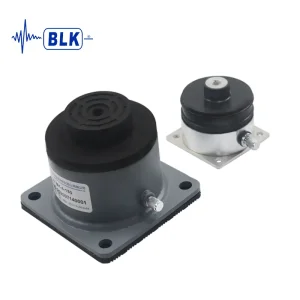
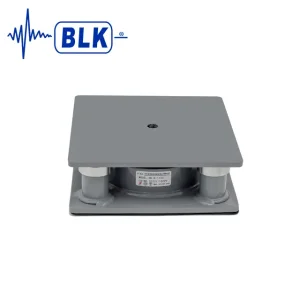
High-Performance Anti-Vibration Systems (Series 01)
Explore our certified range of industrial rubber mounts, spring hangers, and matrix vibration isolators designed for heavy equipment, pumps, HVAC, and power generation units.





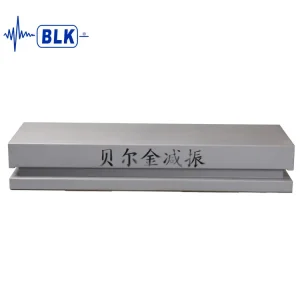


Macro Economic Impact of Uncontrolled Vibration in Modern Industry
Analyzing dynamic stress transmission, structural fatigue, and noise attenuation standards across global manufacturing, building services, and precision tech sectors.
Structural Fatigue & Machinery Depreciation
Uncontrolled kinetic energy produced by rotating machinery leads to elevated harmonic oscillation. Over time, high dynamic load amplitude accelerates metal fatigue, loosens mechanical fasteners, damages bearings, and reduces equipment operating lifespans by up to 45%.
Acoustic Regulation & Structural Isolation
Modern industrial and commercial developments must meet strict acoustic compliance standards (such as ASHRAE guidelines and ISO 3744). Structure-borne noise travels far through building frames; effective spring and rubber isolators prevent low-frequency hums from entering surrounding spaces.
Precision Metrology & Sub-Hz Isolation
For semiconductor fabrication, optical laser testing, and automated CMM inspection tools, environmental floor vibrations destroy measurement repeatability. Advanced pneumatic air mounts isolate micro-seismic disturbances down to 1.7 Hz, ensuring sub-micron precision.
Vibration Isolation Theory, Sizing Calculations & Selection Principles
A deep dive into transmissibility ratios, natural frequency tuning, and dampening coefficients for mechanical procurement managers and design engineers.
1. The Core Physics of Vibration Transmissibility ($T$)
Vibration isolation relies on creating a dynamic system where the natural frequency of the isolator ($f_n$) is significantly lower than the disturbing frequency ($f_d$) produced by the operating machine. Transmissibility ($T$) describes the ratio of the force transmitted to the foundation versus the force generated by the machine:
Transmissibility Equation & Isolation Threshold
$T = \left| \frac{1}{1 - (f_d / f_n)^2} \right|$ (assuming negligible damping)
To achieve active force reduction, the frequency ratio ($f_d / f_n$) must exceed $\sqrt{2} \approx 1.414$. At $f_d / f_n < 1.414$, amplification occurs instead of isolation! For optimal industrial performance, engineers target a ratio of $f_d / f_n \ge 3.0$, yielding over 88% force attenuation.
2. Engineering Matrix: Comparing Isolation Technologies
Different industrial machines require specific dampening matrices depending on operating RPM, environmental conditions, and structural stiffness requirements:
| Isolator Technology | Natural Frequency ($f_n$) | Deflection Capability | Damping Ratio ($\zeta$) | Primary Application Fields |
|---|---|---|---|---|
| Steel Spring Mounts (MC/ME/MD Type) | 2.5 Hz – 5.0 Hz | High (25 mm – 75 mm) | Low (0.01 – 0.05) | Heavy chillers, cooling towers, HVAC fans, diesel generators |
| Pneumatic Air Mounts (BK-A / BK-R) | 1.2 Hz – 2.5 Hz | Controlled Air Deflection | Adjustable (0.05 – 0.20) | Semiconductor tools, optical platforms, precision CMMs |
| Elastomeric Rubber Mounts (BKDE/BKVD) | 6.0 Hz – 12.0 Hz | Low to Medium (3 mm – 12 mm) | High (0.05 – 0.15) | Motors, air compressors, industrial pumps, gearboxes |
| Multi-Layer Dampers (BKSWA Type) | 4.0 Hz – 8.0 Hz | Composite Deflection | Very High (0.15 – 0.30) | Stamping presses, impact equipment, transformer bases |
End-to-End Application Scenarios Across Key Global Markets
From North American commercial HVAC upgrades to Asian high-tech semiconductor fabs and European heavy manufacturing hubs.
Commercial HVAC & Building Systems
Large-scale HVAC equipment mounted on roof decks or interior plant rooms can transmit severe low-frequency hums through concrete structures. By installing restrained spring mounts (such as the MC/ME Type Spring Mounts) combined with HR Type Rubber Hangers for suspended piping, building owners eliminate structural noise transfer while protecting mechanical chillers and pumps from thermal expansion stresses and pipe strain.
Data Centers & Transformer Substations
Electrical power transformers generate continuous 100 Hz / 120 Hz magnetostrictive hums that penetrate surrounding building walls. Applying targeted BK-MT Matrix Anti-Vibration Mounts or customized multi-layer rubber buffers under transformer bases suppresses airborne and structure-borne hums, meeting localized urban noise standards and satisfying strict environmental regulations.
Heavy Stamping & Forging Lines
Punch presses, forging hammers, and heavy shears impart intense dynamic shock impacts (3G to 5G dynamic forces) directly into factory floors. Unmitigated shock damages adjacent precision machinery and leads to floor cracking. High-capacity rubber buffers and matrix spring dampers cushion transient kinetic energy, extending foundation life.
Cleanroom Optical Platforms
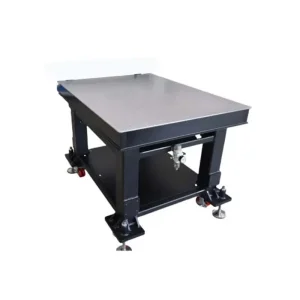
Micro-vibration isolators like the BK-DT Type Low-Frequency Platform utilize air spring suspension and internal leveling valves to create a floating mass system, effectively insulating laser interferometers and semiconductor wafer inspection systems from ambient floor motion.
Understanding Industrial Vibration Isolator Pricing & Cost Drivers
A transparent breakdown of raw material grades, surface treatments, manufacturing tolerances, and factory-direct procurement savings.
When evaluating vibration isolator pricing from factory manufacturers, procurement teams must look beyond unit cost and evaluate lifetime value, environmental durability, and safety factors. Key pricing drivers include:
- Elastomeric Rubber Formulation: High-grade Natural Rubber (NR), Neoprene (CR), or Nitrile (NBR) formulated for oil, ozone, and thermal resistance carry higher material costs than recycled rubber compounds, but deliver predictable deflection and prevent premature cracking.
- Spring Steel Quality & Heat Treatment: Industrial spring isolators utilize high-tensile alloy steels (such as 60Si2Mn or 50CrVa). Shot-peening, stress-relieving, and precise coil pitch control ensure the spring will not sag or lose free height over 15+ years of continuous rated load.
- Corrosion Protection Finish: Standard powder coatings suit basic indoor installations. Corrosion-resistant treatments like Dacromet coating withstand 900+ hours of salt spray testing for harsh outdoor HVAC, offshore, and coastal chemical environments.
- Leveling & Restraint Features: Open spring mounts are economical, while housed or seismic-restrained spring isolators with integrated height adjustment bolts require additional casting, machining, and structural testing.
Direct Factory Advantage
By sourcing directly from an ISO-certified manufacturer, industrial buyers eliminate 20% to 40% distributor markups, gain access to custom engineering modifications (1:1 parameter matching), and receive full raw material and load-deflection test certification for site compliance.
Technical Roadmap & Future Outlook in Vibration Control
Emerging trends in active piezoceramic attenuation, smart sensor integration, and sustainable polymer chemistry.
IoT-Enabled Smart Mounts
Integration of wireless tri-axial accelerometers and micro-sensors inside heavy-duty spring housings. Real-time dynamic spectrum monitoring alerts plant engineers to bearing wear or fan imbalance before mechanical breakdown occurs.
Hybrid Active-Passive Systems
Combining reliable passive air springs with high-speed piezoelectric actuators. Active electromagnetic counter-forces neutralize transient vibrations within milliseconds, providing ultra-stable environments for nanometer-scale photolithography tools.
Eco-Compliant Polymer Compounds
Development of halogen-free, REACH & RoHS-compliant synthetic rubber matrixes designed for severe operating temperatures (-40°C to +120°C) with minimal compression set and zero toxic off-gassing in cleanroom environments.
Frequently Asked Questions Regarding Vibration Isolator Sizing & Sourcing
Direct technical answers from our vibration isolation application team to help you specify the correct mounts.
How do I choose between spring, rubber, and pneumatic vibration isolators?
What parameters are required to calculate and size custom vibration isolators?
What is the typical service life of industrial vibration isolators under continuous load?
How does surface coating affect isolator price and performance outdoors?
Can Bellking manufacture custom non-standard mounts to match existing equipment bolt holes?
Precision Air Mounts, Optical Platforms & Specialty Dampers (Series 02)
Explore specialized pneumatic air mounts, adjustable rubber feet, optical vibration isolation platforms, and multi-layer dampers for specialized technical applications.