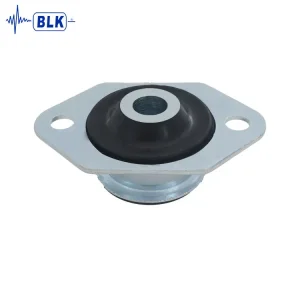
High-Quality BKDJ Type Rubber Pad Manufacturers, Manufacturer
View Product Details
Explore precision-engineered damping units configured for brutal cyclic stresses, severe dynamic loading, and continuous mineral processing runs.

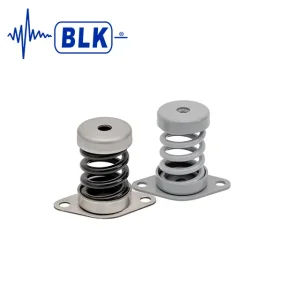
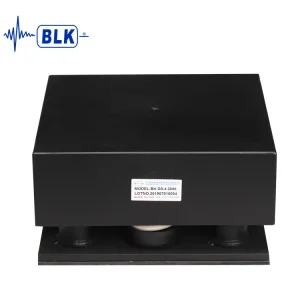


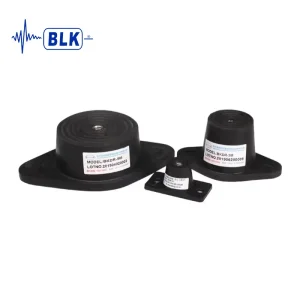

Analyzing the dynamic interaction between super-scale mineral extraction machinery, structural fatigue vectors, and next-generation harmonic damping systems.
In modern mineral processing, comminution circuits, screening assemblies, and mechanical excavators operate at extreme vibrational and dynamic load capacities. Historically, heavy industrial mining relied on uncalibrated mechanical springs or standard vulcanized rubber bushings. However, empirical dynamic testing reveals that un-damped steel coils frequently enter violent resonance regimes during machine run-up and run-down phases, magnifying transmissibility forces up to 400% directly into support infrastructure.
Uncontrolled kinetic energy generated by heavy eccentrics and cyclical impact pulverization induces rapid concrete cracking and bolt shear. Advanced composite spring isolators integrate viscous damping chambers to absorb catastrophic harmonic surges within milliseconds.
Standard nitrile degrades rapidly when exposed to acidic leachates, oil sprays, and abrasive slurry dust. Contemporary mining isolators incorporate hydrogenated nitrile and specialized polyurethane matrices formulated to resist long-term permanent set and chemical embrittlement.
Mining operations subject isolators to multi-directional shearing forces alongside vertical downward weight. Modern engineered mounts decouple 6-DOF (six degrees of freedom) movements to prevent excessive lateral drift during peak start-stop torque transformations.
Key technical benchmarks EPC contractors and mining conglomerates evaluate when auditing specialized vibration isolation manufacturers.
Mining springs must undergo shot-peening and stress-relieving cycles with 100% electromagnetic eddy-current crack testing. Spring rates must remain within ±5% variation over a minimum design cycle of 2.5 × 10⁷ dynamic flexure oscillations.
Mount housings must be cast from high-tensile ductile iron (e.g., QT450-10 or ASTM A536) capable of sustaining vertical and lateral seismic shocks ranging from 3G to 5G acceleration loads without structural rupture or permanent deformation.
With operational sites spanning the Atacama Desert to sub-Arctic Canada, isolator casings require specialized multi-layer Dacromet zinc-flake or hot-dip galvanization exceeding 900 hours of continuous ASTM B117 salt spray endurance testing.
Engineered vibration isolation schemes deployed across high-tonnage mining sub-sectors and crushing infrastructures.
High-stroke horizontal and multi-slope screens deliver high eccentric dynamic loads. Custom engineered spring assemblies paired with shear-type internal dampers isolate over 96% of kinetic forces, guarding support trusses against cyclical stress fatigue.
Crusher chambers frequently process oversize uncrushable tramp iron, causing extreme momentary peak impact loads. Heavy pre-stressed isolation mounts with integrated limit stops absorb these massive shock waves without exceeding travel thresholds.
Massive volumetric slurry displacement induces severe fluid pulsations and structural vibration. Reinforced concrete inertia base support frames coupled with low-frequency spring units suppress acoustic noise and mechanical wear across suction and discharge lines.
Ensuring operational reliability through comprehensive finite element testing, global regulatory adherence, and localized engineering field services.
Every manufacturing batch undergoes comprehensive spring compression testing, raw material spectrographic analysis, and full mechanical traceability. All units are issued with calibrated test certificates to satisfy stringent site audits.
Before casting or tooling, finite element analysis (FEA) simulates dynamic load profiles, checking for internal stress concentrations and confirming that isolator natural modes remain cleanly separated from plant operating frequencies.
Experienced field technicians assist project teams with laser-aligned baseline deflection checks, multi-channel FFT vibration spectral analysis, and post-installation tuning to verify field performance against baseline design models.
A strategic timeline showing the migration from static passive mounts toward adaptive, self-tuning, and predictive vibration management ecosystems.
Replacing traditional elastomeric blocks with nano-silica enhanced urethanes and microcellular elastomers that provide superior resistance to hot slurries and deliver 30% higher damping factors.
Integrating wireless MEMS accelerometers, temperature sensors, and strain gauges directly into isolator cores, streaming real-time deflection and stress data to plant SCADA frameworks.
Transitioning toward semi-active MR fluid dampening arrays that automatically adjust fluid shear viscosity in milliseconds as process feed rates and crushing loads fluctuate throughout shifts.
Self-powered counter-phase kinetic cancellation platforms that actively neutralize low-frequency excitations, fully isolating concrete foundations from cyclic fatigue wear.
In-depth responses covering dynamic loading calculations, environmental durability, and vibration isolation design criteria.
Explore heavy-duty shock solutions, precision pneumatic mounts, and rugged industrial dampening units built for demanding applications.