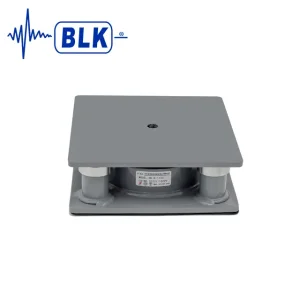
Featured Elastomeric & Hybrid Isolation Systems
Explore our primary Series of factory-engineered elastomeric mounts, spring isolators, and structural platforms engineered for high mechanical loss factor performance.

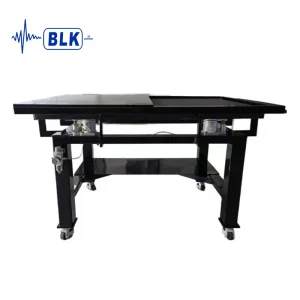
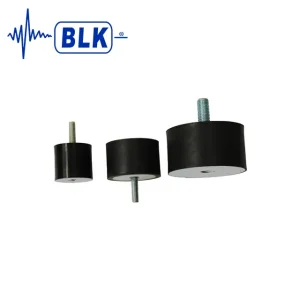

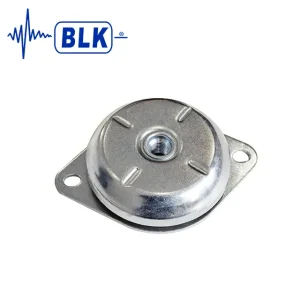



Executive Summary: The Science of High-Quality Rubber Design
In modern industrial engineering, controlling unwanted structural vibration and structure-borne noise is no longer merely a comfort consideration—it is a critical imperative for machine reliability, operational lifespan, and regulatory compliance. Uncontrolled kinetic energy transferred through mechanical foundations causes premature bearing degradation, structural fatigue, micro-cracking in welds, and acoustic emissions that violate international ambient noise thresholds (such as OSHA 1910.95 and ISO 14001 guidelines).
This industrial whitepaper serves as a comprehensive technical guide for acoustic engineers, procurement managers, system integrators, and plant engineers seeking to understand the physics, structural design parameters, compounding physics, and cost structures of high-performance elastomeric anti-vibration mounts. Through specialized rubber compound modeling, FEA-optimized geometries, and state-of-the-art Chinese manufacturing efficiencies, high-efficiency vibration attenuation is achievable at direct-from-factory pricing scales.
Elastomeric Damping Mechanics & Dynamic Stiffness
Rubber design vibration and noise control components rely on the fundamental viscoelastic properties of elastomeric polymers. Unlike metallic springs that exhibit purely elastic behavior ($F = kx$) with negligible internal hysteresis loss, elastomeric materials combine elastic energy storage with viscous dissipation. This dual nature allows rubber mounts to isolate high-frequency mechanical oscillation while simultaneously absorbing transient shock loads without resonant amplification runaway.
Dynamic-to-Static Ratio ($K_d / K_s$)
A critical parameter in elastomeric design is the ratio between Dynamic Stiffness ($K_d$) and Static Stiffness ($K_s$). Under static loading, the rubber deflects to support machine mass. Under high-frequency cyclic loading, polymers stiffen due to molecular chain relaxation limits. Premium compounded rubber maintains a low $K_d / K_s$ ratio (1.2 to 1.6), preventing high-frequency vibration transmission through stiffened isolators.
Loss Factor ($\eta$) & Hysteresis Damping
The material loss factor ($\eta = \tan \delta$) defines the phase angle lag between applied dynamic stress and resulting mechanical strain. High loss factor compounds (such as high-damping rubber formulations) convert vibrational kinetic energy directly into thermal energy via internal molecular friction, suppressing amplitude peaks during system startup and shutdown through critical resonance phases.
Transmissibility ($T_r$) Calculation
Vibration isolation efficiency ($I_e = (1 - T_r) \times 100\%$) is mathematically governed by the frequency ratio $\lambda = f_d / f_n$, where $f_d$ is the forcing frequency of the equipment and $f_n$ is the natural frequency of the mount. Isolation only occurs when $\lambda > \sqrt{2} \approx 1.414$. Beyond this threshold, higher flexibility yields superior acoustic and force isolation.
Engineering Rule of Thumb: For maximum vibration isolation efficiency (>90%), custom rubber mount configurations are designed to achieve a forcing-to-natural frequency ratio ($\lambda$) between 3.0 and 5.0, keeping natural frequency $f_n$ within the 5 Hz to 12 Hz range for static deflections of 3mm to 10mm.
Elastomer Compounding & Finite Element Analysis (FEA)
Selecting the optimal polymer base and filler cross-linking density is critical for ensuring long-term creep resistance, chemical tolerance, and thermal stability. Our factory utilizes raw polymer formulations rigorously evaluated via Mooney-Rivlin and Ogden hyperelastic material models.
| Elastomer Type | Shore A Hardness | Tensile Strength (MPa) | Damping Factor ($\tan \delta$) | Temp Range (°C) | Primary Industrial Application Suitability |
|---|---|---|---|---|---|
| Natural Rubber (NR) | 40 - 75 | 18 - 25 | 0.05 - 0.15 | -40 to +80 | Maximum resilience, low creep; ideal for indoor HVAC, pumps & motor mounts. |
| Neoprene (CR) | 45 - 80 | 14 - 20 | 0.10 - 0.20 | -35 to +100 | Moderate oil, ozone, and weather resistance; perfect for marine & outdoor HVAC. |
| EPDM Rubber | 50 - 80 | 10 - 16 | 0.08 - 0.15 | -45 to +130 | Superior steam, ozone, and acid resistance; ideal for outdoor power equipment. |
| Nitrile (NBR) | 50 - 85 | 12 - 18 | 0.09 - 0.18 | -30 to +110 | High hydrocarbon & lube oil resistance; specialized for automotive/hydraulic units. |
| Silicone (VMQ) | 30 - 70 | 6 - 10 | 0.15 - 0.35 | -60 to +200 | Extreme heat tolerance & medical cleanrooms; specialized low-load isolation. |
Non-Linear Hyperelastic FEA Simulation Workflow
Unlike standard structural metals, rubber exhibits intense geometric and physical non-linearity under compression, shear, and combined multi-axis stress modes. To prevent local strain concentration and rubber bond tearing under severe shock loads (up to 3G–5G transient acceleration), our factory engineering team executes non-linear Finite Element Analysis prior to mold fabrication.
By mapping Mooney-Rivlin material constants ($C_{10}, C_{01}$) obtained through uniaxial, biaxial, and planar shear lab testing, we optimize internal shear stress distributions. This custom geometry tuning eliminates stress concentrations at the bonded metal-elastomer interface, guaranteeing superior fatigue life exceeding 10 million load cycles.
Localized Application Scenarios & Engineering Case Studies
Rubber vibration and noise control products are implemented across diverse infrastructure, industrial, and high-precision environments worldwide. Below are four key field deployment scenarios highlighting specific engineering challenges and tailored isolation solutions.
1. Rooftop HVAC & Commercial MEP Systems
Challenge: Heavy centrifugal chillers, air handling units (AHUs), and cooling towers installed on lightweight roof decks transmit low-frequency hum (30–60 Hz) into occupied office space below.
Solution: Implementation of custom double-deflection BKVD and BKH Series rubber mounts equipped with weather-resistant CR elastomeric bases. Attenuates structure-borne acoustic vibration by 24 dB(A), ensuring compliance with NC-35 acoustic criteria.
2. Semiconductor Cleanrooms & CMM Metrology
Challenge: Micro-vibrations caused by foot traffic and building auxiliary pumps degrade precision coordinate measuring machines (CMM) and optical wafer probing resolution.
Solution: Deployment of custom BK-VT high-stiffness low-frequency damped elastomeric platforms with active leveling capabilities, suppressing ambient floor vibration down to VC-C (12.5 μm/s) cleanroom requirements.
3. High-Power Transformers & Substations
Challenge: Magnetostriction inside 110kV/220kV power transformers generates continuous 100Hz/120Hz core hum, propagating into residential soil and structural foundations.
Solution: Installation of heavy-duty oil-resistant elastomeric transformer mounts with high shear stiffness, offering over 95% structure-borne noise reduction under continuous thermal load.
China Factory Supply Chain Resilience & Cost-Efficiency Advantages
Navigating global supply chain volatility requires manufacturing partners capable of delivering uncompromised engineering quality, short lead times, and competitive price structures. Operating from our state-of-the-art production base in Kunshan, China, our specialized factory integration offers significant strategic advantages to global OEMs and EPC contractors.
1. End-to-End Vertical Integration
From raw polymer compounding and internal banbury mixing to precision mold machining, robotic laser cutting, and hydraulic vacuum vulcanization, every step occurs under one roof. Vertical integration eliminates sub-supplier markups and ensures strict QA tracing.
2. 30–40% Cost Advantage at Scale
Proximity to world-class chemical suppliers and automated multi-cavity injection molding machines minimizes waste and cycle times. Global customers receive high-tier ISO-compliant isolators at direct factory-gate pricing unattainable in Western markets.
3. Rapid Customization & Prototyping
Need non-standard durometers, custom mounting plates, or special height adjustments? Our engineering team delivers 3D CAD models and FEA reports within 24 hours, with physical sample prototypes ready in as little as 3–5 working days.
Global Industry Landscape & International Compliance
International industrial markets demand rigorous adherence to health, safety, and environmental standards. Every rubber isolator leaving our manufacturing floor undergoes thorough testing protocols to ensure seamless global market clearance and long-term operating safety.
ISO 9001:2015
Full quality management system audit tracing raw rubber batching to post-curing durometer verification.
RoHS 3 & REACH
100% compliant polymer formulations free from polycyclic aromatic hydrocarbons (PAHs), heavy metals, or SVHC substances.
ISO 10816 Standard
Engineered to maintain machine vibration levels well within Class I–IV "Good" to "Allowable" operational zones.
900H Salt Spray
Metal encasements protected via Dacromet coating, effortlessly passing ASTM B117 900-hour corrosion testing.
Technology Roadmap: Next-Gen Vibration & Noise Control
As industrial machinery transitions toward higher speeds, lighter structural frames, and smart automation, anti-vibration rubber design is undergoing a revolutionary shift toward intelligent, sustainable, and adaptively damped systems.
1. Smart MRE Mounts
Development of Magnetorheological Elastomers (MREs) embedded with iron micro-particles. When triggered by magnetic fields, the stiffness ($K_d$) alters instantly in real-time, offering semi-active suppression across shifting variable-frequency drives (VFDs).
2. Bio-Based Elastomers
Pioneering sustainable elastomer formulations substituting petroleum-derived carbon black with bio-silica derived from agricultural waste, achieving a 40% reduction in manufacturing carbon footprint without compromising tensile or fatigue limits.
3. IoT Sensor Integration
Embedding micro-piezoelectric wireless sensors into rubber cores to measure real-time dynamic deflection, thermal buildup, and structural degradation, sending predictive maintenance alerts directly to plant control systems.
Frequently Asked Questions on Rubber Mount Selection & Pricing
Additional Industrial Vibration & Hanger Systems
Review our suspended ceiling hangers, specialized polymer pads, air mounts, and heavy inertia bases engineered for complete structural noise isolation.