
Precision Damping & Vibration Control Products







Understanding Vibration Damping Rubber Pads: Fundamentals of Polymer Physics and Dynamic Mechanical Analysis
An in-depth analysis of dynamic stiffness, loss factor, polymer cross-linking density, and transmissibility mechanics governing high-performance elastomeric anti-vibration isolation.
Dynamic Stiffness ($K_d$) vs Static Stiffness ($K_s$)
Elastomeric vibration pads demonstrate viscoelastic properties where the dynamic stiffness ratio ($K_d / K_s$) directly governs isolation efficiency. Industrial pads optimized for low transmissibility maintain a tight ratio between 1.2 and 1.6, avoiding high-frequency hardening.
Loss Factor ($\tan \delta$) & Energy Dissipation
Internal damping capacity is quantified by the loss factor ($\tan \delta = E'' / E'$), representing the ratio of loss modulus to storage modulus. High-performance synthetic rubber pads achieve a loss factor between 0.15 and 0.35, rapidly absorbing kinetic resonant peaks without mechanical degradation.
Frequency Ratio Optimization ($f_d / f_n$)
Isolation occurs strictly when the disturbance frequency ($f_d$) exceeds $\sqrt{2}$ times the system natural frequency ($f_n$). Premium rubber pads are custom engineered to achieve natural frequencies down to 5 Hz under optimal loading, suppressing up to 95% of structure-borne noise.
Information Gain: The Mechanics of Elastomeric Creep and Fatigue Life
When specifying vibration damping pads for heavy HVAC systems, chillers, or industrial presses, static creep deformation over time presents a catastrophic risk if unmanaged. Compounding formulations incorporating high-purity natural rubber (NR) blended with carboxylated nitrile (XNBR) significantly reduce compression set under ASTM D395 test parameters. Standard off-the-shelf pads experience up to 25% creep strain within 24 months, leading to misaligned drive shafts and structure-borne sound bridges. Advanced China factory formulations optimize sulfur vulcanization cross-linking density to limit 10-year creep strain to under 8.5%, maintaining constant isolation profiles over the extended lifecycle of industrial assets.
Industrial Elastomer Formulation Matrix & Application Engineering
Selecting the optimal elastomeric polymer matrix based on chemical resistance, operating temperature envelopes, durometer hardness (Shore A), and dynamic loss tangent.
| Polymer Base | Durometer (Shore A) | Temp Envelope (°C) | Oil & Solvent Resistance | Loss Factor ($\tan \delta$) | Primary Industrial Application |
|---|---|---|---|---|---|
| Natural Rubber (NR) | 40 - 75 | -40 to +80 | Fair / Poor | 0.05 - 0.15 | HVAC units, low-frequency motor mounts, acoustic isolation floors |
| Neoprene (CR) | 45 - 80 | -35 to +100 | Good | 0.12 - 0.25 | Outdoor chillers, marine diesel engines, structural building pads |
| Nitrile (NBR) | 50 - 85 | -30 to +120 | Excellent | 0.15 - 0.28 | Hydraulic pump bases, metal stamping presses, oily shop environments |
| EPDM Elastomer | 40 - 80 | -45 to +150 | Poor (Good for Acids) | 0.10 - 0.20 | Rooftop equipment exposed to heavy UV, ozone, and acid rain |
| Viscoelastic Polymer | 30 - 60 | -20 to +70 | Moderate | 0.30 - 0.55 | High-precision semiconductor metrology, sensitive optical tables |
Strategic Sourcing Advantages of China Vibration Damping Pad Factories
How vertically integrated manufacturing hubs deliver unmatched price-to-performance metrics, advanced compounding control, and rapid custom tooling cycles.
Fully Automated Vacuum Compression Molding
Modern Chinese manufacturing facilities utilize 500-ton fully automated vacuum compression molding machines. Vacuum degassing eliminates micro-void inclusions within the rubber matrix, guaranteeing uniform density and eliminating internal dynamic stress concentrators.
In-House Tooling & Rapid OEM Prototyping
With direct access to regional CNC tooling centers, OEM/ODM mold fabrication times are reduced from industry-standard 6 weeks down to 5 working days. This rapid iteration capacity drastically accelerates product development for custom equipment footprints.
Raw Material Economies of Scale & Compound Pricing
Proximity to synthetic rubber synthesis clusters and automated internal mixer compounding (Banbury mixers) allows Chinese factories to achieve up to 35-45% cost savings on base polymers while keeping strict durometer tolerances within $\pm 3$ Shore A.
Next-Generation Industry Trends & Structural Damping Innovations
The transformation of passive elastomer pads into active-ready, environmentally compliant, smart vibration isolation systems.
IoT Smart Sensor Embedded Pads
Integration of thin-film piezoelectric strain sensors directly into the vulcanized core of rubber pads. Real-time dynamic load monitoring enables predictive maintenance alerts before structural degradation causes rotational offset in industrial turbines.
RoHS & REACH Bio-Based Polymers
Stringent international environmental standards are driving the adoption of zero-VOC, bio-derived plasto-elastomer blends. These eco-compliant compounds eliminate polycyclic aromatic hydrocarbons (PAHs) while increasing fatigue cycle life under dynamic shear.
Multi-Layered Composite Geometry
Engineered multi-tier pads incorporating alternating layers of high-density neoprene elastomer and cork/steel friction plates. This hybrid geometric design decouples both high-frequency secondary harmonics and low-frequency structural excitation.
Global Procurement Guidelines & Wholesale Price Drivers
A transparent breakdown of cost structures, quality control criteria, and total cost of ownership (TCO) considerations for enterprise sourcing managers.
Key Commercial Variables Influencing Unit Price
Wholesale pricing for industrial vibration damping rubber pads is primarily governed by compound formulations, dimensions, vulcanization duration, and surface friction profiling. While basic natural rubber pads with low filler quality can be acquired at low entry prices ($1.50 - $4.00 per unit), enterprise-grade neoprene or nitrile pads engineered to strict ISO 2017 dynamic testing guidelines range from $8.50 to $35.00+ depending on total load capacity and steel insert bonding.
- Polymer Purity & Synthetic Blend Ratios: 100% virgin polymer bases command premium pricing over recycled crumb rubber blends but guarantee consistent dynamic stiffness ($K_d$).
- Steel Core Integration (Bonded Sandwiches): Cold-rolled steel inserts embedded within multi-ribbed rubber layers increase shear resistance for lateral stability under seismic loads.
- Testing & Certification Compliance: Batch-traceable mill test reports (MTR), dynamic durometer verification, and flame-retardant rating (UL 94-V0) certifications.
Procurement Evaluation Matrix
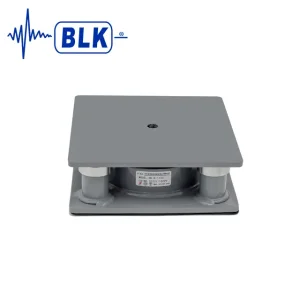
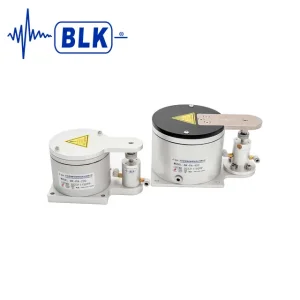
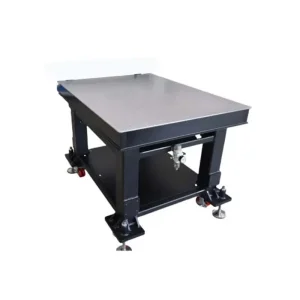
Heavy Industrial & Precision Isolation Systems



Localized Application Scenarios & Engineering Field Integration
Real-world deployment profiles showing how customized rubber damping pads decouple mechanical energy across high-demand sectors.
Commercial HVAC & Rooftop Chiller Plants
Multi-ribbed neoprene damping pads placed beneath heavy centrifugal chillers prevent fluid-dynamic resonance from transmitting into structural concrete floor slabs, ensuring compliance with indoor NC-30 acoustic criteria.
Power Electrical Transformers & Substations
Oil-resistant nitrile pads installed under power transformer bases absorb continuous 100Hz/120Hz magnetostrictive core hum, mitigating environmental noise pollution in suburban electrical substations.
Heavy Forging Presses & CNC Machining Centers
High-durometer (75 Shore A) elastomer isolation mats absorb severe transient shock energy from 500-ton stamping presses, protecting nearby coordinate measuring machines (CMM) from ground vibrations.
Frequently Asked Questions on Vibration Damping Rubber Pads
Detailed engineering answers regarding sizing formulas, durometer selection, temperature thresholds, and factory customization.
How do I accurately calculate the required area and thickness of a vibration damping pad?
What is the difference between Shore A hardness 50, 60, and 70 in dampening performance?
How do temperature extremes affect the dynamic behavior of synthetic rubber pads?
Why choose factory-direct Chinese OEM suppliers over local distributors?
Are waffle, ribbed, or smooth surfaces better for vibration isolation?
Request Engineering Sourcing Specifications & Factory Direct Quotes
Connect directly with our senior elastomer engineers for dynamic stiffness calculations, custom CAD mold designs, dynamic finite element analysis (FEA), and bulk factory price breaks within 24 hours.
Contact Engineering Team Today