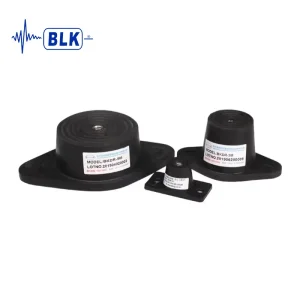
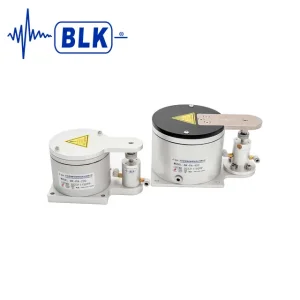
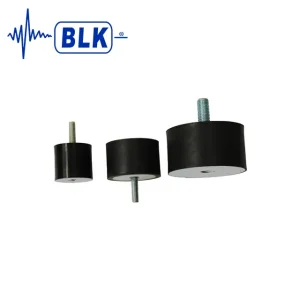
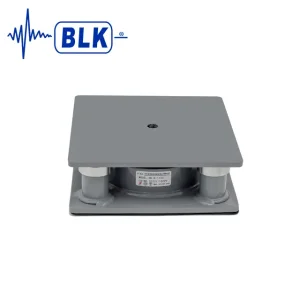
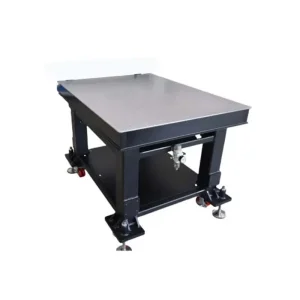
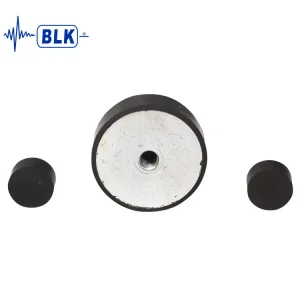
Featured Spring Isolators & Damping Solutions
Explore our factory-engineered baseline product lineup engineered for optimal static deflection, broad load capacities, and harsh environmental compliance.



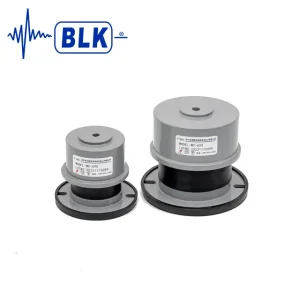
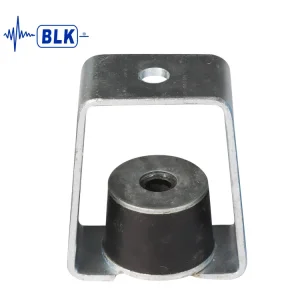


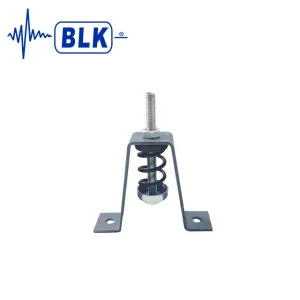
Global Industry Trends in Vibration Control Engineering
Modern manufacturing environments and high-efficiency MEP (Mechanical, Electrical, and Plumbing) infrastructures require rigorous vibration suppression strategies to ensure operational longevity, structural integrity, and regulatory noise compliance.
High-Density Urban & Commercial HVAC
As commercial buildings transition toward ultra-quiet acoustic standards (such as ASHRAE 189.1 and LEED v4 acoustic thresholds), industrial chillers, cooling towers, and air handling units (AHUs) located on upper mechanical floors demand spring isolators capable of eliminating harmonic structure-borne noise at efficiency thresholds surpassing 98% to 99%.
Sub-Micron Semiconductor & Metrology
Advanced fabrication facilities operating under nanometer nodes require rigorous compliance with Vibro-Criterion (VC) curves (VC-A through VC-G). Spring mounts integrated with high-viscous damping layers prevent environmental ground vibrations from degrading extreme ultraviolet (EUV) lithography tools and coordinate measuring machines (CMMs).
Power Grid & Renewable Energy Resiliency
Transformers, electrical switchgear, and energy storage system (ESS) cooling modules undergo low-frequency electromagnetic hum (100 Hz–120 Hz magnetostriction excitation). Customized anti-vibration mounts mitigate dynamic fatigue failure on solder joints and structural enclosure welds, extending transformer lifespan past 15 years.
Engineering Physics & Dynamic Transmissibility Equations
Selection of vibration isolation spring mounts relies on precise mechanical dynamics. The fundamental objective is to engineer a system whose natural frequency ($f_n$) is substantially lower than the forcing frequency ($f_d$) generated by the operating machinery.
Mathematical Calculation of Natural Frequency
The natural frequency ($f_n$) of a helical steel spring mount is defined by static deflection ($\delta_s$) under gravity ($g = 9.81 \text{ m/s}^2$):
Where dynamic mechanical transmissibility ($T_r$) measures the proportion of vibratory force transmitted into the supporting floor structure:
Where: $r = f_d / f_n$ (Frequency Ratio), $\zeta$ = Damping Ratio of the isolator material.
Key Design Rule: The √2 Isolation Threshold
For isolation to occur, the ratio $r = f_d / f_n$ must exceed √2 (approximately 1.414). At $r = 1$, the system enters resonance, catastrophically amplifying force transmissibility.
- r < 1.414: Amplification zone (Magnifies vibration into building foundation).
- r = 3.0 to 5.0: Industrial Standard Isolation zone (88% to 96% efficiency).
- r > 5.0: High-Precision Isolation zone (>98% efficiency, ideal for low RPM compressors & heavy generators).
| Isolator Type Category | Static Deflection Range | Natural Frequency (f_n) | Primary Damping Mechanism | Target Industrial Application |
|---|---|---|---|---|
| Open Spring Mounts (MA/MB Series) | 25 mm - 50 mm | 3.0 Hz - 5.0 Hz | Internal Steel Hysteresis + Rubber Base Pad | HVAC Chillers, Pumps, Air Handling Units |
| Restrained Spring Mounts (MC Series) | 25 mm - 75 mm | 2.0 Hz - 4.5 Hz | High-Viscous Fluid / Friction Limiters | Cooling Towers, Equipment with Fluid Load Shifts |
| Pneumatic Air Mounts (BK-A/BK-PA) | Variable Pneumatic | 1.2 Hz - 2.5 Hz | Air Chamber Volume Cushioning | Semiconductor Lithography, Electron Microscopes |
| Elastomeric & Hanger Mounts (HR/HV) | 6 mm - 15 mm | 8.0 Hz - 12.0 Hz | High-Damping Neoprene / Nitrile Compound | Suspended Piping, Exhaust Ducts, High RPM Motors |
Global Procurement Requirements & Total Cost of Ownership (TCO)
Engineering procurement managers evaluating B2B OEMs and OEM factory suppliers must look beyond initial unit costs. Poorly engineered spring isolators cause structural fatigue, mechanical seal failure, fluid leaks, and costly plant downtime.
Metallurgical Integrity
High-grade vibration mounts utilize 60Si2Mn or 50CrVa alloy spring steel subjected to shot peening and stress-relieving heat treatment. This prevents permanent sag (load loss under sustained compression) and guarantees coil fatigue survival past 10,000,000 dynamic cycles.
Anti-Corrosion Surface Finishing
For outdoor chillers, coastal marine environments, and chemical processing facilities, standard powder coating quickly fails. Top manufacturers utilize Dacromet or Geomet zinc-flake coatings capable of enduring over 900 hours of neutral salt spray testing per ASTM B117 standards.
Traceability & Certification
Tier-1 industrial procurement protocols require EN 10204 3.1 material test certificates, ISO 9001:2015 quality control compliance, and certified dynamic load deflection test curves accompanying each factory shipment batch.
Macro Industry Engineered Isolation Solutions
Tailored application engineering frameworks designed for complex industrial machinery and sensitive structural environments.
HVAC Central Plant & Chiller Isolation
Large centrifugal and screw chillers generate substantial dynamic forces during startup and steady-state operating RPMs (typically 1450 RPM to 2950 RPM). Unrestrained spring isolators can cause alignment shifts when water is drained for maintenance.
Solution: Restrained Spring Mounts featuring integral vertical and horizontal limiters (snubbers). These limiters allow free vertical isolation movement under normal liquid-filled operation while preventing over-extension when fluid weight is removed.
Power Transformers & Electrical Substations
Electrical transformers radiate low-frequency noise (100–120 Hz) caused by core magnetostriction, transmitting tonal humming into adjacent residential or corporate spaces via concrete slab structures.
Solution: High-Damping Transformer Anti-Vibration Mounts combining high-rigidity steel housings with specialized elastomeric damping cores engineered to absorb magnetostrictive harmonics and withstand sudden short-circuit electromagnetic shock forces.
Heavy Industrial Stamping Presses & Forging
Impact equipment subjects foundations to extreme high-amplitude shock pulses rather than continuous harmonic vibration, leading to concrete foundation cracking and surrounding equipment interference.
Solution: Heavy-Duty Damped Spring Inertia Bases. Heavy reinforced concrete inertia masses mounted on high-capacity spring units with integrated viscous dampers convert peak shock impact into manageable kinetic energy dissipations.
Semiconductor Cleanroom Micro-Vibration Isolation
Sub-micron fabrication and optical metrology require total isolation from ambient footsteps, HVAC duct movement, and structural ground waves.
Solution: Active Air-Mount Pneumatic Isolation Platforms with automatic leveling valves capable of achieving ultra-low natural frequencies down to 1.2 Hz, stabilizing delicate optic stages within milliseconds.
Localized Support, Seismic Compliance & Installation Assurance
Global installations require adherence to regional building codes, seismic zones, and strict wind load standards. A vibration isolator is only as effective as its physical installation compliance.
Seismic & Wind Restraints (IBC / ASCE 7)
In regions susceptible to seismic activity or high wind loads (e.g., rooftop cooling towers), vibration isolators must incorporate all-directional heavy steel housing snubbers designed to withstand dynamic shear force acceleration up to 3.0g to 5.0g without structural yield.
Acoustic Short-Circuit Prevention
If holding bolts or rigid piping directly bridge the spring isolator without flexible connectors (e.g., rubber expansion joints), acoustic energy bypasses the spring—causing an "acoustic short circuit." Proper engineering guidelines dictate flexible duct/pipe couplers and elastomeric washer grommets.
Factory Field Technical Support
Tier-1 factories offer full pre-installation center-of-gravity (CG) load distribution calculations. Because machinery weight is rarely symmetrical, custom spring stiffness rating matching is performed across each support point to ensure even foundation leveling.
Technical Roadmap & Future Outlook (2026–2035)
Next-generation industrial vibration mitigation is rapidly evolving toward intelligent, smart-sensor-integrated active damping technology and bio-based high-durability polymers.
IoT-Enabled Telemetry Mounts
Integration of self-powered MEMS wireless micro-accelerometers inside spring bases to stream real-time operational vibration data and load degradation alerts to cloud dashboards.
Magnetorheological (MR) Damping
Hybrid spring mounts featuring fluid dynamic viscosity adjustment via electromagnetic coils, automatically altering damping coefficients within milliseconds during variable RPM equipment spool-up.
Bio-Based Damping Elastomers
Replacement of synthetic nitrile rubber base pads with ultra-durable bio-derived polyurethanes, achieving zero VOC emissions and superior tear resistance under severe temperature fluctuations.
AI-Driven Resonance Avoidance
Closed-loop active pneumatic-spring hybrid platforms utilizing predictive AI algorithms to counteract seismic ambient micro-tremors before they reach optical and nano-manufacturing tools.
Frequently Asked Questions (Engineering Q&A)
In-depth technical answers from senior application specialists regarding spring mount sizing, static deflection selection, and installation best practices.
- Rubber/Elastomeric Mounts: Ideal for high-speed equipment (>1800 RPM / >30 Hz) requiring small static deflections (3 mm to 10 mm). Excellent at attenuating high-frequency noise.
- Spring Isolators: Essential for low-to-medium speed equipment (300 RPM to 1800 RPM / 5 Hz to 30 Hz) requiring high static deflection (25 mm to 50+ mm) to achieve low natural frequencies (2 Hz to 5 Hz). Ideal for HVAC chillers, pumps, and gensets.
- Pneumatic Air Mounts: Required for delicate ultra-low-frequency micro-vibration applications (<3 Hz natural frequency) such as electron microscopes and semiconductor metrology.
- Lower the center of gravity of top-heavy equipment, preventing excessive tipping or rocking during startup.
- Add structural rigidity to prevent equipment casing flex and shaft misalignment between motor and pump.
- Increase the total mass of the system, which reduces dynamic amplitude displacement during steady-state operation.
Complete Product Catalog & Custom Rubber/Pneumatic Series
Browse our specialized custom vibration damping products, leveling feet, and precision low-frequency optical platforms.