Precision Engineered Vibration Isolator Assemblies
Select from our specialized spring, pneumatic, and polymer mounts engineered specifically for high static load deflections and low-frequency dynamic attenuation.





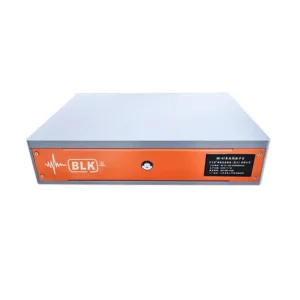
Executive Technical Summary: Wall-Mounted Dynamic Isolation
Wall-mounted vibration isolators represent a critical intersection of structural mechanics, acoustic engineering, and elastomeric material science. Unlike traditional floor-mounted vibration isolation systems where loads act primarily in pure axial compression, wall-mounted bracket installations introduce complex combined vector loads—specifically overturning moment couples, direct vertical shear, and cantilevered tensile pull-out forces.
When HVAC equipment, wall-hung heat pumps, medical air handling units, process fluid pumps, or high-voltage electrical transformers are affixed to vertical building structures without specialized elastomeric or spring-based isolation mounts, dynamic operational frequencies directly excite the building envelope. This phenomenon initiates structure-borne acoustic bridging, causing low-frequency hums ($31.5 \text{ Hz} - 250 \text{ Hz}$) to propagate through concrete walls, steel girders, and drywall partitions into adjacent noise-sensitive zones.
Macro-Industry Solutions & System Integration
Tailored structural damping matrices designed for demanding commercial, medical, data-center, and manufacturing environments.
HVAC & Mechanical Plant Rooms
Wall-mounted variable refrigerant flow (VRF) outdoor units, heavy-duty exhaust blowers, and booster pumps generate substantial low-frequency excitation. Sizing wall mounts with dual-elastomer dampeners prevents mechanical vibration from transmitting into occupied spaces above or below plant rooms, ensuring compliance with ISO 3744 and ASHRAE Chapter 48 guidelines.
Data Centers & Mission Critical Power
High-capacity wall-hung transformers, inverter banks, and uninterruptible power supply (UPS) enclosures produce high-frequency electromagnetic magnetostrictive hum ($100\text{ Hz} - 120\text{ Hz}$). Specialized high-damping silicone or rubber wall pads isolate electromagnetic vibrations from rigid building cores, reducing fatigue on wiring connections and solder joints.
Healthcare & Bio-Pharma Cleanrooms
Wall-mounted cleanroom air recirculators, laminar flow hoods, and precision pharmaceutical dispensers require micro-vibration mitigation. Pneumatic air mounts and multi-layer polymer pads eliminate structure-borne feedback, stabilizing high-magnification optical sensors, electron microscopes, and automated liquid handlers operating nearby.
Wall Mounted Vibration Isolation: Tech Roadmap & Future Outlook
The global vibration isolation industry is transitioning rapidly from passive static isolators toward smart, adaptive, and sustainable structural damping systems. As modern architectural design emphasizes lightweight steel-frame construction and high-tensile wall partitions, dynamic stiffness control becomes paramount.
1. Active Piezo-Electric & Magnetorheological Cantilever Mounts
Future wall-mounted isolators integrate embedded piezo-ceramic sensors and active magnetorheological (MR) dampeners within the bracket structure. Real-time accelerometers measure incoming wall excitation frequencies, altering the fluid viscosity or electromagnetic field in milliseconds. This dynamic feedback loop eliminates harmonic resonance amplification during equipment run-up and emergency shutdown cycles.
2. Eco-Compliant High-Damping Elastomeric Compounds
Environmental standards (RoHS 3, REACH, ISO 14001) are driving the phase-out of traditional halogenated rubber additives and petroleum-heavy polymer formulations. Next-generation mounts utilize high-durability, flame-retardant (UL94-V0 rated) thermoplastic vulcanizates (TPVs) and bio-based synthetic elastomers that maintain stable spring rates across extreme temperature thresholds ($-40^\circ\text{C}$ to $+120^\circ\text{C}$).
3. Integrated IoT Wireless Health & Deflection Monitoring
Smart wall brackets now incorporate self-powered Bluetooth/LoRaWAN MEMS vibration nodes. These micro-sensors wirelessly transmit dynamic peak-to-peak amplitude, deflection fatigue metrics, and harmonic FFT spectrums directly to building management software (BMS), triggering automated maintenance alerts before physical isolation failure or bolt shear occurs.
China Factory 4.0: Supply Chain Resilience & Quality Excellence
Located in Kunshan, China's premier high-tech manufacturing cluster, Bellking operates a fully integrated Industry 4.0 production facility dedicated exclusively to anti-vibration technology. Our 2,000 square meter factory combines advanced CNC machining, automated robotic welding, dynamic load testing, and rigorous raw material validation to deliver high-performance mounts globally.
Automated Precision Engineering
Utilizing fiber laser cutting cells and 6-axis robotic welding stations, our bracket fabrications maintain tolerance margins within $\pm0.1\text{ mm}$. This ensures consistent load distribution across multi-point wall installations, preventing structural binding and premature bushing wear.
Corrosion Barrier Excellence (Dacromet Coating)
Outdoor wall-hung mounts are vulnerable to atmospheric corrosion, salt air, and chemical exposure. All metallic housings undergo continuous Dacromet processing, passing 900-hour neutral salt spray tests (ASTM B117 / ISO 9227) without red rust formation, outlasting conventional galvanizing by a factor of three.
| Quality Assurance Metric | Bellking Factory Standard | Testing Methodology / Certification |
|---|---|---|
| Spring Steel Fatigue Endurance | > 2,000,000 Deflection Cycles | Dynamic Fatigue Testing Rig (EN 13906-1) |
| Elastomer Hysteresis Consistency | Durometer Shore A Tolerance ±3 | ASTM D2240 Hardness Verification |
| Corrosion Resistance | 900 Hours Salt Spray Pass | ASTM B117 / ISO 9227 Dacromet Protocol |
| Structural Weld Integrity | 100% NDT Inspected | Ultrasonic & Dye Penetrant Testing |
| Traceability & Verification | Batch-level EN 10204 3.1 Certs | Full Chemical & Tensile Dossier per Order |
Global Enterprise Sizing & Engineering Procurement Guide
Selecting the optimal wall-mounted vibration isolator requires evaluating three fundamental mechanical forces acting on the bracket assembly: Static Shear, Overturning Cantilever Moment, and Dynamic Force Amplification.
Step-by-Step Engineering Calculation Protocol
- Determine Total Equipment Load ($W$): Sum the operating wet weight of the machinery, internal fluids, attached piping, and cabling accessories.
- Calculate Cantilever Moment Vector ($M_c$): Measure the distance ($L_c$) from the wall mounting plane to the equipment center of gravity (CG). $M_c = W \times L_c$. This moment generates tensile pull-out forces on the upper wall anchors and compression forces on the lower pads.
- Establish Operating Disturbing Frequency ($f_d$): Convert machinery RPM to Hertz ($f_d = \text{RPM} / 60$). For instance, a 1,750 RPM motor presents a primary excitation frequency of $29.17\text{ Hz}$.
- Select Target Isolator Natural Frequency ($f_n$): To achieve greater than 92% isolation efficiency ($\eta$), ensure $f_d / f_n \ge 3.0$. For $29.17\text{ Hz}$ excitation, choose a mount with $f_n \le 8.0\text{ Hz}$ under actual static loading.
Localization Support, Seismic Compliance & Field Engineering
Global architectural engineering projects require adherence to localized structural building codes and seismic design mandates. Bellking provides international engineering teams with comprehensive technical documentation, 3D BIM models, FEA stress simulations, and localized compliance dossiers.
Seismic Restraints (ASCE 7 / IBC)
Integrated omnidirectional seismic snubbers prevent catastrophic bracket failure during seismic acceleration events, meeting North American and East Asian building code requirements.
Acoustic Retrofit Field Audits
Our engineering specialists offer remote spectrum analysis and on-site acoustic measurement guidance, matching precise rubber durometers to troublesome resonance frequencies.
Customized 3D BIM Integration
Downloadable Revit and STEP files allow MEP engineers to simulate wall loads, bolt hole alignments, and maintenance clearances directly in project BIM environments.
Frequently Asked Questions by Structural & Acoustic Engineers
In-depth technical answers addressing wall bracket dynamics, dynamic deflection limits, elastomer durability, and installation best practices.
1. Why can't standard floor-type vibration mounts be mounted horizontally on a wall bracket?
Floor-type isolators are designed primarily for pure vertical axial compression where spring coils or rubber elements operate symmetrically. Mounting a floor isolator horizontally on a vertical wall introduces severe shear binding and asymmetrical lateral compression. Wall-mounted isolators must be explicitly engineered with dual-axis load snubbing to handle the combination of vertical shear force and horizontal tensile pull-out caused by equipment cantilever moments.
2. How do you calculate the target static deflection for wall-hung spring mounts?
Static deflection ($\delta_{st}$) directly dictates the natural frequency ($f_n$) of steel spring elements via the formula $f_n \approx 5 / \sqrt{\delta_{st} \text{ (in cm)}}$. For slow-speed machinery operating around $1,200\text{ RPM}$ ($20\text{ Hz}$), a target natural frequency of $3.5\text{ Hz} - 4.0\text{ Hz}$ requires approximately $15\text{ mm} - 20\text{ mm}$ of static deflection under dead load. Ensuring adequate static deflection guarantees high isolation efficiency during continuous operation.
3. What is the operational lifespan of Bellking wall mounts in outdoor HVAC installations?
Bellking spring and transformer isolators feature Dacromet-coated housing steel that resists salt fog corrosion for over 900 hours, yielding a typical operational outdoor lifespan exceeding 15 years under normal atmospheric conditions. Pneumatic air mounts exposed to UV and ozone have an engineered service life of 6 to 8 years before elastomeric bladder inspection or replacement is recommended.
4. How can acoustic bridging be avoided during anchor bolt installation into hollow brick or stud walls?
Direct metallic contact between anchor bolts and internal wall structure creates an "acoustic bridge," short-circuiting the vibration isolator. Bellking wall mounts utilize isolated elastomeric sleeve washers that isolate the bolt shank and washer face from the mounting flange, ensuring zero metal-to-metal continuity between bracket and wall studs.
5. Can customized non-standard wall brackets be designed for limited space or corner installations?
Yes. Bellking provides 1:1 OEM/ODM customization based on equipment dimensions and wall space constraints. Our engineering department delivers custom bracket CAD designs, FEA stress reports, and sample prototypes in as fast as 3 working days from design sign-off.
Additional Rubber, Polymer & Platform Assemblies
Explore our full range of heavy-duty rubber pads, specialized mounts, and desktop optical isolation platforms engineered for comprehensive acoustic decoupling.