High-Efficiency Marine Vibration Isolator Systems
Engineered for continuous exposure in harsh maritime propulsion, auxiliary engine, and deck-mounted applications. Select factory-direct certified mounts engineered for shock deflection and long-term acoustic isolation.
-
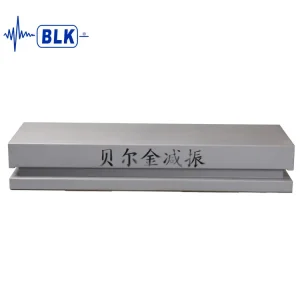
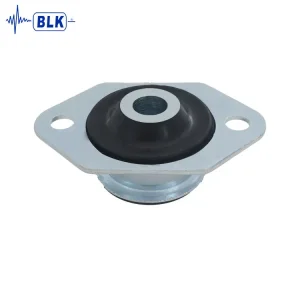
High-Quality BK-MT Type Matrix Anti-vibration Mount Manufacturers, Manufacturer
-
-
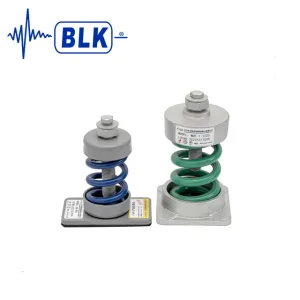
High-Quality MD Type Anti-vibration Spring Mounts Factory, Manufacturer
-
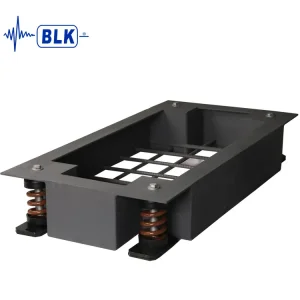
High-Quality CPB type Inertia Bases & Pump Supports Manufacturers, Manufacturer
-
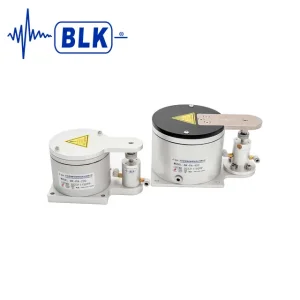
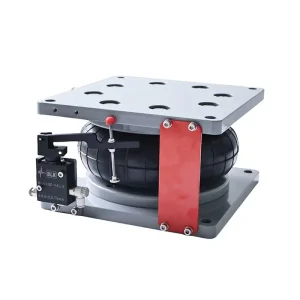
High-Quality BK-PA Type Precision Air Mounts Factories, Manufacturers
-
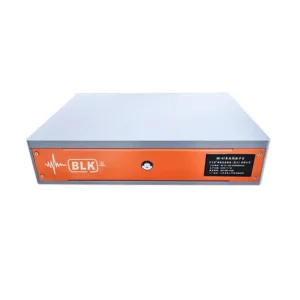
Custom BK-AT Type Desktop Vibration Isolation Platform Manufacturers, Price
-
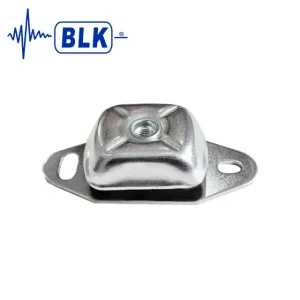
-
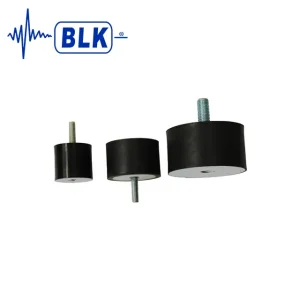
Macro Industry Solutions: Naval Architecture & Marine Dynamics
In modern naval architecture, mitigating structural vibration is a safety-critical imperative rather than an aesthetic luxury. Unchecked dynamic forces induce mechanical fatigue, propagate structure-borne acoustic signatures, and jeopardize propulsion stability under extreme sea states.
Primary Propulsion & Drivetrain Isolation
Marine propulsion engines generate intense reciprocating torsional and axial forces. Precision-tuned matrix elastomer mounts isolate low-frequency pulses (below 10 Hz), safeguarding transmission gears, stern tubes, and hull frames from excessive harmonic amplification.
Acoustic Signature Dampening
For naval combatants, research vessels, and luxury superyachts, underwater radiated noise (URN) must be suppressed. Our compound viscous-damped mounts break structural acoustic transmission paths, mitigating high-frequency flanking transmission into the oceanic environment.
Critical Auxiliary Plant Attenuation
Auxiliary generators, hydraulic power units (HPUs), and centrifugal chiller skid installations require custom multidirectional snubbing. Captive fail-safe hardware ensures continued isolation under pitch, roll, and extreme wave slap dynamics.
Commercial Status & Cost Engineering in Marine Manufacturing
Procuring low-cost marine vibration isolators without sacrificing marine classification standards requires vertical manufacturing integration, rigorous metallurgy, and systematic elastomeric formulation.
Supply Chain Rationalization
Traditional Tier-1 naval suppliers charge steep premiums driven by layered distributorships. Direct-to-factory engagement reduces lifecycle procurement budgets by 30-45% while preserving traceability from billet steel to vulcanized bond.
Total Cost of Ownership (TCO)
Premature degradation of rubber bushings due to oil mist or ozone exposure creates costly drydock interventions. Engineering with fluorosilicone-blended nitriles and Dacromet coatings extends replacement windows past 15 years.
Rapid Fleet Retrofit Logistics
Commercial operators face demurrage penalties exceeding $25,000 per idle day. Our streamlined engineering protocols provide standard model dispatches within 24 hours, complemented by turn-key dimensionally interchangeable refit mounts.
Localized Support & Marine Regulatory Compliance
Maritime installations demand adherence to strict worldwide society rules. Our manufacturing facility combines ISO 9001 governance with documented traceability, finite element analysis (FEA), and classification testing.
| Standard / Classification | Technical Scope | Verification Method | Bellking Compliance Level |
|---|---|---|---|
| ISO 9001:2015 | Quality management system across production and testing | Annual TUV / SGS surveillance audit | Fully Certified (Since 2013) |
| MIL-STD-167-1A | Mechanical vibration of shipboard equipment (Type I & II) | Multi-axis swept-sine dynamic shake testing | Engineered & Class Certified |
| MIL-S-901D / Grade A | High-impact mechanical shock tests for naval vessels | Drop-hammer / floating shock platform testing | Captive Fail-Safe Rated (3-5 G) |
| ASTM B117 (Dacromet) | Accelerated synthetic seawater corrosion resistance | Continuous salt spray chamber (900+ Hours) | Zero Red Rust Formation Confirmed |
| IACS Unified Requirements | Marine society safety rules (DNV, BV, ABS, CCS) | Material batch mill certificates & batch rupture testing | 100% Traceable Mill Certificates |
Targeted Marine Application Matrix
Whether navigating inland waterways or operating deep-sea drilling risers, vibration transmission pathways require bespoke isolator designs matched to equipment mass, center of gravity, and excitation spectra.
Commercial Cargo & Tankers
Mounting solutions for main generators, auxiliary scrubbers, and high-pressure boiler feed pumps to prevent hull plate resonance and cabin noise penetration.
Workboats, Tugs & Trawlers
Compact, high-deflection cone and wedge rubber isolators built to withstand aggressive thrust reversals, erratic torque jolts, and high ambient engine room heat.
Offshore Rigs & FPSO Vessels
Heavy-duty matrix inertia bases and spring dampening arrays that isolate mud pumps, deck air compressors, and critical separator modules from structural fatigue.
Naval & Coastal Defense Craft
Fully captive, shock-qualified mountings designed to safeguard fire control equipment, radar consoles, and auxiliary power supplies against close-proximity shock waves.
Technical Roadmap: Next-Generation Maritime Isolation
The convergence of naval decarbonization, electric propulsion, and smart predictive vessel maintenance dictates new performance envelopes for vibration attenuation devices.
Electric Drive & High-Frequency Modes
Battery-electric and hybrid maritime drives eliminate massive low-frequency combustion pulsations but generate high-frequency inverter whine and electromagnetic hum (500 Hz - 4 kHz). Our hybrid damping matrices suppress both mechanical deflection and magnetic harmonic transmission.
Smart IoT Condition Monitoring
We are piloting smart integrated sensor pockets within large matrix mounts. Micro-MEMS accelerometers continuously measure deflection rates, dynamic load anomalies, and elastomeric stiffness creep, feeding live diagnostics into onboard ship automation systems.
Sustainable Bio-Polymer Formulations
Aligning with international clean marine directives, R&D efforts focus on next-generation vulcanizates that replace synthetic petroleum rubbers with recyclable, low-VOC polyurethanes that deliver superior tear resistance and extended immersion stability.
Frequently Asked Questions: Marine Vibration Isolators
Comprehensive engineering insights into selection, classification standards, corrosion ratings, and OEM integration parameters.
How does marine isolator design differ from industrial HVAC mounts?
Marine isolators require dynamic multi-axis captive restraints (fail-safe mechanisms) to maintain machine positioning during pitch, roll, yaw, and explosive shock loading. Furthermore, they incorporate high-grade Dacromet or stainless-steel coatings passing 900+ hour salt-spray testing, paired with ozone- and oil-resistant elastomers not standard in commercial building applications.
How do you calculate the optimal frequency ratio for shipboard engines?
Effective vibration isolation requires the disturbing frequency ($f_d$) of the engine or pump to be at least $\sqrt{2}$ times the natural frequency ($f_n$) of the isolator, with an optimal ratio of $f_d / f_n \ge 3$. For a 4-stroke marine diesel idling at 600 RPM (fundamental excitation 10 Hz), the isolator system natural frequency must remain below 3.3 Hz to avoid dangerous dynamic amplification.
What prevents engine thrust from misaligning the drive shaft?
For installations where propulsion thrust passes directly through resilient mountings, specialized thrust-bearing brackets or high-axial-stiffness marine cone mounts are specified. These units permit vertical isolation while maintaining high lateral and longitudinal rigidity to sustain propeller thrust within shaft tolerance boundaries.
How can Bellking supply marine-grade mounts at low wholesale pricing?
By operating a direct 2,000 m² robotic-automated manufacturing plant in Kunshan, China, Bellking controls raw steel sourcing, stamping, robotic welding, vulcanization, and Dacromet coating under one ISO 9001 roof. This eliminates middleman trading margins and delivers direct factory cost benefits to international shipbuilders and fleet operators.
What is the typical operational lifespan of marine rubber mounts?
Under continuous marine service, Bellking marine rubber mounts provide a design working life of 8 to 15 years, while enclosed steel spring isolators typically exceed 15 years. Lifespan is protected by using engineered elastomers with high tear strength and Dacromet anti-corrosion barrier protection.
Can custom footprints and load centers be engineered for refits?
Yes. Bellking provides non-standard 1:1 customization. With our in-house CNC and tooling capabilities, replacement mounts matching legacy naval bolt patterns and height envelopes can be engineered and sampled within 3 working days.
High-Capacity Industrial & Marine Vibration Isolators
Explore our complete catalog of shock mounts, cone dampers, precision air mounts, and custom elastomeric units engineered for demanding operating environments.