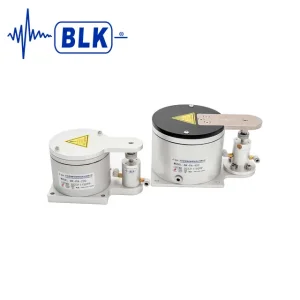
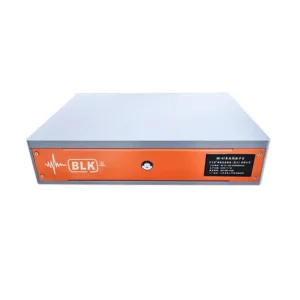
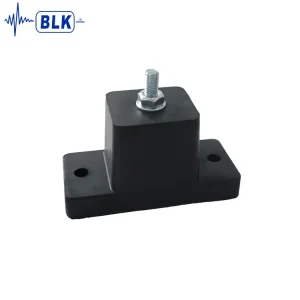
Explore our top-tier precision-engineered vibration isolators manufactured directly in Kunshan, China. Designed for heavy-duty HVAC, structural rail, and industrial equipment setups.

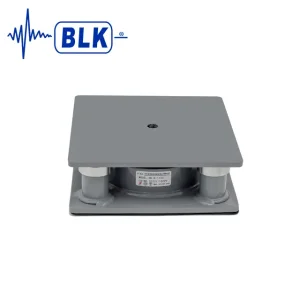


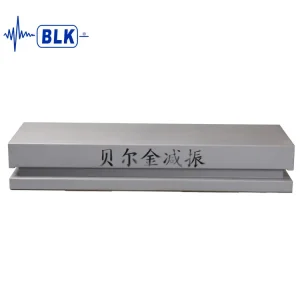


Modern railway networks worldwide—spanning high-speed passenger rail (HSR), heavy-haul freight lines, and urban rapid transit (metros and light rail)—operate under intense mechanical loads. The continuous interaction between train wheels and steel tracks generates dynamic excitation forces ranging from ultra-low frequencies (1–10 Hz) to high-frequency structure-borne noise (50–500 Hz). Left unmitigated, these vibrations degrade track geometry, damage civil infrastructure (such as tunnels and elevated viaducts), cause ballast breakdown, and create severe noise pollution in surrounding urban communities.
Consequently, the global market for railway vibration isolators has transitioned from standard rubber pads to highly specialized elastomeric and hybrid metallic isolation systems. Procurement officers and civil engineers face a dual imperative: achieving strict dynamic attenuation metrics compliance (such as EN 45545-2 flame safety and DIN 45673 track compliance) while simultaneously optimizing the Total Cost of Ownership (TCO) through factory-direct procurement.
The core objective of a railway vibration isolator is to decouple dynamic energy produced by rolling stock from the underlying substructure. Achieving high isolation efficiency depends on matching the isolator's natural frequency ($f_n$) against the dominant disturbance frequency ($f_d$) generated by train wheelsets:
Where: r = f_d / f_n (Frequency Ratio), ζ = System Damping Ratio
To enter the isolation zone where dynamic transmission decreases, the frequency ratio $r$ must exceed $\sqrt{2} \approx 1.414$. For high-performance installations near sensitive urban zones, engineers specify systems targeting $r \ge 3.0$, yielding vibration reduction rates above 90%.
| Isolator Material / Type | Natural Freq. (f_n) Range | Dynamic-to-Static Ratio (K_dyn / K_stat) | Primary Railway Application | Environmental Tolerance |
|---|---|---|---|---|
| High-Resilience EPDM Pad | 12 Hz – 20 Hz | 1.3 – 1.6 | Under-Sleeper Pads (USP), Rail Fasteners | Excellent UV & Ozone Resistance |
| Micro-Cellular Polyurethane (MCU) | 8 Hz – 14 Hz | 1.2 – 1.4 | Under-Ballast Mats (UBM), Baseplates | High Oil & Chemical Resistance |
| Steel Coil Spring with Viscous Damper | 3 Hz – 6 Hz | 1.0 – 1.1 | Floating Slab Track (FST) Systems | Requires Corrosion Shielding (Dacromet) |
| Pneumatic Air Mount Assemblies | 1.7 Hz – 3.5 Hz | 1.05 – 1.15 | Sub-station Precision Recovers & Testing Beds | Controlled Indoor Environments |
When searching for Low Price Railway Vibration Isolator Factories & Price metrics online, procurement managers frequently question how Chinese manufacturers achieve price points 30% to 50% lower than European or North American counterparts without sacrificing safety margins.
The cost advantage stems from structural manufacturing efficiencies within specialized industrial clusters like Kunshan, Jiangsu, rather than material compromise:
Direct localized access to premium synthetic rubbers (EPDM, Natural Rubber compounds) and specialized spring steel mills reduces raw material freight overhead by up to 18%.
State-of-the-art multi-cavity hydraulic injection molding and robotic welding lines eliminate manual labor variances, drastically reducing unit cycle times.
Equipped with dynamic fatigue testing machines capable of 10-million-cycle simulations, ensuring full ISO 9001 quality validation without third-party delay costs.
Bypassing multi-tier international distributors and trading firms removes 25%–35% middleman markups directly for global rail project contractors.
Vibration isolators must be customized according to specific track beds and rolling stock installation environments. Below are the primary deployment scenarios:
Operating at speeds exceeding 300 km/h requires extreme dynamic stability. High-density elastomeric cone mounts and under-sleeper pads prevent micro-fractures in concrete track beds caused by high-frequency impact loads.
Metros passing underneath residential districts utilize Floating Slab Track (FST) systems supported by heavy-duty spring mounts. These lower structural vibration by up to 25 dB(A), suppressing human discomfort.
Axle loads exceeding 30–35 metric tons demand robust steel spring isolators paired with viscous dampers capable of withstanding massive shear stresses and high dynamic impacts without permanent deformation.
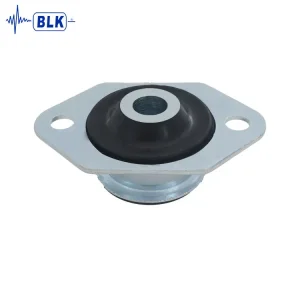
Mounted inside passenger cars and train roof units, compact rubber buffer mounts (like the BKVV & BKSW types) isolate passenger cabins from onboard generator and air conditioning compressor vibrations.
To guarantee long-term operational integrity and avoid premature track degradation, enterprise procurement teams must evaluate isolator manufacturers against five stringent engineering parameters:
- 1. Static vs. Dynamic Stiffness Ratio ($K_{dyn} / K_{stat}$): Ensure the ratio remains below 1.4 for elastomeric mounts to prevent stiffening under fast-moving train loads.
- 2. Fatigue Cycle Validation: Verify that factory test certificates confirm non-failure across at least 5 to 10 million cycles under peak load spectrums.
- 3. Corrosion Protection Specs: Exposed track parts require hot-dip galvanization or Dacromet coating tested for 900+ hours of continuous salt spray exposure.
- 4. Flame & Smoke Safety: Compliance with EN 45545-2 (R22/R23 HL2/HL3 hazard levels) for tunnel fire safety compliance.
- 5. Extreme Temperature Range: Materials must maintain elastomeric memory from -40°C in freezing climates up to +80°C under sun-exposed rails.
The next generation of railway vibration control is moving toward intelligent and sustainable isolation platforms. Industry trendlines reveal two major shifts:
Integration of micro-piezoelectric sensors inside isolator housings allows real-time track condition monitoring. Rail operators receive early warnings regarding ballast settling or abnormal wheel flat spots before structural damage occurs.
Leading Chinese factories are developing bio-based polyurethane and recyclable thermoplastic elastomers (TPE) that significantly lower carbon footprints during track bed construction and decommissioning.
Detailed answers to critical engineering and purchasing questions regarding low-price railway vibration isolators, direct factory lead times, and quality assurance.
Complete your sourcing review with our remaining highly rated industrial shock absorbers, precision air mounts, desktop platforms, and rubber damping pads.