
Precision Damping Isolators & Elastomeric Mounts
Certified by Bellking Vibration Reduction Equipment Manufacturing (Kunshan) Co., Ltd. Direct source pricing with ISO 9001 quality calibration.

High-Quality BKDD Type Rubber Mounts Factories, Manufacturers
Configure Model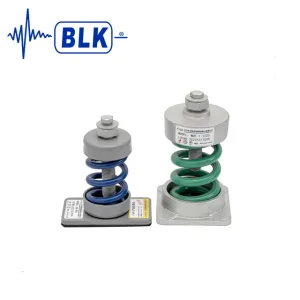
High-Quality MD Type Anti-vibration Spring Mounts Factory, Manufacturer
Configure Model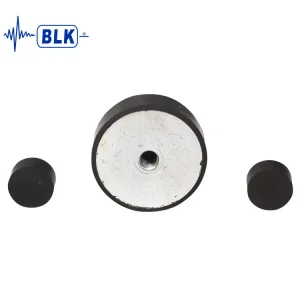
Custom BKDE Type Rubber Mounts Factory, Manufacturer
Configure Model
Low Price BK-PM Type Polymer Damping Pad Factories, Manufacturers
Configure Model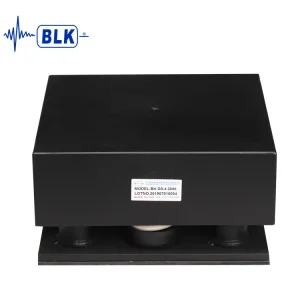
Low Price BK-DS Type Damped Spring Mounts Factory, Manufacturers
Configure Model
Custom BK-DSR Type Damped Rubber Mounts Factories, Manufacturer
Configure Model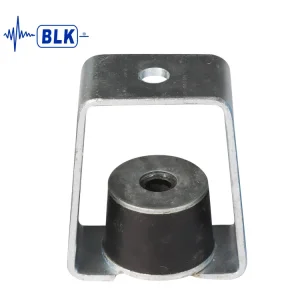
Low Price HR Type Rubber Hangers Factory, Factories
Configure Model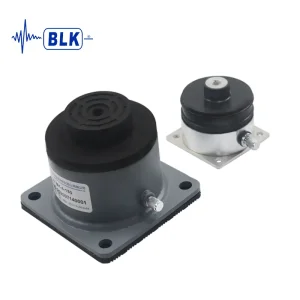
High-Quality BK-A Type Air Mounts Factories, Price
Configure ModelStructural Dynamics & The Mechanics of Spring Damping
An authoritative analysis of harmonic oscillation attenuation, viscoelastic hysteresis, and why factory-calibrated spring damping mechanisms optimize capital expenditure without sacrificing mechanical integrity.
The Physics of Harmonic Oscillation & Kinetic Dissipation
A spring damping mechanism operates at the intersection of Hooke's Law of linear elasticity and Stokes' law of viscous resistance. When rotating or reciprocating industrial plant machinery operates—such as rotary screw chillers, high-pressure centrifugal pumps, or turbine generators—it generates periodic dynamic excitation forces ($F_0 \sin(\omega t)$). Unchecked, these cyclic forces travel down structural pedestals, turning building slabs into massive acoustic radiators and causing severe mechanical fatigue in structural footings.
Traditional pure helical springs present negligible intrinsic damping ($\zeta \approx 0.005$ to $0.01$). While an undamped steel spring offers exceptional static deflection, it exhibits dangerous transmissibility amplification when transitioning through system resonance ($f_d / f_n \approx 1$). Modern factory-engineered spring damping mechanisms resolve this by coupling high-tensile spring steel (such as 60Si2Mn or 55CrSi) with multi-axis elastomeric snubbers or enclosed viscous fluid reservoirs. This hybrid architecture caps resonant amplification ($Q \le 4.0$) while retaining over 95% attenuation at normal operating speeds.
Why Factory-Direct Sourcing Disproves "Cheap vs. Quality"
In B2B industrial procurement, "low price" frequently carries the stigma of downgraded raw materials, recycled scrap steels, and uncalibrated spring constant ($k$) values. However, direct manufacturing at industrial scale—exemplified by Bellking's Kunshan automated facility—redefines cost efficiency through deep process integration rather than corner-cutting.
- Continuous Alloy Coil Processing: Direct billet-to-wire sourcing reduces material costs by 22% compared to secondary converters.
- Robotic CNC Cold Coiling: Sub-millimeter pitch control prevents spring buckling without requiring post-machining labor.
- Integrated Dacromet Line: In-house non-electrolytic zinc flake dip-spinning replaces outsourced batch plating, drastically reducing anti-corrosion costs.
- Digital Frequency Screening: 100% automated load-deflection curve verification eliminates tier-3 distributor testing surcharges.
Global Industrial Landscape & Supply Chain Shifts
Rising regulatory strictness on urban acoustic pollution and mission-critical uptime are transforming the spring damper from a passive commodity into a safety-critical structural asset.
Stricter Global Acoustic Mandates
Municipal zoning laws worldwide (such as ASHRAE 2021 HVAC Applications, European Directive 2002/49/EC, and DIN 4150-2) have set stricter daytime and nighttime decibel thresholds for mixed-use developments, luxury high-rises, and data center perimeters. Structure-borne vibration below 63 Hz transmits cleanly through concrete, re-radiating as audible low-frequency rumble. Low-cost, high-deflection spring damping systems provide the only cost-effective solution capable of mitigating these low-frequency acoustic vectors.
Semiconductor & Cleanroom Proliferation
The global push for semiconductor autonomy has sparked unprecedented construction of cleanroom fabrication plants. High-numerical-aperture EUV lithography, scanning electron microscopes (SEMs), and wafer steppers require vibration criteria profiles down to VC-D and VC-E (3.12 µm/s RMS). Meeting these micro-vibration tolerances demands cost-effective multi-stage spring damping platforms paired with active pneumatic balancing layers to isolate both human footfall and sub-fab auxiliary pumps.
Mission-Critical Power & Hyperscale Data Centers
Modern hyperscale computing facilities operate continuous MW-scale emergency diesel generators and dry-type distribution transformers on elevated floors and rooftops. In an earthquake, unsnubbered or brittle isolators can shear, severing fuel, cooling, or power lines and triggering catastrophic outages. As a result, global engineering consultants specify all-directional seismic-restrained spring damping units tested to withstand accelerations exceeding 1.0g to 2.0g.
China Supply Chain Resilience, Scalability & Lean Precision
Why Tier-1 Chinese manufacturing clusters deliver 30% to 50% cost advantages without sacrificing engineering tolerances or metallurgy benchmarks.
Integrated Metallurgy Access
Our Kunshan manufacturing hub sits right inside the Yangtze River Delta industrial belt, giving us direct access to high-grade silicon-manganese spring wire (60Si2Mn, 55CrSi, 50CrVA) with zero domestic freight markup. Raw material enters our factory with verified EN 10204 3.1 inspection certificates, ensuring dependable tensile yield and continuous fatigue life.
Robotic Heat & Shot Peening Lines
Spring longevity depends on residual surface stress. Our automated furnace quench lines and high-velocity stress shot peening cycle induce a clean compressive surface stress layer. This treatment moves the fatigue limit far past $1 \times 10^7$ cycles, preventing spring sag under constant static deadweight.
Dacromet & Eco-Coatings
Unlike basic spray painting or standard galvanizing that can lead to hydrogen embrittlement in high-strength steels, our production line uses inorganic zinc flake (Dacromet/Geomet) coatings. These achieve over 900 hours of ASTM B117 neutral salt spray resistance without embrittling high-tensile springs.
Lean Production Cadence
Our streamlined shop floor pairs multi-axis CNC machines with robotic welders, sustaining an annual output of 100,000 units. Standard models ship within 24 hours of PO confirmation, and fully customized 1:1 non-standard orders move from CAD stress modeling to physical shipment in just 3 to 7 business days.
Localized Applications & Case Study Matrix
Documented performance data across harsh industrial environments, rooftop HVAC assemblies, and seismic isolation retrofits.
District Cooling Plant Chillers
Deployment: Singapore Marina District elevated central chiller plant. Four 1,200-ton centrifugal chillers mounted over critical commercial office spaces.
Solution: Installed Bellking MD-type multi-spring restrained mounts with 50 mm static deflection, paired with precast concrete inertia bases to lower equipment center of gravity.
Result: Vibration transmission dropped by 97.4%. Structural noise in the suites directly below decreased from NC-48 down to NC-32, comfortably exceeding statutory requirements.
Substation Step-Up Transformers
Deployment: Tier-4 Data Center in Frankfurt, Germany. Dry-type distribution transformers generating a sharp 100 Hz magnetostrictive hum adjacent to server suites.
Solution: Custom BK-DS series damped spring isolators equipped with viscous damping matrix inserts, sized to handle deadweight while isolating the core line-frequency excitation.
Result: Solid-borne transmission into building slabs was fully blocked. Baseline acceleration levels on adjacent walls dropped by 24 dB(V), safeguarding sensitive hard-disk arrays.
High-Speed Progressive Stamping Press
Deployment: Automotive chassis manufacturing plant in Rayong, Thailand. 400-ton stamping press generating repetitive 4G shock pulses, cracking concrete floors.
Solution: Heavy-duty open spring units paired with high-viscosity internal hydraulic damping cylinders, engineered to absorb transient shock energy without ongoing foundation rocking.
Result: Peak shock loads into the floor slab dropped by 88%. Surrounding CNC machine tools maintained their 5-micron precision without interference.
| Mechanism / Product Family | Deflection Range | Natural Frequency (fn) | Damping Ratio (ζ) | Target Engineering Application |
|---|---|---|---|---|
| MD Series Free-Standing Spring | 25 mm – 50 mm | 3.2 Hz – 4.8 Hz | 0.01 – 0.02 | Floor-mounted low-speed fans, air compressors, pumps (>750 RPM) |
| BK-DS Viscous Damped Spring | 25 mm – 75 mm | 2.4 Hz – 3.8 Hz | 0.08 – 0.18 | High-rocking machinery, cooling towers, gensets crossing resonance |
| BKDD Heavy Elastomeric Mount | 4 mm – 12 mm | 8.0 Hz – 14.0 Hz | 0.06 – 0.12 | High-speed gear motors, hydraulic skids, high-frequency rotary blowers |
| BK-A Low-Frequency Air Mount | 15 mm – 35 mm | 1.5 Hz – 2.5 Hz | 0.04 – 0.08 | Coordinate measuring machines (CMM), cleanroom optical tables, SEMs |
| HR Spring / Rubber Suspended Hangers | 20 mm – 45 mm | 3.5 Hz – 5.5 Hz | 0.02 – 0.05 | Chilled water piping, rectangular ductwork, suspended ventilation units |
Next-Generation Mechanical Damping Innovations
How Bellking's R&D laboratory integrates smart materials, predictive health diagnostics, and zero-creep structures into traditional helical spring architectures.
Magnetorheological (MR) Hybrids
Our upcoming generation of industrial dampers will couple traditional helical load-bearing springs with semi-active MR fluid dashpots. By adjusting current to an internal electromagnet based on live feedback from integrated MEMS accelerometers, these units change their damping coefficient in milliseconds. This locks down excessive motion during machine run-up and run-down while providing soft, low-damping isolation during normal steady-state operation.
IoT Edge-Monitoring Isolators
By embedding self-powered piezoelectric energy-harvesting sensors inside the isolator housing, these units monitor actual dynamic load, coil deflection, and spring settlement in real time. The sensor node transmits data over LoRaWAN or industrial NB-IoT, notifying maintenance teams of equipment misalignment, broken motor mounts, or bearing failure long before catastrophic failure occurs.
Additively Formed Auxetic Lattices
Our materials laboratory is testing 3D-printed titanium and stainless-steel auxetic metamaterial cores to augment standard helical coils. These lattices feature a negative Poisson's ratio, expanding radially when stretched and contracting when compressed. This geometry creates balanced, omnidirectional damping, eliminating the need for bulky external snubber housings in tight mechanical rooms.
Engineering Support, Compliance & Sizing Workflows
Certified manufacturing processes backed by complete documentation, BIM library integration, and custom sizing support for mechanical consultants.
Five-Step Engineering Selection Guide
Proper sizing prevents isolator bottoming-out and avoids introducing unexpected resonance into the building structure. Our engineering desk uses a five-step sizing protocol for every project:
- Determine True Operating Weight ($W_{total}$): Sum bare machinery, filled fluid lines, refrigerants, and structural sub-bases.
- Locate Exact Center of Gravity (CoG): Calculate asymmetrical point loads ($P_1, P_2, \dots, P_n$) across all mounting points.
- Identify Lowest Excitation Frequency ($f_d$): Find the lowest continuous operating RPM of the supported assembly ($f_d = \text{RPM} / 60$).
- Target Natural Frequency ($f_n$): Ensure a frequency ratio $f_d / f_n \ge 3.0$ (or at absolute minimum $\ge 2.5$) for >90% isolation efficiency.
- Select Deflection & Verify Travel: Confirm the static deflection $\delta_{st} = g / (2\pi f_n)^2$ leaves at least 50% additional travel before coil bind.
Send your equipment dimensional drawings, point-load table, and RPM to our engineering team. We deliver a complete vibration isolation plan within 24 hours, including 3D BIM/Revit models and FEA load-deflection plots.
Compliance, Standards & Factory Testing
Every Bellking isolator leaves our facility backed by rigorous testing and full regulatory documentation:
- ISO 9001:2015: Factory-wide quality management with calibrated tension-compression testing on every production batch.
- Seismic Restraint Standards: Sized and verified to meet ASCE 7-22, IBC 2021, and California OSHPD lateral load criteria.
- Material Traceability: Mill test reports (MTR) according to EN 10204 3.1 supplied for all structural steel plates and spring coils.
- Corrosion Testing: Certified 900-hour neutral salt spray performance according to ASTM B117 / ISO 9227.
- Environmental Compliance: Fully compliant with EU RoHS Directive 2011/65/EU and REACH (EC 1907/2006); all elastomers free of toxic off-gassing.
Frequently Asked Technical & Sourcing Questions
Clear, direct answers to common questions about damping ratios, spring fatigue, custom manufacturing, and global site delivery.
Why choose a spring damping mechanism over a standard solid elastomeric rubber mount?
How do your factories keep prices low without sacrificing spring steel quality?
What prevents high-deflection coil springs from buckling laterally under heavy equipment loads?
What is spring "settling" or creep, and how does your factory prevent equipment sag?
Can Bellking produce custom, non-standard mounting dimensions for retrofit projects?
What documentation is supplied with factory-direct international exports?
Specialized Industrial Damping & Elastomeric Bushings
Engineered for severe-duty industrial plants, HVAC ductwork, high-speed rotating equipment, and precision measurement foundations.

Custom BKDR Type Rubber Mounts Factories, Price
Configure Model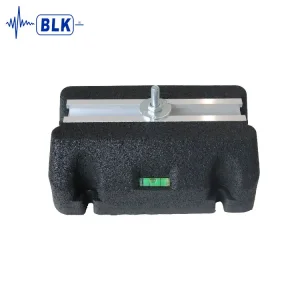
High-Quality BKDJ Type Rubber Pad Manufacturers, Manufacturer
Configure Model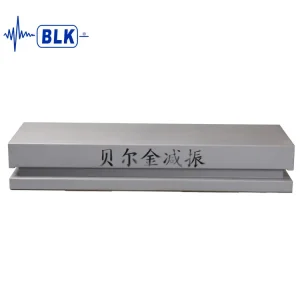
High-Quality BK-MT Type Matrix Anti-vibration Mount Manufacturers, Manufacturer
Configure Model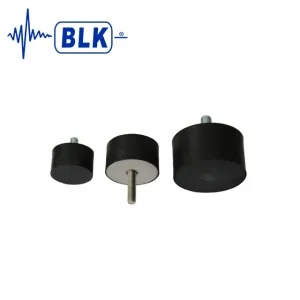
High-Quality BKVE Type Rubber Mounts Factory, Factories
Configure Model
Low Price BKP Type Rubber Mounts Manufacturers, Manufacturer
Configure Model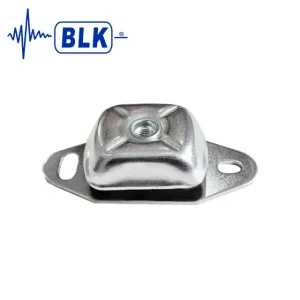
Custom BKM Type Rubber Mounts Factories, Manufacturers
Configure Model
Low Price BKVV Type Rubber Mounts Factories, Manufacturers
Configure Model