
Featured Heavy-Duty & Precision Isolator Series (Part 1)
Explore our factory-direct industrial spring hangers, precision platforms, and elastomeric mounts engineered for maximum transmissibility reduction.

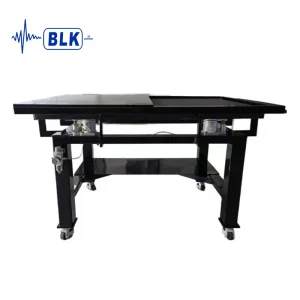

High-Quality BK-DT Type Low-Frequency High-Damping Optical Vibration Isolation Platform Factory, Manufacturer
View Specifications
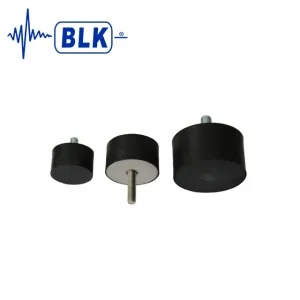



Evolutionary Dynamics & Kinematic Principles of Spring Vibration Isolators
Understanding the transition from basic mechanical elasticity to advanced multi-degree-of-freedom damping systems in modern industrial facilities.
Harmonic Resonance Mitigation
Industrial rotating machinery generates severe low-frequency disturbance forces. Traditional rigid anchor bolts transmit up to 95% of harmonic energy into structural foundations. Modern helical spring isolators decouple equipment energy by establishing a low natural system frequency ($f_n$), ensuring that disturbing frequencies ($f_d$) achieve operational ratios where transmissibility drops below 5%.
Seismic & Wind Restraints
Critical infrastructure in seismic zones (ASCE 7, ASHRAE 170 compliance) demands isolators capable of maintaining static vibration absorption while simultaneously restraining dynamic lateral forces up to 2.0g. Modern housing designs integrate heavy-duty ductile iron snubber housings lined with high-density polyurethane pads to withstand catastrophic shear forces.
Viscous Fluid Integration
Uncontrolled steel springs exhibit high resonance amplification during machine startup and shutdown cycles. To counter transient surge forces, high-performance OEM manufacturers incorporate viscous damping fluid chambers alongside coil springs, elevating the damping ratio ($\zeta$) from 0.01 to over 0.15 without sacrificing static deflection performance.
Isolation Efficiency (%) = (1 - Transmissibility T) × 100%
Where Transmissibility $T = \sqrt{ \frac{1 + (2\zeta r)^2}{(1 - r^2)^2 + (2\zeta r)^2} }$ and $r = f_d / f_n$. High-grade coil springs engineered by Bellking achieve natural frequencies as low as 3.0 Hz, guaranteeing over 97.5% vibration isolation efficiency for equipment operating above 1,200 RPM.
Global B2B Sourcing Analysis: Decoding "Low Price" vs. Total Cost of Ownership (TCO)
Strategic insights for EPC contractors, procurement directors, and MEP consulting engineers seeking optimized capital expenditure without operational risk.
1. The "Low Price" Misconception
Searching for "low price spring vibration isolators" often exposes buyers to low-grade cast carbon steel springs that suffer from permanent set (sagging) within 18 months of continuous load. True cost efficiency lies in direct factory sourcing of shot-peened, fatigue-rated alloy springs (DIN 2096) that eliminate maintenance downtime and premature building structural damage.
2. Value Engineering & OEM Margins
Western brands often rebrand imported vibration isolators with 300% to 500% markups. Direct procurement from ISO 9001 certified Chinese manufacturers eliminates middleman distribution layers, allowing engineering projects to secure 100% compliant seismic-rated mounts at true factory BOM (Bill of Materials) baseline costs.
3. Life Cycle Cost Reduction (LCC)
High-grade surface protection—such as 900-hour salt-spray tested Dacromet coating or hot-dip galvanizing—prevents structural corrosion in coastal HVAC cooling towers and offshore applications. Investing in superior metallurgical coatings upfront drops 15-year TCO by over 60%.
China Factory 4.0: Metallurgical Precision & Supply Chain Resilience
How advanced automated manufacturing clusters in Kunshan deliver world-class anti-vibration hardware with uncompromised quality controls.
Automated CNC Coil Winding
Utilizing fully automated CNC cold coiling machines ensures uniform pitch, precise wire diameter tolerances (±0.05mm), and consistent spring rates ($k$) across batch production runs.
Dacromet Electro-Coating
Unlike standard spray paint that chips and rusts, automated zinc-flake Dacromet lines deliver total surface protection without hydrogen embrittlement risks in high-tensile steel.
100% Load & Deflection Test
Every spring assembly undergoes electronic compression testing to confirm static deflection, solid height safety, and lateral stiffness ratios ($k_x / k_y \ge 0.8$).
Agile OEM Customization
Integrated engineering software (FEA dynamic modeling) enables custom non-standard spring drawing releases within 24 hours and physical prototype delivery in 3 business days.
Engineering Selection Matrix: Isolator Technologies Compared
Selecting the optimal vibration mitigation device based on disturbing frequency, load density, and acoustic isolation objectives.
| Technology Category | Natural Freq (Hz) | Deflection Range | Isolation Efficiency | Best Application Scenarios | Cost Index |
|---|---|---|---|---|---|
| Spring Vibration Isolators (MA/MB/MC/MD Series) | 3.0 - 5.0 Hz | 25mm - 50mm | 95.0% - 99.0% | HVAC Chillers, Air Handling Units, Cooling Towers, Gensets | Low - Medium (Optimal OEM) |
| Pneumatic Air Mounts (BK-PA Series) | 1.5 - 2.5 Hz | Active Air Chamber | 98.5% - 99.9% | Semiconductor Lithography, Electron Microscopes, Metrology | High (Precision Class) |
| Elastomeric Rubber Mounts (BKVE/BKDR Series) | 8.0 - 15.0 Hz | 3mm - 10mm | 80.0% - 92.0% | High-Speed Motors (>1800 RPM), Small Compressors, Piping Pads | Very Low (Economy) |
| Optical Damping Platforms (BK-DT / BK-VT) | 1.7 - 3.0 Hz | Rigid Honeycomb Core | 97.0% - 99.5% | Laser Interferometers, Cleanroom Inspection, Precision Optics | Medium - High |
| Seismic Restrained Spring Mounts | 3.0 - 4.5 Hz | 25mm - 75mm | 94.0% - 98.5% | Roof Chiller Plants, Earthquake Hazard Zones (Zone 4) | Medium |
Localized Application Engineering & Real-World Scenarios
Field-tested anti-vibration integration across commercial, power generation, industrial manufacturing, and micro-electronics environments.
A. Central HVAC Chillers & Rooftop Pumps
Challenge: Heavy centrifugal chillers installed on lightweight concrete roof decks transmit low-frequency noise (30-60 Hz) into occupied executive floors below.
Solution: Installation of Bellking MA-Type open spring isolators with 50mm static deflection combined with concrete inertia bases. Reduces transmissibility to under 2%, complying with stringent LEED acoustic indoor environmental quality standards.
B. Substation Transformers & Gensets
Challenge: Magnetostrictive core hum from 110kV electrical transformers creates structure-borne 100Hz/120Hz continuous acoustic resonance in high-rise basements.
Solution: Heavy-duty high-damping matrix transformer mounts featuring dual-layer elastomer-spring composites. Absorbs 98% of core vibrations and prevents fatigue damage to high-voltage cable terminations.
C. Semiconductor Fabs & Cleanroom Metrology
Challenge: Sub-micron wafer inspection tools require zero ambient floor vibration (VC-E / VC-G criteria) in cleanroom environments.
Solution: Implementation of BK-PA Precision Air Mounts paired with BK-DT optical platforms, achieving high pneumatic isolation efficiency down to 1.7 Hz natural frequency and automated level control (±0.05mm).
Frequently Asked Questions (Engineering & Sourcing FAQ)
Expert technical answers regarding sizing, mechanical performance, corrosion protection, and factory direct procurement.
1. How do I accurately size a spring vibration isolator for a chiller or pump?
2. Why are Bellking spring vibration isolators priced significantly lower than European/US OEM equivalents?
3. What is the difference between open spring isolators and restrained spring isolators?
4. What surface protection is applied to prevent rust in humid or coastal environments?
5. What is the expected service life of Bellking spring vibration isolators?
6. Can custom mounting dimensions and non-standard spring rates be developed?
7. How does an inertia base improve spring isolator performance under centrifugal pumps?
Featured Heavy-Duty & Precision Isolator Series (Part 2)
Explore additional specialized matrix mounts, multi-layer dampers, desktop platforms, and low-frequency air mounts.





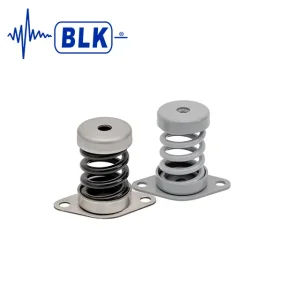


Request Factory Direct Pricing & Custom Sizing Plans
Need engineered vibration calculations, 3D CAD models, or custom OEM quote proposals? Our team of vibration control specialists responds within 24 hours.