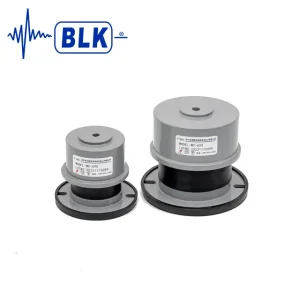
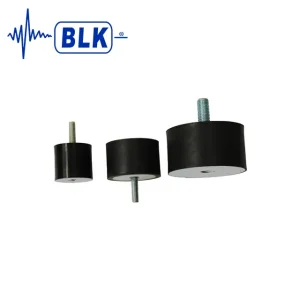
Precision Engineering Vibration Isolation Mounts
Explore our primary range of factory-direct elastomer buffers, spring hangers, and high-damping optical platforms engineered for low natural frequencies and high dynamic durability.
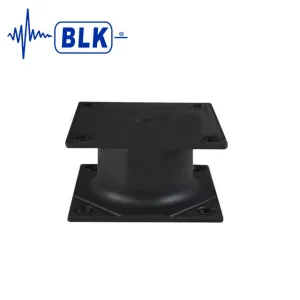

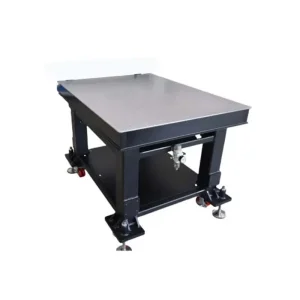



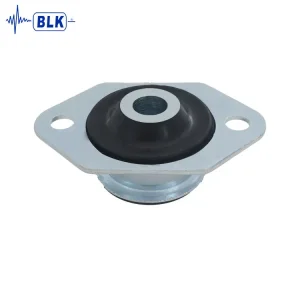
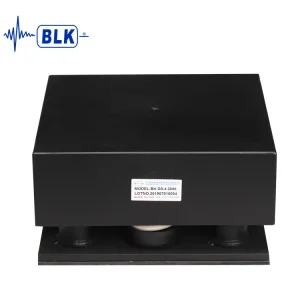
Navigating Low Price Vibration Isolation Mount Sourcing Without Quality Compromise
In industrial machinery, HVAC installation, power transmission, and semiconductor manufacturing, mechanical vibration represents an ongoing operational hazard. Left unattenuated, structure-borne harmonic oscillations lead to premature fatigue failure of equipment frame, structural acoustic noise pollution, degraded machining tolerances, and costly un-planned downtime. Consequently, procurement officers and mechanical engineering leads frequently seek out low price vibration isolation mounts factories and competitive pricing structures to mitigate financial outlay while maintaining structural integrity.
However, searching for low-cost vibration control components presents a technical dichotomy. Lower unit cost must not be achieved by degrading dynamic stiffness ratios, utilizing un-vulcanized scrap rubber fillers, or omitting fatigue-resistant heat treatment in steel springs. True economy in vibration control sourcing stems from total cost of ownership (TCO) optimization—leveraging advanced automated production in industrial hubs such as Kunshan, China, optimizing standardized elastomeric formulas, and direct engineering-to-factory procurement models.
The Physics of Vibration Isolation: Dynamic Calculations & Selection Criteria
To properly specify a low price vibration isolation mount from a manufacturing facility, engineering teams must evaluate the underlying physics rather than relying solely on static load capacities. The ultimate objective of an anti-vibration mount is to shift the system's natural frequency ($f_n$) far below the forcing frequency ($f_d$) generated by rotating or reciprocating equipment.
Transmissibility & Frequency Ratio
Vibration isolation begins only when the ratio of forcing frequency to natural frequency ($f_d / f_n$) exceeds $\sqrt{2} \approx 1.414$. At ratios below 1.414, the isolator amplifies vibration due to resonance. For high-efficiency performance (>90% isolation efficiency), factory designs target an $f_d / f_n$ ratio of 3:1 or higher.
Static Deflection Mechanics
For helical spring vibration isolators, the natural frequency ($f_n$) is inversely proportional to the static deflection ($\delta$) caused by the equipment's static weight:
$f_n \approx 5 / \sqrt{\delta \text{ (in cm)}}$
Achieving a lower natural frequency requires greater static deflection, demanding high-grade spring steel (such as 60Si2Mn) that resists long-term creep and stress relaxation.
Elastomer Damping & Hysteresis
Rubber vibration isolators operate via internal polymer hysteresis loss, converting mechanical vibration energy directly into microscopic heat. While rubber provides superior high-frequency acoustic attenuation and internal structural damping, its dynamic stiffness index ($K_d / K_s$) must be managed to prevent stiffness hardening over extended duty cycles.
Comprehensive Vibration Isolator Technical Selection Matrix
Selecting the correct mount class ensures optimized pricing without over-engineering or compromising performance limits.
| Isolator Mount Type | Core Elastomer / Material | Natural Frequency ($f_n$) | Damping Ratio ($\zeta$) | Primary Industrial Application | Relative Price Index |
|---|---|---|---|---|---|
| Helical Damped Spring Mounts (BK-DS / MD) | High-Carbon Alloy Steel & Viscous Damping | 2.5 Hz – 5.0 Hz | 0.08 – 0.15 | Heavy Chillers, Cooling Towers, Generator Sets | Medium |
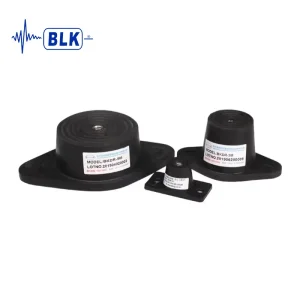
| High-Damping Rubber Buffers (BKSW / BKVE) | Compounded NR / EPDM Elastomer | 8.0 Hz – 15.0 Hz | 0.15 – 0.25 | Industrial Pumps, Motors, Hydraulic Power Units | Economy / Low Price |
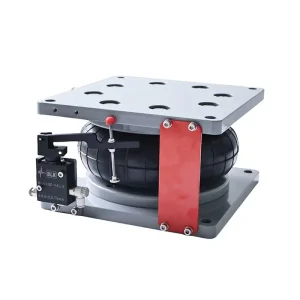
| Precision Air Pneumatic Mounts (BK-PF) | Reinforced Elastomeric Diaphragm | 1.5 Hz – 3.0 Hz | 0.05 – 0.20 | Semiconductor Inspection, CMM, Optical Benches | High Precision |
| Anti-Vibration Spring Hangers | Steel Spring + Neoprene Cup | 3.0 Hz – 6.0 Hz | 0.05 – 0.10 | Suspended Ductwork, HVAC Piping, Ceiling AHUs | Economy / Low Price |
| Cone & Cylindrical Mounts (BKCN / BKDR) | Bonded Rubber-to-Metal Shears | 7.0 Hz – 12.0 Hz | 0.10 – 0.18 | Off-highway Equipment, Engine Cradles, Cabinets | Economy / Low Price |
Why China Factories Deliver Low Price & High Quality in Vibration Control
The global procurement landscape for vibration isolation hardware has shifted dramatically toward specialized manufacturing hubs in China, specifically within industrial clusters like Kunshan, Jiangsu. The ability of Chinese factories to deliver low price vibration isolation mounts alongside rigorous ISO 9001 quality compliance rests on several systemic supply chain advantages:
- Upstream Material Integration: Immediate proximity to world-class steel mills and synthetic rubber compounding plants reduces raw material transport overhead and lead times.
- Automated Production Lines: Robotic CNC spring coiling, continuous vacuum rubber vulcanization, and automated shot peening maximize yield rates while minimizing unit labor overhead.
- Advanced Surface Metallurgy: Modern surface treatments, such as electro-galvanizing and Dacromet coating (passing 900-hour salt spray testing), are performed in high-volume integrated finishing plants.
- In-House Tooling & Mold Making: Rapid tooling turnover allows custom rubber formulation, bespoke thread sizing, and modified bracket dimensions in days rather than weeks.
Manufacturing Quality Assurance Architecture
A low factory price is meaningless if it leads to high field failure rates. Leading Chinese factories implement strict quality control gates across the production life cycle:
Verifying raw steel alloy composition and natural rubber purity prior to processing.
Subjecting spring and elastomeric batches to 2,000,000 continuous compression cycles.
Automated testing of spring rates ($K$) to ensure strict compliance within $\pm 5\%$ tolerance bands.
Macro Solutions & Field Application Scenarios
Vibration isolation mounts are deployed across diverse global industries. Tailoring mount selection to specific operational environments is essential for cost optimization and equipment reliability.
HVAC & Commercial Building Engineering
Chillers, large centrifugal water pumps, and air handling units (AHUs) located on roof decks or upper floors transmit low-frequency hum throughout building structures. Utilizing heavy-duty spring mounts (MD/MA Series) combined with spring hangers for suspended piping effectively isolates frequencies down to 3 Hz, meeting stringent NR-25 acoustic criteria in commercial installations.
Semiconductor & Precision Metrology
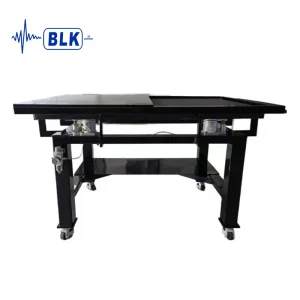
Sub-micron lithography, CMM inspection tools, and laser optical benches require complete isolation from floor footfall noise and ambient factory vibrations. High-damping optical vibration isolation platforms (BK-DT) and pneumatic air mounts (BK-PF) isolate micro-vibrations down to 1.7 Hz, ensuring reliable, sub-micron measurement accuracy.
Electrical Transformers & Power Substations
Power transformers exhibit continuous magnetostrictive hum at twice the grid frequency (100 Hz / 120 Hz). Specialized transformer anti-vibration mounts engineered with oil-resistant elastomers and high static load ratings isolate structural hum, preventing noise propagation through electrical room floors into adjacent urban spaces.
Understanding Factory Cost Drivers for Anti-Vibration Mounts
When evaluating supplier quotes for low price vibration isolation mounts, international procurement teams must analyze the underlying bill of materials (BOM) and manufacturing process drivers to ensure price quotes reflect genuine efficiency rather than material shortcuts.
1. Rubber Elastomer Chemistry
Elastomer formulation accounts for 35%–50% of a rubber mount's cost. High-grade 100% virgin Natural Rubber (NR) or Ethylene Propylene Diene Monomer (EPDM) provides long-term elastic memory and tensile strength (>15 MPa). Lower-cost alternatives that incorporate recycled crumb rubber or high concentrations of carbon black filler suffer from accelerated compression set and severe cracking under outdoor UV exposure.
2. Metallurgy & Spring Processing
For spring mounts, alloy selection is paramount. Premium manufacturers utilize 60Si2Mn or 50CrVa spring steel subjected to precision oil quenching and double shot peening. Lower-tier suppliers may use plain carbon steel wire without thermal stress relief, leading to height sagging, altered spring rates, and eventual fatigue fracture within 12–18 months of operation.
3. Bonding Metallurgy & Corrosion Finish
The metal-to-rubber bonding layer requires automated chemical washing, silane primer coating, and precise vulcanization pressure. Furthermore, outdoor mounts require hot-dip galvanizing or Dacromet coating. Skimping on surface preparation lowers factory costs by 15%, but risks premature bond debonding and rusting in humid environments.
B2B Buyer Checklist: Evaluating Low Price Vibration Mount Factories
Use this strategic evaluation checklist when auditing OEM/ODM vibration control suppliers to balance aggressive unit cost targets with strict engineering standards.
Step 1: Request Dynamic Stiffness Data Sheets
Ensure the supplier provides dynamic stiffness ratio ($K_d / K_s$) curves across operational temperature ranges (-20°C to +80°C) and excitation frequencies, not just static deflection numbers.
Step 2: Audit Metal-to-Rubber Bond Integrity
Confirm compliance with ASTM D429 Method B (90 Degree Peel Test) for rubber-to-metal bonding strength to prevent shear separation under extreme shock loads.
Step 3: Verify Salt Spray Corrosion Certification
For outdoor HVAC or coastal installations, verify third-party ASTM B117 salt spray test reports certifying a minimum 500 to 900-hour rating without red rust formation.
Step 4: Clarify Packaging & Customization MOQ
Confirm factory minimum order quantities (MOQs), palletized export packaging specs, custom thread tapping options (Metric vs. UNC), and color-coding for spring load identification.
Vibration Isolation Sourcing & Technical FAQ
Clear answers to common questions asked by procurement officers and mechanical design engineers.
Advanced & Specialized Vibration Isolation Solutions
Explore our specialized series including custom platforms, precision pneumatic air mounts, and heavy-duty damped rubber isolators.