
Industrial Engineering & Whitepaper
Low Price Vibration Mounting And Controls Manufacturers & Price
Comprehensive Technical Analysis of Mechanical Dynamics, Cost Optimization, Isolation Efficiency, and Global Supply Chains for Heavy Machinery, HVAC, Power Systems, and Semiconductor Cleanrooms.
Direct Factory Catalog
Featured Vibration Mounting & Control Systems (Part 1)
Precision-engineered spring, rubber, and pneumatic isolation systems designed for high transmissibility reduction and structural dynamic stability.

High-Quality BK-PA Type Precision Air Mounts Factories, Manufacturers
View Product Details
High-Quality MA Type Anti-vibration Spring Mounts Factory, Factories
View Product Details
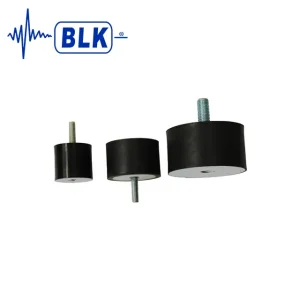
Low Price BKP Type Rubber Mounts Manufacturers, Manufacturer
View Product Details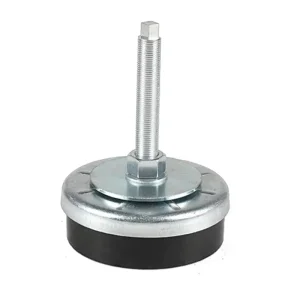
Low Price BKAL Type Adjustment Rubber Feet Factory, Manufacturers
View Product Details
Low Price BK-DS Type Damped Spring Mounts Factory, Manufacturers
View Product Details
High-Quality BK-A Type Air Mounts Factories, Price
View Product Details
Custom BKSWA Type Multi-Layer Antivibration Dampers Factory, Price
View Product Details
Industry Economics & Supply Chain Analysis
Global Commercial & Industrial Status of Vibration Control Technology
In modern industrial manufacturing, civil architecture, power generation, and high-precision scientific engineering, mechanical vibration control has transitioned from an ancillary design consideration to a mission-critical sub-discipline. Uncontrolled dynamic forces generated by rotating, reciprocating, or impacting machinery lead to premature mechanical fatigue, structural noise pollution, micro-displacement in precision optical setups, and catastrophic equipment failures. Consequently, the global market for low price vibration mounting and controls has witnessed exponential expansion, driven by stringent urban noise pollution regulations, high-speed automated production lines, and the rapid growth of advanced semiconductor fabrication facilities worldwide.
Historically, industrial procurement teams faced a binary compromise: either purchase premium-priced European or North American vibration isolators at elevated capital expense, or compromise on structural safety with low-tier unverified rubber buffers. Today, modern engineering manufacturers—exemplified by advanced manufacturing hubs in Kunshan, China—have fundamentally redefined this market. By combining high-grade raw materials (such as Dacromet-coated alloy spring steel and high-durability elastomeric compounds) with automated robotic welding and precise vulcanization techniques, factory-direct suppliers offer enterprise-grade vibration mounts at competitive price points.
Information Gain Key Insight: Low-cost vibration control does not imply lower mechanical performance. Cost reductions are primarily achieved through optimized manufacturing scale, lean supply chains, local elastomer formulation, and integrated automated testing—yielding isolation efficiencies exceeding 95% to 99% without premium brand markups.
Globally, the market dynamics vary considerably across geographic regions:
- North America & Western Europe: High demand driven by retrofit projects, strict OSHA workplace acoustic standards, and advanced HVAC updates in commercial skyscrapers and data centers. Procurement focuses heavily on certified compliance, salt-spray durability, and seismic-restraint ratings.
- Asia-Pacific (APAC): The fastest-growing regional hub, driven by massive investments in semiconductor cleanrooms, lithium-battery gigafactories, high-speed rail networks, and heavy industrial plant expansions. Direct access to primary metal and rubber refining allows APAC manufacturers to lead in cost-efficiency and custom engineering agility.
- Middle East & Latin America: Expansion in energy infrastructure, desalination plants, power substations, and heavy mining infrastructure requires extreme-environment isolators capable of surviving high ambient temperatures, UV exposure, and sand abrasion.
99%
Max Isolation Efficiency
1.7 Hz
Ultra-Low Natural Freq.
900 Hrs
Salt Spray Resistance
15+ Yrs
Operational Service Life
Technology Integration
Emerging Development Trends in Industrial Vibration Control
1. Hybrid Active-Passive Damping Architecture
While traditional passive spring and rubber mounts remain the benchmark for economical continuous load isolation, high-tech facilities are rapidly integrating active air mounts. Pneumatic systems equipped with high-speed proportional valves allow automatic leveling and real-time response to dynamic payload shifts in sub-micron manufacturing tools.
2. Advanced Nanocomposite & Eco-Rubber Compounds
Environmental standards (RoHS/REACH) and cleanroom outgassing requirements have driven innovations in synthetic rubber formulation. Modern rubber buffers and cone mounts utilize modified EPDM and high-damping silicone blends that resist ozone cracking, petroleum exposure, and temperature extremes without toxic off-gassing.
3. Extended Corrosion-Proof Coatings (Dacromet/Geomet)
Standard industrial paint finishes deteriorate rapidly when exposed to cooling tower moisture, coastal salt air, or outdoor transformer pads. Premium low-cost spring manufacturers now standardly apply Dacromet coatings capable of surviving over 900 hours of continuous salt-spray testing, quadrupling field operational lifespans.
Engineering Deployments
Localized Application Scenarios & Engineering Frameworks
Choosing the correct vibration isolation mechanism requires a granular understanding of the operational environment, the disturbance frequency ($f_d$), and structural mounting constraints. Below are five key industrial scenarios where custom vibration control systems are essential:
1. Commercial MEP & HVAC Mechanical Rooms
Large-scale chillers, centrifugal water pumps, cooling towers, and Air Handling Units (AHUs) installed on roof slabs or mechanical floors transmit significant low-frequency structure-borne noise. Unchecked vibrations travel through building concrete frames, creating acoustic nuisance in office or residential zones. Deploying damped spring mounts (BK-DS Type) or inertia bases (CPB Type) decouples the equipment from the slab, reducing harmonic energy transfer by up to 98%.
2. Semiconductor Tooling & Metrology Cleanrooms
Sub-nanometer photolithography equipment, Coordinate Measuring Machines (CMMs), electron microscopes, and laser inspection benches are extraordinarily sensitive to ambient floor vibrations (such as footsteps, nearby traffic, or elevator operation). Passive or active precision air mounts (BK-PA and BK-PF Types) provide ultra-low natural frequencies (down to 1.7 Hz), ensuring micro-vibration mitigation required for pristine semiconductor yield rates.
3. Electrical Power Transformers & Substations
Dry-type and oil-immersed power transformers emit a constant 100 Hz / 120 Hz magnetostrictive hum caused by core alternating magnetic fields. When mounted directly on concrete pads, this frequency amplifies through the ground. Specialized transformer anti-vibration mounts utilizing composite matrix rubber pads and constrained spring assemblies effectively contain acoustic humming within the substation boundary.
4. Heavy Stamping Presses & Reciprocating Machinery
Forging presses, punch presses, and industrial air compressors impart high-energy dynamic shock loads into factory floors. Unchecked shock waves crack adjacent concrete foundations and disrupt nearby automated machinery. Utilizing high-load elastomeric buffers (BKVD/BKP Types) combined with viscous damping matrices cushions dynamic impulse impact, protecting both machine housing and structural foundations.
| Isolator Type | Primary Elastomer / Material | Natural Frequency ($f_n$) | Best Suited Application | Target Isolation Range |
|---|---|---|---|---|
| Pneumatic Air Mounts (BK-PA/PF) | Reinforced Elastomeric Air Spring | 1.7 Hz - 3.0 Hz | Semiconductor, CMMs, Optical Benches | 95% - 99% |
| Spring Mounts (MA / BK-DS) | High-Tensile Alloy Spring Steel | 3.0 Hz - 5.0 Hz | Chillers, HVAC Pumps, Gensets, AHUs | 90% - 98% |
| Rubber Mounts (BKVD / BKP) | Custom Vulcanized Neoprene / EPDM | 7.0 Hz - 15.0 Hz | Motors, Small Compressors, CNC Machines | 80% - 92% |
| Inertia Bases (CPB Type) | Structural Steel Frame + Concrete | Custom System Damping | End-Suction Pumps, High-Dynamic Fans | System Motion Stabilization |
Future Horizons
Technology Roadmap & Future Outlook (2025–2035)
Anticipating the next decade of structural dynamics, smart material advances, and factory automation integrations.
2025 – 2027
IoT-Connected Smart Isolators
Integration of low-cost wireless MEMS accelerometer sensors embedded inside spring housings for real-time condition monitoring, predictive mechanical maintenance, and automated load imbalance alerts.
2027 – 2029
Magnetorheological (MR) Dampers
Commercialization of low-power MR fluid dampers capable of adjusting shear stress within milliseconds to dynamically absorb variable impulse loads from industrial stamping and seismic tremors.
2029 – 2032
Zero-Outgassing Nanocomposites
Development of ultra-clean, molecularly cross-linked elastomers tailored for EUV lithography cleanrooms operating in near-vacuum conditions without hydrocarbon contamination risk.
2032 – 2035
AI-Optimized Dynamic Matrix Pads
Generative AI algorithm modeling for customizing 3D-printed lattice elastomer mounts tailored precisely to non-symmetrical mass distribution equipment in high-speed aerospace applications.
System Engineering & Sizing Math
Macro-Level Industrial Solutions & Selection Physics
To guarantee that a low-cost vibration mounting solution performs reliably without risking mechanical resonance, field engineers must apply core structural dynamics calculations rather than estimating load values. Under-specifying an isolator leads to bottoming out, while over-specifying creates an excessively stiff mount that conducts vibrations directly into the substrate.
Key Mathematical Formulation for Isolation Design
1. Natural Frequency ($f_n$) Calculation:
f_n = (1 / 2π) * √(k / m) = 4.98 / √(δ_s) [Hz]
Where $k$ is the spring stiffness (N/m), $m$ is the equipment supported mass (kg), and $\delta_s$ is the static deflection of the mount in centimeters.
2. Vibration Transmissibility ($T$) Equation:
T = 1 / | (f_d / f_n)² - 1 |
Where $f_d$ is the operating/disturbing frequency of the machinery (RPM / 60). Effective isolation occurs strictly when $f_d / f_n > \sqrt{2} \approx 1.414$. For high-efficiency isolation (>90%), engineers target $f_d / f_n \ge 3.0$.
By specifying spring mounts with adequate static deflection ($\delta_s$), the system's natural frequency is pushed significantly below the machine's running speed, achieving optimal performance at minimal unit cost.
Complete Range Showcase
Anti-Vibration Mounts & Precision Isolation Catalog (Part 2)
Explore our specialized heavy-duty matrix mounts, cone buffers, precision air platforms, and pump inertia supports.

High-Quality BK-MT Type Matrix Anti-vibration Mount Manufacturers, Manufacturer
View Product Details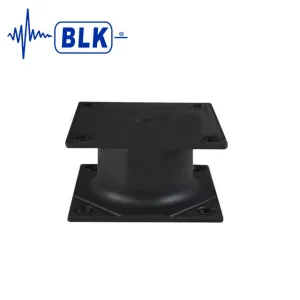
Custom BKSW Type Rubber Buffer Factory, Manufacturers
View Product Details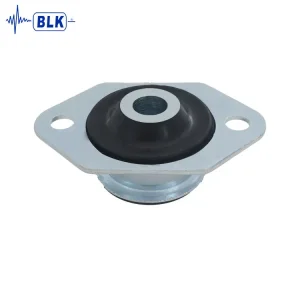
High-Quality BKCN Type Cone Mounts Factory, Manufacturers
View Product Details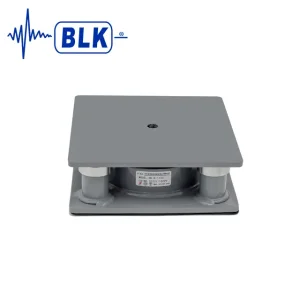
High-Quality BK-R Type Air Mounts Factories, Manufacturer
View Product Details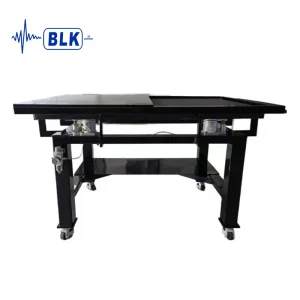
Custom BK-VT Type Vibration Isolation Platform Factories, Manufacturer
View Product Details
High-Quality BKDD Type Rubber Mounts Factories, Manufacturers
View Product Details
High-Quality BK-PF Type Precision Air Mounts Factories, Manufacturer
View Product Details
High-Quality CPB type Inertia Bases & Pump Supports Manufacturers, Manufacturer
View Product Details
Authoritative Engineering FAQ
Technical Guidance & Manufacturer Selection Q&A
How do engineers differentiate between rubber, spring, and pneumatic mounts for low-cost projects?
Selection is dictated by the equipment's disturbing frequency ($f_d$). Elastomeric rubber mounts (e.g., BKVD, BKP) exhibit higher natural frequencies (7–15 Hz) and are ideal for high-speed equipment like motors, small compressors, and fans (>1,200 RPM). Steel spring mounts (e.g., MA, BK-DS) provide lower natural frequencies (3–5 Hz), making them essential for lower-speed HVAC chillers, heavy pumps, and diesel generators (300–1,200 RPM). Pneumatic air mounts (e.g., BK-PA, BK-PF) achieve ultra-low natural frequencies (1.7–2.5 Hz) required for sensitive micro-vibration environments like semiconductor probing and optical metrology.
Why is purchasing directly from Chinese manufacturers like Bellking cost-effective without sacrificing quality?
Direct sourcing from Kunshan's specialized industrial clusters eliminates multiple distributor markups, agent overheads, and import re-branding costs. Furthermore, automated spring coiling, robotic welding, in-house vulcanization, and local raw steel procurement significantly lower manufacturing overhead. Compliance with ISO 9001 and international testing guarantees that materials, fatigue resistance, and salt-spray durability meet global standards.
What crucial mechanical parameters must be submitted to receive a dynamic isolation plan?
To accurately size vibration mounts, engineers require: (1) Total operating mass of the machine; (2) Mass distribution and exact center of gravity (CG); (3) Number and spatial layout of mounting support points; (4) Minimum operational speed (RPM or Hz); (5) Environmental factors (indoor, corrosive cooling tower, oil exposure, cleanroom cleanliness class); and (6) Any required seismic or wind-restraint hardware.
What is the functional purpose of an Inertia Base (CPB Type) under a motor-driven pump?
An inertia base consists of a structural steel frame filled with high-density concrete beneath equipment. It serves three crucial functions: (1) Lowers the system center of gravity to prevent equipment rocking or tipping during start-up torque surges; (2) Adds mass to reduce the vibration amplitude of the operating equipment; and (3) Provides rigid alignment between the pump and motor, preventing pipe flange strain and dynamic fatigue.
How long is the expected field service life of industrial anti-vibration mounts?
Under standard indoor plant operating conditions, steel spring mounts treated with Dacromet corrosion protection perform efficiently for 15+ years. Elastomeric rubber mounts typically deliver a service life of 8 to 12 years before environmental oxidation degrades the compound, while pneumatic air mounts maintain peak performance for 6+ years under continuous regulated air supply.
Request Your Customized Vibration Control & Pricing Plan Today
Our application engineering team provides complete static deflection analysis, custom isolator CAD drawings, and factory-direct pricing quotes within 24 hours.