
Featured Vibration Isolation Systems
Engineered for low natural frequency, maximum stability, and heavy-duty mechanical equipment isolation.
1. The Bangkok Metropolises & Eastern Seaboard Industrial Ecosystem
The Greater Bangkok Metropolitan Area—encompassing Bangkok, Samut Prakan, Nonthaburi, and Pathum Thani—along with the surrounding Eastern Economic Corridor (EEC) industrial clusters (Chonburi and Rayong), represents the powerhouse of Southeast Asia’s industrial growth. From high-density commercial towers along Sukhumvit, Silom, and Wireless Road to massive automotive, electronic, and pharmaceutical plants across Bang Kadi, Lat Krabang, and Amata City, mechanical infrastructure requirements have evolved dramatically.
In modern industrial and commercial MEP (Mechanical, Electrical, and Plumbing) design, the installation of high-capacity centrifugal pumps, massive HVAC chillers, cooling towers, and air-handling units (AHUs) introduces severe structural vibration challenges. In Bangkok's specific geographical setting, where high-rise buildings are anchored into deep alluvial clay soil and industrial parks operate 24/7 high-duty equipment, unmitigated mechanical vibrations lead to catastrophic structural fatigue, pipe line ruptures, premature bearing failures, and severe noise pollution governed by Thailand's Pollution Control Department guidelines.
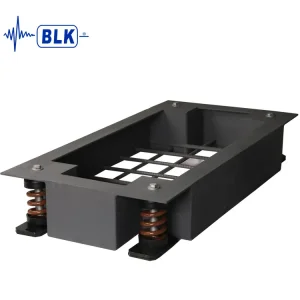
To overcome these challenges, consulting engineers, EPC contractors, and plant managers across Bangkok are specifying engineered heavy-duty Inertia Bases & Pump Supports paired with open or caged spring isolators. Inertia bases serve a dual physical purpose: they add structural mass to lower the system's center of gravity and provide an unyielding rigid framework that prevents pump casing distortion and pipe flange strain during high-torque starting cycles.
2. Physical Dynamics & Fundamental Selection Mechanics of CPB Inertia Bases
An inertia base is not merely a steel tray poured with concrete; it is a tuned mechanical system designed using precise principles of structural dynamics. The physics of vibration isolation dictates that isolation efficiency ($I_e$) depends entirely on the ratio between the equipment's disturbing frequency ($f_d$, calculated from motor RPM) and the isolator system's natural frequency ($f_n$).
Key Dynamic Equations Governing Inertia Base Sizing:
1. System Natural Frequency Equation:
f_n = (1 / 2π) * √(k / m)
Where k is the total stiffness of the spring isolators and m is the combined mass of the equipment, fluid, structural base, and poured concrete. By increasing the total system mass (m) via a heavy concrete-filled CPB inertia base, the natural frequency ($f_n$) is systematically driven down into the desirable 3 Hz to 5 Hz range.
2. Vibration Transmissibility ($T_r$):
T_r = √[ (1 + (2ζr)²) / ((1 - r²)² + (2ζr)²) ]
Where $r = f_d / f_n$ is the frequency ratio, and $\zeta$ is the damping factor. When $r > \sqrt{2}$, isolation begins. To achieve an isolation efficiency exceeding 95% in Bangkok high-rise plant rooms, $r$ must be maintained above 3.0.
When high-capacity end-suction or split-case pumps operate, sudden changes in water velocity create dynamic thrust forces. Without a properly engineered inertia base, these forces cause eccentric movement, leading to localized pipe fatigue, leaking mechanical seals, and structure-borne noise transmission through the building skeleton. By matching the weight of the concrete base to 1.5–3.0 times the wet weight of the pump assembly, rotational eccentricity is absorbed and dynamic movement is constrained within tight ISO 10816 velocity limits.
Mass Stabilization
Provides rigid support, absorbing dynamic motor torque and preventing torsional movement during high-load pump startups.
Lower Center of Gravity
Drastically reduces the rocking motion of tall vertical in-line pumps or heavy double-suction pumps in compact MEP layouts.
Pipe Stress Protection
Keeps suction and discharge nozzles perfectly aligned with connected piping, preventing costly flange shearing and seal tears.
3. China's Manufacturing Engine: Precision, Speed, and Scale for Bangkok Projects
While local Bangkok steel fabricators offer basic welding services, high-specification inertia bases require exact structural tolerances, integrated height-saving brackets, embedded steel rebar networks, and specialized anti-corrosion surface treatments. Partnering with a dedicated, high-tech manufacturing facility in China—such as Bellking’s 2,000 m² state-of-the-art facility in Kunshan, Jiangsu—provides unprecedented advantages for global procurement managers and Thai MEP contractors.
The synergy between Chinese advanced manufacturing and Thailand's rapidly growing infrastructure sector delivers four critical benefits:
- Automated Precision Fabrication: Utilizing high-precision fiber laser cutting, robotic seam welding, and CNC bending ensures structural perimeter channels (ASTM A36 steel) match engineering CAD blueprints down to sub-millimeter tolerances.
- Advanced Coating Technologies for Tropical Resilience: Bangkok’s warm, highly humid climate causes rapid atmospheric oxidation on bare structural steel. Chinese direct factories apply high-grade hot-dip galvanizing and Dacromet coatings capable of enduring over 900 hours of continuous salt spray testing.
- 3-Day Rapid Custom Engineering: Tailored CPB type inertia bases designed around non-standard equipment dimensions can be engineered, structural-stress-tested via FEA software, and produced within 3 to 5 working days.
- Unmatched Cost-to-Performance Ratio: By sourcing directly from China's primary industrial steel and spring supply chains, contractors achieve 30% to 45% cost savings compared to European or Western-sourced isolators, without sacrificing ISO 9001 quality metrics.
| Parameter / Specification | Standard Local Bangkok Fabricator | Bellking China Direct Factory Supply |
|---|---|---|
| Structural Steel Grade | Commercial Grade Mild Steel (Variable) | Certified ASTM A36 / Q235B Heavy Channel Steel |
| Surface Corrosion Protection | Single Layer Primer Spray Paint | Multi-stage Dacromet Coating or Hot-Dip Galvanizing (900h Salt Spray) |
| Inertia Base Brackets | Standard Top Welding (Height Addition) | Integrated Height-Saving L-Brackets (Low Profile) |
| Isolation Spring Efficiency | 80% - 85% Efficiency (Generic Rubber/Spring) | Up to 99% Efficiency (Color-coded High Deflection Springs) |
| Custom Design Turnaround | 2 to 3 Weeks Design Cycle | 3 Days CAD/FEA Custom Solution Delivery |
4. Localized Application Scenarios Across Greater Bangkok
Mechanical vibration requirements vary significantly across different commercial and industrial sectors in Thailand. Below are three representative field scenarios where CPB type inertia bases and specialized spring/rubber mounts deliver critical performance:
1. Skyscraper Chilled Water Plants (Bangkok Central Business District)
Challenge: Basement or mid-level mechanical floors in 50+ story commercial towers housing massive chilled water pumps (primary/secondary loops). Vibration transmitted into the floor slab resonates through tenant office spaces above.
Solution: Heavy CPB Concrete Inertia Bases fitted with high-deflection open spring isolators ($25\text{mm}$ to $50\text{mm}$ static deflection), filtering out over 97% of motor and impeller frequencies.
2. Semiconductor & Electronics Cleanrooms (Pathum Thani / Ayutthaya)
Challenge: Precision fabrication lines require sub-micron stability. Surrounding utility pumps and compressors generate continuous ground vibrations that disrupt sensitive optical inspection and lithography tools.
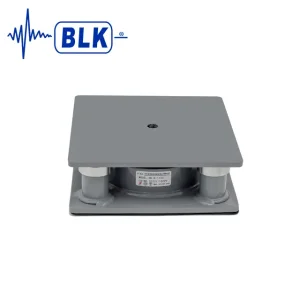
Solution: Pneumatic Air Mounts (BK-R & BK-DT Series) combined with perimeter pump inertia supports to isolate high-frequency mechanical shock down to a natural frequency of 1.7 Hz.
3. Petrochemical & Industrial Pumping (Rayong & Map Ta Phut EEC Belt)
Challenge: High-pressure chemical transfer pumps handling aggressive fluids in coastal environments subject to high humidity and salt vapor corrosion.
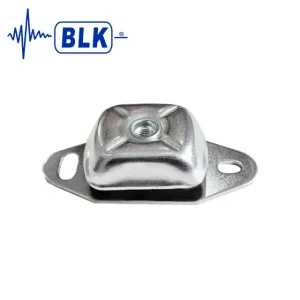
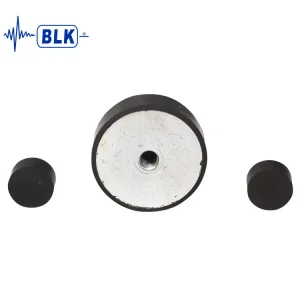
Solution: Custom heavy-duty steel inertia bases treated with 900-hour salt spray tested Dacromet finish, equipped with neoprene elastomeric pads (BKDJ type) or caged seismic spring mounts.
5. Engineering Sizing Checklist for Bangkok MEP Engineers & Buyers
Before submitting a request for quotation (RFQ) for CPB type inertia bases or specialized spring isolators, engineering teams should gather the following essential operational parameters to ensure exact structural sizing and spring deflection selection:
Step-by-Step Inertia Base Procurement Sizing Parameters:
- Equipment Operating Weight (Wet Weight): Include the pump housing, motor, pump base plate, plus the total weight of water contained within the casing and adjacent manifolds.
- Equipment Operating Speed (RPM): Identify the motor speed (e.g., 1450 RPM, 2900 RPM, or variable speed drive ranges) to calculate the primary disturbing frequency ($f_d$).
- Center of Gravity (CG) Position: Ensure non-symmetrical pump/motor weight distributions are mapped so spring mounts can be selected with variable load capacities.
- Pipe Connection Loads & Diameter: Large diameter suction/discharge lines ($>200\text{mm}$) create high static pipe strain; height-saving brackets must be configured accordingly.
- Environmental Exposure Criteria: Outdoor roof-top chiller plants versus basement plant rooms determine whether Dacromet coating, hot-dip galvanizing, or standard epoxy paint is specified.
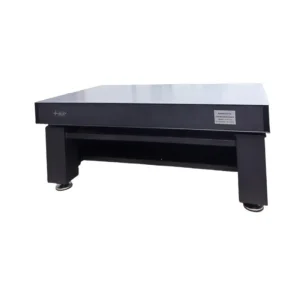
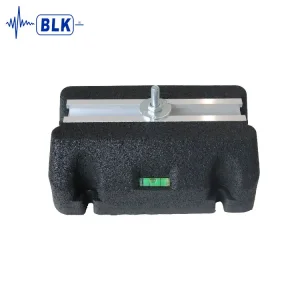
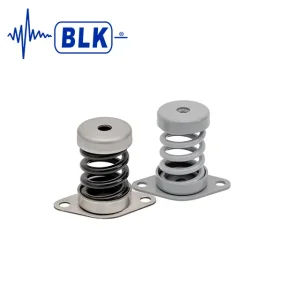
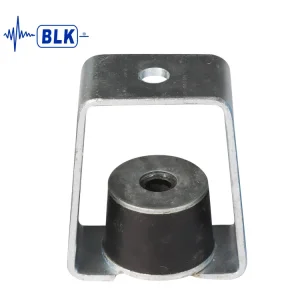
Complete Anti-Vibration Mounts & Platform Lineup
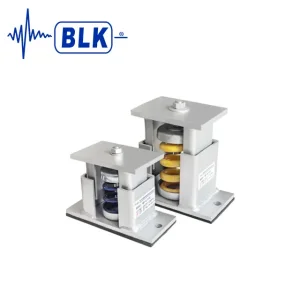
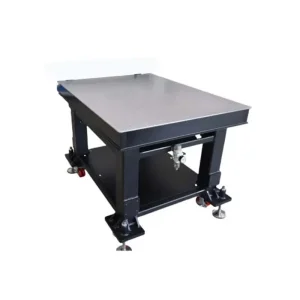
Explore our comprehensive product range for suspended piping, optical tables, air mounts, and heavy machinery damping.


Frequently Asked Questions (FAQ)
In-depth engineering responses regarding inertia bases, pump supports, and vibration control in Bangkok installations.
Why are CPB type inertia bases strongly recommended for pump applications in Bangkok high-rise buildings?
Are CPB inertia bases shipped pre-poured with concrete or assembled on-site in Thailand?
How does tropical humidity in Thailand affect the lifespan of spring isolators and inertia bases?
What deflection rating is required for spring mounts beneath pump inertia bases?
What is the typical shipping lead time from Kunshan factory to Bangkok or Laem Chabang Port?
Can Bellking customize non-standard pump support frames based on non-rectangular CAD footprints?
How do I verify if my existing pump installation suffers from poor vibration isolation?
Partner with China’s Leading Vibration Control Factory
Get custom CPB inertia base engineering designs, 3D CAD files, and competitive direct factory pricing within 24 hours for your Bangkok or global project.
Send Inquiry Now