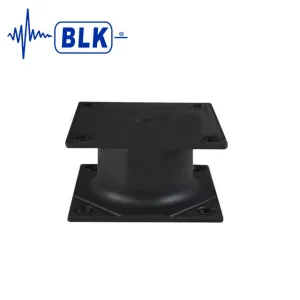
Russia Industrial Metrology & Heavy Industry Grade
Low Price Pneumatic Vibration Isolators: Manufacturers & Price in the Russia Market
Precision 1.5–3.0 Hz air mounts, active auto-leveling isolators, and arctic-grade polymer damping solutions designed for Russian CMM labs, semiconductor research, optical metrology, and heavy manufacturing.
High-Precision Pneumatic Air Mounts for Russian Labs & Testing Centers
Engineered for sub-micron stability under thermal fluctuations and low resonance points. Designed to directly replace legacy Western brands in Russian scientific and industrial facilities.
RUS METROLOGY
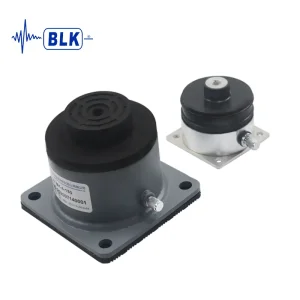
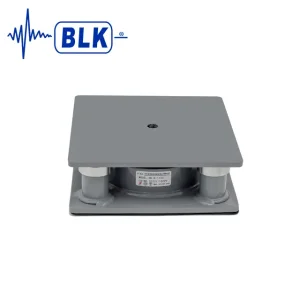
BK-A Type Pneumatic Air Mount (Moscow Metrology Series)
Ultra-low natural frequency air spring mount built for high-precision optical tables, laser interferometers, and coordinate measuring machines (CMM).
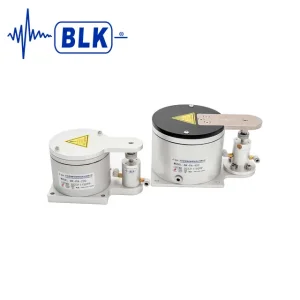
BK-PF Precision Air Mount (Novosibirsk Arctic Proven)
Reinforced steel canister air mount featuring integrated mechanical height stops and high-durability internal dampening valves for harsh Siberian workshops.
Pneumatic Vibration Isolation in the Russian Federation: Market Shifts & Engineering Demands
Analyzing import substitution dynamics, supply-chain modernization, and physical metrology challenges across Moscow, St. Petersburg, the Urals, and Siberia.
Import Substitution Pivot
Sanctions have severed access to Western European and American isolator suppliers (e.g., Bilz, Newport, Fabreeka). Russian plant engineers and research institutes now demand certified, direct Tier-1 Chinese replacements with zero intermediary markups.
Direct RMB/RUB Settlements
Direct B2B cross-border currency clearing facilitates seamless transactions without SWIFT dependencies. Direct freight via Trans-Siberian rail or Manzhouli-Zabaikalsk overland routes reduces lead time to 12–18 days.
GOST R & Severe Climate Rigor
Machinery operating in heavy industrial complexes like Chelyabinsk and Novosibirsk requires structural isolation capable of resisting ambient shop floor vibration and low factory winter temperatures down to -30°C.
1. The Evolution of Industrial Vibration Mitigation Across Key Russian Hubs
The manufacturing sector in the Russian Federation is undergoing an unprecedented capital modernization cycle. As domestic production ramps up in machine tool manufacturing, microelectronics prototyping (in clusters such as Zelenograd), aerospace structural testing (Samara and Zhukovsky), and optical research under the Russian Academy of Sciences (RAN), environmental and building-borne vibrations have emerged as critical bottlenecks to throughput and precision tolerances.
In high-precision metrology laboratories operating Coordinate Measuring Machines (CMMs) like Carl Zeiss, Leitz, or Mitutoyo across the Urals, micro-vibrations generated by adjacent 500-ton forging presses, heavy overhead cranes, or passing rail lines can inject structure-borne noise exceeding ISO VC-C (Velocity Criterion Class C: 12.5 µm/s) thresholds. Conventional steel springs or standard elastomeric pads fail to decouple these low frequencies (sub-10 Hz). This necessitates active and passive pneumatic vibration isolators that provide fundamental natural frequencies down to 1.5–2.5 Hz, delivering isolation efficiencies upwards of 95% at 5 Hz and exceeding 99% across higher excitation frequencies.
Vibration transmission theory dictates that isolation is only achieved when the excitation frequency ($f_d$) divided by the isolator's natural resonance frequency ($f_n$) exceeds 1.414. In typical Russian metalworking factories, ground rumble from heavy stamping presses typically peaks between 4.0 Hz and 8.0 Hz. Under these conditions, a standard industrial rubber mount ($f_n \approx 8 - 12\text{ Hz}$) causes intense dynamic amplification rather than isolation. Bellking BK-A and BK-PF pneumatic isolators, with an air cushion tuned to $1.7\text{ Hz}$, achieve an $f_d / f_n$ ratio of 2.9 to 4.7, eliminating up to 98% of incoming mechanical shock energy.
2. Cold-Climate Physics: Engineering Pneumatic Bladders for Sub-Zero Work Environments
A persistent vulnerability in standard commercial pneumatic mounts imported from warmer manufacturing regions is elastomeric glass-transition failure. When ambient indoor air temperatures drop during extreme Siberian winters—or in non-climate-controlled logistics warehouses across Krasnoyarsk or Irkutsk—conventional neoprene or natural rubber bladders undergo crystallization. This stiffens the diaphragm, drives the natural frequency from 2.0 Hz to above 8.0 Hz, and causes micro-cracking at pneumatic crimp seams.
Bellking addresses this operational reality through custom polymer compound engineering:
Modified Fluorosilicone & Polar Epichlorohydrin (ECO) Bladders: Engineered to preserve flexibility, tensile elasticity, and airtight hermetic sealing at sustained operating temperatures as low as -40°C.
Condensate-Immune Orifice Air Damping: Industrial compressed air lines in Russian winter facilities frequently suffer from moisture carryover. Bellking pneumatic mounts feature integrated particulate brass and PTFE restrictor valves that prevent orifice freezing and fluid-locking.
Dacromet Zinc-Flake Anti-Corrosion Coating: All steel canisters, base plates, and leveling assemblies undergo a 900-hour salt-spray-tested Dacromet treatment, resisting aggressive chemical washdowns and condensation cycles.
Procurement Economics & TCO Benchmarking
Pneumatic Vibration Isolator Pricing Breakdown: Russia Market Tiers
Direct B2B comparison illustrating capital expenditure savings, landed logistics margins, and Chinese Industry 4.0 manufacturing efficiencies.
Prior to recent global supply realignment, Russian industrial procurement departments relied heavily on German, Swiss, or American brand catalog houses. A single German-made auto-leveling air mount typically retailed at €1,200 to €2,800 through regional distributors. Today, grey-market transit through secondary intermediary states incurs up to 45% logistical markups, unpredictable 4-month transit delays, and non-existent warranty or application-engineering support.
By partnering directly with Bellking (Kunshan, China), procurement directors achieve factory-direct pricing ($180 – $680 per unit, depending on payload and automation specs) with 100% full-traceability inspection certificates, direct technical customization, and predictable shipping cycles.
Bellking’s 2,000 m² high-precision facility in Kunshan, Jiangsu Province, is powered by automated robotic welding cells, continuous CNC multi-axis turning, and specialized automated elastomer vulcanization presses. Unlike small trading workshops, our in-house testing complex operates dynamic servo-hydraulic resonance test benches capable of plotting transmissibility curves across 0.5 Hz to 200 Hz.
For Russian B2B buyers, this translates into guaranteed consistency:
Hermetic Seal Assurance: Every single pneumatic isolator unit undergoes helium-mass-spectrometry and 72-hour pressure-decay testing at 0.8 MPa to ensure zero micro-porosity leakage.
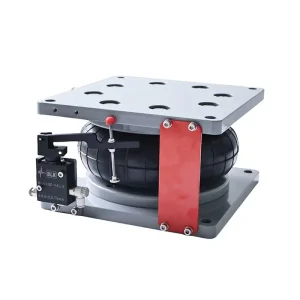
Automated Mechanical Leveling Repeatability: Integrated 3-point mechanical or electro-pneumatic leveling valves automatically replenish or bleed air as loads shift, restoring table elevation within ±0.01 mm in under 2 seconds.
High-Shock Impact Containment: Structural housing ratings withstand sudden 3G–5G seismic or emergency-stop accelerations without structural rupture, providing vital safety in heavy industrial zones.
Industrial Deployment Analysis
Localized Engineering Use Cases in the Russian Federation
Real-world integration scenarios demonstrating performance gains across Russian scientific, defense, metrological, and metallurgical operations.
St. Petersburg & Moscow Precision CMM Labs
Problem: A heavy industrial valve plant in Saint Petersburg installed a 5-axis high-speed CNC mill 30 meters away from an inspection room housing a granite-bed Zeiss CMM, causing sensor jitter and probe abort errors. Solution: Installed four Bellking BK-A 800 pneumatic air mounts with continuous automatic three-valve leveling. Result: Transmissibility reduced by 96.2% at 8 Hz; measurement repeatability restored to 0.4 µm.
Zelenograd Semiconductor & Nanotech Metrology
Problem: Electron microscopy and wafer defect inspection stations experienced blurred imaging caused by low-frequency acoustic and structural footfall traffic. Solution: Integrated custom Bellking BK-PA stainless steel precision air mounts with cleanroom-certified NBR internal diaphragms. Result: Floor vibration lowered below ISO VC-E standards; imaging resolution improved down to sub-10 nm line widths.
Chelyabinsk Heavy Roll Grinding Beds
Problem: Roll grinder finishing steel mill cylinders in the Southern Urals was picking up resonance from adjacent forging hammers, leaving chatter marks on rolls. Solution: Deployed eight heavy-capacity Bellking BK-PF units coupled with an inertia base foundation. Result: Chatter marks completely eliminated, surface finish Ra reduced from 0.8 µm to 0.12 µm, cutting roll reject rates to 0%.
Comprehensive vibration reduction hardware engineered to solve resonance challenges across Russian power generation, heavy machining, and factory HVAC infrastructure.
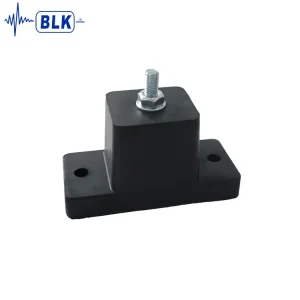
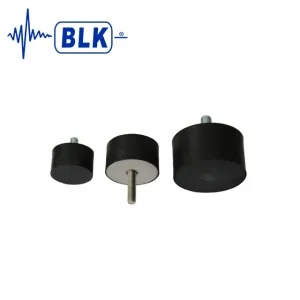
DAMPING PAD
BKTS Type Polymer Damping Pad (Siberia Oil & Gas)
High-density elastomeric compound pad designed for heavy dynamic compressors, chillers, and foundation decoupling.
Expert answers addressing cross-border customs clearance, GOST-R conformity, sizing calculations, and severe climate operational limits.
How do Bellking pneumatic isolators replace legacy Western brands like Bilz or Fabreeka?
Our engineering team conducts 1:1 dimensional and parametric cross-referencing. By matching load distribution, footprint bolt circles, air port thread standards (G, NPT, or metric), and operating height, Bellking BK-A and BK-PF isolators drop directly into existing machine bases without structural concrete re-coring. We supply complete conversion calculation dossiers within 24 hours of receiving your machine drawing.
What documentation is supplied for Russian customs and EAC / GOST compliance?
We provide full commercial documentation for seamless clearance through Far East (Vladivostok) or Trans-Siberian border points: Invoice, Packing List, Certificate of Origin (Form A / non-preferential), ISO 9001 factory inspection records, material test reports (MTR), and pressure vessel tightness test certificates. Equipment classifications comply with Eurasian Customs Union (EAC) TR CU declarations for industrial components.
What air supply parameters are required to maintain auto-leveling precision?
Standard shop compressed air supplied at 0.4 to 0.7 MPa (4 to 7 bar) is sufficient. For Russian installations, we strongly advise an upstream sub-micron oil-removal filter and a desiccant air dryer capable of maintaining an atmospheric pressure dew point of -40°C to prevent internal condensation and freezing during winter shutdown periods.
How does Bellking manage payment terms under current banking frameworks?
We support direct Cross-Border Interbank Payment System (CIPS) settlements denominated in Chinese Yuan (RMB) or Russian Rubles (RUB), as well as standard Telegraphic Transfer (T/T) via non-sanctioned clearing banks. This guarantees uninterrupted supply contracts and protects procurement timelines from third-party banking blockages.
What is the typical shipping lead time to Moscow or Yekaterinburg?
Standard catalog models (BK-A, BK-R, BK-PF) are stocked at our Kunshan production base and can dispatch within 24–48 hours. Consolidated rail freight via the China-Europe / Trans-Siberian freight corridor delivers to Moscow terminal stations (Vorsino / Bely Rast) within 14–18 days, significantly faster than traditional maritime routes.
Accelerate Your Vibration Decoupling Project Today
Whether you require drop-in replacement pneumatic mounts for a St. Petersburg metrology laboratory or custom heavy-duty isolation for an Ural forging facility, our engineering department delivers turnkey vibration analysis and competitive FOB/CIF quotation within 24 hours.