
Custom Spring Hanger

Korea-Spec Custom Anti-vibration Spring Hangers
Deflection25mm – 75mm
Natural Freq.3.0 – 4.5 Hz
Target SectorSub-Fab UPW/Gaseous Lines
Engineered for high static deflection, natural frequencies down to 3 Hz, and anti-short-circuit elastomeric decoupling. Precision calibrated for Samsung Pyeongtaek, SK Hynix Yongin, and Incheon Songdo biopharma HVAC pipe runs.


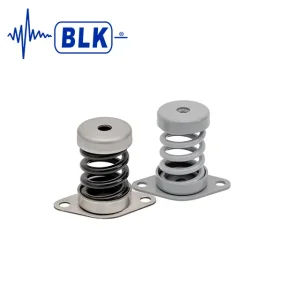
From the world's most advanced semiconductor cleanrooms in Gyeonggi-do to hyper-scale data hubs in Pangyo, South Korea demands ultra-reliable acoustic decoupling at globally competitive factory-direct pricing.
The Republic of Korea stands as a global pinnacle for microelectronics fabrication, biopharmaceutical processing, and massive naval shipbuilding. However, this dense industrial profile creates an unforgiving acoustic and structural challenge. In high-density industrial corridors such as the Pyeongtaek Semiconductor Cluster, the Yongin Mega-Fab Zone, Incheon Songdo Bio-Valley, and naval docks across Ulsan and Geoje, suspended infrastructure is subject to extreme rotational and hydrodynamic forces. Primary mechanical systems—including high-pressure chilled water lines, ultra-pure water (UPW) distributions, industrial exhaust fans, and cryogenic nitrogen piping—are suspended within overhead plenums directly above micro-lithography scanners and cleanrooms.
In these hyper-sensitive environments, micro-vibrations exceeding Vibration Criterion (VC) curves VC-D or VC-E (down to 3.12 µm/s) cause focal deviations in photolithography machines, leading to catastrophic wafer scrap rates. Traditional commercial HVAC hangers frequently fail to address low-frequency mechanical surges generated by variable frequency drive (VFD) pumps operating between 10 Hz and 30 Hz. Compounding this challenge is South Korea’s rigorous regulatory enforcement under the Noise and Vibration Control Act (소음·진동관리법) and the post-Gyeongju/Pohang updates to KDS 41 17 00 (Seismic Design Code for Non-structural Components). Korean general contractors (Samsung C&T, Hyundai E&C, GS E&C, POSCO DX) can no longer rely on uncertified or overpriced domestic intermediaries who repackage standard imported hardware with massive channel markups.
Overhead suspension of UPW loops, chemical vapor delivery, and exhaust air streams directly over ISO Class 1 to 4 cleanrooms. Requires dynamic isolation efficiencies exceeding 98% to preserve VC-E thresholds.
Intense spatial clustering in Pangyo, Gimpo, and Gasan Digital Complex requires overhead CRAH/CRAC hydronic lines to remain acoustically decoupled from mission-critical server chassis to prevent HDD/NVMe resonance degradation.
Korean building codes necessitate non-structural MEP restraint capable of resisting horizontal acceleration parameters ($I_p = 1.5$). Hangers must incorporate captive fail-safe housings that prevent catenary collapse during seismic events.
Why conventional rubber hangers fail at low RPMs and how dual-stage spring-elastomer hybrid kinematics achieve >98% true dynamic decoupling.
The fundamental design criterion of any vibration isolation hanger suspended from a reinforced concrete slab or steel deck truss is governed by the classic single-degree-of-freedom (SDOF) transmissibility equation:
Here, r = fd / fn represents the frequency ratio between the disturbing/forcing frequency of the pipe flow or motor RPM (fd) and the undamped natural frequency of the suspension assembly (fn), while ζ denotes the damping ratio. Effective vibration isolation can only occur when r > √2 (≈ 1.414). Below this threshold, the hanger does not isolate; it actively amplifies vibration via resonance. To attain the industrial benchmark of >95% to 98% isolation efficiency required in advanced Korean electronics facilities, an operating frequency ratio of r ≥ 3.0 to 4.5 must be maintained across all operational spectra.
The undamped natural frequency of a helical steel spring hanger is tied directly to its true static deflection (δst) under operating gravitational load:
When specifying ceiling hangers for chilled water piping carrying turbulence from a 1,180 RPM centrifugal pump (fd ≈ 19.67 Hz), a standard rubber hanger providing merely 3 mm of static deflection yields a natural frequency of approximately 9.1 Hz (r = 2.16), resulting in mediocre isolation efficiency (< 75%) and severe structural sound radiation into the concrete slab. Conversely, our HV and Custom Series high-deflection spring hangers deliver 25 mm to 50 mm of true static deflection, driving fn down to 3.16 Hz – 2.23 Hz (r > 6.2). This guarantees an isolation efficiency surpassing 98.2%.
| Hanger Architecture | Static Deflection (δst) | Assembly Natural Freq. | Isolation Efficiency (1,450 RPM / 24.1 Hz) | High-Frequency Acoustic Bridging Control | Primary Industrial Application |
|---|---|---|---|---|---|
| Solid Elastomeric / Neoprene Cup (HR) | 2.5 mm – 6.0 mm | 6.4 Hz – 10.0 Hz | 82% – 88% | Superior (>40 dBA dampening) | High-velocity HVAC supply/return ducts, terminal VAV units |
| Uncaged Bare Steel Coil Spring | 25.0 mm – 50.0 mm | 2.2 Hz – 3.2 Hz | 97.5% – 99.1% | Poor (High-frequency sound waves travel down wire coils) | Low-RPM industrial pump rooms (Non-critical occupancy) |
| Bellking Hybrid Spring + Neoprene Cup | 25.0 mm – 75.0 mm | 1.8 Hz – 3.1 Hz | 98.8% – 99.6% | Zero Bridging (Dual-action physical sound barrier) | Semiconductor cleanroom plenums, hospital chillers, K-DC |
| Pre-Compressed Seismic Spring Hanger | 35.0 mm – 50.0 mm | 2.2 Hz – 2.7 Hz | 98.2% – 99.2% | Engineered elastomeric snubbers prevent metallic clatter | KDS 41 seismic lifelines, critical fire mains, power plants |
The Danger of High-Frequency Sound Bridging: While coiled steel springs provide exceptional low-frequency compliance, their physical wire geometry permits high-frequency audible noise (surges, blade-pass frequencies, flow turbulence above 500 Hz) to travel directly through the helical steel wire as longitudinal acoustic waves. This phenomenon, known in vibroacoustics as spring surge bridging, completely short-circuits the ceiling isolation. Bellking solves this through our integrated dual-phase isolation design: every steel spring is nested within an oil-resistant, high-density chloroprene (neoprene) acoustic cup. The acoustic cup eliminates metal-to-metal contact with the structural casing, attenuating audible structure-borne noise by up to 42 dBA.
Eliminating multi-tier agent markups while upgrading steel alloy grades, surface anti-corrosion, and structural factory test transparency.
Procuring engineered mechanical equipment for Korean EPC projects has historically followed a high-margin distribution hierarchy. Domestic distribution agencies in Seoul and Busan typically add between 45% to 75% in commercial overhead on top of imported vibration mounts, while maintaining limited inventory for large-diameter pipe runs (>300A). When custom deflections or seismic calculations are mandated, project schedules stall due to prolonged lead times from third-party brokerage chains.
Bellking’s Kunshan Manufacturing Advantage: Our ISO 9001 certified plant in Kunshan, Jiangsu Province, is strategically positioned near the maritime transport ports of Shanghai and Taicang. By sourcing directly from our state-of-the-art production floor—equipped with multi-axis CNC wire coiling machines, robotic welding cells, continuous mesh-belt heat treatment furnaces, and fully automated electrostatic Dacromet coating lines—Korean contractors capture significant commercial and technical advantages:
Direct export pricing without local agent splits. Volume discounts structured specifically for Korean mega-contractors bidding on Samsung Biologics, SK on-site battery plants, and LG Display lines.
Every batch shipped to Korea is accompanied by EN 10204 Type 3.1 Material Test Reports (MTR), dynamic spring cycle fatigue certificates (>10 million cycles without settling), and load-deflection calibration plots.
Standard zinc plating fails within months in coastal marine facilities (Busan, Ulsan, Incheon). Our proprietary Dacromet 500 coating and hot-dip galvanizing pass 900+ hours of continuous neutral salt spray (ASTM B117 / KS D 9502).
Bespoke isolation strategies tailored to specific structural vibration profiles across manufacturing, energy, and urban infrastructure.
Sub-fab basement networks contain hundreds of kilometers of suspended piping carrying ultra-pure chemicals, slurry, and process gases. Bellking’s Custom High-Deflection Hangers isolate piping resonances caused by variable-speed drive compressors, shielding the upper-level cleanroom floor from micro-tremors.
Korea District Heating Corporation (KDHC) transmission lines endure extreme thermal expansion alongside massive water hammer pulses. Our pre-compressed, heavy-load spring hangers support pipe diameters up to 800A while accommodating both thermal axis travel and vertical dynamic forces.
High-rise commercial properties (such as Lotte World Tower, Yeouido IFC, and Teheran-ro towers) require silent MEP operation. Our HR-type elastomeric and HV-type hybrid hangers stop regenerated noise from ventilation shafts from entering executive suites and residential units.
Bridging traditional mechanical suspension with smart factory telemetry for automated health monitoring of critical piping systems.
As South Korean industries transition to Smart Factory 4.0 standards, passive mechanical isolation hardware is evolving to provide digital operational awareness. Unbalanced flow dynamics, thermal pipe binding, or failing pump bearings often manifest as subtle frequency shifts in suspended hanger brackets weeks before catastrophic seal rupture or structural fatigue occurs.
Bellking's R&D team in Kunshan, working in partnership with leading university vibroacoustics laboratories, is pioneering the next frontier of smart mechanical suspensions designed for deployment across high-stakes Korean industrial environments:
Miniaturized piezoresistive load-sensing cells embedded directly into the spring hanger seat. Wirelessly transmits live load-distribution data to BMS/SCADA platforms, detecting thermal expansion binding or sudden fluid weight surges.
Secondary viscous-fluid chambers that clip onto standard HV spring hangers to suppress low-frequency resonance during transient equipment start-ups and emergency pump trips without sacrificing high-frequency isolation performance.
Next-generation green elastomers meeting the most stringent Korean environmental and fire-safety audits (KS M 6518). Zero toxic off-gassing, non-combustible ratings, and guaranteed 20+ year elastomeric elasticity without dry-rotting.
Comprehensive technical submittals, 3D BIM integration, and bilingual calculation packages to streamline site approvals by Korean safety authorities.
Navigating approvals from South Korean building authorities, insurance inspectors, and prime general contractors requires rigorous compliance documentation. Bellking bridges the cross-border engineering divide by delivering pre-packaged technical submittals aligned with domestic Korean standards:
Complete Seismic Sizing under KDS 41 17 00: Following major regional seismic tremors, the Korean Ministry of Land, Infrastructure and Transport (MOLIT) established strict seismic restraint guidelines for non-structural MEP components. Every Bellking seismic spring hanger project includes a certified Non-Structural Seismic Calculation Package. Our engineering submittals detail horizontal and vertical seismic load coefficients (Fp), component amplification factors (ap), and response modification factors (Rp), validating that all hanger steel housings and anchor embedments withstand peak design ground accelerations.
Fast Logistics Pipeline Across the Yellow Sea: Situated in Kunshan, just 50 km from Shanghai Port, our factory utilizes express Ro-Ro (roll-on/roll-off) and fast container vessel lines connecting directly to Incheon Port (인천항) and Busan Port (부산항) within 48 to 72 hours. For emergency cleanroom retrofits or shutdown maintenance schedules, air freight consolidation through Shanghai Pudong (PVG) to Incheon International Airport (ICN) guarantees on-site delivery in less than 24 hours.
| Korean Regulatory Standard | Technical Focus & Scope | Bellking Compliance & Verification Protocol |
|---|---|---|
| KDS 41 17 00 | Seismic Design Criteria for Non-structural MEP Elements | FEA stress-simulated structural housings; full compliance for safety factor ≥ 2.0 under lateral seismic acceleration. |
| KS B 1563 | Steel Pipe Hangers and Structural Pipe Supports | Conforms to dimensional, structural tensile, and thread-load limits specified in Korean Industrial Standards. |
| Noise and Vibration Control Act | Ministry of Environment workplace boundary noise & vibration limits | Eliminates structural airborne sound radiation; provides >35 dBA insertion loss across mechanical frequencies. |
| KS D 9502 / ASTM B117 | Neutral Salt Spray Corrosion Resistance | Dacromet 500 coating and hot-dip galvanization tested to 900+ hours with zero red rust formation. |
Authoritative answers addressing load calculations, seismic certifications, water hammer surges, and factory-direct procurement.
Static deflection is derived directly from the disturbing frequency of the mechanical equipment driving the piping (e.g., chillers, circulation pumps, cooling towers). For standard Korean HVAC pumps operating at 1,450 RPM (~24.1 Hz), our application engineers target a frequency ratio (r) of at least 4:1 to achieve >95% isolation efficiency. This requires an isolator natural frequency (fn) below 6.0 Hz. Using the formula δst = (5 / fn)², a minimum static deflection of 7 mm is technically required. However, to account for variable-frequency drives (VFD) that drop operating speeds down to 900 RPM (15 Hz), Bellking specifies a minimum deflection of 25 mm to 35 mm (yielding fn ≈ 2.6 Hz to 3.1 Hz), ensuring the system never slips into resonance during low-RPM operation.
Coiled steel springs alone cannot arrest high-frequency sound waves (>500 Hz); the audible vibrations travel directly along the steel helical wire into the concrete slab. Bellking’s hybrid spring hangers resolve this by seating the spring base inside an engineered high-density Neoprene (chloroprene) acoustic cup. This elastomer cup creates a complete physical barrier between the steel spring and the outer hanger casing, preventing metal-to-metal contact and providing up to 35–42 dBA of audible structure-borne sound attenuation.
Yes. Standard vibration hangers are suspended under tension and can jump or collapse when subjected to the multi-directional lateral and vertical forces generated during a seismic event. Bellking offers Seismic Pre-Compressed Hangers engineered with captive steel housings and integrated multi-directional elastomeric limit stops. These assemblies withstand dynamic seismic loads up to 1.5g in accordance with KDS 41 17 00, guaranteeing that suspended piping remains secure without catastrophic disconnection during an earthquake.
Standard commercial electro-galvanized hangers corrode quickly in Korea’s humid coastal industrial zones, causing spring embrittlement and catastrophic failure. Bellking applies an automated Dacromet coating (a multi-layer zinc and aluminum flaked inorganic coating) to all helical springs, complemented by heavy-duty powder coating or hot-dip galvanization on outer steel cages. This multi-barrier treatment withstands over 900 hours of neutral salt spray testing (ASTM B117 / KS D 9502) without showing signs of red rust, providing a service life exceeding 15 years in coastal environments.
Standard spring and rubber hanger models ship from our warehouse inventory within 24 hours of purchase order confirmation. Custom engineered models (such as custom deflection spring ratings or bespoke bracket dimensions) are fabricated in our CNC coiling facility within 3 to 5 business days. Transit from Shanghai Port to Incheon Port or Busan Port takes 48 to 72 hours via direct weekly container and Ro-Ro sailings. For critical project milestones or emergency retrofits, expedited air freight through Shanghai Pudong (PVG) to Incheon (ICN) enables 24-hour door-to-door delivery.
Explore the remaining core portfolio of Bellking heavy mounts, damped platforms, and precision pneumatic mounts widely deployed in Korean industrial facilities.
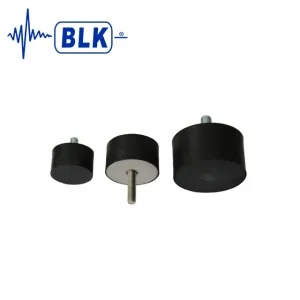
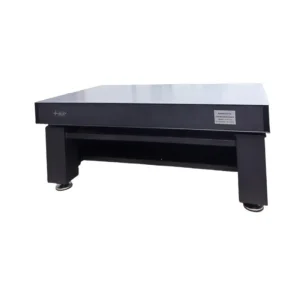



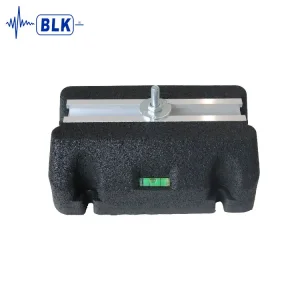


Send us your pipe diameters, fluid loads, equipment operating RPMs, and seismic criteria. Our engineering team returns a full vibration isolation proposal complete with static deflection calculations and BIM models within 24 hours.