
High-Precision Vibration Isolation Systems for Kansai Facilities
Engineered for cleanroom instrumentation, wafer inspection, optical coordinate measuring machines (CMM), and laser metrology stages across Osaka, Sakai, and Kyoto technology corridors.
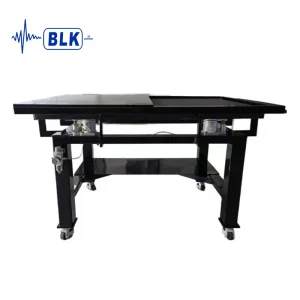
Custom BK-VT Type Vibration Isolation Platform Factories, Manufacturer
Air-bearing pneumatic leveling, resonant frequency ≤1.5 Hz, optimized for Osaka photonic inspection suites.
View Osaka Specs & RFQ
Custom BK-AT Type Desktop Vibration Isolation Platform Manufacturers, Price
Compact desktop platform tailored for analytical balances, AFM, and scanning probe microscopes in university labs.
View Osaka Specs & RFQ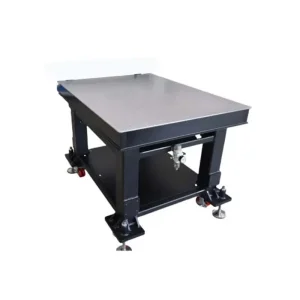
High-Quality BK-DT Type Low-Frequency High-Damping Optical Vibration Isolation Platform Factory, Manufacturer
Ultra-low natural frequency air spring system delivering multi-axis damping against high-amplitude floor resonance.
View Osaka Specs & RFQ
High-Quality BK-RT Type Damped Vibration Isolation Platform Factories, Manufacturers
Honeycomb core internal structural damping, ideal for high-throughput automated optical inspection (AOI) lines.
View Osaka Specs & RFQVibration Control Challenges in the Keihanshin Metropolitan Axis
Osaka stands as a premier epicentre of Japanese precision engineering, housing world-leading semiconductor back-end manufacturing, lithium-ion battery development, photonics research, and ultra-high-precision machine tooling. From the historic small-to-medium monozukuri cluster of Higashiosaka and Yao to the high-tech cleanroom expanses in the Sakai-Senboku Coastal Industrial Zone and research clusters in Kita-ku (Umekita) and Osaka University (Suita & Toyonaka campuses), precision measurement requirements have transitioned from micrometer to sub-nanometer scales.
However, the geological and urban fabric of Osaka introduces severe vibration challenges. Built over extensive alluvial silt deposits along the Yodo River basin, the ground exhibits high seismic and acoustic transmissibility. Dense logistical networks—including the Tokaido-Sanyo Shinkansen, the Osaka Loop Line, the Hanshin Expressway viaducts, and extensive underground subway systems—generate persistent, continuous environmental micro-tremors ranging from 3 Hz to 35 Hz. Without certified precision vibration isolation platforms, nanoscale metrology instruments suffer measurement artifacts, high signal-to-noise ratios, and loss of repeatability.
Engineering Fundamentals: Generic Vibration Criteria (VC) & Transmissibility
Specifying a precision platform in Osaka requires aligning ambient site measurements with international vibration criterion curves (VC-A through VC-G) defined by the Institute of Environmental Sciences and Technology (IEST) and ISO 10816 standards.
Sub-Hertz Dynamic Transmissibility
Isolation efficiency commences only when the excitation frequency ($f$) exceeds $\sqrt{2} \times f_n$, where $f_n$ represents the natural frequency of the platform. Bellking’s auxiliary pneumatic reservoir chambers suppress amplification at resonance to under 2.5 Q while maintaining exceptional roll-off rates of -40 dB/decade in higher frequency bands.
Acoustic Honeycomb Structural Rigidity
Dynamic compliance determines platform distortion under point loads. Incorporating high-permeability ferromagnetic stainless steel upper skins, closed-cell stainless honeycomb cores, and epoxy adhesive hot-bonding, our platforms eliminate internal structural resonances up to 1,200 Hz.
6-Degrees-of-Freedom Damping
Ground disturbances arrive across three translational axes ($X, Y, Z$) and three rotational axes ($\theta_x, \theta_y, \theta_z$). Our trifilar and dual-chamber pneumatic actuators feature laminated horizontal decoupling shear-plates, balancing vertical and lateral isolation metrics uniformly.
| Criterion Curve | RMS Velocity (μm/s, 1-80 Hz) | RMS Velocity (μin/s) | Minimum Detail Size | Representative Target Applications | Recommended Bellking Platform |
|---|---|---|---|---|---|
| VC-A | 50.0 | 2,000 | 8 μm | Optical microscopes (400x), standard probe stations, microbalances | BK-AT Desktop |
| VC-B | 25.0 | 1,000 | 3 μm | High-resolution micro-tooling, coordinate measuring machines (CMM) | BK-RT Damped |
| VC-C | 12.5 | 500 | 1 μm | Optical aligners, standard scanning electron microscopes (SEM) | BK-VT Platform |
| VC-D | 6.25 | 250 | 0.3 μm | Field-emission SEM (FE-SEM), Dual-beam FIB, cleanroom steppers | BK-DT Low-Freq |
| VC-E | 3.12 | 125 | 0.1 μm | Transmission electron microscopes (TEM), critical AFM imaging | BK-DT Ultra-Damped |
| VC-F / VC-G | 1.56 / 0.78 | 62.5 / 31.2 | Nanoscale / Sub-nm | Extreme ultraviolet (EUV) inspection, atomic lithography, quantum research | Custom Active Hybrid |
Global Supply Chain Dynamics vs. Osaka Regional Sourcing
Balancing high Japanese domestic OEM costs against certified direct-from-manufacturer import advantages without sacrificing technical compliance or operational lifetime.
Traditional Domestic Sourcing Bottlenecks in Japan
- Excessive Trading House Markups: Procuring precision optical platforms through multiple domestic trading tiers (shosha) frequently inflates capital expenditures by 45% to 75% over direct factory cost.
- Extended Fabrication Lead Times: Domestic Japanese manufacturers operate on lean production queues, resulting in quoted delivery windows of 10 to 18 weeks for non-standard platform dimensions or custom tapping layouts.
- Rigid Standard Form Factors: Standard catalogs often force Osaka lab designers to modify equipment footprints to match standard 600x900 mm or 900x1200 mm table envelopes rather than receiving custom-tailored geometries.
The Bellking Direct-Factory Advantage for Osaka
- Direct-to-Facility Pricing: Direct delivery to Osaka Port or Kansai International Airport (KIX) eliminates distributor layers, saving 35-50% on capital equipment expenditures while providing full factory-backed warranties.
- Rapid 1:1 Engineering Turnaround: Full mechanical 3D CAD/STEP models delivered within 3 working days; rapid fabrication cycles with express shipping directly to Kansai factories in 2 to 4 weeks.
- Uncompromising Material Quality: Honeycomb cores utilize aviation-grade adhesives and SUS304 skins; pneumatic air springs feature DuPont Neoprene elastomers passing 900-hour salt spray corrosion resistance.
High-Precision Case Scenarios Across Kansai Industrial Hubs
How Bellking vibration platforms provide targeted attenuation for critical research, manufacturing, and analytical operations in Osaka and neighboring prefectures.
Semiconductor Metrology & Wafer Dicing
Location: Sakai & Nanko High-Tech Industrial Hubs
Application: Critical dimension scanning electron microscopes (CD-SEM) and automated wafer probing stations.
Challenge: Heavy automated transport carriers (AGVs) generating repetitive 8-12 Hz floor impulses.
Solution: Custom BK-VT isolation platforms fitted with high-damping level controllers, suppressing settling time to <1.2 seconds.
Biophysics & Cryo-TEM Imaging
Location: Suita Campus & Umekita Medical Innovation Zone
Application: Atomic force microscopy (AFM) and biological Cryo-TEM instrumentation.
Challenge: Low-frequency environmental micro-tremors from the nearby JR Kyoto rail line.
Solution: BK-DT series ultra-low frequency optical platforms operating with a 1.2 Hz natural vertical frequency, reaching VC-E compliance.
Ultra-Precision Tooling & Mold Metrology
Location: Higashiosaka Monozukuri Cluster
Application: Sub-micron 3D coordinate measuring machines and stylus surface profilometers.
Challenge: Structural coupling from adjacent metal stamping presses and CNC milling machines (15-60 Hz).
Solution: High-rigidity BK-RT damped honeycomb platforms integrated with pneumatic perimeter leveling, achieving 99% vibration reduction.
Precision Vibration Isolation Platform Price Guide for Osaka
Accurate budgetary benchmarks for factory procurement teams, mechanical design contractors, and university purchasing offices across Kansai.
| Platform Category | Typical Footprint (mm) | Load Capacity (kg) | Resonant Freq. ($f_n$) | Estimated Factory Price (USD) | Estimated CIF Osaka Port (JPY) |
|---|---|---|---|---|---|
| BK-AT Desktop Passive Platform | 450 × 500 × 65 | 20 – 120 kg | 2.5 – 3.8 Hz | $750 – $1,450 | ¥115,000 – ¥225,000 |
| BK-VT Standard Cleanroom Platform | 600 × 900 × 100 | 150 – 450 kg | 1.5 – 2.0 Hz | $1,850 – $3,200 | ¥285,000 – ¥495,000 |
| BK-DT Low-Frequency Optical Table | 1200 × 1800 × 200 | 500 – 1,500 kg | 1.2 – 1.6 Hz | $3,800 – $6,500 | ¥585,000 – ¥1,000,000 |
| BK-RT Heavy-Duty Industrial AOI Table | 1500 × 3000 × 300 | 1,200 – 3,500 kg | 1.5 – 2.2 Hz | $6,200 – $11,500 | ¥950,000 – ¥1,780,000 |
| Custom Integrated Cleanroom Granite Station | Custom Geometric Spec | Up to 5,000 kg | ≤ 1.2 Hz | $8,500 – $19,000+ | ¥1,300,000 – ¥2,950,000+ |
Cost Driver 1: Natural Frequency ($f_n$)
Standard passive elastomeric bases isolate above 15 Hz at low cost. Achieving sub-2.0 Hz requires precision multi-chamber pneumatic diaphragms with precision leveling valves, driving system sophistication.
Cost Driver 2: Top Surface & Damping
Standard solid aluminum plates offer minimal internal structural damping. Precision stainless steel honeycomb breadboards with tuned internal damping mass packs ensure minimal dynamic compliance under high dynamic motion.
Cost Driver 3: Logistics, Import & Taxes
Consolidated maritime shipping directly to the Port of Osaka or express air via KIX keeps freight predictable. Products clear Japanese customs under Standard Tariff Classifications with 10% JCT applied transparently.
Engineering Compliance, JIS Standards & Seismic Restraint in Japan
Ensuring micro-vibration performance during daily operation alongside mechanical integrity during seismic events in the Kansai region.
Japanese Industrial Standard (JIS) Alignment
All precision vibration isolation platforms destined for Japanese facilities are certified in accordance with JIS B 0907 (Mechanical vibration and shock) and JIS B 0908 (Vibration and shock calibration of transducers). Pneumatic piping, automatic mechanical servo valves, and pneumatic air regulators integrate standard Japanese metric Rc/PT thread connections and SMC-compatible push-to-connect polyurethane fittings (6 mm / 8 mm OD).
For semiconductor cleanroom installations, Bellking platforms comply with ISO 14644-1 Class 3 cleanroom standards. Internal bladder elastomers undergo stringent degassing treatments, stainless top-sheets feature electro-chemically polished mirror or brushed finishes, and exhaust air from automatic levelers is centralized for external venting.
Seismic (Jishin) Restraints & Failsafe Locks
Located within the circum-Pacific seismic belt, Kansai facilities must balance sub-Hertz mechanical compliance with rigorous seismic safety. Highly compliant pneumatic platforms can experience excessive sway during earth tremors.
- Omnidirectional Snubbers: Integrated 3D mechanical travel stops restrict maximum transient horizontal and vertical displacements to ±3 mm.
- 3G to 5G Static Lateral Rating: Tested to withstand substantial horizontal acceleration without frame shearing or mechanical tipping.
- Automatic Pressure Depressurization: Emergency pneumatic shut-off locks the isolated payload securely onto non-marring structural elastomer pads during anomalous excursions.
Technology Roadmap: Smart Active Control & AI-Assisted Damping
Addressing the challenges of the sub-2nm semiconductor node and advanced quantum computing research through hybrid multi-variable active isolation.
Active Piezoelectric Compensation
While passive air isolators excel above 3 Hz, they exhibit residual amplification around their 1.0-2.0 Hz resonance peak. Next-generation systems integrate secondary PZT piezoelectric actuators and high-sensitivity velocity geophones, executing active force cancellation down to 0.5 Hz.
AI Predictive Feedforward Control
High-speed motorized XY stages in semiconductor inspection create predictable internal inertial shocks. Integrating dynamic feed-forward algorithms synchronized with stage motion controllers allows platforms to counteract center-of-gravity shifts instantaneously, reducing settling times to under 10 milliseconds.
Carbon-Fiber Honeycomb Matrix Cores
Replacing traditional steel internal honeycomb structures with high-modulus, pitch-based carbon fiber composites elevates internal bending resonance modes above 2,500 Hz while reducing platform dead-weight by 40%, optimizing floor loading for multi-story Osaka lab facilities.
Frequently Asked Questions by Osaka Facility & Procurement Engineers
Comprehensive engineering guidance on platform selection, compressed gas logistics, lead times, and on-site integration.
The choice depends on the disturbing frequency of your environment and the sensitivity of your equipment. Isolation begins when the disturbing frequency ($f$) exceeds $\sqrt{2} \times f_n$. High-speed industrial pumps or motors (1,500+ RPM / >25 Hz) can be managed with elastomeric or spring isolators ($f_n \approx 3\text{--}5\text{ Hz}$). Sensitive metrology tools like SEM, AFM, and optical profilers operate below 10 Hz where urban ground vibrations dominate; these require pneumatic air mounts ($f_n \approx 1.2\text{--}1.8\text{ Hz}$). If disturbances occur between 0.5 Hz and 2.5 Hz, an active vibration cancellation system or an ultra-low-frequency negative-stiffness mechanism is necessary.
Our standard pneumatic platforms operate effectively with clean, dry, oil-free compressed air (CDA) or bottled nitrogen gas supplied at a pressure range of 0.4 MPa to 0.7 MPa (4 to 7 bar / 58 to 102 psi). Air consumption is negligible during static operation; air is only utilized when compensating for moving mass or during initial leveling adjustments. Standard push-in pneumatic connections are matched to Japanese standard metric 6 mm or 8 mm tubing.
Yes. We regularly supply standard metric M6 tapped holes on a 25 mm grid matrix, standard imperial 1/4-20 holes on a 1-inch grid, or custom hole patterns specified directly via client CAD files. Each hole is CNC drilled, blind-tapped, counter-sunk, and ultrasonically cleaned with sealed cylindrical cup interiors to prevent oil or particulate contamination inside cleanrooms.
Every platform includes a full factory inspection report, dynamic FFT spectral transmissibility curves measured via calibrated tri-axial accelerometers, static load deflection test certificates, surface flatness interferometry/laser inspection records, and Certificate of Origin (COO). Our manufacturing facility operates under certified ISO 9001:2015 quality management protocols.
Standard catalog models ship within 24 to 48 hours of order confirmation. Custom engineered-to-order platforms complete production in 10 to 18 working days. Transport via direct consolidated sea container from Shanghai/Ningbo to Osaka Port takes 3 to 4 days, with customs clearance typically executed in 48 hours under Incoterms (CIF Osaka or DDP to your facility address). Express air freight to Kansai International Airport (KIX) is available for critical project timelines.
Complete Heavy Machinery, HVAC & Cleanroom Vibration Mount Catalog
Preserving our complete industrial lineup of factory-direct spring, pneumatic, and elastomeric isolators serving Kansai manufacturing facilities.

High-Quality MD Type Anti-vibration Spring Mounts Factory, Manufacturer
Heavy-duty enclosed steel spring mounts designed for industrial chillers, blowers, and Osaka rooftop HVAC units.
View Specs & Request RFQ
High-Quality BK-A Type Air Mounts Factories, Price
Precision pneumatic air suspension elements for metrology tables, coordinate testers, and cleanroom tools.
View Specs & Request RFQ
High-Quality BKH Type Rubber Mounts Factory, Price
High-damping elastomeric shear mounts for industrial compressors, electric drive motors, and stamping tooling.
View Specs & Request RFQ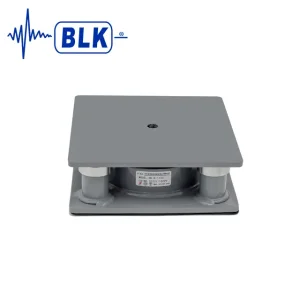
High-Quality BK-R Type Air Mounts Factories, Manufacturer
Compact diaphragm air mount actuators offering low resonant frequencies for laboratory and industrial setups.
View Specs & Request RFQ
Low Price BKVV Type Rubber Mounts Factories, Manufacturers
Versatile cylindrical male/female elastomeric isolators for instrumentation racks and auxiliary pump assemblies.
View Specs & Request RFQ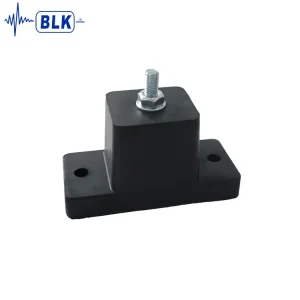
Low Price BKTS Type Rubber Pad Factory, Manufacturer
Engineered polymer composite damping pads for foundation decoupling, acoustic dampening, and high impact reduction.
View Specs & Request RFQ
High-Quality CPB type Inertia Bases & Pump Supports Manufacturers, Manufacturer
Heavy-gauge welded structural steel inertia frames designed for concrete infill, lowering machine center-of-gravity.
View Specs & Request RFQ
Low Price BKP Type Rubber Mounts Manufacturers, Manufacturer
Compact flange-mount elastomeric snubbers for electrical enclosures, machine controls, and light utility machinery.
View Specs & Request RFQEngineering Consultation & Custom Sizing for Osaka Projects
Need dynamic frequency calculations, 3D STEP models, or an itemized CIF Osaka Port quotation for your upcoming cleanroom or metrology line? Connect with Bellking’s application engineering team today.