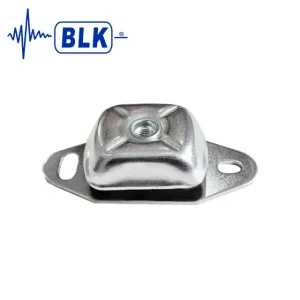
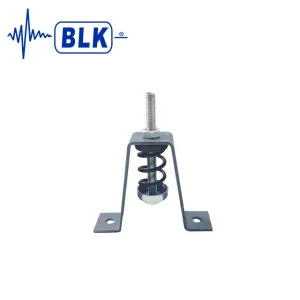
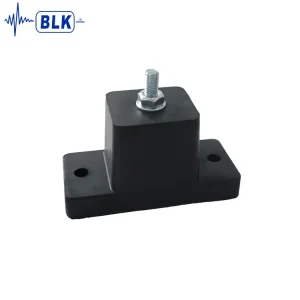
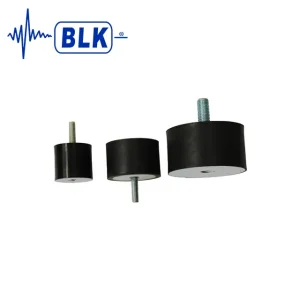
Industrial Anti-Vibration Mounts & Pad Series
High-performance matrix mounts, elastomeric rubber dampeners, spring-loaded isolators, and structural inertia supports manufactured under strict ISO 9001 quality controls.
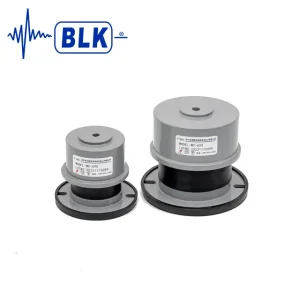
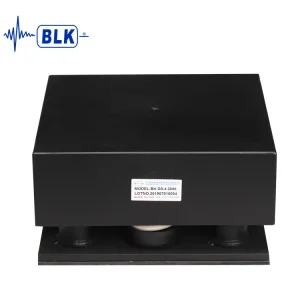
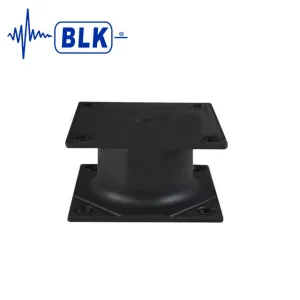



State of the Art in Industrial Anti-Vibration Mounting Technology
A comprehensive evaluation of dynamic structural isolation, harmonic damping metrics, and global OEM sourcing trends in heavy machinery, HVAC, and precision engineering sectors.
The Mechanics of Structural Harmonic Suppression
Vibration isolation is fundamental to mechanical efficiency, acoustics management, and equipment longevity. Industrial plant operations generate cyclic forces through unbalance, impact, and acoustic hum. Anti-vibration mounting pads function by intercepting dynamic forces and modifying system response characteristics.
By providing controlled elastomeric deflection under load, mounting pads alter the system's fundamental natural frequency ($f_n$). When the disturbing frequency ($f_d$) of operating machinery exceeds $\sqrt{2} \cdot f_n$, transmissibility drops below 1.0, achieving attenuation of structure-borne noise and mechanical shock.
Industry 4.0 & Micro-Vibration Isolation Trends
With the global rise of Industry 4.0, smart manufacturing, semiconductor fabrication, and high-speed automated assembly lines, vibration standards have shifted from macro-level machine stabilization to sub-micron micro-vibration containment.
Modern factories require engineered pad materials capable of providing multi-axis damping—suppressing vertical compression displacement while resisting lateral shear movement. Advanced multi-layer composite matrix pads (such as BK-MT and BKSWA types) incorporate internal damping membranes and ribbed friction profiles to minimize secondary high-frequency resonance.
Elastomer Selection & Damping Polymer Chemistry
Comparing compounding formulations, shore hardness ratings, thermal resilience, and dynamic modulus behavior across specialized industrial environments.
Neoprene (Polychloroprene)
Neoprene is an ideal general-purpose material for HVAC equipment, industrial compressors, and transformer pad isolators. It exhibits exceptional compression set resistance, dynamic tear strength, and chemical durability against oil, ozone, and weather exposure across temperatures from -40°C to +120°C.
Nitrile Rubber (NBR)
Engineered specifically for machine shop environments, stamping press beds, and hydraulic power units. NBR features superior resistance to petroleum-based fuels, synthetic lubricants, and industrial coolants, maintaining high tensile strength and structural stiffness under direct oil submersion.
High-Damping Polyurethane
Polymer matrix formulations like the BK-PM series deliver high energy dissipation factors ($\tan \delta$). Ideal for high-impact machinery (such as forging hammers and punch presses), polyurethane pads absorb sudden transient shock loads, preventing floor cracking and structural fatigue.
| Elastomer Compound | Hardness Range (Shore A) | Dynamic Damping Ratio ($\zeta$) | Oil & Solvent Resistance | Optimal Application Scenario |
|---|---|---|---|---|
| Natural Rubber (NR) | 40 - 75 Shore A | 0.03 - 0.08 | Moderate / Low | HVAC fans, centrifugal pumps, low-temp isolators |
| Neoprene (CR) | 45 - 80 Shore A | 0.05 - 0.12 | Excellent | Chillers, rooftop AHUs, transformers, electrical cabinets |
| Nitrile (NBR) | 50 - 85 Shore A | 0.06 - 0.14 | Superior (Petroleum) | CNC lathes, metal stamping tools, hydraulic pump skid pads |
| EPDM Elastomer | 50 - 75 Shore A | 0.05 - 0.10 | Poor (Petroleum) / High UV | Outdoor cooling towers, coastal industrial plants |
| Viscoelastic Polyurethane | 30 - 90 Shore A | 0.15 - 0.35 | Good | Heavy stamping press bases, forging machinery impact pads |
Strategic Manufacturing Advantages of Bellking Kunshan Factory
Leveraging advanced polymer vulcanization, automated CNC toolmaking, and rigorous quality assurance within China's premier industrial manufacturing corridor.
Rapid Customization & Tooling Speed
With an in-house CNC mold fabrication workshop, custom-engineered rubber pads and mounting profiles progress from CAD drawings and finite element analysis (FEA) to physical prototype vulcanization in as few as 3 to 5 working days.
ISO 9001 & Advanced Testing QA
Our Kunshan facility integrates tension-compression dynamic testers, durometer batch verifiers, rubber Rheometers, and 900-hour salt spray chambers (for Dacromet-coated metallic plates and housings) to ensure zero batch defects.
Global Export & Scale Efficiency
Occupying 2,000+ m² of optimized production space with an annual capacity exceeding 100,000 units, standard items ship within 24 hours while large OEM bulk purchase contracts benefit from optimized ocean container packing logistics.
Industrial Field Scenarios & Sector Solutions
Tailored vibration attenuation strategies engineered for high-stress operational environments across global heavy industries.
01. Industrial HVAC & Building Services
Water chillers, cooling towers, air handling units (AHUs), and large centrifugal pumps transmit low-frequency hums into commercial building frames. Utilizing multi-layer cross-ribbed pad matrices (e.g., BKTS pad profiles) or spring-and-pad combinations effectively isolates floor slab acoustic transmission, achieving compliance with strict municipal noise codes.
02. Heavy Stamping & Machine Tools
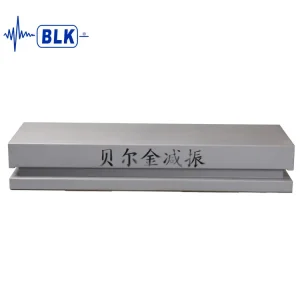
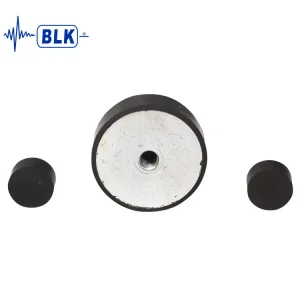
Metal punching presses, CNC machining centers, and industrial shears generate high-magnitude impact pulses. Custom high-durometer rubber buffers (BKSW series) combined with polymer damping sheets protect shop floor concrete slabs from structural cracking, while preserving precision tool geometry and alignment.
03. Substation Transformers & Electrical Grids
High-voltage dry-type and oil-immersed transformers produce continuous magnetostrictive core noise (100 Hz / 120 Hz fundamental harmonics). Bellking specialized anti-vibration transformer pads dissipate core vibrations, reducing acoustic decibel outputs across utility substations and data centers.
04. Semiconductor & Metrology Cleanrooms
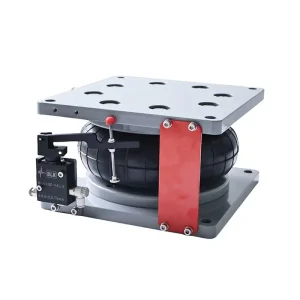
Optical inspection platforms, coordinate measuring machines (CMMs), and semiconductor wafer probing stations require near-zero background ambient vibration. By combining active-ready passive precision platforms with low-frequency pneumatic mounts (BK-PF series), footfall noise and structural building sway are isolated down to sub-micron displacement tolerances.
05. Marine Propulsion & Offshore Skids
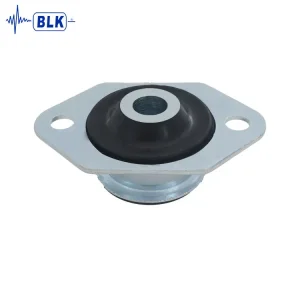
Marine diesel generators, auxiliary pumps, and offshore compressor skids are subjected to dynamic hull motion, pitch, roll, and harsh salt-laden atmospheric conditions. Oil-resistant NBR and Neoprene cone mounts (BKCN series) provide dual-directional restraint, absorbing radial shear forces while offering high corrosion longevity.
Global Procurement Selection & Calculation Protocol
A systematic mathematical framework for specifying optimal mounting pad area, static deflection, and dynamic load margins.
Step 1: Equipment Total Mass & Center of Gravity
Calculate the total operational weight ($W_{total}$) including machine body, fluids, workpiece allowances, and connected piping. Determine point load distribution ($P_1, P_2, \dots, P_n$) based on the center of gravity ($CoG$). Unequal load points require adjusted pad surface area or varying durometer hardness ratings to maintain level alignment.
Step 2: Operating Speed & Excitation Frequency
Identify the lowest disturbing speed of the machine in RPM ($N$). Convert RPM to disturbing frequency in Hertz:
For optimal performance, select a pad profile with a natural frequency ($f_n$) such that the ratio $f_d / f_n \ge 3.0$, yielding over 88% isolation efficiency.
Step 3: Calculating Pad Static Deflection & Transmissibility
The natural frequency of an elastomeric mounting pad under vertical static loading is determined by its static deflection ($\delta_{st}$ in mm):
Transmissibility ($T$) under viscous damping ratio ($\zeta$) is expressed as:
Ensure the pad operating pressure does not exceed the maximum allowed PSI / MPa rating for the selected elastomer to prevent rubber creep and premature hardening.
Frequently Asked Technical Questions
Direct insights from Bellking senior application engineers regarding pad selection, installation, dynamic drift, and environmental longevity.
How do I choose between elastomeric rubber pads, spring mounts, and pneumatic air mounts?
The primary selection criteria is the operating disturbing frequency ($f_d$) of your equipment. Rubber mounting pads excel at higher operating speeds (above 1,200 RPM / 20 Hz) and mid-to-high impact shock absorption. Spring isolators (with natural frequencies around 3 to 5 Hz) are recommended for low-speed machinery like HVAC chillers and rooftop fans operating at 300-1,200 RPM. Pneumatic air mounts reach ultra-low natural frequencies down to 1.7 Hz, making them essential for ultra-sensitive semiconductor wafer probing, optical benches, and cleanroom metrology.
What parameters are required to generate a custom anti-vibration pad specification?
To receive a fully engineered vibration isolation plan within 24 hours, our engineering team requires: (1) Equipment operating weight and center of gravity layout, (2) Support point dimensions and mounting bolt spacing, (3) Equipment excitation RPM or stroke frequency, (4) Environmental factors (oil exposure, outdoor UV, temperature ranges), and (5) Any seismic anchoring or lateral wind load restraint requirements.
What is elastomer creep, and how does Bellking mitigate long-term pad settling?
Elastomer creep refers to the gradual increase in static deflection under continuous mechanical load over time. Uncontrolled creep reduces pad thickness, alters system alignment, and degrades damping performance. Bellking utilizes sulfur-cured Neoprene and premium grade polymer compounds engineered to meet ASTM D395 Method B compression set standards (maintaining <15% set after extended loading), ensuring over 15 years of stable performance without excessive height loss.
Do Bellking anti-vibration mounting pads require anchor bolts into the concrete subfloor?
In most standard machine installations, non-skid waffle or cross-ribbed pad patterns (such as BKTS rubber pads) provide sufficient friction coefficient against concrete surfaces to prevent equipment "walking" without bolting. However, for equipment with high lateral shear forces, tall centers of gravity, or seismic zone compliance standards, we recommend utilizing housing-enclosed mounts with dynamic anchor slots or integrated leveling studs (BKAL series).
What quality certifications and compliance documents accompany your export orders?
All products leaving our ISO 9001 certified Kunshan facility are supplied with official Material Inspection Reports, Shore Hardness Verification Certificates, and Dynamic Load Test summaries. Additionally, our rubber formulations comply with RoHS and REACH environmental directives, while metallic housing components undergo 900-hour salt spray testing for harsh environment readiness.
Need a Custom Sized Anti-Vibration Isolation Solution?
Our experienced engineering team will calculate point loadings, natural frequencies, and pad dimensions for your specific machine footprint within 24 hours.
Consult an Application Engineer NowSpecialized Mounts, Leveling Feet & Damping Pads
Precision polymer pads, spring hangers, level adjustment feet, and cone dampers engineered for severe duty applications.