
High-Performance Anti Vibration Mounts & Feet Solutions
Select from our ISO 9001:2015 certified standard inventory or request custom mold engineering suited to your dynamic equipment specifications.


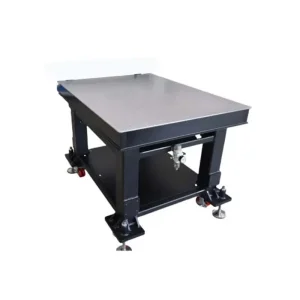





Macro Industrial Landscape & Dynamic Elastomeric Engineering
Understanding the fundamental mechanics of industrial vibration control, hysteresis damping, and natural frequency shifting in modern manufacturing systems.
In modern industrial manufacturing, excessive mechanical vibration represents a primary source of premature structural fatigue, dimensional inaccuracy in precision machining, and non-compliance with global environmental acoustic regulations (such as ISO 10816 vibration standards). As industrial machinery operates at higher operational speeds and under elevated torque profiles, the demand for high-performance custom anti vibration rubber feet and elastomeric mounts has transitioned from a basic structural accessory to an integral sub-system of mechanical engineering design.
Vibration isolation using rubber bumpers, feet, and mounts relies on changing the system's dynamic response. When rotating or reciprocating machinery operates, it creates harmonic forces. If these disturbance frequencies match the machinery's resonance frequency, structural shaking amplifies. High-grade rubber mounts isolate this by shifting system natural frequencies below operational forcing frequencies, absorbing energy through internal polymer chain hysteresis friction.
Dynamic vs. Static Stiffness
Elastomers exhibit higher dynamic stiffness (Kd) than static stiffness (Ks). Our custom compounding achieves optimal Kd/Ks ratios (typically between 1.2 and 1.6), ensuring stable static equipment load leveling without compromising high-frequency dynamic noise absorption.
Broadband Damping Capacity
Unlike pure metallic springs that store dynamic energy without dissipated loss (leading to surge resonance), rubber mounts exhibit viscoelastic dissipation. They absorb continuous harmonic oscillation energy and convert it to harmless thermal energy across broad temperature bands.
Multiaxial Shock Absorption
Machinery induces multi-directional dynamics: axial vertical compression, lateral shear, and torsional moments. Custom engineered rubber feet provide controlled stiffness matrices along all X, Y, and Z axes to prevent tipping and structural shear failure.
Material Science: Custom Polymer Formulations & Durometer Control
Selecting the correct synthetic compound, Shore A hardness rating, and chemical resistance matrix for specific industrial operational environments.
The mechanical longevity and damping effectiveness of anti-vibration rubber feet depend directly on polymer blend selection. Operating environments vary widely, including oil-soaked compressor bases, outdoor HVAC chillers exposed to UV degradation, and high-temperature medical sterilisers. Custom rubber formulation requires balancing Shore A durometer hardness, tensile strength, elongation at break, compression set, and environmental durability.
| Elastomer Type | Shore Hardness | Temp Range (°C) | Oil & Solvent Resistance | Weather & UV Stability | Primary Industrial Application |
|---|---|---|---|---|---|
| Natural Rubber (NR) | 40 - 75 Shore A | -40 to +80 | Fair / Poor | Moderate | High mechanical resilience, heavy load equipment bases, low-frequency isolation. |
| Nitrile Rubber (NBR) | 50 - 85 Shore A | -30 to +110 | Excellent | Fair | Hydraulic pumps, oil-lubricated motor mounts, industrial CNC gearboxes. |
| Neoprene (CR) | 45 - 80 Shore A | -35 to +100 | Good (Moderate) | Excellent | Outdoor HVAC units, maritime generators, transformer isolation pads. |
| EPDM Rubber | 40 - 80 Shore A | -45 to +130 | Poor (Polar Solvents Good) | Outstanding | Chemical process pumps, cleanroom equipment, severe weather installations. |
| Silicone (VMQ) | 30 - 70 Shore A | -60 to +200 | Moderate | Outstanding | High-temperature industrial ovens, medical metrology, food-grade processing. |
| Fluorocarbon (FKM) | 60 - 90 Shore A | -20 to +230 | Superior | Superior | Severe aerospace testing, aggressive petrochemical slurry pumps. |
Durometer Selection Guidelines: Selecting an overly hard rubber (e.g., 80 Shore A for a lightweight machine) causes the system to act as a rigid body, transmitting vibration into the floor structure. Conversely, using soft rubber (40 Shore A) under extreme static loads leads to excessive creep and premature shear failure. Our engineering team conducts dynamic simulation to maintain static deflections within 15% to 20% of free rubber height.
OEM Engineering Roadmap & Manufacturing Workflow
From finite element analysis (FEA) dynamic modeling to cold-runner injection molding and automated bonding inspection.
1. Dynamic Load & FEA Modeling
We evaluate your equipment weight, center of gravity (CoG), operating speeds (RPM), and mounting geometry. Non-linear Finite Element Analysis simulates compression deflections and shear stress concentrations, optimizing rubber bumper contours to minimize strain.
2. Metal Insert & Thread Bonding
High load capacity requires bonding elastomeric bodies to steel, stainless steel, or brass threaded studs (M4 to M24). Metal components undergo phosphating and dual-layer chemical vulcanization primer coating, achieving tensile bonding strengths exceeding elastomer tear resistance.
3. Precision Vulcanization Molding
Utilizing high-tonnage vacuum compression and transfer molding machines, elastomer pre-forms are cured under strict temperature-pressure curves. This process eliminates internal micro-voids, ensuring consistent durometer distribution throughout the rubber foot body.
Global Pricing Structures & Cost Factor Analysis
Transparent analysis of unit production economics, tooling amortization, material surcharges, and volume tier structures.
Understanding the pricing drivers for custom anti vibration rubber feet helps procurement managers optimize purchasing budgets while meeting engineering performance requirements. Pricing ranges from under $0.50 per unit for standard off-the-shelf rubber feet to over $15.00+ for heavy-duty, multi-layered metal-bonded seismic isolators.
| Specification Category | Estimated Price Range (USD) | Primary Cost Drivers | Ideal Procurement Volume |
|---|---|---|---|
| Standard Non-Threaded Rubber Feet | $0.15 - $0.85 / pc | Raw material volume (NR/SBR), mold cavity count. | 10,000+ units (Minimizes per-unit setup fee) |
| Stud-Mounted Male/Female Rubber Mounts | $0.75 - $3.50 / pc | Thread size (M6-M12), plating grade (Zinc/Stainless), insert bonding. | 2,500 - 10,000 units |
| Leveling Heavy-Duty Anti-Vibration Feet | $4.50 - $18.00 / pc | Articulating steel stem, high durometer EPDM/NBR, swivel joint machining. | 500 - 2,500 units |
| Custom Engineered High-Damping / Air Mounts | $25.00 - $180.00+ / pc | Custom tooling die design, low-frequency chambering, specialized air valves. | Custom OEM project batches |
Tooling & Setup Surcharges: Custom shapes require dedicated steel mold development. Single-cavity prototype molds typically range between $500 and $1,200 (delivered in 7-10 working days), whereas multi-cavity automated production tooling ranges from $2,500 to $6,000 depending on geometry complexity. We offer full mold fee credits once cumulative order volumes reach defined contract thresholds.
Industrial Application Scenarios & Global Compliance
Tailored isolation designs for global industrial sectors, supporting international regulatory compliance and safety certifications.
Medical & Laboratory Metrology
Optical benches, centrifuges, and electron microscopes require micro-vibration mitigation. High-damping silicone and pneumatic isolation feet block ambient foot-traffic floor vibrations, keeping instrument readings accurate.
HVAC, Power & Air Compressors
Heavy reciprocating chiller pumps and standby diesel generators generate severe low-frequency vibration. Neoprene and steel spring-compound mounts isolate structure-borne noise from transferring into commercial building frameworks.
Semiconductor & Electronics Assembly
Surface-mount technology (SMT) pick-and-place robotics operate under high acceleration vectors. Custom anti vibration feet prevent machine frame shaking, maintaining component placement accuracy within micron tolerances.
Global Quality Assurance & Material Compliance
All custom rubber formulations comply with global environmental and safety mandates, ensuring smooth cross-border supply chain integration:
- RoHS 3 (Directive 2015/863): Zero heavy metals (Lead, Cadmium, Mercury) or restricted phthalate plasticizers.
- REACH SVHC Compliance: Polymer formulations fully audited against Substances of Very High Concern lists.
- ASTM D2000 Material Classification: Standardized reporting system for rubber property verification.
- FDA 21 CFR 177.2600: Grade-specific elastomeric options for food contact and pharmaceutical processing machinery.
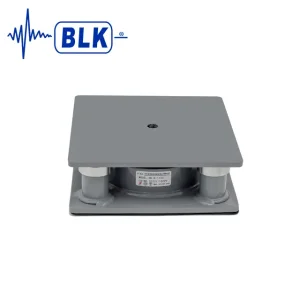
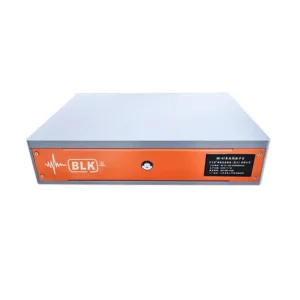
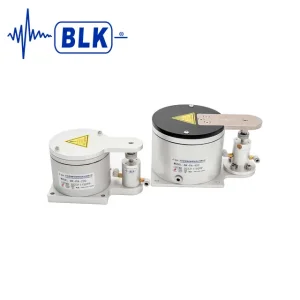
Specialized Industrial Vibration Isolation Systems
Explore specialized air mounts, damped spring isolators, multi-layer shock absorbers, and heavy-duty structural bumpers.





Frequently Asked Engineering & Procurement Questions
Expert guidance on calculating vibration isolation efficiency, selecting elastomeric durometers, and managing installation dynamics.
How do I calculate the required static load capacity for custom rubber feet?
To calculate static load capacity per foot, take the total wet operating mass of the machine (including internal fluids and maximum payload) and multiply by a safety factor of 1.25 to 1.5 to account for uneven weight distribution. Divide this figure by the total number of mounting points. Always verify that the center of gravity (CoG) is centered; for asymmetrical machinery, different durometers or sizes should be specified for individual mounting locations to maintain uniform equipment leveling.
What is the minimum frequency ratio required to achieve effective vibration isolation?
Vibration isolation occurs only when the ratio of forcing frequency (fd) to natural frequency (fn) satisfies fd / fn > √2 (≈ 1.414). At a ratio of 1.414, transmissibility equals 1.0 (0% isolation). To achieve commercial isolation efficiency of 81% to 95%+, engineers target a frequency ratio of 3:1 or higher. For instance, a compressor operating at 1,800 RPM (30 Hz) should be mounted on isolators with a natural frequency of 10 Hz or lower.
Should I choose shear loading or compression loading for rubber mounts?
Elastomers are significantly softer in shear than in compression (shear stiffness is typically 1/4 to 1/8 of compression stiffness). Shear mounting offers lower natural frequencies, ideal for isolating delicate low-frequency disturbances. However, compression loading provides much higher load capacities and impact protection. Many of our custom rubber feet utilize angled sandwich geometries that combine compression and shear forces for balanced stability and isolation.
How do environmental conditions affect long-term elastomeric service life?
Unprotected Natural Rubber degrades when exposed to ozone, ultraviolet light, and petroleum hydrocarbons, leading to surface hardening and cracking. For oil-lubricated industrial environments, Nitrile (NBR) is recommended. For outdoor installations, Neoprene (CR) or EPDM offers strong ozone and weather resistance. Silicone is suited for extreme temperature swings (-60°C to +200°C). High-quality formulations deliver reliable service life exceeding 10 to 15 years.
Partner with a Dedicated Anti-Vibration Engineering Manufacturer
Whether you require high-volume OEM production of standardized stud-mounted rubber feet or full custom FEA design and tooling development, our engineering team delivers precision-molded elastomeric solutions within 3 to 5 working days.