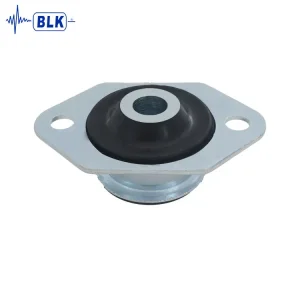
Standard & Custom Elastomeric Vibration Mounts
Direct factory engineering output supporting high dynamic deflection and heavy chemical resistance.
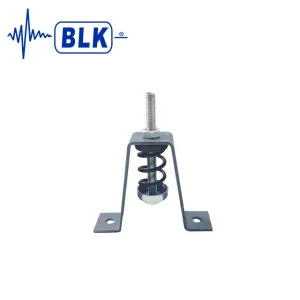
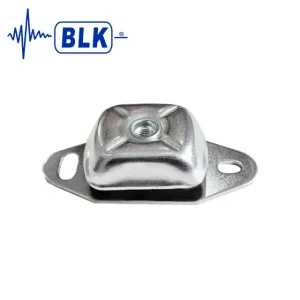



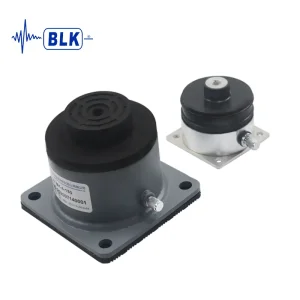
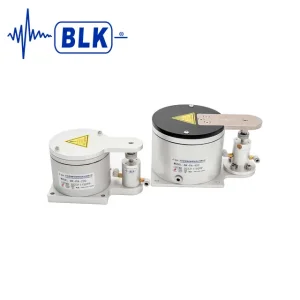

Engineering Next-Generation Oil Resistant Rubber Dampers
A comprehensive analysis of polymer chemistry, structural dynamics, and anti-vibration performance under intense hydrocarbon exposure.
Elastomer Polymer Chemistry
In heavy industrial machinery, traditional natural rubber isolators rapidly degrade when exposed to mineral oils, hydraulic fluids, and diesel fuels. Petroleum hydrocarbons penetrate the polymer chain, inducing swelling, softening, and dramatic loss of shear modulus.
Our OEM manufacturing facility specializes in Nitrile Hydrocarbon Vulcanizates (NBR), Fluorocarbon Elastomers (FKM/Viton), and HNBR compounds. These custom formulations maintain structural cross-linking density under continuous solvent immersion, ensuring long-term dynamic stiffness constants ($K_d$).
Dynamic Damping & Resonance Isolation
Industrial machinery generates both high-frequency structure-borne noise and low-frequency transient impact shocks. Selecting the correct dampening constant ($\zeta$) requires balancing static deflection with dynamic loss factors.
By engineering custom durometer profiles (ranging from 40 Shore A to 80 Shore A), our rubber dampers achieve optimal natural frequencies ($f_n$) down to 3–8 Hz. This guarantees up to 99% isolation efficiency at standard rotating speeds (1200 RPM – 3600 RPM) while preventing thermal runaways caused by internal mechanical hysteresis.
Chemical & Thermal Resistance Profile
Oil-resistant rubber dampers must withstand simultaneous thermal cycling and continuous fluid exposure without embrittlement or compression set failure.
According to ASTM D471 testing standards, our proprietary FKM and high-ACN NBR dampers undergo less than 5% volume change when immersed in ASTM Oil No. 3 at 125°C for 70 hours. This superior resistance extends component operational life up to 15+ years in aggressive automotive, marine, and power generation environments.
Comparative Performance of Oil-Resistant Compounds
Engineered rubber selection based on operating temperature, fluid contact type, and mechanical stress dynamics.
| Elastomer Type | Oil Resistance (ASTM D471) | Temp Range (°C) | Dynamic Damping Ratio ($\zeta$) | Tensile Strength (MPa) | Primary Industrial Applications |
|---|---|---|---|---|---|
| High-ACN NBR (Nitrile) | Excellent (Mineral oils, fuel) | -30 to +120 | 0.08 - 0.15 | 18.5 | Automotive engine mounts, hydraulic pumps, HVAC compressors |
| HNBR (Hydrogenated Nitrile) | Outstanding (Synthetic oils, sour gas) | -40 to +155 | 0.10 - 0.18 | 24.0 | Heavy industrial gearboxes, oilfield equipment, marine propulsion |
| FKM / Viton (Fluorocarbon) | Maximum (Aggressive hydrocarbons, bio-diesel) | -20 to +230 | 0.05 - 0.12 | 16.0 | Chemical processing plants, high-temp turbochargers, aerospace |
| Neoprene (CR Polymer) | Moderate (Refrigerant oils, lubricants) | -35 to +100 | 0.12 - 0.22 | 17.0 | HVAC spring hanger caps, structural acoustic pads, transformers |
| Custom Silicon-Fluoride Hybrid | Superior (Extreme fluids & ozone) | -55 to +200 | 0.06 - 0.14 | 12.5 | Military aviation, precision cleanroom metrology isolation |
Macro-Level Engineering Solutions for Enterprise Buyers
Addressing structural resonance, fluid degradation, and compliance across global supply chains.
Marine & Heavy Offshore Gensets
Marine engine compartments present severe vibration challenges exacerbated by constant exposure to diesel, heavy fuel oil (HFO), and bilge water. Standard mounts lose structural elasticity within months.
Our OEM factory supplies custom vulcaners with interlocking fail-safe metal housings and marine-grade FKM elements that limit dynamic engine movement during heavy sea pitch and roll, preventing piping fatigue and shaft misalignment.
Industrial HVAC & Refrigeration Systems
Large chiller units and screw compressors leak refrigeration oils (POE/PAG) that attack baseline rubber isolators. Dissolved oils cause traditional rubber pads to swell up to 30%, altering the system's static deflection profile.
Our oil-resistant BKM and BKDE rubber mounts utilize oil-impermeable NBR formulations, maintaining consistent static height, eliminating structural hum, and keeping building acoustic vibration within low NC-30 standards.
High-Precision CNC & Stamping Presses
Metalworking equipment leaks extreme-pressure (EP) cutting fluids and lubricating oils. Impact shocks from 500-ton stamping presses break low-grade rubber-to-metal bonds.
We incorporate high-tensile steel inserts treated with Dacromet anti-corrosion coating (900-hour salt spray rated) combined with proprietary Chemlok hot-vulcanization bonding, delivering shear bond strengths exceeding 10 MPa.
End-to-End Custom OEM/ODM Production Workflow
From Finite Element Analysis (FEA) to rapid prototyping and mass compound molding.
1. FEA & Load Dynamics Modeling
Our engineering team inputs client parameters—equipment mass distribution, center of gravity (CG), disturbing frequency ($f_d$), and ambient oil exposure types—into customized ANSYS Mechanical software.
We simulate static deflection, shear strain distribution, and non-linear hyperelastic material behavior (Mooney-Rivlin model) to eliminate structural stress hotspots prior to tooling investment.
2. Custom Compound Formulation
Working in our automated compounding house, polymer scientists combine base resins with specialized carbon blacks, plasticizers, antioxidant anti-ozonants, and vulcanizing agents.
Rheometer testing verifies scorch safety, vulcanization rates, and final durometer hardness, ensuring full compliance with international standards including ASTM D2000 M3BG714 specs for oil resistance.
3. CNC Machining & Injection Molding
Metal hardware inserts (Q235 steel, 304/316 stainless steel) undergo automated degreasing, shot blasting, and dual-layer adhesive spraying.
High-precision vacuum injection molding presses apply heat and 200-ton hydraulic pressure, creating seamless rubber-to-metal bonding that guarantees zero delamination under severe shear stresses.
Quality Assurance & Global Compliance
To guarantee complete reliability in critical infrastructure projects, every production lot is subjected to 100% dynamic stiffness and dynamic loss factor testing.
- ISO 9001:2015 Quality Management System: Strict trace-ability from raw polymer batches to finished isolators.
- RoHS & REACH Compliance: Zero restricted heavy metals, polycyclic aromatic hydrocarbons (PAHs), or hazardous phthalates.
- Fatigue Testing: Proven survival through 2,000,000 continuous dynamic cycles under maximum rated load.
- Third-Party Certification: Inspection reports provided by SGS, TUV, and national laboratory facilities upon request.
Industry Trends & Next-Gen Outlook
The industrial landscape is rapidly transitioning toward automated, high-speed machinery operating under higher power densities and elevated fluid temperatures. Key development vectors include:
- Smart Embedded Sensing: Integrating micro-piezoelectric sensors inside rubber dampers to provide real-time vibration amplitude and oil degradation analytics to centralized PLC systems.
- Bio-Synthetic Fluid Compatibility: Developing specialized fluorosilicone and peroxide-cured HNBR compounds tailored for next-generation biodegradable hydraulic oils and synthetic ester lubricants.
- Eco-Compliant Vulcanization: Adopting non-nitrosamine curing systems and zero-VOC adhesive primers to satisfy stringent global environmental standards.
Frequently Asked Questions on Oil Resistant Rubber Dampers
Expert answers from our senior vibration isolation application engineers.
How does oil exposure cause failures in standard rubber vibration mounts?
Non-oil-resistant rubbers (such as standard Natural Rubber or EPDM) possess non-polar molecular structures similar to hydrocarbon oils. When exposed to oils, petroleum molecules diffuse into the rubber matrix, forcing polymer chains apart. This causes volumetric swelling, loss of tensile strength, dramatic reduction in durometer hardness, and eventually total breakdown of the rubber-to-metal vulcanized bond.
What is the difference between NBR, HNBR, and FKM for oil resistance?
NBR (Nitrile): Excellent resistance to mineral oils, greases, and fuels at temperatures up to 120°C. Best cost-to-performance ratio for standard industrial machinery.
HNBR (Hydrogenated Nitrile): Superior thermal stability (up to 155°C) and significantly higher mechanical strength, tensile property, and abrasion resistance. Ideal for heavy-duty automotive and oilfield applications.
FKM (Viton): Maximum resistance to aggressive chemical solvents, synthetic lubricants, bio-diesels, and extreme heat up to 230°C. Best suited for high-temperature turbochargers, chemical plants, and aerospace applications.
How do I calculate the required static deflection and load capacity for custom dampers?
Static deflection ($\delta_s$) is directly proportional to the natural frequency ($f_n$) of the damper, governed by the formula: $f_n = 5 / \sqrt{\delta_s}$ (where $f_n$ is in Hz and $\delta_s$ is in cm). To achieve 90%+ isolation efficiency, the ratio of equipment operating frequency ($f_d$) to natural frequency ($f_n$) should be at least 3:1 ($f_d / f_n \ge 3$). Provide our engineers with total machinery weight, number of support points, center of gravity location, and operating RPM for a complete optimized selection plan.
Can your factory provide custom durometers and non-standard mounting dimensions?
Yes. As a direct OEM/ODM manufacturer, we produce custom durometer formulations from 40 Shore A up to 80 Shore A ($\pm 5$ durometer tolerance). We manufacture customized metal baseplates, thread sizes (metric & imperial), overall heights, and specialized mounting hole patterns based on your CAD drawings within 3 to 5 working days for prototypes.
What anti-corrosion treatments are applied to metal parts embedded in rubber mounts?
Standard metal components are treated with a multi-stage Dacromet or Geomet coating process capable of exceeding 900 hours of continuous salt spray testing according to ASTM B117 standards. For extreme offshore or marine environments, we offer full 304 or 316 stainless steel housings bonded with high-durability Chemlok primer systems.
What lead time and quality documentation can global buyers expect?
Standard catalog items ship within 24 to 48 hours. Custom engineering orders generally carry a 2 to 3 week production lead time depending on mold complexity. Every shipment includes a Certificate of Analysis (COA), ISO 9001 factory inspection reports, dynamic load test curves, and material compliance certificates (RoHS/REACH).
Precision Damping Platforms & Specialized Mounts
Explore our comprehensive anti-vibration solutions designed for pumps, transformers, air compressors, and optical tables.