
Precision Anti-Vibration Products (Part I)
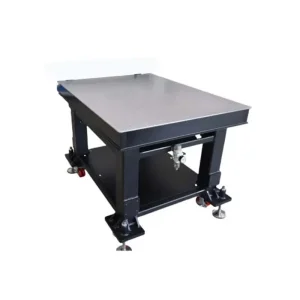
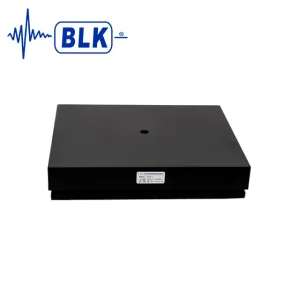
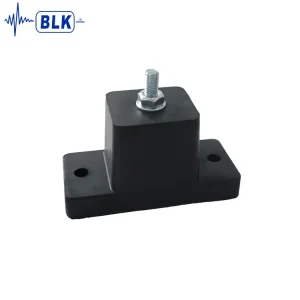
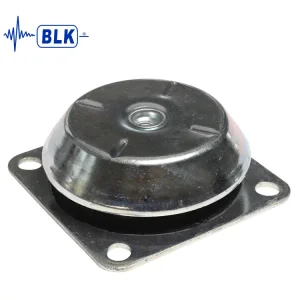
Factory-direct engineered optical platforms, polymer damping pads, and specialized rubber mounts certified for extreme industrial durability.

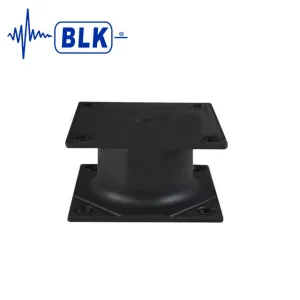

Global Enterprise Procurement Demand for Transformer Vibration Pads
An in-depth evaluation of global power distribution growth, urban acoustic mandates, and critical infrastructure sourcing paradigms.
Power Grid Modernization & Expansion
As the global energy transition accelerates, electric utilities are replacing aging infrastructure with high-efficiency dry-type and oil-immersed transformers. Mitigating structural hum at the source via specialized elastomeric vibration pads prevents ground-transmitted low-frequency harmonics into adjacent civil engineering structures.
Hyperscale Data Center Acoustic Compliance
Modern AI and cloud data centers place medium-voltage step-down transformers in close proximity to sensitive server racks and residential boundaries. Municipal noise pollution codes demand structural vibration isolation efficiency exceeding 95% to pass environmental compliance audits.
Offshore Wind & Renewable Energy Substations
Offshore wind turbines and solar inverter stations subject power transformers to severe continuous dynamic excitation, salt mist corrosion, and thermal fluctuation. Custom transformer vibration pads engineered with high-grade EPDM or nitrile matrix compounds provide long-term resilience against structural fatigue.
Engineering Physics of Transformer Vibration & Acoustic Damping
Understanding magnetostriction excitation, harmonic frequency responses, and elastomeric vibration isolation mathematics.
Power transformers generate vibration primarily due to magnetostriction in the silicon steel core laminations and electromagnetic forces within the transformer windings. Magnetostriction occurs twice per electrical cycle, producing a fundamental excitation frequency of 100 Hz (for 50 Hz power grids) or 120 Hz (for 60 Hz power grids), along with significant higher-order harmonics (200 Hz, 300 Hz, 400 Hz, etc.).
Without adequate mechanical isolation, these vibrational forces transmit directly into the foundation slab, converting structural vibration into airborne low-frequency hum that travels through building walls, ductwork, and structural framing.
Transmissibility & Natural Frequency Equations
To achieve effective vibration isolation, the natural frequency ($f_n$) of the isolator pad under loaded conditions must be significantly lower than the disturbing frequency ($f_d$) of the transformer:
Where k represents the dynamic stiffness of the elastomeric compound, m is the static mass acting on the pad, f_d is 100 Hz/120 Hz, and T is the force transmissibility. For an isolation efficiency exceeding 90%, the ratio $f_d / f_n$ must be greater than 3.16.
Compound Material Performance Matrix
| Elastomer Compound | Shore A Hardness | Max Static Load (MPa) | Damping Factor (tan δ) | Temperature Range | Key Industrial Advantage |
|---|---|---|---|---|---|
| High-Damping Neoprene (CR) | 45 - 65 Shore A | 1.2 - 2.5 MPa | 0.12 - 0.22 | -30°C to +100°C | Excellent balance of load capacity, oil resistance, and low creep. |
| Engineered Nitrile (NBR) | 50 - 70 Shore A | 2.0 - 4.0 MPa | 0.10 - 0.18 | -25°C to +110°C | Maximum resistance to transformer mineral oils and synthetic esters. |
| EPDM Composite Matrix | 40 - 60 Shore A | 1.0 - 2.0 MPa | 0.15 - 0.25 | -40°C to +130°C | Superior UV, ozone, and weather resistance for outdoor substations. |
| Polymer Damping Laminate | 55 - 75 Shore A | 3.5 - 6.0 MPa | 0.25 - 0.40 | -20°C to +90°C | High-density multi-layer isolation for heavy step-up transformers. |
Custom Transformer Vibration Pad Engineering & Factory Tailoring
How OEM customization delivers specific load deflection profiles, steel-interlayer vulcanization, and exact dimensional compatibility.
1:1 Load Deflection Matching
No two transformer installations possess identical center-of-gravity distributions. Factory engineering involves calculating point loads at each transformer wheel or base channel, adjusting rubber durometer (Shore 45A to 75A) to guarantee uniform deflection across all support locations.
Steel Interlayer Vulcanization
For high-tonnage oil transformers, solid elastomeric pads may experience lateral bulging under extreme static pressure. Custom factory designs integrate internal hot-vulcanized steel load distribution plates (multi-tier sandwich construction), preventing shear failure while maintaining axial elasticity.
Seismic & Wind Restraint Design
In high-seismic zones (IEEE 693 compliance), plain rubber pads must be augmented with steel housing restraints or anti-shear containment pins. Customized transformer vibration isolator assemblies integrate elastomeric snubbers to absorb extreme lateral earthquake shocks without transferring destructive forces to transformer bushings.
Technical Roadmap & Next-Generation Material Innovations
The evolution of intelligent acoustic materials, nano-reinforced elastomers, and predictive vibration monitoring.
Graphene & Carbon Nano-Reinforcement
Integration of multi-walled carbon nanotubes (MWCNTs) into synthetic nitrile rubber compounds yields superior energy dissipation density, extending fatigue resistance beyond 20 million dynamic cyclic compressions without structural micro-cracking.
Integrated Sensor / Smart Damping Pads
Next-generation smart pads embed piezo-resistive thin-film sensors directly inside the elastomer matrix. These sensors wirelessly stream real-time load displacement and vibration spectrum data to plant SCADA systems, detecting core coil loosening before catastrophic failure.
Eco-Compliant Non-Toxic Formulations
Addressing global REACH and RoHS3 initiatives, research focuses on bio-derived synthetic polymers that eliminate PAH (Polycyclic Aromatic Hydrocarbons) and nitrosamines while maintaining flame retardancy compliant with UL 94-V0 requirements for indoor substations.
Global Commercial Status, Factory Capabilities & Pricing Architecture
Demystifying wholesale pricing dynamics, custom tooling investments, and volume supply chain economics.
Purchasing directly from an established OEM/ODM factory like Bellking Vibration Reduction Equipment Manufacturing (Kunshan) Co., Ltd. eliminates tier-2 trading margins, providing a 25% to 40% cost advantage over regional distributors. Factory pricing is determined by material grade, shore hardness precision, internal steel plate integration, and batch volume.
Transformer Vibration Pad Price Drivers Breakdown
- Standard Elastomeric Damping Mats ($15 - $45 / unit): Unreinforced neoprene or NBR pads suitable for small dry-type distribution transformers (50 kVA - 500 kVA).
- Steel-Interleaved High-Load Isolation Pads ($50 - $180 / unit): Multi-layer vulcanized steel plate sandwich pads designed for medium-voltage substations (1 MVA - 10 MVA).
- Custom Heavy-Duty Seismic Isolation Assemblies ($200 - $650+ / unit): Fully enclosed, high-tonnage isolator assemblies with Dacromet-coated steel housings and integrated snubbers for grid-level power transformers (>20 MVA).
Localized Technical Support & Global Compliance Framework
Verifiable manufacturing standards, ISO quality management, and international electrical utility certifications.
ISO 9001:2015 Quality Management
Every production batch undergoes strict incoming elastomer spectro-analysis, durometer hardness testing, static compressive modulus verification, and dynamic stiffness evaluation prior to dispatch.
IEC 60076-10 & IEEE 693 Standards
Our transformer vibration isolation pads are engineered to assist transformer manufacturers in satisfying IEC 60076-10 (Determination of Sound Levels) sound power attenuation limits and IEEE 693 (Recommended Practice for Seismic Design of Substations) structural strain thresholds.
Corrosion Protection & Salt Spray Certification
All exposed steel fasteners and structural framing elements feature proprietary Dacromet coating, certified to endure over 900 hours of continuous neutral salt spray testing (ASTM B117) for extreme coastal and industrial environments.
Precision Anti-Vibration Products (Part II)
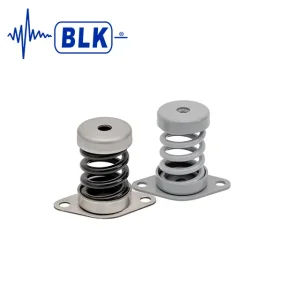
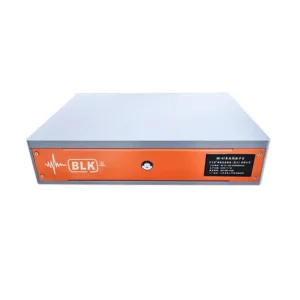
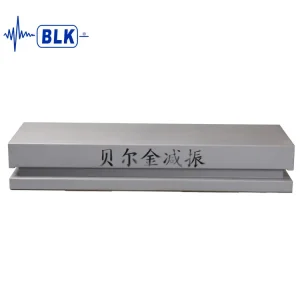
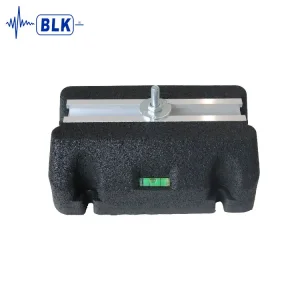
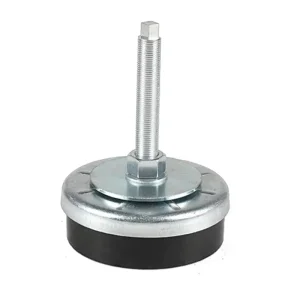
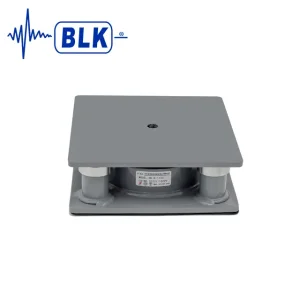
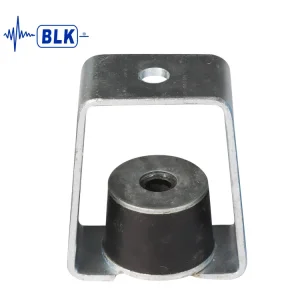
Explore our complete inventory of industrial spring mounts, matrix isolators, desktop optical platforms, and suspended rubber hangers.

Frequently Asked Questions (FAQ)
Engineering & Procurement answers regarding custom transformer vibration pads, pricing models, and installation best practices.