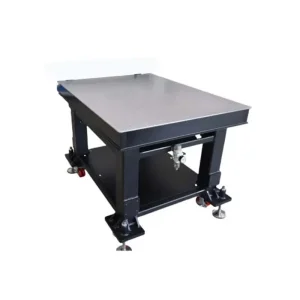
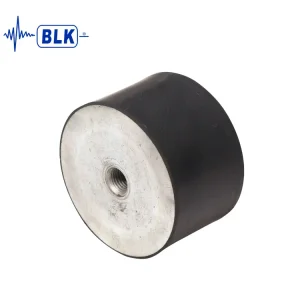
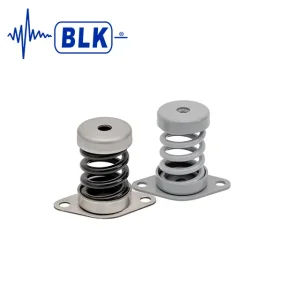
High-Efficiency Attenuation Solutions: Primary Deployments
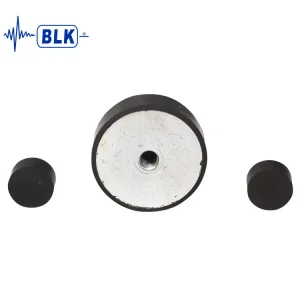
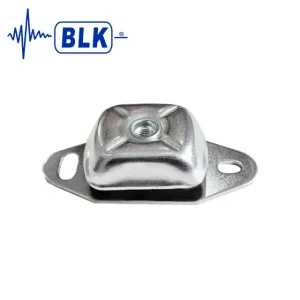
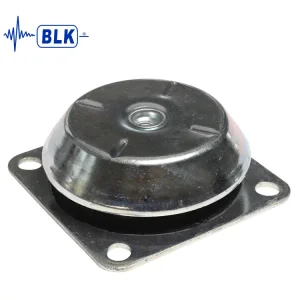
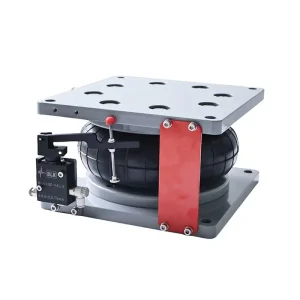
Engineered vibration damping mounts calibrated for HVAC chillers, multi-axis machine centers, optoelectronics, and micro-lithography stages.
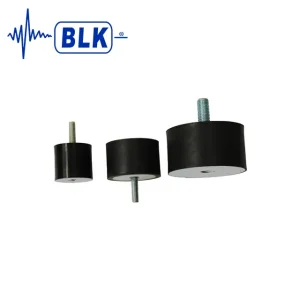

The Global Landscape of Vibration Damping & Dynamic Isolation
Analysis of macro-industrial adoption rates, acoustic pollution standards, and the escalating demand for high-performance damping elements across automated sectors.
Escalating Tolerance Demands
Modern semiconductor manufacturing (sub-3nm lithography), scanning electron microscopy (SEM), and wafer inspection require sub-micron vibration control where ground accelerations of VC-E/VC-G criteria are enforced.
Stricter Environmental & Noise Regulations
Municipalities across Europe and North America enforce rigorous acoustic laws (ASHRAE, ISO 1996, LEED credits) restricting structure-borne vibrational transmission from HVAC installations and industrial generators into residential infrastructures.
Machinery Lifecycle Preservation
Unmitigated dynamic excitation degrades bearing raceways, induces fatigue micro-fractures in foundation pads, and causes thermal unbalance. High-damping isolators deliver up to 300% asset lifespan extension.
Why Tier-1 Global Procurement Directs to Chinese Engineering Centers
Combining integrated elastomer vulcanization, metallurgical spring synthesis, and rapid CNC tooling within single high-density industrial clusters.
Rapid Non-Standard Tooling (3-Day Prototypes)
Unlike Western manufacturers facing extended tooling lead times, specialized Kunshan manufacturing clusters utilize synchronized 5-axis CNC mold tooling, reducing custom elastomeric formulation and design-to-sample lead times to under 72 hours.
Integrated Surface Treatments (900h Salt Spray)
Advanced Dacromet finishing and environmental electrostatic powder coatings are integrated directly into automated assembly lines, delivering extreme corrosion protection tested to endure C4/C5 coastal and chemical atmospheres without delamination.
Comprehensive Material Compliance & Testing
In-house tensile testing, static-to-dynamic stiffness ratio analysis, dynamic mechanical analysis (DMA), and Durometer Shore testing guarantee total RoHS and REACH chemical compliance alongside validated anti-shock performance up to 5G acceleration.
Precision Dynamic Control Under Verified Factory Benchmarks
Quantitative kinematic metrics audited and tested across automated spring, pneumatic, and polymer isolator configurations.
Kinematic Control Tailored to Critical Industrial Operating Spectra
From high-frequency mechanical oscillation to extreme static deflection requirements.
Heavy HVAC Chillers & Cooling Towers
Rotary screw compressors and centrifugal impellers generate low-to-medium broadband vibrations (15-60 Hz). Standard practice specifies multi-cell spring isolators with high static deflection (25mm to 50mm) and viscous damping cups to absorb startup resonance surges.
Recommended: ME & MB Spring MountsDry & Oil-Filled Power Transformers
Core magnetostriction forces trigger harmonic fundamental hums at 100 Hz/120 Hz, propagating throughout structural beams. Specially compounded nitrile-bonded neoprene pads and enclosed guided spring isolators intercept acoustic paths cleanly.
Recommended: BKVD & BK-DT PlatformsLithography, SEM & Optical Metrology
Cleanroom metrology apparatus cannot tolerate micro-vibrations exceeding 0.5 µm/s. Active-assisted self-leveling pneumatic air springs isolate environmental footsteps, seismic tremors, and air duct turbulence effectively down to 1.7 Hz.
Recommended: BK-PF & BK-R Pneumatic MountsVibration Isolator Selection & Kinematic Matrix
Mathematical transmissibility relies entirely on the frequency ratio rule: Isolation occurs only when Disturbing Frequency (fd) / Natural Frequency (fn) > √2 (1.414). Efficient engineering mandates a ratio ≥ 3.0.
| Mount Technology | Resonance Envelope (fn) | Dynamic Damping Ratio (ζ) | Optimal For Machinery | Mechanical Durability |
|---|---|---|---|---|
| Pneumatic Air Mounts (BK-PF, BK-R) | 1.7 Hz – 3.0 Hz | 0.06 – 0.12 | Semiconductor, optical platforms, coordinate measurement machines (CMM) | 6+ Years (Elastomeric Bladder) |
| Housed Steel Spring Isolators (ME, MB) | 3.0 Hz – 5.0 Hz | 0.01 – 0.03 (Viscous added) | HVAC chillers, cooling towers, industrial generators, air handling units | 15+ Years (Dacromet Coated) |
| Bonded Elastomeric Mounts (BKVD, BKM) | 8.0 Hz – 15.0 Hz | 0.10 – 0.20 | Centrifugal pumps, compressors, hydraulic gear, industrial diesel engines | 8-10 Years (Oil & UV resistant) |
| Engineered Polymer Pads (BK-PM, BKDJ) | 12.0 Hz – 25.0 Hz | 0.15 – 0.35 | High-speed stamping presses, punchers, transformers, structural foundation slips | 12+ Years (No Creep) |
| Rigid Concrete Inertia Bases (CPB Type) | Tuned with springs | Mass Stabilization | End-suction water pumps, split-case pumps, critical HVAC loops | 25+ Years (Structural Frame) |
Emerging Industry Trends & OEM Sourcing Frameworks
How global tier-1 EPC contractors and precision device builders manage risk, quality, and lifetime costs during supplier selection.
Shift Toward Semi-Active Hybrid Systems
The market is shifting towards hybrid configurations combining high-deflection passive pneumatic platforms with closed-loop piezo or electromagnetic actuators, compensating for low-frequency floor rumble (<2 Hz) without compromising high-payload static load balance.
Seismic-Restrained Mount Adoption
Standard open springs are widely being replaced with all-directional housed seismic mounts compliant with IBC (International Building Code) and OSHPD parameters. Snubbers contain internal dynamic motion during unexpected seismic events or pipe burst shocks.
Rigorous Traceability in OEM Contracts
Procurement teams now audit raw elastomer composition (avoiding recycled crumb fillers), vulcanization curing curemeter charts, and coil spring eddy current flaw inspection reports to avoid settling creep and unscheduled industrial downtime.
Engineering Questions Frequently Fielded by Bellking Specialists
Detailed design, installation, and procurement answers based on over a decade of project data.
How do you select accurately between spring mounts, solid elastomeric mounts, and pneumatic isolators?
What operational data must EPCs submit to receive a guaranteed vibration isolation schedule?
Why is an inertia base recommended for water pumps and reciprocating compressors?
How does Dacromet coating compare against standard electro-galvanizing in real plant atmospheres?
Can non-standard mechanical isolator dimensions be fabricated for legacy retrofit projects?
Comprehensive Vibration Mitigation Portfolio: Advanced Modules
Explore specialized floor mountings, precision optical platforms, inertia structures, and elastomeric damping pads.