
DIN-Compliant Anti-Vibration Products (Series I)
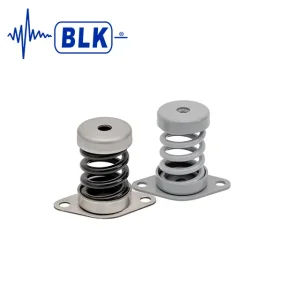
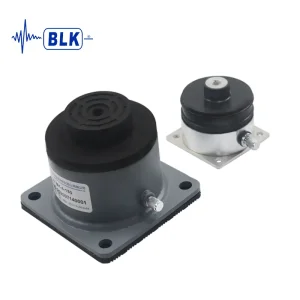
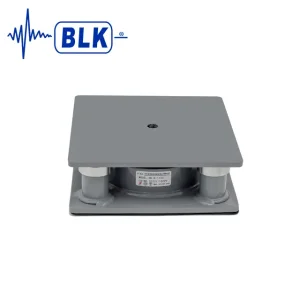
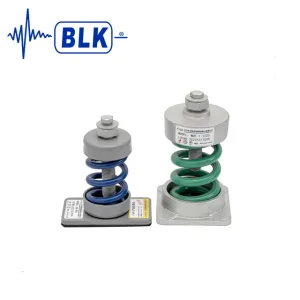
Direct-from-factory vibration isolation mounts, precision air platforms, and heavy-duty spring assemblies manufactured in Kunshan, China.

Global Commercial Status & Engineering Standardization of DIN Dampers
In modern industrial engineering, vibration control is no longer merely a acoustic comfort requirement—it is a critical pillar of structural longevity, mechanical precision, and regulatory compliance. Deutsches Institut für Normung (DIN) standards define the worldwide benchmark for mechanical isolation, elastomeric elastomer dynamic stiffness, and structural resonance prevention.
Global procurement metrics show an accelerating demand for DIN Standard Vibration Dampers across heavy infrastructure, power generation, semiconductor cleanrooms, and high-speed railway networks. As industrial machinery operates at higher RPMs and tighter tolerances, unmitigated harmonic vibration causes rapid mechanical fatigue, micro-cracks in foundations, premature bearing failure, and disruptive structure-borne noise transmission.
Key DIN specifications governing this sector include:
- DIN 95400 / DIN EN 1299: Mechanical vibration and shock isolation of machinery and equipment.
- DIN 4109: Sound insulation in building construction, specifying structure-borne noise abatement for HVAC and mechanical plant rooms.
- DIN 2093 / DIN 2095: Helical compression springs and disc spring specification parameters for dynamic load durability.
- DIN 53504 / DIN 53505: Tensile strength and Shore hardness testing protocols for vulcanized natural and synthetic rubber dampeners.
Industry Macro Insights
The global market for industrial vibration isolation solutions is projected to surpass $6.8 Billion USD by 2030, driven by rapid industrial expansion in Western Europe, North America, and East Asia. Key growth catalysts include the construction of ultra-sensitive 2nm semiconductor fabrication facilities, large-scale HVAC retrofits for energy efficiency, and stringent European Union municipal noise regulations.
Engineers and EPC contractors increasingly specify DIN-compliant elastomeric dampers, viscous spring isolators, and low-frequency air mounts to safeguard capital-intensive assets.
Why Tier-1 Global OEMs Source DIN Vibration Dampers from China
Combining world-class metallurgical engineering, automated polymer vulcanization, and unmatched supply chain responsiveness in Kunshan, Jiangsu.
Full-Scale Vertical Integration
Our Kunshan manufacturing plant operates end-to-end production lines—from high-tensile spring steel winding and robotic laser welding to precision CNC machining and custom polymer compound blending. This eliminates third-party markups and quality bottlenecks.
Strict Quality Control & 900h Testing
Every batch of DIN dampener components undergoes rigorous empirical testing: 900-hour Dacromet salt-spray anti-corrosion trials, dynamic fatigue cycle testing (up to 5 million cycles), dynamic stiffness spectrum analysis, and shear modulus validation.
30-40% Total Cost of Ownership Savings
By leveraging China's dense industrial ecosystem in Jiangsu, we provide OEM/ODM clients in Europe and North America with 1:1 DIN-compliant replacements that reduce procurement budgets by 30-40% while matching or exceeding Western performance standards.
Mechanics of DIN Standard Vibration Isolators
A technical evaluation of natural frequencies ($f_n$), transmissibility curves, and elastomeric vs. spring vs. pneumatic isolation principles.
| Dampener Type | DIN Standard Alignment | Natural Frequency ($f_n$) | Isolation Efficiency | Ideal Industrial Applications |
|---|---|---|---|---|
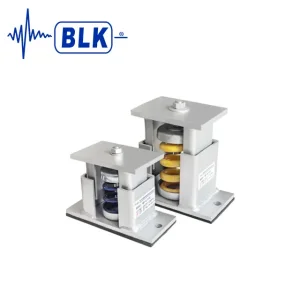
| Viscous Damped Spring Isolators | DIN 2093 / DIN EN 1299 | 3.0 Hz – 5.0 Hz | Up to 98.5% | Centrifugal Chillers, Heavy Generators, Cooling Towers, Large Pumps |
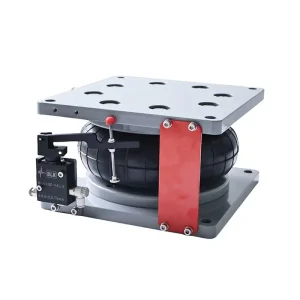
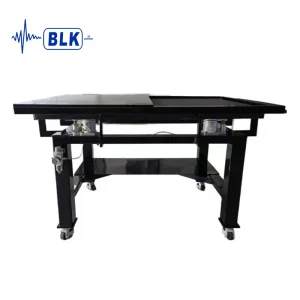
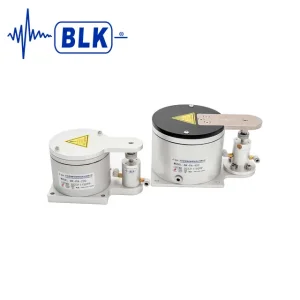
| Pneumatic Air Mount Isolators | DIN 95400 (Precision Class) | 1.7 Hz – 2.5 Hz | Up to 99.4% | Semiconductor Lithography, Electron Microscopes, Metrology Benches |
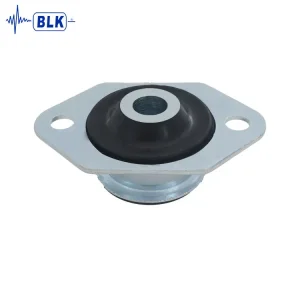
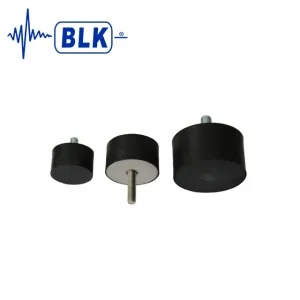
| Industrial Rubber Mounts (BKVV/BKH) | DIN 53505 / DIN 4109 | 8.0 Hz – 15.0 Hz | Up to 92.0% | Air Compressors, Motors, Small Fans, Electrical Control Cabinets |
| Transformer Anti-Vibration Mounts | DIN EN 50588-1 / DIN 4109 | 4.5 Hz – 7.0 Hz | Up to 96.0% | Oil & Dry Power Transformers, Electrical Substations, Data Centers |
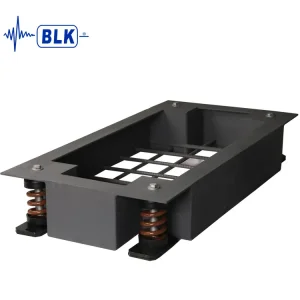
| Concrete-Filled Inertia Bases (CPB) | DIN 4109 / ISO 2017-1 | Custom Calibrated | Up to 99.0% | End-Suction Pumps, Variable Frequency HVAC Drives, Reciprocating Compressors |
The Frequency Ratio Isolation Rule
Effective vibration isolation requires that the equipment disturbing frequency ($f_d$) significantly exceeds the natural frequency ($f_n$) of the isolator mount. Vibration transmissibility ($T$) is defined mathematically as:
Isolation only initiates when $f_d / f_n > \sqrt{2} \approx 1.414$. To achieve high-efficiency damping (>90%), DIN standards recommend specifying isolators that maintain a frequency ratio $f_d / f_n \ge 3.0$.
Elastomer Material Engineering
Bellking DIN rubber dampers utilize high-purity vulcanized elastomers engineered to precise Shore A hardness levels (40 to 70 Durometer). Our proprietary compound recipes incorporate:
- Natural Rubber (NR): Exceptional elasticity, low creep, and high fatigue resistance for indoor mechanical rooms.
- Nitrile Rubber (NBR): Superior resistance to oils, petroleum lubricants, and hydraulic fluids.
- EPDM & Neoprene: Outstanding ozone, UV, and thermal degradation resistance for exposed rooftop installations.
Industrial Application Scenarios for DIN Dampers
Field-proven engineering implementations across critical global infrastructure projects.
1. High-Voltage Power Transformers
Challenge: Magnetostriction in transformer cores generates low-frequency 100 Hz / 120 Hz hum that propagates through substation foundations into nearby urban residential zones.
DIN Solution: Heavy-duty Bellking Transformer Anti-Vibration Spring Mounts installed beneath oil tanks reduce structure-borne noise transmission by 22-28 dB, complying strictly with DIN 4109 residential noise thresholds.
2. Commercial HVAC & Rooftop Plant Rooms
Challenge: Large chillers, cooling towers, and circulating pumps mounted on upper floors induce severe dynamic deflection and building resonance.
DIN Solution: Viscous damped ME/MD spring isolators paired with CPB concrete inertia bases lower the equipment center of gravity, absorbing start-up torque and isolating over 96% of kinetic energy.
3. Semiconductor Fab Micro-Vibration Isolation
Challenge: Sub-nanometer semiconductor probing and optical metrology tools fail in the presence of ambient ground vibrations as small as VC-E (1.5 μm/s).
DIN Solution: Active-ready BK-PA and BK-PF pneumatic air mounts with auto-leveling valves provide a ultra-low natural frequency (down to 1.7 Hz), stabilizing granite optical stages.
Emerging Damping Trends & Technology Innovations
1. Smart Damping & IoT Vibration Sensing
The integration of micro-electromechanical sensors (MEMS) and IoT spectrum analyzers directly inside DIN damper housings allows real-time tracking of dynamic stiffness degradation, peak acceleration loads, and structural displacement. Maintenance teams receive predictive alerts before mechanical failure occurs.
2. Magnetorheological (MR) & Active Damping
While passive spring and rubber dampers remain the industrial workhorse, semi-active systems utilizing magnetorheological fluids are gaining traction. By altering magnetic field intensity in response to instantaneous load spikes, smart dampers adjust viscosity in milliseconds.
3. Eco-Friendly Bio-Polymer Elastomers
In response to EU REACH and RoHS environmental directives, next-generation DIN rubber mounts utilize non-toxic, recyclable synthetic polymers and bio-based vulcanization agents that eliminate toxic off-gassing during high-temperature plant operations.
4. Advanced Multi-Directional Seismic Restraints
Modern DIN dampers are increasingly designed with integrated 3-axis seismic snubbers. These all-in-one assemblies withstand high-magnitude lateral shear loads caused by earthquakes or extreme wind uplift on rooftop chillers without compromising soft isolation under normal operations.
Global B2B Sourcing Criteria for DIN Vibration Dampers
A checklist for procurement managers, structural engineers, and EPC contractors evaluating OEM suppliers.
1. Dimensional & Load Verification
Ensure the manufacturer supplies complete Finite Element Analysis (FEA) reports, static deflection curves, and weight distribution calculations for each support point under maximum operating load.
2. Surface Coating Standards
For outdoor or marine environments, standard powder coating is insufficient. Demand minimum 900-hour salt-spray tested Dacromet coatings or hot-dip galvanizing conforming to ISO 1461 / DIN EN ISO 1461.
3. Rapid Customization & Lead Time
Leading manufacturers should provide custom non-standard CAD designs within 24 hours and physical prototype production within 3 to 5 working days to prevent project delays.
Frequently Asked Questions by Technical Buyers
Expert answers from Bellking application engineers regarding DIN vibration isolation specification and setup.
DIN-Compliant Anti-Vibration Products (Series II)
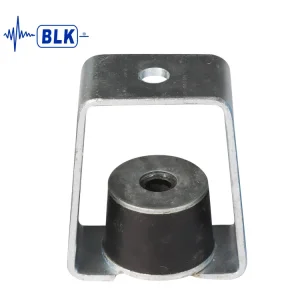
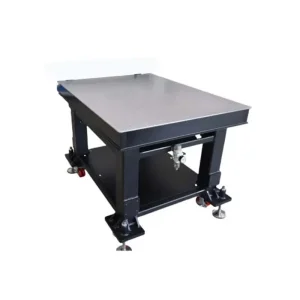
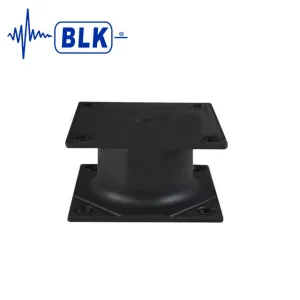
Inertia bases, heavy rubber hangers, high-damping optical platforms, and specialty shock buffers.

Request a Custom DIN Vibration Damping Solution
Send your machinery weight specifications, operating speed (RPM), support layout, and site environmental parameters. Our engineering team in Kunshan will deliver a complete isolation scheme within 24 hours.
Consult With An Application Engineer