Industrial Whitepaper & Sourcing Guide 2026

High-Quality Electronic Equipment Isolator Factories & Price

Engineering micro-vibration mitigation, dynamic resonance suppression, and high-resilience supply chain architectures for next-generation semiconductors, avionics, and sensitive electronic payloads.

Direct OEM Catalog

Precision Electronic Equipment Mounts: Selection Series I

Factory-calibrated elastomeric, viscous-damped, and multi-directional isolators engineered for precision electronics, servers, and sensitive instrumentation.
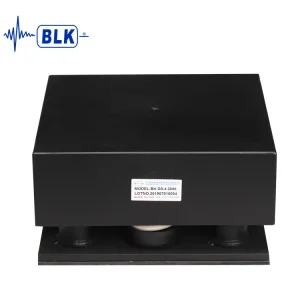
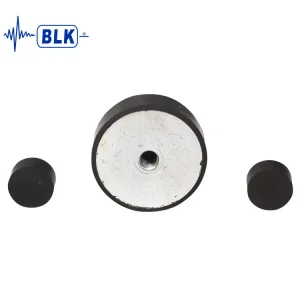
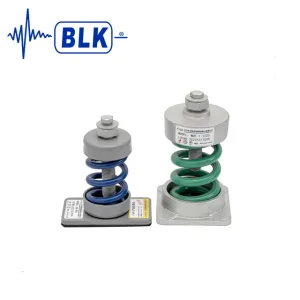
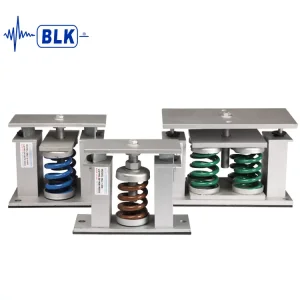
Low Price BK-DS Type Damped Spring Mounts Factory, Manufacturers
Technical Specifications
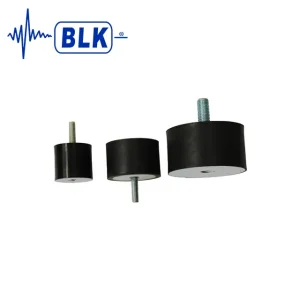
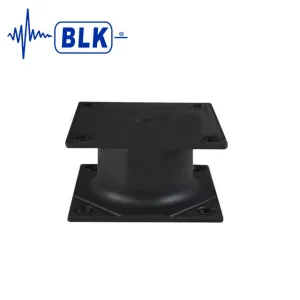
Custom BKDE Type Rubber Mounts Factory, Manufacturer
Technical Specifications
Low Price BKP Type Rubber Mounts Manufacturers, Manufacturer
Technical Specifications
Custom BKVD Type Rubber Mounts Factories, Manufacturer
Technical Specifications
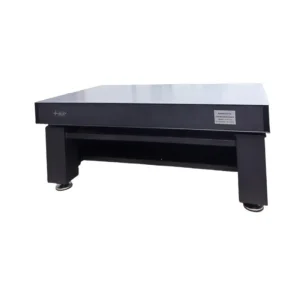
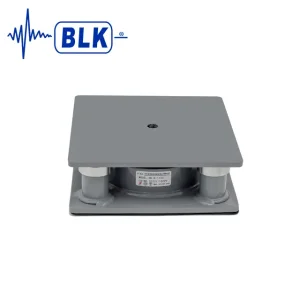
High-Quality BK-RT Type Damped Vibration Isolation Platform Factories, Manufacturers
Technical Specifications
High-Quality BK-MT Type Matrix Anti-vibration Mount Manufacturers, Manufacturer
Technical Specifications
High-Quality MD Type Anti-vibration Spring Mounts Factory, Manufacturer
Technical Specifications
Custom BK-DSR Type Damped Rubber Mounts Factories, Manufacturer
Technical Specifications
Industry Paradigm

Vibration Isolation Trends in Advanced Electronics (2026–2030)

How nanoscale lithography, hyperscale edge computing, and high-G defense electronics are transforming isolator material science and procurement metrics.

99%
Maximum Attenuation Efficiency
1.7Hz
Sub-Harmonic Natural Frequency
900h
Salt-Spray Corrosion Resistance
3-5G
Dynamic Impact Acceleration Rating
The miniaturization of electronic sub-assemblies and the exponential densification of high-frequency power electronics have altered traditional mechanical shock and vibration paradigms. Electronic equipment isolators are no longer simple off-the-shelf elastomeric grommets or unconstrained coil springs; they represent sophisticated dynamic transfer-function filters. In modern automated surface-mount technology (SMT), sub-nanometer metrology, aerospace guidance systems, and high-density AI data center power blocks, structural kinetic energy induces microphonic noise, solder joint fatigue (intermetallic boundary cracks), and laser beam jitter.
Industrial data indicates that more than 43% of unexplainable electronic printed circuit board assembly (PCBA) field failures originate from low-amplitude continuous vibration, commonly known as structural acoustic resonance coupling. Harmonic frequencies transmitted from adjacent variable frequency drives (VFDs), centrifugal pumps, and ventilation systems oscillate between 15 Hz and 250 Hz—a range that coincides with the flexural resonance modes of large-format graphics processing unit (GPU) carrier boards and optical alignment tables. Effective isolation requires exact frequency tuning where the natural frequency ($f_n$) of the isolator establishes a frequency ratio ($r = f_d / f_n$) greater than $\sqrt{2}$, moving the operation deep into the active isolation zone where dynamic transmissibility ($T$) drops below 0.05.
Critical Frequency Ratio Formula for Electronic Enclosures

The mathematical transmissibility of an electronic shock mount is governed by: $T = \sqrt{\frac{1 + (2\zeta r)^2}{(1 - r^2)^2 + (2\zeta r)^2}}$, where $\zeta$ represents the structural damping ratio and $r$ is the operational excitation ratio ($f_d / f_n$). High-quality manufacturers tune $\zeta$ between 0.06 and 0.15 using viscoelastic matrix compounds or fluid damping orificing, eliminating violent amplification during startup transients while delivering steep attenuation slopes at high speeds.

Ultra-Low Resonance Tuning

Modern cleanrooms and semiconductor testing bays demand natural frequencies approaching 1.7 Hz to 3 Hz. Precision air mounts with auxiliary volume chambers achieve pneumatic compliance without structural sag.

Harsh Environment Metallurgies

Heavy electronics subjected to coastal or factory climates require Dacromet dip-spin coatings resistant to over 900 hours of continuous salt-spray fog testing without hydrogen embrittlement.

Zero Outgassing Elastomers

Aerospace avionic pods and optical chambers require specialized fluorosilicone and peroxide-cured synthetic polyisoprene compounds compliant with NASA and ESA cleanroom outgassing thresholds.

Sourcing & Economics

Enterprise Procurement Criteria & Price Formation Mechanics

A rigorous breakdown of production overhead, custom tooling amortizations, and total cost of ownership (TCO) across global procurement channels.

International procurement officers handling bill-of-materials (BOM) management for mission-critical infrastructure confront a volatile market for vibration mitigation components. The true unit cost of an electronic equipment isolator is determined by three variables: metallurgical spring rating consistency, elastomeric compound longevity, and dimensional tolerance validation.
Isolator Architecture Target Frequency Range Typical Price Range (USD/Unit) Primary Industrial Application Lifecycle Benchmark
Pneumatic Membrane (Active/Passive) 1.2 Hz – 2.5 Hz $180.00 – $650.00 Semiconductor steppers, STM/AFM microscopes 6 – 8 Years (Seals)
Viscous-Damped Steel Spring (BK-DS / MD) 3.0 Hz – 5.5 Hz $28.00 – $95.00 Server racks, transformers, chillers, UPS banks 15 – 20+ Years
Engineered Neoprene / Nitrile Mount (BKDE) 8.0 Hz – 18.0 Hz $6.50 – $24.00 Avionics enclosures, micro-pumps, telemetry 7 – 10 Years
High-Damping Polymer Matrix Pads (BK-PM) 12.0 Hz – 30.0 Hz $12.00 – $45.00 (per sheet) Substation transformers, structural busbars 12 – 15 Years
Matrix Multi-Directional Assemblies (BK-MT) 4.5 Hz – 9.0 Hz $45.00 – $140.00 Mobile military electronics, marine navigators 10 – 15 Years
Tier-1 engineering buyers evaluate beyond the unit price quote ($FOB/EXW$). The Total Cost of Ownership (TCO) includes catastrophic circuit board failure liability. A failed $15 elastomeric mount under a high-current variable power converter can trigger severe solder pad fatigue, inducing micro-arcing and complete automated assembly line downtime running at $25,000 per hour. Leading factories differentiate themselves via automated spring rate testing ($k_v$, $k_h$), 100% vulcanization shear proof testing, and dynamic hysteresis profiling.
Smart Manufacturing

China Factory 4.0: Supply Chain Agility & Kunshan Industrial Cluster

Combining robotic precision fabrication with in-house dynamic R&D to collapse global procurement cycles from months to days.

Robotic Automation & CNC Milling

Utilizing 6-axis robotic welding cells, continuous coil spring winding, and multi-station CNC housings ensures dimensional concentricity under ±0.05mm, preventing tilt and localized shear stress.

Rapid 1:1 Custom Prototyping

Direct digital links from FEA stress simulations to additive elastomer tooling allow non-standard isolator footprints to transition from dynamic CAD approval to physical verification within 72 hours.

Unmatched Yangtze Delta Logistics

Situated in the Kunshan precision manufacturing hub, direct vertical integration with regional specialty steel mills, synthetic elastomer polymerizers, and Dacromet coaters yields a 24-hour turnaround on volume SKUs.

Western original equipment manufacturers (OEMs) historically sustained 10-to-16-week lead times for engineered isolators. By operating an integrated 2,000 m² smart production base featuring calibrated tension-compression servo presses, multi-channel vibration spectrum analyzers, and in-house climatic environmental chambers, modern Chinese facilities maintain a permanent rolling inventory of high-tensile spring coils and vulcanized cores. This structural resilience ensures international customers receive tailored isolation systems on schedule, unaffected by raw material bottlenecks.
Field Deployments

Engineered Application Environments & Site Scenarios

Real-world integration patterns where dynamic vibration control safeguards mission-critical systems and process yields.

Cleanroom Semiconductor Inspection

Automated wafer probing tables and scanning electron microscopes (SEMs) demand zero ambient floor transmission. Pneumatic platforms (such as the BK-DT and BK-PF) suppress structural vibrations down to VC-E environmental vibration criteria (3.12 µm/s RMS).

Hyperscale Edge AI Server Enclosures

High-mass 48U server racks packed with extreme-RPM cooling fans generate complex aerodynamic turbulence. Dual-deflection damped spring mounts (BK-DS series) isolate the mechanical chassis, preventing hard drive read-write head drift and circuit micro-cracking.

Medium-Voltage Substations & UPS

Dry-type electrical distribution transformers operate with continuous 100 Hz / 120 Hz magnetostrictive hum. Specialized matrix mounts decouple the transformer core from structural concrete slabs, mitigating building acoustic resonance.

Technical & Sourcing Inquiries

Frequently Asked Questions on Electronic Isolators

Comprehensive engineering and procurement answers regarding dynamic selection, load verification, and global shipping policies.

How do you calculate the correct static deflection for an electronic cabinet isolator?
Static deflection ($\delta_{st}$) directly dictates the natural frequency ($f_n$) of an undamped elastic suspension via the formula: $f_n = \frac{1}{2\pi}\sqrt{\frac{g}{\delta_{st}}} \approx \frac{5}{\sqrt{\delta_{st}}}$ (with $\delta_{st}$ in centimeters). For example, if your disturbing harmonic frequency ($f_d$) is 30 Hz (1,800 RPM fan or motor excitation), achieving an optimal isolation efficiency of 90%+ requires an isolator natural frequency below 10 Hz (ratio $r \ge 3$). An $f_n$ of 5 Hz requires an initial static compression deflection of approximately 10 mm under full dynamic operating weight.
What distinguishes pneumatic air mounts from mechanical spring isolators?
Mechanical coil springs typically achieve natural frequencies between 3.0 Hz and 6.0 Hz. Below 3 Hz, mechanical steel springs become tall and laterally unstable, risking tilt or coil clash. In contrast, pneumatic air mounts (such as the BK-PF or BK-R series) achieve ultra-low natural frequencies down to 1.2 Hz – 2.0 Hz using compressed air columns. Pneumatic isolators also feature integrated height-leveling sensors that preserve horizontal calibration even under eccentric mass distributions.
How do environmental factors such as oil, heat, and ozone impact elastomer mounts?
Standard natural rubber excels in elastic recovery and tensile endurance but degrades rapidly under hydrocarbon mist, UV exposure, and temperatures exceeding 70°C. For industrial electronic enclosures exposed to industrial oils or outdoor marine atmospheres, we specify chloroprene (neoprene), nitrile (NBR), or high-fluorine fluoroelastomers. These materials maintain dynamic spring rates across temperature swings of -30°C to +110°C without plasticizer leaching or brittleness.
What documentation and test verifications accompany factory-direct exports?
Every production batch manufactured under ISO 9001 quality controls can be delivered with complete traceability packs: raw material metallurgical mill sheets, static load-deflection characteristic curves ($k_v$, $k_h$), 900-hour Dacromet salt-spray validation certificates, Shore A durometer hardness inspection reports, and CE/RoHS material compliance declarations. Third-party testing via SGS or TÜV is supported upon contract request.
What are the minimum order quantities (MOQ) and production turnaround schedules?
For standard catalog items (including BK-DS, BKDE, and MD models), we support rapid sample requests with no strict MOQ, shipping within 24 hours from finished inventory. Volume OEM supply contracts feature stepped container-tier pricing. Customized engineering configurations requiring non-standard mounting plates or compound durometer tailoring complete dynamic FEA design approval and initial sample delivery within 3 to 7 working days.
Specialized Platforms & Buffers

Precision Electronic Equipment Mounts: Selection Series II

Optical-grade damping platforms, precision pneumatic air bladders, and high-deflection elastomeric impact limiters.
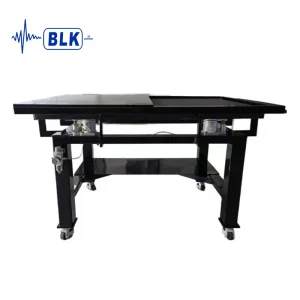
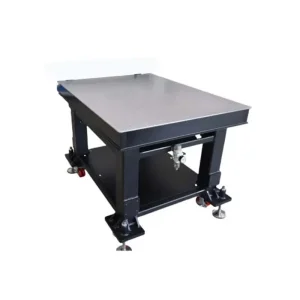
Custom BK-VT Type Vibration Isolation Platform Factories, Manufacturer
Technical Specifications
High-Quality BK-DT Type Low-Frequency High-Damping Optical Vibration Isolation Platform Factory, Manufacturer
Technical Specifications
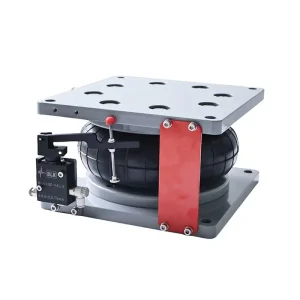
High-Quality BK-R Type Air Mounts Factories, Manufacturer
Technical Specifications
Custom BKDR Type Rubber Mounts Factories, Price
Technical Specifications
High-Quality MA Type Anti-vibration Spring Mounts Factory, Factories
Technical Specifications
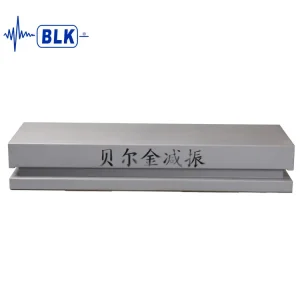
Low Price BK-PM Type Polymer Damping Pad Factories, Manufacturers
Technical Specifications
High-Quality BK-PF Type Precision Air Mounts Factories, Manufacturer
Technical Specifications
Custom BKSW Type Rubber Buffer Factory, Manufacturers
Technical Specifications