
Precision-Engineered Mounts & Acoustic Suspensions
Industrial shock mitigation solutions manufactured under strict ISO 9001 protocols, delivering up to 99% structural kinetic decoupling for heavy plant and metrology applications.





Structural Transmissibility & The Mechanics of Suspended Isolation
Why ceiling-suspended dynamic loads present distinct acoustic vulnerability compared to floor-mounted machinery, and how hanging spring isolators intercept structure-borne excitation.
Dynamic Decoupling & Frequency Ratios
The mathematical efficacy of hanging spring isolators depends strictly on the frequency ratio: $r = f_d / f_n$, where $f_d$ represents the disturbing frequency of the suspended equipment (e.g., HVAC fans, axial exhausters, or chilled water pumps) and $f_n$ is the natural frequency of the spring hanger. Mechanical isolation only begins when $r > \sqrt{2} \approx 1.414$. To attain industrial acoustic standards exceeding 90% to 98% isolation efficiency, top-tier engineering specifications demand a frequency ratio $r \ge 3.0$ to $4.0$.
Static Deflection & Resonant Safety
The system natural frequency $f_n$ is intrinsically coupled to the spring's static deflection under dead load, calculated via $f_n = (1 / 2\pi) \sqrt{g / \delta_{st}} \approx 4.98 / \sqrt{\delta_{st}}$ (where $\delta_{st}$ is in centimeters). Sourcing hanging spring isolators with verified 25mm to 50mm rated deflection ensures natural frequencies down to 3.1 Hz – 2.2 Hz. This deep static deflection prevents dynamic mechanical resonance from transmitting shear waves into overhead reinforced concrete structural floor slabs.
Series Hybridization with Elastomers
Steel helical springs offer superior low-frequency attenuation but exhibit internal surging and wave transmission at high audible frequencies (500 Hz – 2000 Hz) due to helical coil mass effects. Premium hanging spring isolators incorporate a high-damping chloroprene or molded neoprene acoustic cup in series beneath the steel spring coil. This compound architecture decouples structure-borne acoustic buzz and high-frequency fluid-borne cavitation before it enters the ceiling structural matrix.
Hanging Spring Isolators Pricing Dynamics & Global Factory Direct Analysis
Understanding the manufacturing economics, raw material surcharges, pre-compression mechanisms, and testing tiers that dictate FOB and DDP price matrices across international markets.
Spring Steel Metallurgy
Prices fluctuate based on the selection of oil-tempered 60Si2Mn spring steel versus standard carbon steel. Chromium-silicon alloys deliver extreme fatigue resistance and avoid permanent relaxation under continuous tensile loads, impacting raw unit costs by 15-22%.
Dacromet Surface Treatment
Standard electro-galvanized coatings fail prematurely in humid HVAC plenums. Factory application of Dacromet or hot-dip galvanizing passing 900+ hour salt spray testing (ASTM B117) provides coastal and industrial protection, adjusting unit unit FOB cost by $1.80 to $4.50.
Pre-Compression & Restraints
Pre-compressed hanging spring isolators incorporate internal travel-limiting studs to maintain piping elevations during fluid drainage and filling. The complex welded casing and calibration labor add 25-35% over basic open-frame suspension hangers.
Seismic Restraint Certification
Hangers rated for seismically active zones require structural ductile cast steel or heavy laser-cut steel boxes tested to withstand multi-axis dynamic loads (3G to 5G acceleration). Third-party seismic shake table verification elevates certified unit costs.
| Hanger Series Classification | Deflection Range | Load Capacity (per point) | Typical Applications | Direct Factory Price Range (FOB) |
|---|---|---|---|---|
| Standard Light-Duty Spring Hangers Series BKH-L |
15 mm – 25 mm | 15 kg – 180 kg (33 – 400 lbs) | Suspended exhaust fans, VAV terminal boxes, small ductwork | $8.50 – $18.20 / unit |
| Heavy-Duty HVAC Spring & Rubber Hangers Series BKH-M |
25 mm – 50 mm | 150 kg – 1,200 kg (330 – 2,640 lbs) | Chilled water mains, AHUs, large inline centrifugal blowers | $24.00 – $65.00 / unit |
| Pre-Compressed Industrial Piping Hangers Series BKH-PC |
25 mm – 75 mm | 300 kg – 3,500 kg (660 – 7,700 lbs) | Power plant steam pipes, riser transitions, boiler connections | $72.00 – $165.00 / unit |
| Seismic & Wind-Restrained Hangers Series BKH-SEIS |
25 mm – 50 mm | 200 kg – 2,500 kg (All-Directional) | Critical infrastructure, hospital MEP, mission-critical data centers | $95.00 – $240.00 / unit |
Macro-Industry Solutions for Complex Kinetic Environments
Strategic deployment architectures tailored to mission-critical MEP infrastructure, cleanroom metrology, and heavy manufacturing facilities.
Hyperscale Data Center Infrastructure
Modern data centers utilize immense rooftop air handlers and chilled water loop piping directly above multi-megawatt server halls. Fluid-induced turbulence and compressor harmonics can generate micro-vibrations that migrate down structural steel beams into hard drive racks and optical fiber junctions. Hanging spring isolators calibrated with 35mm static deflection isolate up to 98% of low-frequency vibrations, safeguarding data throughput integrity and hard drive read/write heads.
Semiconductor Fabrication & Sub-Fab Plenums
Wafer fabrication plants (fabs) operate under extreme vibration criterion curves (VC-D through VC-F). Heavy exhaust ductwork, toxic gas extraction scrubbers, and vacuum pumping lines hung in the sub-fab generate continuous tonal disturbances. Bellking custom-engineered matrix suspensions and precision air-cushioned spring hangers intercept sub-harmonic structural paths, preventing micron-level mask misalignment during extreme photolithography passes.
Commercial High-Rise Acoustic Retrofit
High-end hospitality and multi-story commercial towers enforce strict NC-25 to NC-30 interior noise criteria. Unisolated chilled water mains passing through false ceilings emit structure-borne rumbling directly into executive boardrooms or luxury suites. Utilizing hybrid spring-elastomer hanging brackets eliminates metal-to-metal contact, preventing boundary acoustic radiation and meeting stringent LEED acoustic quality credits.
The Future of Dynamic Suspensions: Next-Gen R&D Horizons
Pioneering the evolution of structural isolation through active piezoelectric attenuation, digital twin lifecycle monitoring, and high-entropy alloy springs.
IoT-Enabled Smart Hanger Telemetry
Transitioning from passive mechanical components to cyber-physical sensors. Advanced hanging spring isolators currently in development integrate ultra-low-power MEMS wireless strain gauges and accelerometers. Continuous load and vibration spectra are streamed directly to the facility BMS (Building Management System), diagnosing impeller imbalance, bearing spalling, and dynamic load redistribution before catastrophic failure occurs.
Magnetorheological Active Damping (MR)
Traditional passive spring isolators struggle during machinery startup and run-down phases when excitation frequency traverses the natural frequency ($r = 1.0$), generating severe resonance magnification. Integrated MR dampers adapt their shear resistance in milliseconds by altering a local magnetic field, suppressing resonance excursion while maintaining ultra-soft isolation during steady-state high-speed operation.
Advanced Composite Alloys & Green Elastomers
Mitigating weight without compromising spring rates via carbon-fiber reinforced polymer (CFRP) springs and titanium-stabilized spring steels. Simultaneously, petrochemical-based neoprenes are being phased out in favor of bio-based elastomer matrix composites with engineered high loss factors ($\eta > 0.25$), zero toxic off-gassing, and absolute compliance with RoHS, REACH, and green building environmental certifications.
OEM Manufacturing Quality Framework & International Standards
Rigorous quality controls, robotic processing, and certified metallurgical standards underpinning Bellking's global OEM & ODM manufacturing ecosystem.
ISO 9001:2015 Precision Process
Our Kunshan manufacturing complex utilizes multi-axis CNC coiling, induction heat-treating stations, and robotic submerged-arc welding jigs. Every spring batch undergoes automatic shot-peening to eliminate surface micro-notches, followed by 100% solid load pressing to lock in zero residual set over the component's 15+ year operational life cycle.
Seismic & Wind Structural Validation
Compliant with ASHRAE 171, IBC 2024, and ASCE 7-22 structural standards. All seismically rated hanging spring isolator series feature heavy ductile iron or structural steel retainers tested to withstand lateral and vertical acceleration g-forces, ensuring suspended pipelines remain anchored during severe seismic events or extreme plant pressure surges.
Comprehensive Verification & Traceability
Every shipment is accompanied by dimensional inspection protocols, raw steel material certs (EN 10204 3.1), tension-compression hysteresis curve data, and 900-hour Dacromet salt spray compliance logs. Third-party testing reports from accredited CNAS/ILAC laboratories are readily furnished for critical commercial submittals.
High-Performance Anti-Vibration Solutions for Dynamic Equipment
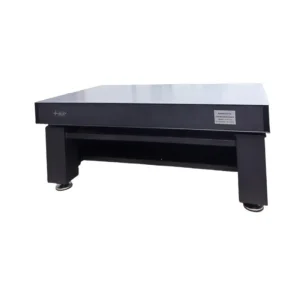
Explore our specialized portfolio of low-frequency platforms, rubber buffers, and matrix mounts engineered to resolve structure-borne vibration and shock challenges globally.






Engineering & Procurement FAQ: Hanging Spring Isolators
Authoritative, physics-backed answers to the most demanding technical and commercial inquiries submitted by mechanical consulting engineers and international procurement teams.