
Primary Heavy-Duty Isolation Equipment Matrix
Factory-engineered dampeners, spring platforms, and precision pneumatic pad assemblies engineered for maximum structural vibration attenuation.





The Global Commercial & Industrial Vibration Control Landscape
An authoritative analysis of high-frequency structural fatigue, modern factory automation challenges, and the economic imperative of dynamic strain isolation.
Industry 4.0 Precision Tolerances
As modern manufacturing pivots toward sub-micron machining and high-speed robotic integration, unmitigated kinetic energy transfer degrades tool longevity by up to 42%. Industrial vibration pads serve as critical dynamic dampers that absorb unwanted resonant feedback between heavy equipment and sub-flooring foundations.
Structural Acoustics & Compliance
Global acoustic regulations (such as DIN 4149 and ASHRAE equipment isolation codes) impose strict decibel ceiling targets in commercial retrofit zones. High-density elastomeric damping pads effectively block structure-borne audio frequencies from converting into structural noise in high-rise HVAC installations.
Economic Impact of Downtime
Uncontrolled shock waves lead to premature bearing wear, localized metal fatigue, and bolt shearing. Utilizing certified heavy-duty elastomeric pads provides an estimated 12.5x ROI over a 5-year operating window by extending mechanical component lifecycle.
Elastomeric Vulcanization & Vibration Transmissibility Mechanics
Engineering breakdown of shear stress deformation, durometer rating mechanics, and transmissibility mathematics.
When specifying Heavy Duty Vibration Pads, mechanical engineers must evaluate both static deflection ($\delta$) and dynamic natural frequency ($f_n$). Elastomeric pads function as non-linear viscoelastic dampers where rubber polymers store and dissipate mechanical energy via internal molecular friction during cyclic shear deformation.
The core mathematical framework dictating vibration transmissibility ($T$) across an elastomeric pad interface is defined by the classical single-degree-of-freedom (SDOF) transfer function:
Where: r = f_d / f_n (Ratio of disturbing frequency to natural frequency), and ζ is the material damping ratio (typically 0.05 to 0.15 for high-density neoprene compounds).
Shore A Hardness & Cross-Linking Density
Heavy duty vibration pads are formulated with Shore A durometers ranging from 45 Durometer (Soft) to 80 Durometer (High Density). Choosing the correct durometer dictates loading capacity per square inch. Over-compressing a pad reduces its elastic deformation capacity, causing high-frequency harmonic energy to bypass the dampener entirely.
Ribbed, Cross-Ribbed & Steel Sandwich Structures
Plain flat rubber sheets experience lateral bulging restrictions under heavy loads. Modern heavy duty vibration pads utilize cross-ribbed geometric patterns or composite steel-plate laminations. Alternating cross-ribs provide expansion channels for elastomer flex, dropping the effective stiffness under lighter operational dynamic forces.
| Elastomer Matrix Type | Shore A Durometer | Max Load Range (PSI) | Damping Ratio (ζ) | Chemical & Oil Resistance | Primary Industrial Application |
|---|---|---|---|---|---|
| High-Grade Neoprene | 50 - 65 Shore A | 50 - 180 PSI | 0.08 - 0.12 | High (Oils, Grease, Flame) | HVAC Chillers, Air Compressors, Gensets |
| Nitrile (NBR) Compound | 60 - 75 Shore A | 100 - 300 PSI | 0.06 - 0.10 | Extreme (Petroleum, Fuels) | Heavy Stamping Presses, CNC Mills |
| EPDM Elastomeric Pad | 45 - 60 Shore A | 40 - 120 PSI | 0.05 - 0.09 | Superior (UV, Ozone, Weather) | Rooftop Air Handlers, Cooling Towers |
| Polyurethane Composite Pad | 70 - 85 Shore A | 250 - 800 PSI | 0.12 - 0.18 | Moderate (High Mechanical Wear) | Transformers, Heavy Forge Hammers |
Factory Price Factors & Custom Tooling Economics
Transparent evaluation of manufacturing cost drivers, bulk volume discounts, and customized compound formulations.
Understanding the unit pricing strategy for Heavy Duty Vibration Pads requires analyzing five primary manufacturing variables in factory-direct sourcing:
1. Raw Vulcanization Compound Grade
Synthetic neoprene or high-grade NBR rubber compounds increase base raw material costs compared to recycled SBR rubber. However, engineered compounds prevent long-term compression set (permanent flatlining), delivering a drastically lower total cost of ownership (TCO).
2. Lamination & Metal Interlayers
Integrating galvanized steel plates or high-strength aluminum inner sheets requires dedicated high-temperature adhesive primer coating and precise high-pressure compression molding, increasing unit unit price by 25–40% while quadrupling load capacity.
3. Custom Die Cutting vs. Molded Tooling
Standard geometric stock sizes (e.g., 18"x18" ribbed pads) carry zero tooling fees. Specialized custom footprints, mounting hole patterns, or custom durometer blends involve one-off mold design fees ranging from $300 to $1,200 depending on tool complexity.
| Pad Specification & Size | Load Capacity per Pad | MOQ Tier | Est. Factory Unit Price (USD) | Lead Time |
|---|---|---|---|---|
| Standard Cross-Ribbed Neoprene (4" x 4" x 7/8") | Up to 1,200 lbs | 100 - 500 Pcs | $2.50 - $4.20 | Stock / 24 Hours |
| Heavy Laminated Steel-Rubber Sandwich (6" x 6" x 1-1/2") | Up to 8,000 lbs | 50 - 200 Pcs | $12.80 - $18.50 | 3 - 5 Working Days |
| Extreme High-Density Polyurethane Pad (12" x 12" x 2") | Up to 45,000 lbs | 20 - 100 Pcs | $45.00 - $68.00 | 5 - 7 Working Days |
| Custom Engineered Anti-Seismic Pad Assembly | 100,000+ lbs Custom | Bespoke Order | Custom Engineering Quote | 7 - 10 Working Days |
Localized Application Scenarios & Industrial Implementation
Deployment protocols tailored to specific dynamic equipment categories and factory floor environments.
Rooftop HVAC & Industrial Cooling Systems
Scenario: Heavy centrifugal chillers mounted on commercial building roofs causing resonant floor hum in sub-level offices.
Solution: Installation of composite EPDM/Steel multi-layer heavy duty pads beneath structural steel skids. Attenuates low-frequency motor hum and withstands severe outdoor UV weathering.
Power Transformers & Electrical Sub-Stations
Scenario: 120Hz magnetostrictive core hum from high-voltage dry transformers transferring acoustic noise into surrounding concrete slab floors.
Solution: Specialized oil-resistant high-durometer polyurethane pads placed beneath base rails, reducing audible hum by over 18 dB.
Heavy Stamping Presses & Mechanical Forging
Scenario: Severe transient impact pulses exceeding 4G dynamic force destroying nearby CMM inspection accuracy.
Solution: Custom multi-layer elastomer shock isolation pads integrated into deep inertia block concrete foundations.
Global Compliance & On-Site Technical Engineering Support
Rigorous quality assurance, material traceability, and international vibration standards alignment.
Compliance & Certification Protocols
Our Kunshan manufacturing factory operates strictly under ISO 9001:2015 certified quality management workflows. Every production batch of vibration pads undergoes rigorous physical testing, including:
- ASTM D2240: Durometer Hardness Verification
- ASTM D412: Vulcanized Rubber Tensile & Elongation Tests
- ISO 2017-1: Mechanical Vibration & Shock Testing
- RoHS 3 & REACH: Heavy-metal and SVHC chemical safety compliance
- 900-Hour Dacromet Corrosion Test: For associated structural steel metal inserts
Localized Field Consultation & FEA Modeling
We provide comprehensive technical support for engineering procurement teams worldwide:
- FEA Dynamic Stress Modeling: Simulating shear deformation and maximum pad deflection under extreme transient impact loads.
- 3-Day Rapid Prototyping: Quick-turn custom mold design and sample production for emergency retrofit engineering projects.
- On-Site Spectrum Analysis: Global technical assistance for site vibration analysis and isolation sizing.
Technology Roadmap: Next-Generation Damping Systems
Advanced materials, smart IoT vibration monitoring, and sustainable bio-based polymer integration.
IoT-Embedded Smart Vibration Pads
Integration of piezoelectric thin-film sensors directly into elastomer matrices during vulcanization. Enables continuous real-time load, temperature, and cyclic fatigue telemetry straight to facility management dashboards.
Magnetorheological Viscoelastic Composites
Development of semi-active hybrid vibration pads containing iron micro-particles that adjust dynamic stiffness within milliseconds in response to external electromagnetic field modulation.
Eco-Compliant Recyclable Elastomers
Formulating bio-derived polymer blocks capable of full circular re-vulcanization at end-of-life without sacrificing tensile strain energy density or fatigue limits.
Additional Factory Vibration Mounts & Air Systems
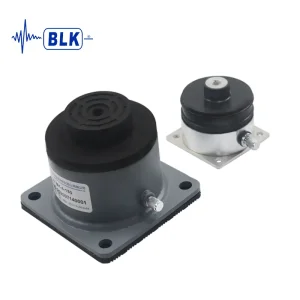
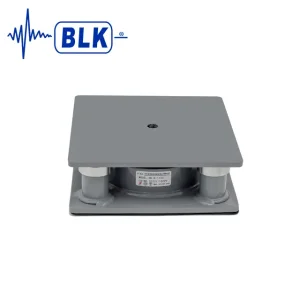
Explore our full line of pneumatic isolators, rubber hangers, and specialized anti-vibration rubber feet.






Frequently Asked Questions (Q&A)
Technical insight directly from our chief engineering team regarding pad selection, sizing, pricing, and installation protocols.