
Featured High-Tolerance Vibration Isolators
Explore our flagship rubber pads, spring mounts, and low-frequency optical platforms built for rigid industrial performance.
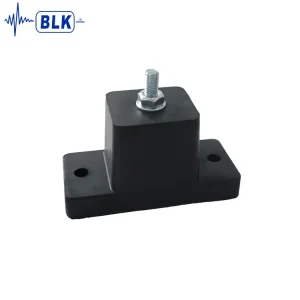
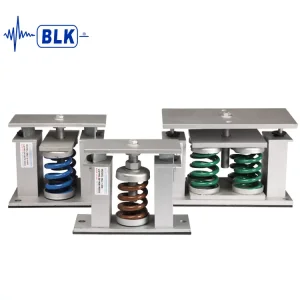
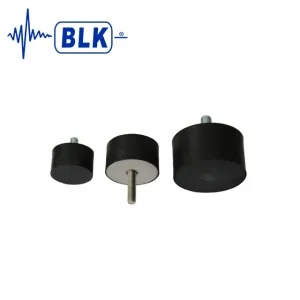
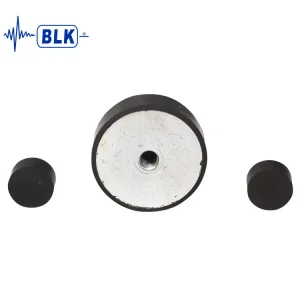
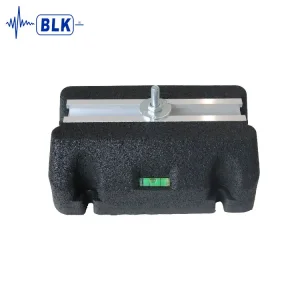

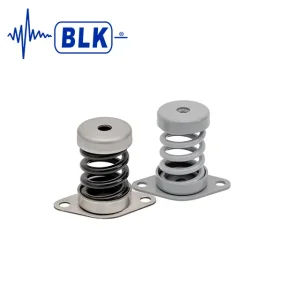
1. The Engineering Physics of High-Tolerance Vibration Isolation
In modern industrial manufacturing, high-precision HVAC installations, semiconductor fabrication facilities, and power distribution grids, mechanical vibration represents far more than simple operational noise. Unmitigated kinetic energy transmitted through structural floors causes rapid tool misalignment, severe structural fatigue, component wear, and disruptive acoustic radiation. A High-Tolerance Vibration Isolator is an advanced mechanical damping device engineered to maintain rigorous spring rate tolerances (±2% to ±5%), controlled static deflections, and predictable natural frequency responses under dynamic load variations.
To achieve vibration isolation efficiencies exceeding 95% to 99%, mechanical engineers rely on the mathematical relationship between the equipment's disturbing excitation frequency ($f_d$) and the isolation system's natural frequency ($f_n$). The force transmissibility ratio ($T$) is defined by the classical dynamic governing equation:
$$T = \sqrt{ \frac{1 + (2 \zeta r)^2}{(1 - r^2)^2 + (2 \zeta r)^2} }$$
Where: $r = f_d / f_n$ (Frequency Ratio), and $\zeta$ represents the damping ratio of the elastomeric or viscous damping medium. Effective isolation begins strictly when $r > \sqrt{2}$ ($r > 1.414$). High-tolerance engineering aims for $r \ge 3.0$ to push system transmissibility below 3%.
High-tolerance manufacturing ensures that every spring coil, pneumatic diaphragm, and elastomeric compound matches exact stiffness matrix calculations. When dynamic loads shift or equipment operates near transient harmonic resonance, precision-engineered isolators eliminate destructive force spikes while providing high lateral stability.
Tightly Controlled Deflection
Precision spring coiling and elastomer vulcanization guarantee uniform load distribution across all mounting points, preventing equipment tilt and internal stress concentration.
Broadband Harmonic Suppression
Engineered for attenuation across low-frequency motor hum (10–30 Hz) up to high-frequency structural noise (>500 Hz), yielding clean acoustic signatures.
Corrosion & Fatigue Resistance
Constructed using high-tensile 60Si2Mn spring steel treated with Dacromet surface coatings, rated to withstand over 900 hours of continuous salt spray exposure.
2. Enterprise Procurement Requirements & Sourcing Matrix
When global Engineering, Procurement, and Construction (EPC) managers and OEM equipment builders evaluate high-tolerance vibration isolators, purchasing decisions extend far beyond initial piece-part pricing. Unplanned equipment downtime caused by isolator failure or resonant fatigue can cost semiconductor fabs or data centers millions of dollars per hour. Procurement matrices prioritize five core metrics:
Batch Consistency
Strict k-factor (stiffness) variance limits ensure multi-mount installations share loads evenly without requiring manual shimming.
Complete Certification
ISO 9001 quality audits, third-party dynamic stiffness test reports, and material origin documentation (MTR) are mandatory for compliance.
Seismic & Wind Compliance
Restrained spring isolators certified for IBC (International Building Code) and ASHRAE seismic zone requirements.
Rapid Rapid Prototyping
Ability to deliver non-standard height, custom top plates, and specialized damping fluids in 3 to 5 business days.
3. Price Benchmarks & Dynamic Cost Drivers
Understanding the pricing structure of high-tolerance vibration control hardware allows procurement teams to optimize budget allocation while guaranteeing mechanical safety. Prices vary dramatically based on load capacity, environmental rating, dynamic damping mechanisms, and precision leveling features.
| Isolator Category | Typical Load Range per Mount | Natural Frequency ($f_n$) | Primary Cost Drivers | Estimated Market Price (USD) |
|---|---|---|---|---|
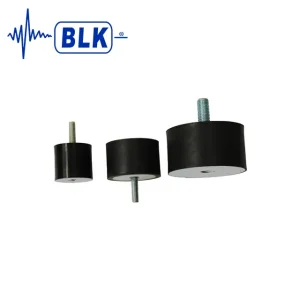
| Industrial Elastomer / Rubber Pads | 10 kg – 2,000 kg | 8 Hz – 15 Hz | Neoprene / Nitrile compound quality, anti-slip profile molding | $5 – $35 |
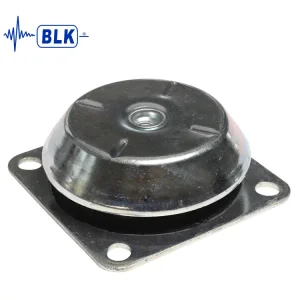
| Open Spring Mounts (MA/ME Series) | 50 kg – 5,000 kg | 3 Hz – 5 Hz | 60Si2Mn spring steel grade, Dacromet coating depth, baseplate CNC machining | $35 – $180 |
| Seismic Restrained Spring Isolators | 100 kg – 8,000 kg | 2.5 Hz – 4.5 Hz | Cast iron/steel housing weight, snubbing rubber thickness, G-force rating certification | $120 – $450 |
| Transformer Anti-Vibration Mounts | 500 kg – 20,000 kg | 4 Hz – 8 Hz | Viscous fluid damping chambers, high-temperature resistance, anti-oil polymers | $250 – $1,200 |
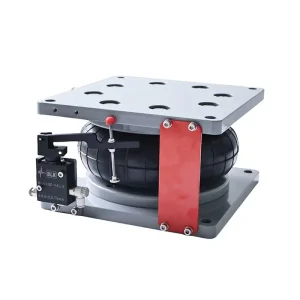
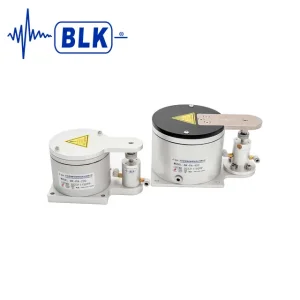
| Pneumatic Air Mounts (BK-PA / BK-PF) | 50 kg – 3,500 kg | 1.2 Hz – 2.5 Hz | Auto-leveling mechanical valves, ultra-low permeability diaphragms, aluminum anodization | $450 – $2,800 |
| Active Optical Isolation Platforms | 100 kg – 1,500 kg | 0.5 Hz – 1.5 Hz | Piezoelectric sensors, real-time DSP controllers, electromagnetic actuators | $3,500 – $12,000+ |
Key Factors Influencing Manufacturing & Quotation Costs:
- Surface Treatment Standards: Standard powder coating vs. high-grade 900-hour salt spray Dacromet electro-plating for offshore or chemical plant installations.
- Elastomer Polymer Sourcing: Use of 100% virgin Natural Rubber (NR) or Chloroprene (CR) vs. recycled rubber filler blends drastically impacts long-term creep and aging performance.
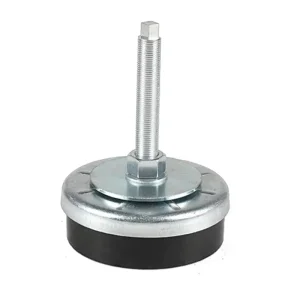
- Precision Leveling Mechanisms: Integrated height-adjustment bolts with fine thread pitch and internal spherical orientation pads increase machining labor but dramatically reduce field setup times.
Macro Industry Solutions
Tailored micro-vibration mitigation architectures across high-tech, commercial, and industrial sectors.
Semiconductor & Lithography
Wafer probers, metrology tools, and SEMs require compliance with VC-B through VC-G micro-vibration curves. Pneumatic air isolators (BK-PA/PF) damp floor vibrations down to 1.2 Hz, ensuring nanometer-scale feature alignment.
Power & Transformers
Substation transformers produce constant 100 Hz/120 Hz magnetostrictive hum that radiates into nearby structures. Specialized high-deflection spring isolators with internal viscous damping attenuate up to 32 dB of noise transmission.
Commercial HVAC & Building Acoustics
Chillers, cooling towers, and centrifugal pumps mounted on mechanical penthouses emit low-frequency excitation. Inertia bases combined with spring mounts eliminate structure-borne noise across occupied spaces.
Heavy Stamping & Compressors
Reciprocating machinery subjected to 3G–5G shock acceleration requires heavy-duty rubber mounts or spring bumpers to absorb massive transient kinetic energy pulses without structural failure.
Precision Optical Benches
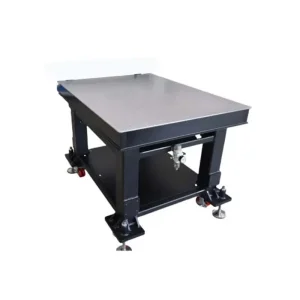
High-damping optical isolation platforms (BK-DT) provide a ultra-flat, honeycomb-stabilized granite or steel surface, isolating laser interferometers and microscopes from foot-traffic vibration.
Medical & Laboratory Metrology
Centrifuges, MRI cooling pumps, and robotic histology analyzers require compact rubber pads or rubber-to-metal bonded feet to guarantee quiet laboratory operations and accurate diagnostics.
The Future of Smart Micro-Vibration Isolation
How Industry 4.0, IoT sensing, and advanced material science are reshaping dynamic vibration control.
IoT-Enabled Smart Mounts
Embedding Tri-Axial MEMS accelerometers directly inside spring housings to stream real-time vibration spectral data to cloud dashboards for predictive maintenance.
Active Electro-Magnetic Hybridization
Combining passive low-frequency air springs with rapid-response voice-coil actuators to achieve sub-Hertz micro-vibration cancellation for 2nm semiconductor manufacturing.
Eco-Friendly Polymer Chemistry
Transitioning from petroleum-heavy elastomers to bio-based polymer matrix composites that offer higher internal damping loss factors ($\eta > 0.25$) without hazardous VOC off-gassing.
6. Global Market Landscape & Localization Support
The global vibration isolation market is expanding rapidly, fueled by cleanroom expansion in North America, semiconductor self-sufficiency initiatives across East Asia, and massive HVAC building upgrades in Europe and the Middle East. Sourcing directly from an established manufacturing hub in Kunshan, China provides international buyers with a distinct cost-to-performance advantage.
Regulatory Compliance & Quality Engineering Assurance
To support frictionless international procurement and engineering acceptance, all production lines follow stringent international standards:
- ISO 9001:2015 Quality Management Systems: Every batch undergoes rigorous static deflection testing, load-deflection verification, and material hardness audits.
- RoHS & REACH Environment Compliance: Elastomer formulations are free of polycyclic aromatic hydrocarbons (PAHs), heavy metals, and restricted chemical plasticizers.
- ASHRAE & IBC Seismic Standards: Restrained spring isolators engineered to resist lateral horizontal shear forces up to 1.0G, preventing equipment displacement during seismic events.
- Global Logistics & Custom Packaging: Fast 24-hour dispatch for standard models, with fumigated wooden crate packaging designed for overseas ocean and air freight.
Frequently Asked Questions by Engineering Teams
Direct technical answers to common queries regarding isolator sizing, deflection math, and installation best practices.
How do I calculate the static deflection required for my machinery?
What is the key difference between rubber isolators and steel spring isolators?
When should an Inertia Base be specified beneath a pump or compressor?
How does temperature affect elastomer performance over time?
What surface treatment is best for outdoor coastal or marine installations?
Pneumatic, Hanger & Leveling Isolators
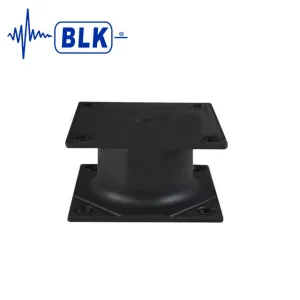
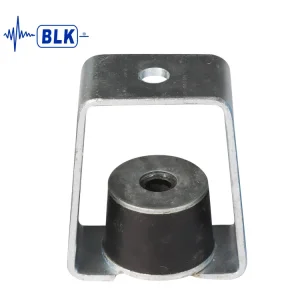
Complete your system design with precision air mounts, rubber buffers, adjustment feet, and ceiling suspended hangers.

Request Custom Sizing & Factory Direct Quotation
Our application engineers provide dynamic vibration calculations and load-deflection modeling within 24 hours.