Precision Dynamics Catalog
Featured Anti-Vibration Systems & Mount Hardware
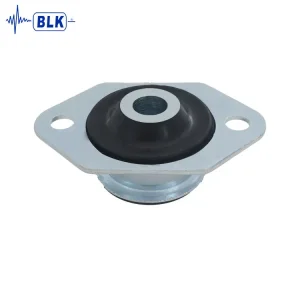
Engineered to mitigate cyclical disturbance forces across HVAC, semiconductor, and heavy industrial infrastructures. Explore our flagship shock and vibration isolators.






Engineering In-Depth Analysis
Elastomeric Mechanics & Pad Anti-Vibration Isolator Fundamentals
A granular perspective on kinetic energy attenuation, frequency ratios ($f_d / f_n$), and structural longevity across complex industrial environments.
The Resonance Factor & Transmissibility
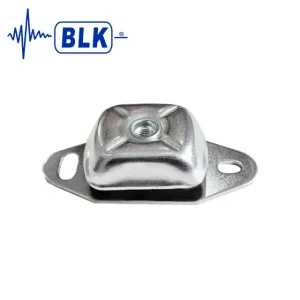
The primary role of a high-performance pad anti-vibration mount is to establish mechanical decoupling between an operating kinetic asset and supporting foundations. Isolation efficacy initiates only when the disturbing frequency exceeds $\sqrt{2} \times f_n$. High-tier composite pads utilize tailored cross-ribbed profiles or cork-elastomer matrix cores to minimize the magnification curve during start-up resonance.
Polymer Viscoelastic Hysteresis
Unlike pure metal helical springs which store mechanical energy and transmit high-frequency harmonics, specialized damping pads leverage rubber viscoelastic hysteresis. Kinetic cycle energy is directly dissipated into low-grade thermal dispersion. Formulations incorporating Nitrile (NBR), Neoprene (CR), or Ethylene Propylene Diene Monomer (EPDM) ensure dynamic damping coefficients ($\eta$) exceeding 0.15 to 0.25.
Dynamic Compressive Creep Resistance
A primary failure metric among generic mounting pads is long-term compressive creep. High-tier industrial pads are cured under strict vulcanization metrics (ASTM D395 Test Method B), ensuring residual deformation remains under 12% after 1,000 continuous hours of operational rating. This prevents asset unbalance, misalignment of drive couplings, and piping shear strain.
Supply Chain Excellence
The Competitive Strengths of Chinese Advanced Isolation Manufacturing
How the integration of Kunshan and Yangtze River Delta industrial ecosystems delivers technical agility, high-volume production, and rigorous ISO certification for tier-1 OEMs.
Fully Integrated Clusters
From custom compounding of specialized fluoroelastomers and synthetic elastomers to CNC tool fabrication and vulcanization mold engraving, our Kunshan factory eliminates third-party supply chain bottlenecks, ensuring consistent batch tolerances within ±0.2mm.
Rapid 1:1 Engineering Customization
Equipped with multi-axis finite element analysis (FEA) dynamic simulation and parametric modeling, we design, prototype, and deliver tailored non-standard elastomeric mounting solutions within 3 to 5 business days, accommodating specific equipment footprint constraints.
Stringent ISO 9001 Testing
Every production batch is backed by comprehensive in-house verification: tension-compression cyclic testing, Shore A durometer validation, 900-hour ASTM B117 salt spray checks for metal bonded surfaces, and dynamic durometer drift tests.
Direct-to-Jobsite Global Logistics
With an annual output exceeding 100,000 units and substantial raw material inventories, our facilities sustain seamless export operations with standard units dispatching within 24 hours to major hubs across Europe, North America, and the Middle East.
Systemic Implementation
Macro-Scale Engineering Solutions: Industrial & Structural Applications
Comprehensive vibration isolation paradigms designed to meet the strict acoustic and operational thresholds of modern architectural, industrial, and technology installations.
HVAC, Pumping & Power Generation Plant Rooms
In modern high-rise commercial structures and industrial plants, un-isolated centrifugal chillers, reciprocating compressors, and cooling towers act as dynamic soundboards. Structural transmission of low-frequency rumble (20 Hz - 100 Hz) bypasses normal partition walls. Our multi-layer pad mounts, coupled with floating concrete inertia bases, establish definitive impedance mismatches that insulate the building core from dynamic structural resonance.
Semiconductor Metrology & Nanotechnology Cleanrooms
Advanced lithography tools, scanning electron microscopes (SEM), and wafer inspection platforms operate at spatial tolerances governed by nanometers. Ambient ground tremors caused by nearby roadways or air handlers disrupt beam calibration. Here, precision pneumatic isolators and micro-cellular polyurethane elastomer pads provide high-level decoupling down to 1.7 Hz, matching VC-D, VC-E, and VC-G vibration criteria.
Transformer Substation Acoustic Retrofitting
Electrical substations in urban zones face stringent acoustic restrictions. Power transformers radiate persistent magnetostrictive hum at fundamental and harmonic multiples of 50 Hz and 60 Hz (100 Hz, 120 Hz, 240 Hz). Specialized oil-resistant transformer anti-vibration pad mounts isolate high shear and normal loads, attenuating ground propagation by up to 25–35 dB(A) and ensuring compliance with local environmental noise bylaws.
Material Selection Matrix
Comprehensive Isolator Mechanical Comparison Table
Reference technical metrics for mechanical and structural engineers sizing anti-vibration mounts for static and dynamic installations.
| Mount Type / Core Material | Natural Frequency ($f_n$) | Isolation Efficiency Range | Maximum Static Loading | Environmental Durability Profile | Recommended Industrial Applications |
|---|---|---|---|---|---|
| Composite Ribbed Nitrile (NBR) Pad | 8 Hz – 15 Hz | 85% – 94% | 0.5 – 3.5 MPa | Superior hydrocarbon, fuel, and synthetic oil resistance | Hydraulic power units, machine tools, gearboxes, pumps |
| Waffle Pattern Neoprene (CR) Pad | 7 Hz – 12 Hz | 88% – 96% | 0.2 – 2.0 MPa | High ozone, weathering, and aging stability | HVAC rooftop chillers, air handling units (AHU), fans |
| Micro-Cellular Polyurethane Pad | 5 Hz – 9 Hz | 92% – 97% | 0.01 – 6.0 MPa | Broad dynamic range, minimal creep, high tear resistance | Precision foundations, high-speed stamping, rail tracks |
| Helical Steel Spring with Damping Pad | 2.5 Hz – 5 Hz | 95% – 99% | Up to 10,000 kg/mount | Hot-dip galvanized / Dacromet finish (900h salt spray) | Low-speed reciprocating compressors, gensets, cooling towers |
| Pneumatic Air Mount Assembly | 1.2 Hz – 2.5 Hz | 98% – 99.8% | Precision leveling control | Cleanroom compatible, non-outgassing elastomer blend | Semiconductor steppers, CMMs, electron microscopy, optical stages |
Strategic Market Outlook
Industry Trends & Global Enterprise Procurement Criteria
Key procurement demands driving specifications across global civil engineering, automation, and industrial projects.
Life-Cycle Cost & Zero-Maintenance Demands
Global EPC contractors and facility directors now prioritize total operational lifespan over initial acquisition cost. Modern pad mounts must maintain elastic spring rates and structural integrity across decades of continuous vibration cycles without stiffening, cracking, or plastic deformation, reducing scheduled plant maintenance outages.
Compliance with Green Building Standards
Leading multi-national corporations specify vibration isolators compliant with LEED, BREEAM, and international environmental directives. Rubber compounds must be strictly RoHS and REACH compliant, free from hazardous volatile organic compounds (VOCs), polycyclic aromatic hydrocarbons (PAHs), and toxic halogen additives.
Traceable Digital Validation & Dynamic Profiling
Modern procurement workflows demand verified technical documentation. Suppliers are evaluated on their ability to furnish third-party certified dynamic test curves, load-versus-deflection hysteresis plots, transmissibility graphs, and finite element simulation models for project submittals.
Knowledge Base
Frequently Asked Questions (FAQ) for Engineering Teams
In-depth technical answers addressing system design, isolation calculations, installation protocols, and lifecycle operations.
What is the fundamental engineering formula used to calculate pad anti-vibration mount isolation efficiency?
Vibration isolation efficiency ($E$) is determined through Transmissibility ($T$), defined by the equation:
$$T = \sqrt{\frac{1 + (2\zeta r)^2}{(1 - r^2)^2 + (2\zeta r)^2}}$$
Where:
$$T = \sqrt{\frac{1 + (2\zeta r)^2}{(1 - r^2)^2 + (2\zeta r)^2}}$$
Where:
- $r = f_d / f_n$: Frequency Ratio between disturbing frequency ($f_d$) and system natural frequency ($f_n$).
- $\zeta$: Damping ratio of the elastomeric material.
- Isolation Efficiency ($E$): Calculated as $E = (1 - T) \times 100\%$.
How do pad anti-vibration mounts differ from coiled spring isolators in high-frequency applications?
Helical steel springs deliver large static deflections and low natural frequencies (down to 2.5–3.0 Hz), making them suitable for low-speed machinery. However, coiled steel springs suffer from internal harmonic wave resonance at higher frequencies, enabling structure-borne sound and vibration to surge directly through the spring coils into the subfloor. Composite anti-vibration pads offer superior high-frequency acoustic attenuation and structural impedance, effectively dampening high-frequency mechanical vibration and cavitation noise.
What specific operating data is required for custom pad sizing and layout planning?
To provide a fully verified 24-hour vibration control recommendation, our engineering team requires:
- Total operating weight of the equipment, including internal fluid media or auxiliary tooling.
- Center of Gravity (CoG) coordinates to account for uneven static load distribution across mounting locations.
- Operational speed (RPM) or lowest periodic disturbing frequency ($f_d$).
- Physical foundation details (e.g., rigid grade slab, elevated structural deck, steel mezzanine).
- Environmental factors (e.g., outdoor UV exposure, oil splashing, extreme temperatures, washdown chemicals).
How do environmental conditions such as oil, ozone, and chemical exposure affect elastomer selection?
Operating environment dictates polymer selection:
- Nitrile (NBR): Recommended for machine shops and hydraulic platforms due to its high resistance to lubricating oils, fuels, and cutting fluids.
- Neoprene (CR): Preferred for outdoor rooftop HVAC units due to balanced resistance to ozone, atmospheric weathering, and direct sunlight.
- EPDM: Chosen for outdoor substations and steam applications due to wide thermal limits (-40°C to +130°C) and chemical resilience.
What are the best practices for installing elastomeric vibration pads under heavy machinery?
Ensure supporting floors are structurally level, clean, and free from oil residue or debris. Pad contact surfaces should match the asset's structural footprint or load-bearing plates to distribute dynamic pressure across the rated durometer surface area without localized edge pinching. Where anchor bolts are installed, utilize elastomeric isolator washers and isolation bushings to prevent metal-to-metal acoustic bridging between the bolt shank, baseplate, and concrete foundation.
Complete Catalog
Precision Mount Assemblies & Heavy-Duty Elastomer Products
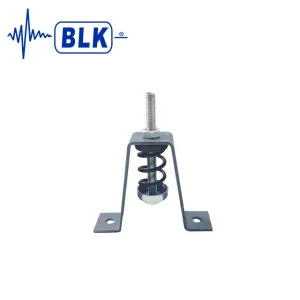
Explore additional models from our comprehensive line of spring hangers, cone mounts, and custom damped vibration pads.