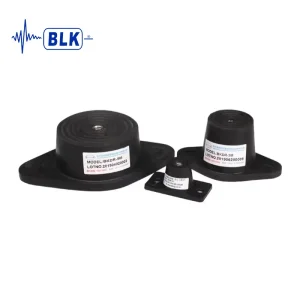
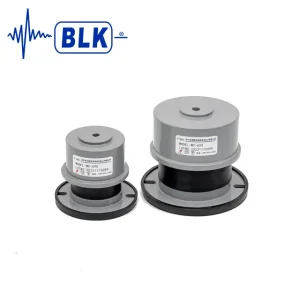
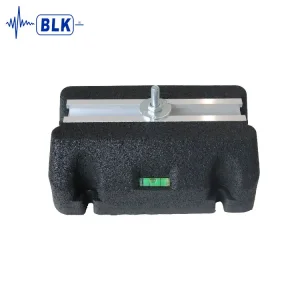
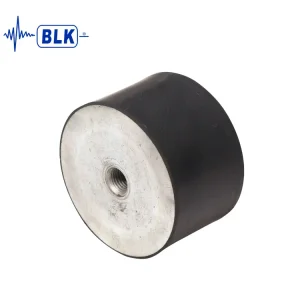
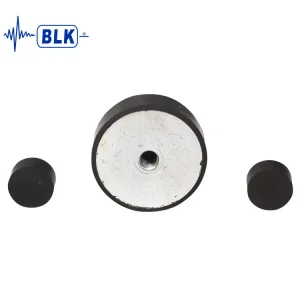
Featured Industrial Rubber & Anti-Vibration Mounts
Explore our core tier-1 elastomeric isolation series engineered for low-frequency shock absorption, HVAC isolation, and heavy-duty industrial stability.


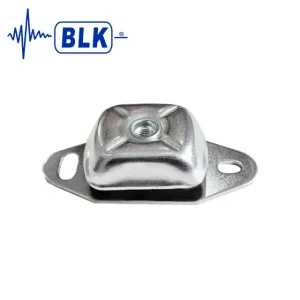
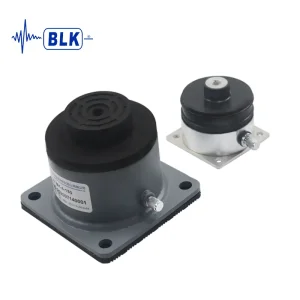
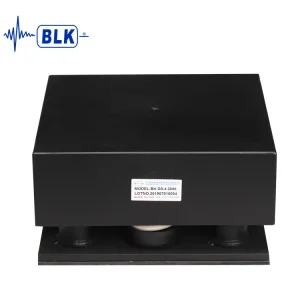
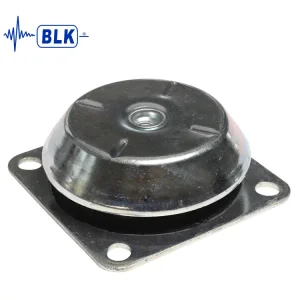
Global Elastomeric Isolation Trends & Market Dynamics
A comprehensive examination of dynamic stiffness, structure-borne noise mitigation, and changing procurement imperatives across high-tech manufacturing ecosystems.
In modern industrial engineering, structural vibration represents more than mere mechanical discomfort—it is a critical vectors of equipment fatigue, operational downtime, micro-measurement inaccuracy, and environmental noise pollution. High-quality rubber vibration isolation mounts serve as the primary defensive barrier between high-energy rotating componentry and foundational structural surfaces.
The Paradigm Shift in Vibration Control Engineering
Over the past decade, the global market for anti-vibration rubber mounts has transitioned from commodity rubber-to-metal bonding to hyper-engineered elastomeric solutions. Driven by strict international noise legislation (such as ISO 3744, ASHRAE building acoustics standards, and EU Directive 2002/49/EC), mechanical contractors and Tier-1 equipment manufacturers are mandating quantified isolation efficiencies exceeding 95% across critical operational frequencies.
Three mega-trends are reshaping global procurement demand:
- Micro-Vibration Mitigation in Advanced Electronics: As semiconductor nodes shrink below 3nm, even nanoscale structural hum can cause wafer alignment flaws. Precision rubber and hybrid air mounts are replacing traditional rigid fixations.
- Urban Decarbonization & HVAC Rooftop Densification: Modern green architecture requires massive air conditioning equipment placed on light structural roofs. High-deflection rubber mounts prevent low-frequency rumble from resonating through concrete slabs.
- Electrification of Power Systems: Smart transformer substations operating inside dense metropolitan centers rely on specialized elastomer compounds tailored to isolate 50Hz/60Hz magnetostrictive hum without degrading under thermal stress.
Global Sourcing & Procurement Demands
Global EPCs demand fully certified, spec-compliant isolators with validated dynamic-to-static stiffness ratios ($K_d/K_s \le 1.4$), ensuring precise mathematical predictability in multi-axis loading conditions.
Material Innovation & Polymer Durability
Utilizing proprietary Neoprene, EPDM, and Nitrile compounds with cross-linking vulcanization additives to withstand high ozone exposure, hydraulic oils, thermal fluctuations (-40°C to +120°C), and cyclic degradation.
Total Quality & Corrosion Mitigation
Structural steel components undergo advanced Dacromet surface treatment, passing 900+ hours of continuous salt spray testing to survive harsh marine, industrial, and coastal installations without flaking.
China Factory 4.0: Supply Chain Resilience & Efficiency
How automated vulcanization processes, robotic metal preparation, and localized raw material integration create an unshakeable competitive pricing edge.
In the contemporary global trade paradigm, overseas buyers—from North American HVAC distributors to European industrial OEMs—face twin challenges: escalating manufacturing costs and supply chain fragility. Situated in Kunshan, Jiangsu, Bellking's 2,000m² digitalized manufacturing facility exemplifies China Factory 4.0 smart manufacturing.
1. Fully Automated Precision Vulcanization
Traditional rubber mount production often suffers from human error during batch weighing and mold temperature variations, leading to unpredictable Shore A hardness tolerances. Bellking implements automated internal mixers and multi-stage hydraulic vacuum vulcanizing presses equipped with real-time pressure-temperature sensors. This guarantees a hyper-consistent durometer tolerance within ±3 Shore A across massive production runs.
2. Robotic Surface Preparation & Elastomer-to-Metal Bonding
Delamination of rubber from metal plates is the primary structural failure mode in high-shear applications. Our automated system incorporates shot-blasting, chemical degreasing, and robotic dual-coat adhesive spraying. This ensures a chemical bond strength ($>10 \text{ MPa}$) that exceeds the tear strength of the rubber matrix itself; the rubber tears before the bond breaks.
3. Direct Factory Pricing Mechanics & TCO Reduction
By integrating upstream raw material sourcing (high-purity natural rubber and certified carbon steel grades) directly with automated inline processing, Bellking eliminates tier-2 trading markups. The resulting pricing structure grants international buyers a 25% to 40% Total Cost of Ownership (TCO) advantage without sacrificing compliance with international standards such as ISO 9001 and RoHS.
Localized Application Scenarios & Selection Matrix
Matching dynamic parameters (RPM, Center of Gravity, Natural Frequency) with optimal rubber mount geometries.
Selecting an effective vibration isolator requires precise mathematical evaluation of the forced disturbing frequency ($f_d$) generated by the operating machine versus the natural frequency ($f_n$) of the elastomeric mount. Isolation occurs only when:
Formula: $f_d / f_n > \sqrt{2} \approx 1.414$
For optimal industrial attenuation ($>90\%$), engineers aim for a frequency ratio of $f_d / f_n \ge 3$.
Localized Industrial Use-Cases:
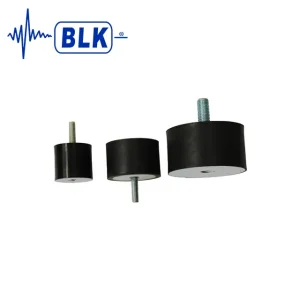
- HVAC Systems & Air Handling Units (AHUs): Heavy water chillers, centrifugal pumps, and cooling towers operating between 1,200 RPM and 1,800 RPM (20Hz–30Hz) utilize heavy-duty cylindrical or shear-type rubber mounts (such as BKVV and BKH types) to block mechanical humming from transferring into building walls.
- Power Generators & Internal Combustion Engines: Reciprocating engines exhibit severe dynamic multi-axis loads. Shear-compression combination mounts absorb multi-directional torque impulses while maintaining equipment alignment.
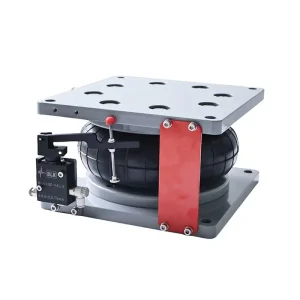
- Precision Optical Benches & Cleanroom Instruments: High-sensitivity laboratory apparatus relies on low-stiffness polymer and pneumatic mounts (BK-A and BK-PF series) to isolate ambient floor vibrations down to 1.7Hz.
| Mount Type | Natural Freq ($f_n$) | Damping Ratio ($\zeta$) | Primary Industrial Scenario | Environmental Resistance |
|---|---|---|---|---|
| Cylindrical Rubber Mounts (BKVV) | 8 Hz - 15 Hz | 0.05 - 0.10 | Small Motors, Compressors, Control Cabinets | Good Oil & Abrasion Resistance |
| Heavy-Duty Shear Mounts (BKH/BKHQ) | 6 Hz - 12 Hz | 0.08 - 0.12 | Centrifugal Pumps, Chillers, Gensets | High Structural Load Rating |
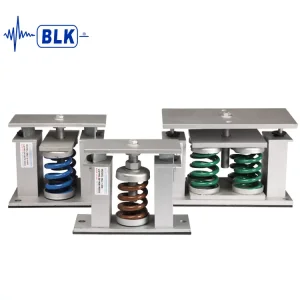
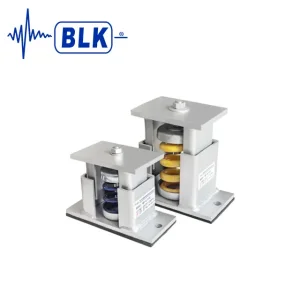
| Damped Spring Mounts (BK-DS/MB) | 3 Hz - 5 Hz | 0.15 - 0.25 | Low-Speed Chillers, Cooling Towers, Blowers | Extreme Lifespan (15+ Years) |
| Pneumatic Air Mounts (BK-PF/BK-A) | 1.7 Hz - 3.5 Hz | 0.03 - 0.08 | Semiconductor Lithography, Metrology Benches | Cleanroom Rated & Auto-Leveling |
Frequently Asked Technical Questions
Comprehensive answers provided by senior vibration engineering directors regarding material selection, load calculation, and factory pricing factors.
What parameters are required to accurately size a rubber vibration isolation mount?
- Total Static Load & Center of Gravity: Distribution of weight across all support points to prevent uneven deflection.
- Equipment Operating Speed (RPM): Establishes the primary disturbing frequency ($f_d$).
- Target Isolation Efficiency: Standard industrial targets range between 85% and 98%.
- Environmental Conditions: Exposure to thermal limits, ambient oil, ambient ozone, or salt mist spray.
How does standard Natural Rubber compare to Neoprene and EPDM in isolation mounts?
Why is dynamic stiffness ($K_d$) higher than static stiffness ($K_s$) in rubber mounts?
What factors determine direct factory pricing for custom rubber isolation mounts?
How do rubber isolators prevent acoustic flanking and structure-borne noise transmission?
Additional Specialized Vibration Isolation Models
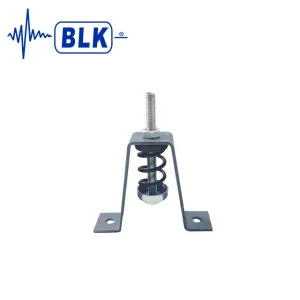
Explore our complete inventory of spring hangers, precision air platforms, transformer isolators, and heavy inertia bases.