Precision Anti-Vibration Mounts & Industrial Dampers
Explore our core spring, rubber, and multi-layer vibration isolation systems manufactured under rigorous ISO 9001 quality management protocols.

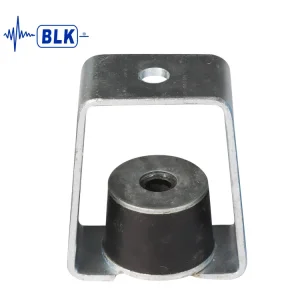
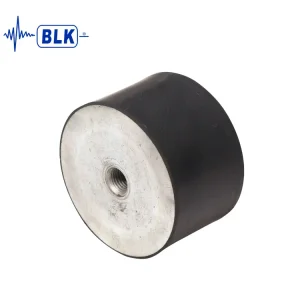

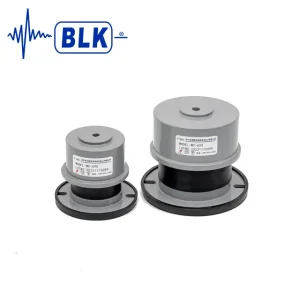

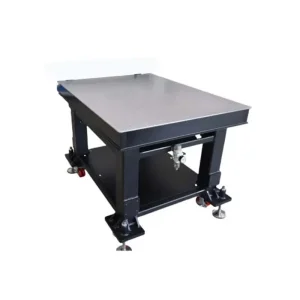

Technical Specification & Metallurgical Excellence of Stainless Steel Vibration Mounts
A comprehensive analysis of dynamic stiffness, transmissibility ratios, material selection, and structural dampening for heavy industrial equipment and micro-vibration applications.
AISI 304 vs. 316L Metallurgical Superiority
Stainless steel anti-vibration mounts engineered in specialized Chinese facilities utilize premium AISI 304 and 316L austenitic stainless steel. 316L features 2–3% Molybdenum content, guaranteeing exceptional resistance to chloride pitting, acidic washdowns, and marine salt-spray environments (tested past 900 hours under ASTM B117 standards).
Dynamic Stiffness & Resonance Prevention
Effective vibration isolation requires managing the ratio between disturbing frequency ($f_d$) and the mount’s natural frequency ($f_n$). Achieving $f_d / f_n \ge \sqrt{2}$ initiates isolation, whereas targeting a ratio of $3.0$ or higher delivers vibration transmissibility below $10\%$, eliminating mechanical resonance and structural fatigue.
Advanced Elastomeric Core Damping
By pairing precision CNC-machined stainless housings with high-damping elastomers (EPDM, Fluoroelastomer, or High-Damping Natural Rubber), our mounts deliver multi-directional damping. This hybrid architecture prevents high-frequency acoustic bridge transmission while retaining high shear strength under shock loads up to 5G.
Key Engineering Metric: Vibration isolation efficiency ($I_e$) is directly calculated via Transmissibility ($T$): $I_e = (1 - T) \times 100\%$. Bellking’s engineered stainless steel spring and pneumatic mounting systems consistently achieve up to 99% isolation efficiency across low disturbing frequencies (down to 1.7 Hz).
Performance Matrix: Stainless Steel Anti-Vibration Mount Variants
| Mount Series / Type | Material Specification | Natural Frequency ($f_n$) | Max Deflection | Corrosion Rating | Primary Industrial Application |
|---|---|---|---|---|---|
| Spring Mounts (MD/MC) | AISI 304 / 316 Housing + Alloy Spring | 3.0 Hz – 5.0 Hz | 25mm – 50mm | Dacromet / Electropolished | HVAC Chillers, Heavy Pumps, Gensets |
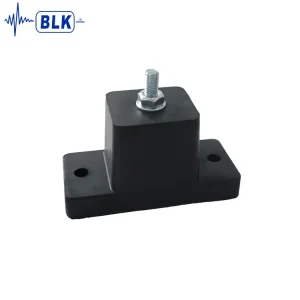
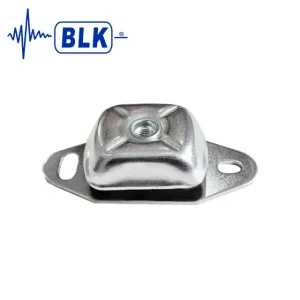
| Rubber/Elastomer (BKDD/BKH) | 316L Stainless Steel Base + EPDM | 8.0 Hz – 15.0 Hz | 5mm – 12mm | Extreme Chemical / Washdown | Food & Biotech, Marine Engines, Motors |
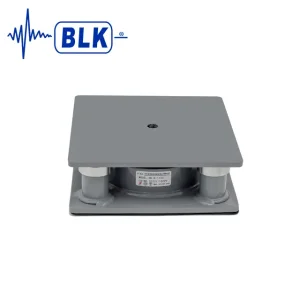
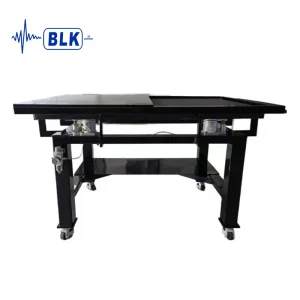
| Pneumatic Air Mounts (BK-R) | Stainless Enclosure + Reinforced Membrane | 1.7 Hz – 3.0 Hz | Leveling Dependent | Cleanroom Class 10/100 | Semiconductor Probers, Optical Benches, CMM |
| Multi-Layer Dampers (BKSWA) | 304 Stainless Plates + Viscoelastic Polymer | 5.0 Hz – 10.0 Hz | 10mm – 20mm | High Durability Industrial | Power Transformers, Stamping Presses |
Why Global OEMs & EPC Contract Manufacturers Source From China
Analyzing the strategic supply-chain benefits, metallurgical integration, automated production capabilities, and cost efficiency offered by Tier-1 Chinese vibration isolation manufacturers.
Fully Integrated Industrial Cluster (Kunshan/Jiangsu Hub)
Situated in the heart of China’s high-precision manufacturing zone in Kunshan, Bellking leverages end-to-end local supply integration. From specialized stainless steel rod milling to precision spring coiling, robotic TIG welding, and local elastomer compounding, lead times are reduced by over 40% compared to Western manufacturers.
Rapid 1:1 OEM/ODM Customization Capabilities
Engineering non-standard equipment mountings often stalls project timelines. Chinese direct manufacturers excel at rapid 3D CAD modeling, FEA (Finite Element Analysis) stress simulation, and physical prototype fabrication within 3 to 5 working days, accommodating custom bolt configurations, load ratings from 5kg to 10,000kg, and custom heights.
Rigorous Quality Assurance & International Certifications
Leading Chinese anti-vibration mount factories adhere strictly to ISO 9001:2015 quality frameworks. Material heat-lot certifications, spectrographic steel verification, dynamic fatigue testing (up to 2,000,000 cycles), and 100% factory load testing guarantee zero defect rates upon delivery to overseas project sites.
Macro-Industry Solutions & Localized Application Scenarios
How specialized stainless steel anti-vibration mounts solve severe vibration, structure-borne noise, and environmental degradation across primary global markets.
1. Semiconductor Manufacturing & Metrology Cleanrooms
Photolithography machines, scanning electron microscopes (SEM), and wafer inspection tools require sub-micron stability. Standard floor micro-vibrations severely affect yield rates. Stainless steel pneumatic isolation platforms (natural frequency ~1.7 Hz) attenuate both horizontal and vertical ground vibrations, maintaining sub-micron measurement accuracy.
2. Pharmaceutical Cleanrooms & Food Processing (CIP/SIP)
Processing units undergo high-pressure chemical washdowns with caustic agents and steam (Clean-In-Place / Sterilize-In-Place). Standard carbon steel mounts corrode rapidly, causing sanitary contamination risk. Electropolished 316L stainless steel mounts equipped with FDA-approved silicone or EPDM elastomers prevent bacterial entrapment and withstand daily caustic exposure.
3. Marine, Offshore Energy & Coastal Power Substations
Offshore wind farm transformers, naval propulsion engines, and marine HVAC equipment are exposed to relentless saltwater spray and continuous shock loadings. High-deflection stainless spring mounts featuring Dacromet-coated springs stop low-frequency hum (100Hz–120Hz) from transferring into hull structures while offering marine salt spray durability exceeding 15 years.
4. Commercial HVAC, Rooftop Chillers & Cooling Towers
Rooftop-mounted chillers, large axial fans, and heavy-duty water pumps radiate structure-borne noise throughout multi-story commercial buildings. By deploying heavy-duty stainless spring mounts paired with concrete-filled inertia bases, mechanical motion is stabilized during motor startup, attenuating up to 98% of transmitted sound power.
Global Industry Trends in Anti-Vibration Technology
Key technological shifts driving the next decade of vibration damping, acoustic isolation, and smart structural engineering.
1. Transition to Smart Active-Passive Hybrid Damping
Modern industrial facilities are combining traditional passive stainless steel mounts with integrated piezoelectric sensors and active electromagnetic actuators. These hybrid systems continuously monitor ambient vibration spectrums, dynamically adjusting damping stiffness in real-time to neutralize transient shock loads in high-speed manufacturing environments.
2. Stringent Acoustic Pollution & ESG Regulations
Governments across North America, the EU, and East Asia are enforcing stricter decibel standards ($<40$ dBA night-time limits) for commercial building utilities and data center cooling units. Procurement teams now mandate factory-certified vibration isolator test reports proving low transmissibility before equipment commission.
3. Eco-Friendly Elastomers & High-Temp Polymers
Environmental compliance (RoHS, REACH) is shifting the market toward zero-degassing, halogen-free viscoelastic polymers. Furthermore, high-temperature industrial processes require customized silicone compounds operating reliably between -50°C and +250°C without undergoing thermal hardening or permanent compression set.
Global Enterprise Procurement Sourcing Checklist
Essential engineering data points procurement officers and EPC engineers must specify when requesting quotation packages from Chinese manufacturers.
1. Exact Equipment Operating Mass & CG Location
Always specify total operating weight (including fluids) and the exact Center of Gravity (CG). Asymmetric weight distribution requires custom-stiffened corner mounts to prevent equipment tilting and premature elastomeric shear failure.
2. Equipment Excitation Frequency (RPM / Hz)
Identify the lowest operating speed (RPM) of your equipment (e.g., motor at 1450 RPM = 24.16 Hz disturbing frequency). The selected mount’s natural frequency must be engineered far below this value to avoid entering the amplification zone ($f_d / f_n = 1.0$).
3. Environmental Exposure & Seismic Restraint
Specify ambient chemical, marine, cleanroom, or temperature conditions. For earthquake-prone regions or rooftop wind loads, request All-Directional Seismic Restrained Stainless Steel Spring Mounts fitted with snubbing limits.
Frequently Asked Questions (FAQ) - Sourcing & Engineering
In-depth responses from senior vibration isolation engineers regarding material choices, installation protocols, and performance selection.
Why choose stainless steel anti-vibration mounts over painted or galvanized carbon steel?
Stainless steel (specifically AISI 304 and 316L) provides non-degrading corrosion resistance that painted or hot-dip galvanized steel cannot match in aggressive environments. Galvanized coatings are prone to micro-fissures during cyclic deflection, leading to subsurface rusting and premature spring failure. Stainless steel maintains structural integrity, cleanroom compliance, and aesthetic appearance indefinitely without chemical off-gassing or metal flake shedding.
How do I correctly select between spring mounts, rubber mounts, and pneumatic air isolators?
Selection depends primarily on the required natural frequency ($f_n$) relative to your equipment’s disturbing frequency ($f_d$):
- Rubber Mounts (8–15 Hz): Ideal for high-speed equipment (>1,800 RPM), lighter loads, and applications requiring high shear strength and compact height.
- Spring Mounts (3–5 Hz): Best for low-speed machinery (300–1,500 RPM) such as HVAC chillers, heavy pumps, and diesel generators requiring high static deflection (25mm–50mm).
- Pneumatic Air Mounts (1.7–3 Hz): Critical for sensitive equipment operating under extremely low excitation frequencies (metrology, semiconductor tools, optical tables) requiring active level compensation.
What lead time can overseas procurement managers expect for custom stainless mounts from China?
Standard model orders ship within 24 hours from stock. For custom engineered solutions (non-standard load capacities, specialized dimensions, or unique mounting plates), 3D CAD design and prototyping take 3 to 5 working days, with full volume production dispatched within 2 to 3 weeks via air or sea freight.
How does Bellking verify anti-corrosion performance and dynamic durability?
Every batch of stainless steel undergoes spectrographic alloy verification and hardness testing. Finish treatments (such as Dacromet plating on springs) undergo rigorous ASTM B117 salt spray chamber testing exceeding 900 continuous hours. Dynamic fatigue testing subjects spring and elastomeric assemblies to 2,000,000 continuous compression cycles without exceedance of set deflection limits.
Can Bellking engineering assist in calculating custom weight distribution for asymmetrical equipment?
Yes. By submitting equipment layout drawings, total weight, and center-of-gravity (CG) coordinates to our engineering team, Bellking generates a comprehensive 24-hour Vibration Isolation Report detailing exact mount selection, required spring stiffness ($k$) at each position, dynamic transmissibility curves, and installation guidelines.
Rubber Pads, Damping Platforms & Specialized Pneumatic Mounts
Explore the remainder of our precision product line engineered for specialized industrial isolation, acoustic retrofit, and optical equipment support.