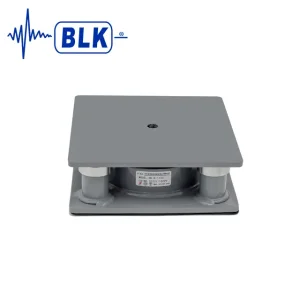
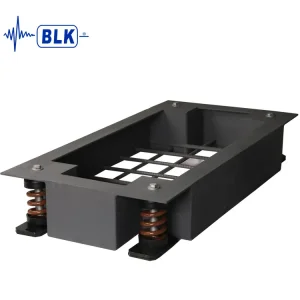
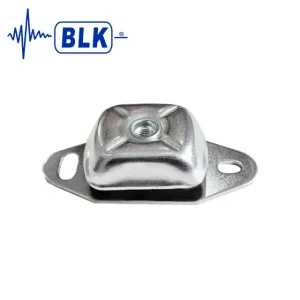
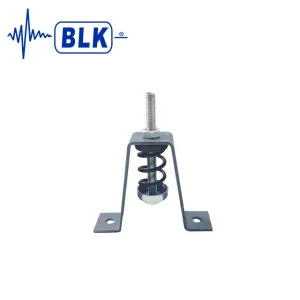
Heavy-Duty Isolation & Precision Mount Series
Explore our high-performance anti-vibration solutions designed for extreme industrial environments and micro-vibration applications.
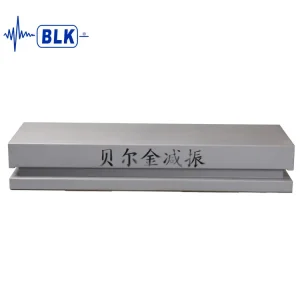
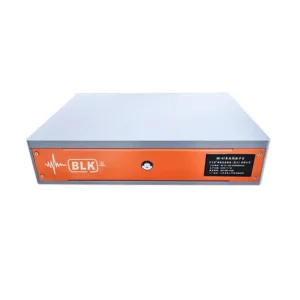
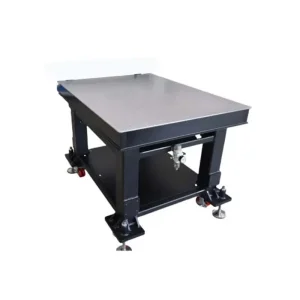

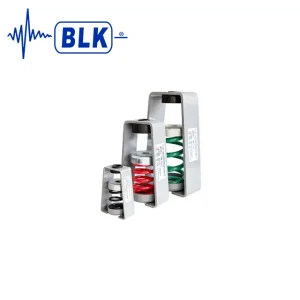
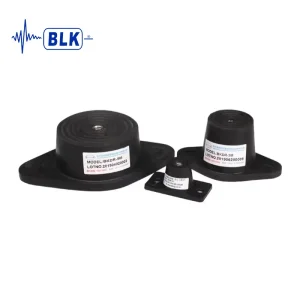
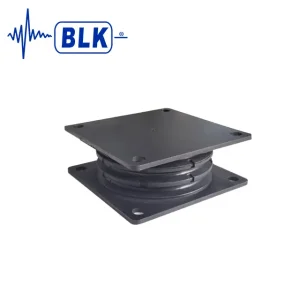

Engineering Fundamentals of Vibration Mountings & Control Systems
In modern industrial engineering, controlling mechanical vibration is not merely a noise reduction exercise; it is a critical requirement for structural integrity, process accuracy, and equipment operational life. Uncontrolled kinetic energy generated by rotating machinery, reciprocating compressors, or external seismic forces transmits structure-borne noise throughout building networks, leading to premature mechanical failure, structural fatigue, and non-compliance with international environmental standards.
As leading global tier-1 suppliers and specialists associated with legacy innovations of Vibration Mountings & Controls Inc factories & manufacturers, modern production facilities leverage advanced elastomeric compounding, precision steel helical spring dynamics, and pneumatic air suspension systems to mitigate unwanted vibration dynamics across multi-axis vectors.
The Physics of Isolation Transmissibility
The core mechanism of a vibration mount revolves around altering the natural frequency ($f_n$) of the equipment setup relative to the disturbing operational frequency ($f_d$). Isolation efficiency ($E$) is mathematically governed by the dynamic transmissibility ($T_r$) formula:
Dynamic Transmissibility Transduction Formula
T_r = \sqrt{ \frac{1 + (2 \zeta \frac{f_d}{f_n})^2}{(1 - (\frac{f_d}{f_n})^2)^2 + (2 \zeta \frac{f_d}{f_n})^2} }
Where \zeta is the damping factor of the material (elastomer hysteresis or viscous damper oil viscosity). Isolation occurs only when $f_d / f_n > \sqrt{2}$. For optimal efficiency (>90%), engineers target a frequency ratio $f_d / f_n \ge 3.0$.
Selecting the incorrect mount stiffness can result in operating near the resonance zone ($f_d / f_n = 1$), which amplifies vibration amplitude up to 500%, causing catastrophic mechanical breakdown. This is why working directly with verified manufacturing plants ensures precise dynamic stiffness calibration.
Comprehensive Macro-Industry Solutions
1. Commercial HVAC & Building Acoustics
Large-scale centrifugal chillers, cooling towers, and rooftop Air Handling Units (AHUs) transmit low-frequency hums through building slabs. Utilizing spring vibration isolators with viscous dampers effectively absorbs starting torque and harmonic resonance, ensuring compliance with ASHRAE standards for acoustic comfort in hospitals, commercial towers, and residential complexes.
2. Semiconductor & Optical Precision Fab
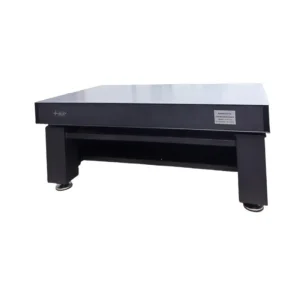
Lithography machines, atomic force microscopes (AFM), and coordinate measuring machines (CMM) demand sub-micron micro-vibration isolation. Active air mounts and BK-DT type pneumatic platforms isolate floor vibrations down to 1.7 Hz, ensuring sub-nanometer yield accuracy in cleanroom semiconductor lines.
3. Power Electrical Transformers & Gensets
Dry-type and oil-immersed power transformers experience magnetostriction, generating continuous 100Hz/120Hz core hum. Custom transformer anti-vibration rubber-metal mounts and inertia bases decouple the unit from concrete foundations, eliminating low-frequency ground propagation in urban substations and data centers.
4. Marine, Offshore & Heavy Machinery
Ship propulsion engines, diesel generators, and heavy forging presses operate under violent transient shocks (3G–5G acceleration). High-tensile matrix mounts (BK-MT) and multi-layer dampers (BKSWA) combine tear-resistant elastomeric alloys with steel housings to withstand shear forces, roll angles, and severe shock displacement.
China Industry 4.0: Supply Chain Resilience & Manufacturing Superiority
The global sourcing landscape for engineering components has evolved rapidly. Today, tier-1 manufacturing hubs located in Jiangsu, China—such as the state-of-the-art facilities in Kunshan—combine digital smart factory infrastructure with integrated metal-elastomer supply chains. This synergy provides global buyers with unmatched lead times, structural reliability, and cost-to-performance advantages.
Automated Precision Machining
Modern production facilities employ multi-axis CNC machining centers, robotic arm welding cells, and automated rubber vulcanization presses. Automated processing eliminates dimensional tolerances variations, ensuring that spring pitch, load-deflection profiles, and mounting hole alignments strictly match digital CAD/BIM models.
End-to-End Material Traceability
From high-tensile 60Si2Mn spring steel to specialized Neoprene, EPDM, and Nitrile rubber formulations, every raw material batch undergoes spectral chemical analysis and durometer hardness testing. Complete traceability logs guarantee consistent spring constants ($k$) and resistance to oil, ozone, and thermal degradation.
Advanced Surface Protection Technologies
To withstand hostile industrial and offshore environments, metal components undergo zinc electroplating, powder coating, or proprietary Dacromet treatment. Our standard isolator housings achieve over 900 hours of continuous salt spray testing (per ASTM B117), exceeding standard paint finishes threefold.
Technical Roadmap & Future Outlook (2025–2035)
As industrial machinery advances toward higher speeds, micro-scale precision, and autonomous operation, passive vibration control is undergoing a technological revolution. Factory engineering teams are pioneering innovations across three core frontiers:
| Technology Vector | Current Engineering Benchmark | Next-Generation Innovation (2025–2035) | Primary Industrial Benefit |
|---|---|---|---|
| IoT-Connected Smart Isolators | Passive deflection inspection; manual vibration meter checks. | Embedded MEMS tri-axial accelerometer sensors with Bluetooth/Zigbee mesh nodes. | Real-time structural health monitoring; predictive failure alerts before mechanical breakdown. |
| Active Piezoelectric Damping | Passive low-frequency spring & pneumatic air leveling systems. | Hybrid active electromagnetic/piezoelectric real-time force feedback control loop. | Sub-Hz vibration cancellation for 2nm semiconductor lithography processes. |
| Eco-Elastomers & High Temp Compounds | Standard Synthetic Nitrile & EPDM elastomers (-20°C to +80°C). | Bio-based fluoroelastomeric alloys operating seamlessly from -50°C up to +220°C. | Extreme resilience for aerospace testing, cryogenic plants, and green building audits. |
| AI Dynamic Sizing Algorithms | 2D static loading lookup tables and manual calculation sheets. | Cloud FEA digital twin simulation auto-calculating dynamic multi-axis loading. | Custom anti-vibration isolation layout engineered in minutes directly from BIM files. |
Global Procurement Engineering Sizing Specification Guide
For Engineering, Procurement, and Construction (EPC) managers, selecting the correct vibration mountings requires precise input data to prevent project delays or operational non-conformance. When submitting specifications to our application engineers, ensure the following parameters are fully defined:
1. Operational & Wet Mass Distribution
Always calculate the total wet weight (including fluids, piping loads, and accessories) rather than dry equipment weight. For non-symmetrical equipment (e.g., chillers with side compressors), locate the exact Center of Gravity (CG) to ensure equal spring deflection across all support points.
2. Excitation Frequency ($f_d$)
Identify the lowest operating RPM of the equipment. For variable frequency drive (VFD) motors, isolation sizing must be calculated based on the lowest operating RPM under throttled conditions, preventing the system from drifting into low-frequency resonance.
3. Seismic & Wind Restraint Requirements
For outdoor installations, elevated mechanical rooms, or earthquake-prone zones, specify seismic-restrained spring mounts compliant with ASCE 7 and local building codes. Restrained mounts feature steel limit switches to restrict horizontal and vertical sway during seismic events.
Localized Support, Global Compliance & Reliability Assurance
Building trust in international procurement demands absolute compliance with global quality and environmental frameworks. Products sourced through certified manufacturing partners undergo strict audit protocols:
Our dedicated global service team offers turnkey installation guidance, structural CAD drawings, load-deflection calculation certificates, and 24-hour rapid technical support to ensure your mechanical systems perform seamlessly from commissioning onward.
Frequently Asked Technical & Sizing Questions
How do I choose between spring, rubber, and pneumatic vibration isolators?
Selection depends directly on the operating speed (disturbing frequency $f_d$) of your equipment and the isolation efficiency required:
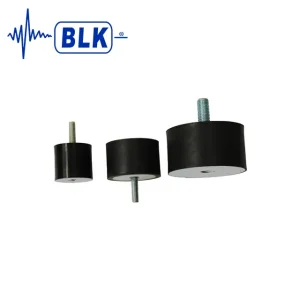
- Rubber Mounts: Ideal for high-frequency vibration equipment (>1,200 RPM / 20Hz), such as small motors, pumps, and compressors. They offer excellent high-frequency acoustic attenuation and shock absorption.
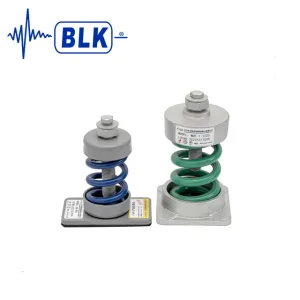
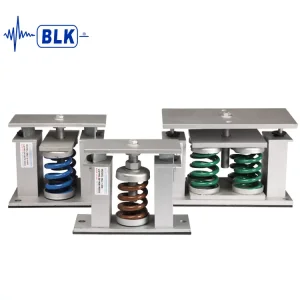
- Spring Isolators: Designed for low-frequency equipment (300 to 1,200 RPM / 5Hz to 20Hz) such as HVAC chillers, air handling units, cooling towers, and diesel generators. Spring isolators provide large static deflections resulting in low natural frequencies (3 Hz to 5 Hz).
- Pneumatic (Air) Mounts: Perfect for ultra-sensitive low-frequency applications (<5 Hz down to 1.7 Hz), including semiconductor probing equipment, CMM machines, electron microscopes, and high-precision optical benches.
What engineering parameters are required to size a custom vibration mount?
To accurately size an isolator, our engineering team requires five core input values:
- Total operating mass (including liquids and attachments).
- Number and physical location of support points (with Center of Gravity details).
- Operating speed range (lowest RPM / VFD operating points).
- Environmental conditions (operating temperature, exposure to oil/chemical/UV, coastal salt spray requirements).
- Restraint needs (seismic ratings per ASCE 7 or wind-load restraint).
What is the difference between open spring isolators and housed seismic spring isolators?
Open spring isolators expose the helical spring directly and offer uninhibited vertical deflection; they are suitable for indoor equipment where lateral forces (wind/earthquake) are absent. Housed seismic spring isolators feature heavy-duty ductile iron or steel enclosures with integrated vertical and horizontal snubbers. These housings restrict equipment movement during seismic events, thermal expansion, or fluid drainage, preventing piping disconnects and tipping risks.
How long is the typical operational lifespan of your vibration mounts?
Under recommended load and environmental conditions, steel helical spring mounts and heavy-duty transformer mounts engineered in our factories feature a design life exceeding 15 to 20 years. Elastomeric rubber mounts typically maintain optimal damping properties for 8 to 12 years before natural polymer degradation suggests replacement. Dacromet surface coatings ensure rust-free performance even after 900+ hours of salt fog exposure.
Can you manufacture custom non-standard vibration isolators for OEM equipment?
Yes. Over 40% of our production output involves 1:1 OEM customization. Our engineering office delivers complete CAD/3D BIM models, load deflection curve calculations, and physical prototypes in as fast as 3 to 5 working days following parameter confirmation.
What lead times and compliance certifications accompany your international shipments?
Standard catalog spring isolators and rubber pads ship within 24 hours of order confirmation. Custom engineered mounts typically ship within 10 to 15 business days. Every shipment includes factory batch inspection certificates, material test reports (MTR), ISO 9001 compliance sheets, and standard 12-month full replacement warranties.
Advanced Damping, Pneumatic & Inertia Base Solutions
Explore specialized anti-vibration hangers, air mounts, and heavy structural pump inertia bases.