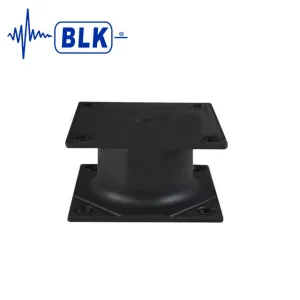
Industrial Anti-Vibration Mounts & Pneumatic Isolators
Explore our factory-direct isolators, air mounts, and rubber feet engineered for precision machinery, heavy HVAC, power generators, and optical platforms.
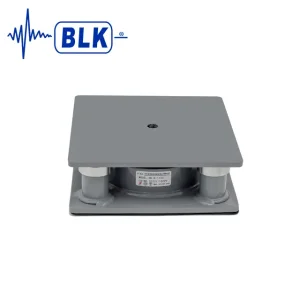


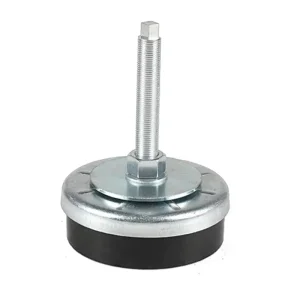



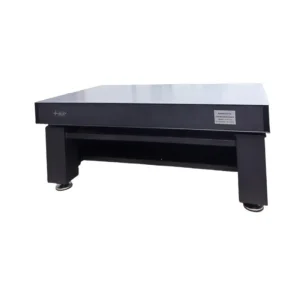
Global Macro Landscape: Anti-Vibration Engine Mount Engineering
In modern industrial power generation, marine propulsion, automotive assembly, and heavy manufacturing, Noise, Vibration, and Harshness (NVH) mitigation is no longer merely a comfort metric—it is a critical mechanical longevity requirement and compliance standard. Uncontrolled structural vibrations generated by internal combustion engines, heavy-duty compressors, and high-torque mechanical drives propagate through structural foundations, leading to accelerated fatigue failure, component misalignments, severe acoustic pollution, and operational downtime.
The global market for anti-vibration engine mounts is undergoing a fundamental transformation. B2B procurement managers and system engineering integrators face strict international regulatory mandates such as ISO 10816 for mechanical vibration limits and OSHA acoustic threshold enforcement. Concurrently, global commercial pressure demands cost minimization ("Low Price") without sacrificing engineering reliability, dynamic fatigue resistance, or operational safety.
Custom Elastomeric Formulations
Modern engine mounts leverage proprietary rubber alloys blending Natural Rubber (NR) for high tensile resilience with EPDM and Nitrile (NBR) for thermal and hydrocarbon resistance.
Low Transmissibility Ratings
Engineered to deliver isolation efficiency surpassing 95% across critical operational frequencies, reducing structural stress and preventing excitation of resonant frequencies.
Harsh Environment Compliance
Advanced Dacromet coating technologies and corrosion-resistant metallic housings endure over 900 hours of continuous salt spray testing under ASTM B117 protocols.
Vibration Isolation Physics & Mathematical Sizing Formulas
Selecting an effective engine mount requires rigorous dynamic evaluation rather than simple static load estimation. The core target of vibration isolation engineering is to minimize the force transmitted from the engine block to the supporting structural baseframe. The fundamental governing equation for Transmissibility ($T$), defined as the ratio of transmitted force to exciting force, is expressed as:
T = \sqrt{ \frac{1 + (2 \zeta r)^2}{(1 - r^2)^2 + (2 \zeta r)^2} }
Where:
r = Frequency Ratio ($f_d / f_n$), comparing Disturbing Frequency ($f_d$) to Natural Frequency ($f_n$).
\zeta (zeta) = Damping Ratio of the elastomeric or spring medium ($C / C_c$).
To achieve active isolation, the frequency ratio ($r$) must strictly exceed $\sqrt{2} \approx 1.414$. When $r < 1.414$, the engine mount enters the amplification zone, increasing the dynamic forces transmitted to the foundation. Professional engineering practices recommend sizing engine mounts such that $r \ge 3.0$, yielding theoretical isolation efficiencies exceeding 88% to 99%.
| Frequency Ratio ($r = f_d / f_n$) | Isolation Zone | Theoretical Transmissibility ($T$) | Isolation Efficiency (%) | Engineering Recommendation |
|---|---|---|---|---|
| r = 1.0 (Resonance) | Amplification Zone | > 2.5 (Severe Amplification) | 0% (Destructive Resonance) | Strictly Prohibited |
| r = 1.414 ($\sqrt{2}$) | Neutral Threshold | 1.0 (100% Transmitted) | 0% Isolation | Not Recommended |
| r = 2.0 | Low Isolation Zone | 0.33 | 67.0% | Acceptable for Non-Critical Units |
| r = 3.0 | High Efficiency Zone | 0.125 | 87.5% | Standard OEM Target Design |
| r ≥ 4.5 | Ultra-Precision Zone | < 0.05 | > 95.0% | Required for Metrology & Optical Tools |
Micro-Level Material Science & Damping Mechanics
The structural performance of an anti-vibration engine mount relies on the material chemistry of the dampening element. Manufacturers utilize three core material technologies:
High-Resilience Natural Rubber (NR)
Offers excellent dynamic-to-static stiffness ratios ($K_d / K_s \approx 1.2 - 1.4$) and superior tensile endurance. Natural rubber provides high internal mechanical damping, ideal for shock absorption and moderate ambient temperatures (-30°C to +70°C).
Synthesized NBR & Neoprene Compounds
Engineered for high-temperature engine compartments subject to oil splatter, diesel exposure, and continuous ambient heat up to 120°C. Delivers low creep deflection over extended service lifespans.
Viscous Fluid & Pneumatic Chambers
Combines air bellows or internal fluid orifices with elastomeric boots to supply dual-stage attenuation: high structural damping during engine start-up/shut-down resonance, and ultra-low stiffness during steady high-RPM operation.
Sector-Specific Application Scenarios
Heavy-Duty Gensets & Prime Power Plants
Large diesel and natural gas generator sets generate severe low-frequency power pulses. Damped spring mounts (such as the BK-DS and MC series) absorb heavy structural forces and prevent vibration transmission into building foundations.
Marine Propulsion & Auxiliary Engines
Marine engines operate under continuous multi-axis pitching and rolling loads. Captured rubber mounts and multi-layer dampers restrict excessive engine movement while isolating hull structure-borne noise in compliance with marine class standards.
Precision Optics, Semiconductor & Metrology
Sub-micron semiconductor lithography tools, CMMs, and optical benches demand elimination of ambient floor tremors. Low-frequency pneumatic air mounts (BK-R, BK-A, BK-PF) lower the system natural frequency down to 1.7 Hz, creating an ultra-stable environment.
Localized Technical Support, Compliance & Cost Economics
Achieving a balance between Low Price procurement and high engineering reliability requires lean factory production and transparent quality assurance. Operating from our ISO 9001:2015 certified production center in Kunshan, China, Bellking integrates end-to-end manufacturing—from rubber compounding and vulcanization to CNC metal machining, robotic welding, and automated Dacromet coating.
Direct Factory Price Advantage
By eliminating intermediate distributors, procurement engineering teams secure factory-direct pricing for standard catalog mounts and non-standard custom orders, lowering total project expenditure.
Strict Quality Verification
Every batch undergoes rigorous quality testing, including dynamic stiffness verification, static load deflection profiling, material tensile strength evaluation, and salt-spray corrosion analysis.
Global Engineering Assistance
Our dedicated application engineering team delivers rapid sizing analysis within 24 hours. Submit your engine operating weight, center-of-gravity parameters, support point configuration, and RPM to receive complete isolation blueprints.
Technology Roadmap & Future Outlook (2025–2030)
The next decade will see significant technological evolution in industrial vibration control. Bellking R&D is pioneering advancements across several key innovation tracks:
Smart IoT Engine Mounts
Integrating embedded MEMS tri-axial accelerometers and piezoelectric strain sensors directly into engine mount housings to provide real-time condition monitoring, predictive maintenance alerts, and structural health tracking via industrial IoT protocols.
Active Piezo-Hydraulic Attenuation
Developing hybrid active-passive isolators capable of generating dynamic counter-phase forces in real time, neutralizing narrow-band order frequencies in variable-speed internal combustion engines.
Eco-Friendly Bio-Polymer Formulations
Transitioning toward sustainable, fully recyclable elastomeric matrices and non-hazardous surface treatments that comply with strict global REACH and RoHS environmental standards without compromising fatigue endurance.
Frequently Asked Technical Questions (FAQ)
Spring Hangers, Buffers, and Precision Mounts
Select from our specialized line of anti-vibration spring hangers, desktop platforms, and rubber shock buffers designed for industrial facilities.