High-Performance Isolation Mounts & Elastomers
Explore our engineering-grade spring and rubber isolation mounts engineered for severe mechanical dynamic loading environments.





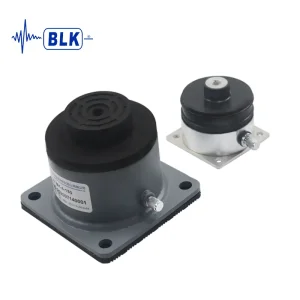
Evolution of Floor Mount Vibration Isolator Springs in Modern Facilities
From simple mechanical isolation to advanced multi-directional damping: How structural engineering requirements are reshaping industrial spring isolator manufacturing.
Transition to Hybrid Viscous Damping
Traditional open-coil spring isolators excel at low natural frequencies (3Hz to 5Hz) but lack control during transient resonance during equipment startup and shutdown. Modern floor-mounted spring isolators integrate viscous damping fluids and internal elastomeric snubbers to absorb energy peaks without sacrificing low-frequency isolation efficiency.
Seismic & Wind Load Compliance
Global building codes (such as ASCE 7 and IBC) increasingly demand that floor-mounted vibration isolators act as dual-function safety mechanisms. Housing structures now incorporate high-tensile ductile iron housings capable of resisting up to 2.0g horizontal seismic shear loads and uplift forces in HVAC rooftop environments.
Dacromet & Advanced Coating Standards
Standard electro-galvanized springs fail within months in harsh coastal or outdoor plant environments. Premier factories now utilize Dacromet hot-dip coating and thermoset epoxy powder baking, passing 900-hour continuous salt spray testing (ASTM B117) to guarantee a 15+ year operational life.
Technical Insight: Static Deflection vs. Natural Frequency
The natural frequency ($f_n$) of a spring isolator is inversely proportional to the square root of its static deflection ($\delta$). To isolate lower equipment operating speeds (e.g., 600 RPM / 10 Hz), higher static deflection springs (25mm to 50mm deflection) are mathematically required to achieve an isolation efficiency above 92% ($f_n = 3.13 / \sqrt{\delta}$).
Enterprise Procurement Criteria: Total Cost of Ownership (TCO) vs. Price Floor
Why procurement leads and MEP contractors must look beyond initial unit prices to evaluate manufacturing quality, structural safety factors, and direct factory capabilities.
| Evaluation Vector | Low-Cost Commodity Suppliers | Tier-1 Factory Direct (Bellking Standard) | Engineering Impact on Project TCO |
|---|---|---|---|
| Spring Steel Quality | Recycled alloy steel wire with inconsistent coil pitch & temper. | High-fatigue Chrome-Vanadium alloy or ASTM A229 spring steel. | Prevents spring sagging, permanent deformation, or premature dynamic fatigue fracture. |
| Resonant Damping | Bare spring coil with zero secondary rubber pad or damping fluid. | Integrates high-density elastomeric base pads and non-linear dampening. | Reduces high-frequency noise transmission through building floors by up to 25 dB. |
| Lateral Stability ($K_x / K_y$) | Uncontrolled coil geometry ($K_x / K_y < 0.6$), susceptible to tipping. | Strict design ratio ($K_x / K_y \ge 0.8$ to $1.0$) providing lateral restraint. | Eliminates equipment sway and catastrophic structural tipping during high-torque startup. |
| Corrosion Resistance | Basic electroplate zinc (< 100 hours salt spray resistance). | Dacromet 900-hour coating + hot-dip galvanized base frames. | Prevents structural failure in harsh chillers, cooling towers, and offshore platforms. |
Macro-Industry Solutions & Engineered Application Profiles
Standardized and custom vibration control layouts across commercial building services, high-precision cleanrooms, and power infrastructure.
HVAC & Building Mechanical Systems
Large centrifugal chillers, cooling towers, and end-suction water pumps generate continuous low-frequency vibrations that propagate through concrete building structures. Utilizing open-coil floor mount spring isolators combined with concrete inertia bases lowers system center-of-gravity, prevents pipe strain, and eliminates structure-borne noise in commercial high-rises.
Semiconductor & Micro-Vibration Platform
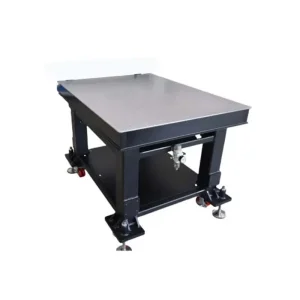
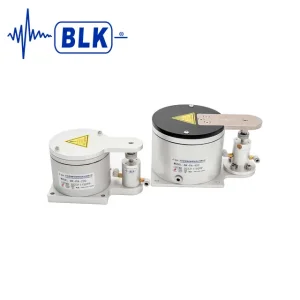
Sub-micron metrology tools, lithography equipment, and CMM machines are affected by ambient ground floor vibrations down to VC-D and VC-E standards. Our precision pneumatic air mounts and passive low-frequency optical platforms reduce natural frequencies down to 1.7 Hz, creating ultra-stable environments for semiconductor wafer inspection.
Power Transmission & Transformers
Dry-type and oil-immersed electrical transformers radiate a continuous 100 Hz / 120 Hz magnetostrictive hum. Customized floor mount transformer vibration isolators eliminate acoustic bridge contact with electrical room slabs, reducing ambient noise level in adjacent commercial or residential spaces by up to 18 dB(A).
Precision Sizing Guide: Sizing Floor Mount Spring Isolators
Avoid common installation failures caused by unequal weight distribution, dynamic torque, and incorrect stiffness calculation.
5-Step Engineering Sizing Protocol
- Determine Total Operating Weight ($W_{total}$): Sum the dry equipment weight, liquid/fluid contents, connected piping loads, and structural sub-base framing.
- Locate Center of Gravity (CG): Calculate uneven corner loading. Asymmetric machinery requires isolators with varying spring rates ($K_1, K_2, K_n$) to achieve uniform deflection and level mounting height.
- Identify Disturbing Frequency ($f_d$): Identify the lowest operating speed (RPM) of the motor, fan, or compressor ($f_d = \text{RPM} / 60$).
- Target Transmissibility Ratio ($T_r$): Select an isolator natural frequency ($f_n$) such that the frequency ratio $r = f_d / f_n \ge 3.0$. This ensures a minimum calculated isolation efficiency of $T_r = |1 / (r^2 - 1)| \le 12.5\%$ (87.5%+ Isolation).
- Verify Overload Capacity: Ensure spring coils have a minimum 50% additional travel to solid capacity beyond nominal rated load to absorb dynamic shock spikes.
Transmissibility Formula & Curve
T_r = \sqrt{ \frac{1 + (2 \zeta r)^2}{(1 - r^2)^2 + (2 \zeta r)^2} }
Where:
• T_r = Dynamic Transmissibility
• r = Frequency Ratio ($f_d / f_n$)
• \zeta = Damping Ratio of the Elastomeric/Spring Assembly
Bellking Manufacturing Infrastructure & Quality Control Standards
Located in Kunshan, Jiangsu, Bellking operates a 2,000m² state-of-the-art facility backed by 37 active patents and ISO 9001 certification.
Automated Robotic Welding & CNC Machining
Housing frames, top plates, and mounting brackets are precision CNC-machined and robotically welded to ensure 100% weld joint integrity, eliminating structural fatigue under vertical shock impact loads up to 3-5G acceleration.
Full In-House Dynamic Testing Lab
Every product line undergoes load-deflection compression verification, digital dynamic stiffness analysis, spectrum analysis, and fatigue life testing to confirm strict adherence to published engineering specification sheets.
Global Compliance & Certification
All Bellking rubber mounts and elastomeric pads comply fully with international environmental directives (RoHS & REACH), ensuring zero off-gassing or toxic hazardous chemical exposure in sensitive cleanrooms and healthcare facilities.
Technical Roadmap: The Future of Industrial Vibration Isolation (2025–2030)
Key technological breakthroughs undergoing engineering development at Bellking’s Kunshan R&D center.
IoT-Enabled Smart Spring Isolators
Integrating wireless piezoelectric micro-sensors inside floor mount spring housings to provide real-time load displacement, vibration amplitude, and fatigue wear telemetry directly to building management systems (BMS).
Bio-Based High-Damping Elastomers
Replacing traditional synthetic nitrile/neoprene dampeners with bio-derived polymer matrices featuring superior tear strength, higher oil resistance, and zero degradation across extreme temperature spans (-40°C to +120°C).
Active Electrodynamic Hybrid Isolation
Merging high-deflection spring isolators with high-speed electromagnetic actuators to instantly cancel transient pulse loads and shock impulses within sub-millisecond response windows.
Frequently Asked Questions: Technical Sizing, Procurement & Installation
In-depth responses from Bellking senior application engineers to address complex field installation questions.
Precision Platforms, Pads & Heavy Damping Series
Explore specialized polymer pads, optical platforms, and multi-layer isolation dampers manufactured for heavy industrial and laboratory applications.