
Primary Heavy Duty Vibration Isolator Series
Direct factory supply of precision rubber, spring, multi-layer, and pneumatic mounts engineered for severe duty industrial machinery.





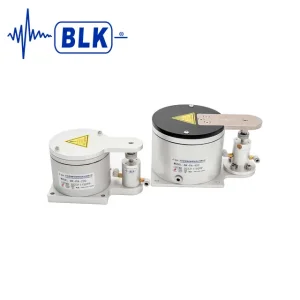


Technical Foundations of Heavy Duty Vibration Control Engineering
An engineering guide to mechanical dynamics, dynamic stiffness, and vibration transmissibility in heavy industrial applications.
In modern industrial engineering, uncontrolled mechanical vibration represents one of the primary drivers of structural fatigue, component failure, acoustic pollution, and operational downtime. Dynamic equipment such as heavy industrial punch presses, centrifugal chillers, power transformers, diesel generators, and slurry pumps generate significant cyclic forces during operation. When these dynamic forces couple with the supporting building structure or foundation, they excite structural resonances, leading to airborne noise, ground-borne shockwaves, and precision degradation.
To eliminate these destructive kinetic forces, consulting engineers and OEM plant managers rely on heavy-duty vibration isolators. The core principle of industrial vibration isolation centers on modifying the mechanical system's natural frequency ($f_n$) relative to the forcing frequency ($f_d$) generated by the operating machinery.
Vibration Transmissibility & Damping Dynamics
Vibration isolation efficiency is evaluated through Transmissibility ($T$), defined as the ratio of the force transmitted to the foundation ($F_t$) to the disturbing force produced by the equipment ($F_0$). Mathematically, for a single-degree-of-freedom (SDOF) mechanical system with viscous damping, transmissibility is expressed as:
T = \sqrt{ \frac{1 + (2 \zeta r)^2}{(1 - r^2)^2 + (2 \zeta r)^2} }
Where $r = f_d / f_n$ is the frequency ratio, and $\zeta$ is the damping ratio of the elastomeric or helical spring isolator. When $r < \sqrt{2}$, transmissibility exceeds 1.0, causing force amplification (resonance zone). Dynamic vibration isolation occurs only when $r > \sqrt{2}$ (the isolation zone). To achieve high-efficiency vibration attenuation exceeding 90% to 99%, engineered heavy duty isolators are designed to achieve a frequency ratio $r \ge 3.0$ to $5.0$.
Selecting between heavy-duty spring mounts, elastomeric rubber pads, and pneumatic air isolation platforms requires matching the static deflection ($\delta_s$) of the isolator to the targeted natural frequency:
f_n \approx \frac{5}{\sqrt{\delta_s \text{ (in cm)}}} \quad \text{or} \quad f_n \approx \frac{3.13}{\sqrt{\delta_s \text{ (in inches)}}}
High static deflection spring mounts yield low natural frequencies (typically 3 Hz to 5 Hz), making them ideal for low-speed machinery such as 300-1800 RPM compressors, HVAC chillers, and large ventilation fans. Elastomeric rubber isolators provide natural frequencies between 8 Hz and 15 Hz, offering superior high-frequency acoustic dampening and high structural damping to absorb transient shock forces.
China Heavy Duty Vibration Isolator Manufacturing Advantages
How direct factory sourcing from China delivers strategic price-performance, certified metallurgy, and custom OEM capabilities.
Integrated Metallurgical & Vulcanization Scale
China's industrial manufacturing ecosystem provides end-to-end integration—from high-fatigue alloy steel wire drawing to precision CNC machining and synthetic elastomer compounding under one roof, reducing total unit costs by 30% to 50% relative to Western manufacturers.
Advanced Surface Anti-Corrosion Finishing
To withstand aggressive chemical plants, marine platforms, and outdoor HVAC installations, Chinese factories utilize advanced Dacromet coating and hot-dip galvanizing technologies, passing rigorous 900-hour salt spray corrosion testing (ASTM B117 standards).
Rapid 1:1 OEM Customization & Tooling
Equipped with modern 3D Finite Element Analysis (FEA) simulation software and rapid prototyping CNC equipment, factory engineers turn non-standard equipment requirements into custom isolation solutions within as few as 3 working days.
Global Procurement & Engineering Sourcing Evaluation Matrix
Key technical, structural, and regulatory metrics required by global EPC contractors, HVAC design consultants, and OEM buyers.
When procuring heavy duty vibration isolators for large-scale infrastructure projects—such as data centers, power generation substations, semiconductor fabs, and high-rise HVAC plants—procurement teams must look beyond price alone. Ensuring long-term operational reliability requires rigorous verification of mechanical properties, environmental resistance, and quality management standards.
| Isolator Type | Natural Freq ($f_n$) | Load Capacity (Per Mount) | Damping Ratio ($\zeta$) | Primary Application Areas | Service Life |
|---|---|---|---|---|---|
| Open Spring Mounts (MD/MB/MA) | 2.5 Hz – 5.0 Hz | 50 kg – 5,000 kg | 0.01 – 0.05 | Chillers, AHUs, Cooling Towers, Pumps | 15+ Years |
| Viscous Damped Spring Mounts | 3.0 Hz – 4.5 Hz | 200 kg – 8,000 kg | 0.15 – 0.25 | Forging Presses, Crushers, Diesel Generators | 15+ Years |
| Rubber & Elastomeric Mounts (BKVD/BKVV) | 8.0 Hz – 15.0 Hz | 10 kg – 1,200 kg | 0.05 – 0.15 | Compressors, Small Motors, Transformers | 8 – 12 Years |
| Multi-Layer Damping Pads (BK-PM/BKTS) | 12.0 Hz – 20.0 Hz | Up to 50 kg/cm² | 0.10 – 0.20 | Foundation Mats, Heavy Machinery Bases | 10+ Years |
| Precision Pneumatic Air Mounts (BK-PA/BK-PF) | 1.5 Hz – 2.5 Hz | 100 kg – 3,500 kg | 0.06 – 0.12 | Semiconductor Inspection, Metrology Benches | 6+ Years |
Essential Verification Factors for Overseas Procurement
Global buyers should mandate factory documentation covering the following five core parameters:
- Dynamic-to-Static Stiffness Ratio ($K_d / K_s$): Elastomeric compounds stiffen under dynamic cycling. Premium isolators maintain a $K_d/K_s$ ratio below 1.4 to prevent elevated dynamic transmission during high-speed operation.
- Spring Solid Height & Overload Capacity: Helical springs must offer an extra 50% travel capacity beyond maximum rated load to solid height, preventing coil contact during transient startup surges or seismic events.
- Lateral Stiffness Ratio ($K_x / K_z$): For stability against lateral wind loads or side forces, open spring isolators should maintain a horizontal-to-vertical stiffness ratio ($K_x/K_z$) between 0.8 and 1.2.
- Corrosion Resistance Standards: Steel housings and springs must undergo shot peening, zinc electroplating, Dacromet, or epoxy powder coating to survive salt-spray exposure (ISO 12944 C4/C5 environmental classifications).
- Compliance Certification: Production facilities must hold ISO 9001 quality management certification and provide batch testing certification for deflection rate, tensile strength, and shore hardness.
Macro Industry Solutions & Localized Applications
Engineered vibration isolation deployments across critical industrial, commercial, and energy infrastructure sectors.
HVAC & Building Mechanical Services
Large commercial installations utilize heavy-duty MD and MB series spring isolators under centrifugal chillers, rooftop cooling towers, and primary water pumps. Restrained spring mounts prevent pipe shearing and fluid momentum shifts during startup while blocking structure-borne hum from reaching occupied building rooms.
Power Generation & Electrical Substations
Dry-type and oil-immersed transformers emit continuous low-frequency magnetostrictive hum (100 Hz / 120 Hz excitation). Specially formulated transformer anti-vibration mounts and multi-layer pads absorb core vibrations, reducing environmental acoustic emissions in residential electrical substations and hospital power rooms.
Heavy Industrial Stamping & Metalworking
Forging hammers, blanking presses, and hydraulic shears generate severe transient shock pulses ($3\text{G} - 5\text{G}$ dynamic acceleration). Heavy duty viscous damped spring mounts and BKSWA multi-layer dampers isolate foundation pits, preventing structural floor cracking and protecting surrounding automated CNC tools.
Semiconductor Fabs & Metrology Cleanrooms
Sub-nanometer chip fabrication tools, optical comparators, and Coordinate Measuring Machines (CMMs) require ultra-stable environmental conditions. High-efficiency pneumatic air isolators (BK-PA/BK-PF series) achieve natural frequencies down to 1.7 Hz, filtering floor micro-tremors and ambient foot traffic vibration.
Mining, Aggregates & Cement Processing
Vibrating screens, ball mills, and jaw crushers operate in dirty, abrasive environments under intense continuous vibration. High-capacity rubber mounts and heavy spring assemblies absorb severe structural shock loads while offering high tear strength and resistance to slurry and grease exposure.
Building Acoustic Isolation & Piping Suspensions
Suspended mechanical piping, ductwork, and ceiling-mounted exhaust fans transfer vibration directly into concrete floor slabs. Custom spring and rubber hangers eliminate acoustic bridging in performance auditoriums, luxury hotels, and broadcasting studios.
Heavy Duty Vibration Control: Industry Trends & Technology Roadmap
Key technological shifts shaping the next generation of industrial shock absorption and acoustic control.
The global industrial vibration control market is undergoing rapid evolution driven by smart factory automation, stringent environmental noise regulations, and ultra-precision manufacturing requirements. Modern engineering projects increasingly demand proactive, intelligent isolation systems capable of self-diagnosis and dynamic adaptation.
Next-Generation Vibration Isolation Developments
- IoT-Enabled Smart Isolators: Integration of piezo-electric sensors and wireless MEMS accelerometers directly into heavy-duty spring mounts. These sensors continuously monitor RMS vibration velocity, FFT spectrum signatures, and load drift, warning maintenance teams of impending bearing wear or mechanical unbalance prior to equipment failure.
- Active & Electro-Pneumatic Hybrid Isolation: Combining passive air mounts with high-speed voice-coil actuators and real-time controller feedback to cancel vibration in real time. This technology eliminates sway settle times in high-speed semiconductor lithography and precision marble motion platforms.
- Eco-Friendly Compound Formulations: Transitioning from traditional oil-derived elastomeric compounds to fully recyclable thermoplastic elastomers (TPE) and bio-based synthetic polymers that eliminate toxic VOC off-gassing while maintaining flame retardancy (UL94-V0) and chemical resistance.
- Seismic & Extreme Weather Restraint Integration: Modern structural codes (such as IBC and EUROCODE 8) require heavy equipment mounts to withstand simultaneous multidirectional seismic acceleration forces (up to 2.0G) and hurricane-force wind shear without structural failure or equipment dislodgement.
Frequently Asked Questions (Technical Sourcing & Selection FAQ)
Expert answers to the most common engineering, sizing, and procurement questions asked by international buyers.
Specialized & Custom Vibration Isolation Models
Explore our extended lineup of industrial rubber, pneumatic platforms, spring hangers, and specialty damping pads.






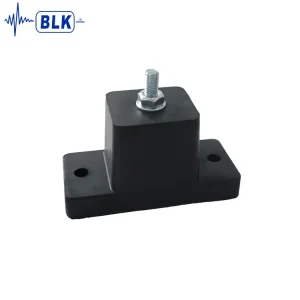

Request an Engineered Vibration Isolation Proposal
Send your machinery operating parameters, weight specifications, and support layout to our technical application engineers for a custom dynamic evaluation and factory-direct quotation within 24 hours.
Consult an Application Engineer