
Primary JIS Industrial Anti-Vibration Products
Explore high-performance OEM/ODM vibration control hardware directly sourced from certified manufacturing facilities.




Global Macro-Industrial Landscape: The Role of JIS Standard Anti-Vibration Mounts
In modern high-precision engineering, mechanical vibration represents one of the most persistent operational hazards, causing structural fatigue, premature component wear, noise pollution, and severe degradation of process accuracy. Japanese Industrial Standards (JIS)—specifically JIS K 6386 (Rubber Vibration Isolators for Industrial Use), JIS B 2401, JIS G 3506 (High Carbon Steel Wire Rods), and JIS G 3101 (SS400 Structural Steel)—have emerged as a global benchmark for performance consistency, mechanical durability, and tight geometric tolerances.
Global original equipment manufacturers (OEMs) across East Asia, North America, and Europe are increasingly sourcing Low Price JIS Standard Anti-Vibration Mounts from qualified high-precision factories. Sourcing directly from certified production hubs allows enterprises to reconcile strict engineering requirements with optimized procurement economics. By cutting out multi-tier intermediary markups while maintaining total compliance with JIS standards, industrial buyers secure up to 40% reductions in Total Cost of Ownership (TCO) without compromising on structural integrity or dynamic loss factor specifications.
Standardization & Interchangeability
JIS standards specify exact thread pitches, mounting bolt spacing, Shore A durometer hardness ranges, and dynamic shear-to-compression ratios. This ensures seamless plug-and-play retrofit capabilities across global machinery platforms.
Material Integrity & Vulcanization
High-grade Natural Rubber (NR), Nitrile (NBR), and Neoprene (CR) elastomeric compounds undergo controlled vacuum vulcanization to eliminate micro-voids, ensuring high tensile strength (>15 MPa) and low compression set.
Supply Chain Cost Optimization
Direct sourcing from specialized OEM factories eliminates commercial distribution markups, giving tier-1 contractors and equipment builders direct access to wholesale unit pricing backed by ISO 9001 quality audits.
Engineering Physics: Fundamentals of Vibration Isolation Sizing
To achieve high-efficiency vibration isolation (exceeding 90% to 99%), mechanical engineers must analyze the system's disturbing frequency ($f_d$), static deflection ($\delta$), and isolator natural frequency ($f_n$). Isolation occurs only when the frequency ratio ($f_d / f_n$) is strictly greater than $\sqrt{2} \approx 1.414$. Optimal efficiency is achieved when this ratio reaches 3 or higher.
Core Mathematical Formulations for JIS Anti-Vibration Mounts
1. System Natural Frequency ($f_n$):
$$f_n = \frac{1}{2\pi} \sqrt{\frac{k}{m}} = \frac{4.98}{\sqrt{\delta \text{ (cm)}}} \text{ [Hz]}$$
Where $k$ is dynamic stiffness (N/m), $m$ is supported mass (kg), and $\delta$ is static deflection under load (cm).
2. Dynamic Transmissibility ($T_d$):
$$T_d = \sqrt{\frac{1 + (2\zeta \cdot \frac{f_d}{f_n})^2}{(1 - (\frac{f_d}{f_n})^2)^2 + (2\zeta \cdot \frac{f_d}{f_n})^2}}$$
Where $\zeta$ is the damping ratio of the elastomeric or viscous damping medium ($\zeta \approx 0.05$ for NR rubber, $0.10-0.20$ for high-damping polymers).
3. Isolation Efficiency ($I_e$):
$$I_e = (1 - T_d) \times 100\%$$
JIS K 6386 Rubber Property Specifications & Material Testing Table
Below is a comparative breakdown of standard elastomeric formulations used by JIS-compliant anti-vibration mount manufacturers:
| Elastomer Type | JIS Durometer (Shore A) | Tensile Strength (MPa) | Elongation at Break (%) | Damping Loss Factor ($\eta$) | Thermal Range (°C) | Primary Industrial Suitability |
|---|---|---|---|---|---|---|
| Natural Rubber (NR) | 40 - 70 ±5 | ≥ 18.0 | ≥ 450% | 0.05 - 0.08 | -40 to +70 | General HVAC, Pumps, Motors, High Resilience Applications |
| Neoprene (CR) | 45 - 75 ±5 | ≥ 15.0 | ≥ 400% | 0.10 - 0.15 | -30 to +100 | Outdoor Marine, HVAC Chillers, Moderate Oil & Ozone Resistance |
| Nitrile Rubber (NBR) | 50 - 80 ±5 | ≥ 14.0 | ≥ 350% | 0.08 - 0.12 | -20 to +120 | Industrial Hydraulic Power Units, Machine Tool Oil Environments |
| High-Damping Polymer (HD) | 35 - 65 ±5 | ≥ 12.0 | ≥ 500% | 0.20 - 0.35 | -10 to +60 | Precision Metrology, Optical Benches, Impact Shock Buffer Pads |
Comprehensive Analysis of JIS Anti-Vibration Mount Categories
Different machinery applications require specific isolation physics. Below, our engineering team breaks down the technical characteristics of major JIS-compliant mount product families:
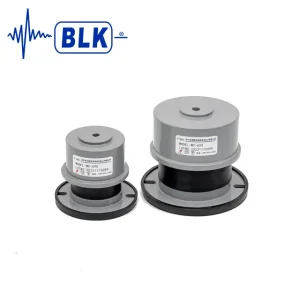
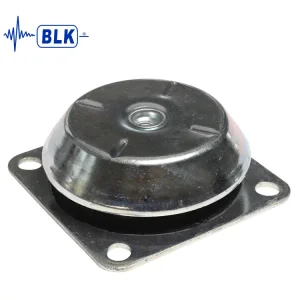
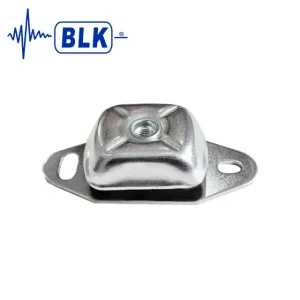
1. Rubber Isolators & Leveling Mounts (BKP, BKH, BKVV, BKM)
Utilizing high-tensile elastomers bonded to JIS G 3101 steel plates, cylindrical and conical rubber mounts provide balanced multi-directional stiffness (shear and compression). Ideal for high-RPM rotary machinery (1,200 RPM and above) like air compressors, fans, and electric motors where compact footprint and cost efficiency are essential.
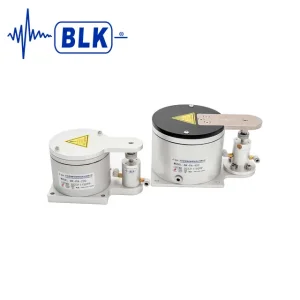
2. Precision Pneumatic Air Mounts (BK-PA, BK-AT, BK-RT, BK-DT)
For micro-vibration mitigation down to 1.7 Hz natural frequency, pneumatic air isolators combine flexible elastomeric bladders with internal air reservoirs and auto-leveling valves. These systems protect high-sensitivity semiconductor inspection tools, scanning electron microscopes (SEMs), and optical interferometers from ground-borne floor motion.
3. Heavy-Duty Spring Mounts & Damped Hangers (MC, MB, BK-DSR)
Steel coil spring isolators compliant with JIS G 3506 offer large static deflection capability (25 mm to 75 mm), achieving natural frequencies between 3 Hz and 5 Hz. Engineered with Dacromet anti-corrosion coatings passing 900-hour salt spray tests, these mounts excel in heavy industrial HVAC chillers, cooling towers, and suspended ducting.
Localized Application Scenarios & Industry Integration
Selecting the correct JIS standard anti-vibration mount requires mapping the mechanical properties of the isolator to the environmental and operational dynamics of specific industrial sectors.
Semiconductor & Cleanroom Facilities
Cleanroom environments demand low-outgassing elastomers and ultra-low frequency air mounts. Protecting photolithography equipment and wafer inspection tools requires adherence to VC (Vibration Criterion) curves VC-C through VC-G, preventing yield degradation caused by ambient building vibrations.
HVAC, Commercial Towers & Plant Rooms
Structure-borne noise transmission in modern high-rise buildings and commercial facilities must meet stringent acoustic noise ratings (NC-25 to NC-30). Combining JIS spring mounts, inertia bases, and flexible pipe connectors eliminates low-frequency hum generated by pumps and refrigeration chillers.
Power Grid & Electrical Substations
Heavy electrical transformers generate persistent magnetostrictive hum at 100 Hz / 120 Hz harmonics. Damped rubber transformer mounts and polymer pads isolate these high-energy vibrations, protecting civil foundation pads and reducing acoustic emissions in urban substations.
Factory Supplier Audit Checklist for B2B Procurement Managers
| Audit Dimension | Evaluation Parameter | JIS / Industry Benchmark Requirement | Verification Method |
|---|---|---|---|
| Material Traceability | Elastomer raw batch purity | 100% virgin NR/CR compounding; zero reclaimed rubber fillers | Rheometer batch curve reports & FTIR analysis |
| Dimensional Accuracy | Thread pitch & plate flateness | JIS B 0205 (Metric coarse thread) & JIS B 0207 | Thread plug gauge & CMM inspection |
| Corrosion Protection | Surface finish quality | Dacromet / Hot-dip galvanizing passing ≥ 900 hours salt spray | JIS Z 2371 / ASTM B117 testing chamber certification |
| Dynamic Testing | Fatigue life & dynamic stiffness | 10^7 continuous compression dynamic fatigue cycles without cracking | Servo-hydraulic fatigue testing rig analysis |
Strategic Sourcing & Price Optimization Framework
When searching for Low Price JIS Standard Anti-Vibration Mount Factories & Manufacturers, B2B procurement officers must balance initial unit purchase cost against operational lifespan and warranty risk. Understanding the true cost breakdown of anti-vibration mount manufacturing provides valuable leverage during contract negotiations:
Raw Materials
High-grade virgin polymer resins, structural carbon steel plates, spring steel wire, and eco-friendly bonding agents.
Manufacturing & Tooling
Precision CNC machining, automatic stamping, robotic welding, and high-pressure compression molding equipment.
QA & Testing Overhead
ISO 9001 compliance, dynamic mechanical rheometer testing, salt spray testing, and CMM dimension verification.
Factory Profit & Logistics
Direct factory margin, export packaging compliant with ISPM 15, and international freight containerization.
By establishing direct OEM/ODM factory partnerships in specialized manufacturing hubs, enterprise buyers eliminate multi-tier distributor margins, securing factory-direct pricing while maintaining rigorous quality control protocols.
Technology Roadmap: Next-Generation Industrial Vibration Control
The industrial vibration isolation landscape is evolving rapidly under Industry 4.0 paradigms. Modern manufacturers are integrating advanced smart diagnostics and bio-based material innovations to meet increasingly stringent environmental and operational demands.
Smart IoT-Sensored Mounts
Embedding piezoresistive strain sensors and micro-accelerometers inside rubber mounts enables real-time monitoring of structural load distribution, dynamic stress peak, and material fatigue, feeding telemetry directly into predictive maintenance software.
Eco-Friendly Elastomers
Transitioning from fossil-derived synthetic compounds to bio-based natural rubber blends and zero-outgassing fluoroelastomers reduces environmental impact while meeting EU RoHS 3 and REACH compliance standards.
Active-Passive Hybrid Systems
Combining standard JIS passive rubber/spring mechanical mounts with high-speed electromagnetic actuators yields hybrid isolation platforms capable of sub-Hertz noise cancellation for next-generation semiconductor lithography.
Extended Industrial Product Line & Specialized Isolators
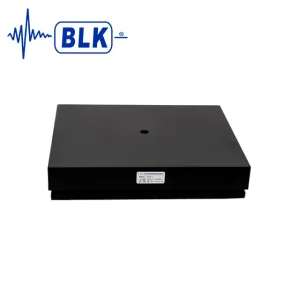
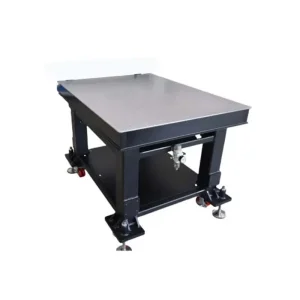
Complete product catalog featuring precision platform isolators, damped spring hangers, and specialized rubber feet.






Frequently Asked Questions: Technical Sourcing & Engineering
In-depth answers to common questions asked by mechanical project leaders and global procurement managers.