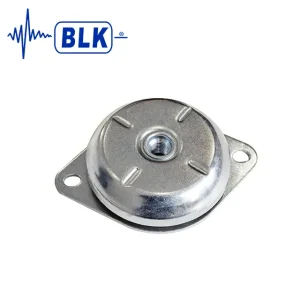
Heavy-Duty & Precision Anti-Vibration Mounts
Factory-direct damping mounts with load capacities from 10 kg to 50,000 kg. High-durability spring and elastomeric engineering tested to ASTM and ISO industrial standards.



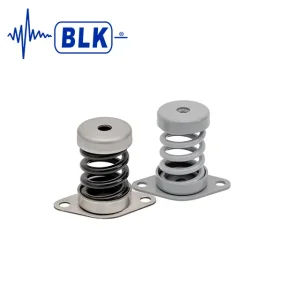

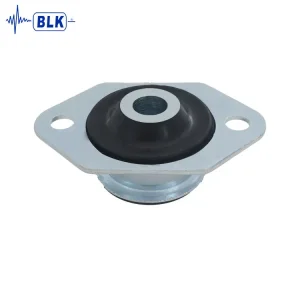

The Global Industrial Status of Machine Vibration Mounts
A deep dive into why structural dynamics, acoustic fatigue mitigation, and precision tolerances govern modern manufacturing profitability.
Across the global industrial landscape, machine vibration mounts have transitioned from simple passive hardware components into critical engineering subsystems. Modern rotating machinery, dynamic stamping presses, centrifugal chillers, and sub-micron lithography tools operate under extreme mechanical stress. Uncontrolled harmonic resonance causes mechanical looseness, premature bearing seizure, foundation cracking, and structural noise transmission through reinforced concrete slabs.
In North American and European production ecosystems, traditional distribution networks introduce significant friction: long lead times spanning 8 to 14 weeks, excessive channel markups of 200% to 400%, and rigid minimum order quantities for specialized elastomeric or spring constants. Consequently, enterprise procurement directors and mechanical engineering consultants are strategically pivoting toward direct partnerships with advanced Asian manufacturing factories that demonstrate rigorous quality assurance, documented static-to-dynamic stiffness verification, and custom non-standard fabrication capabilities within rapid timelines.
Google Search Intent & Value Realization: Industrial B2B buyers searching for "Low Price Machine Vibration Mounts Factory & Price" do not seek low-grade commodity rubber. They demand optimized structural dynamics, certified load-deflection ratings, and transparent factory-gate unit economics that maximize capital expenditure (CapEx) efficiency without risking machinery downtime.
Decoding the China Factory Cost & Efficiency Advantage
How geographical industrial clusters, automated manufacturing, and complete metallurgical supply chains deliver unmatched price-performance ratios.
Vertical Raw Materials
Direct sourcing of premium spring steel (60Si2Mn, 55CrSi) and custom-compounded natural rubber and neoprene with tight Shore A hardness durometer control eliminates third-party raw material premiums.
Automated CNC & Robotic Welding
High-precision multi-axis CNC turning and automated robotic welding cells ensure zero-defect seam integrity, consistent spring coil pitch, and structural housing stability under 3G to 5G dynamic impulse loads.
Advanced Dacromet Coating
In-house surface treatment facilities applying environmentally compliant Dacromet and cathodic electrodeposition coatings pass 900+ hour ASTM B117 salt spray tests, ideal for coastal and chemical applications.
3-Day Rapid Prototyping
Integrated FEA structural modeling and in-house tooling shops allow custom dimensional and damping modifications to be engineered, prototyped, and validated in as little as 3 working days.
The efficiency of the Chinese vibration isolation manufacturing ecosystem, centralized in regions such as Kunshan and the Yangtze River Delta, stems from unparalleled supply chain density. Within a 30-kilometer radius, an OEM factory has instant access to precision metallurgical foundries, elastomeric vulcanization labs, specialized fastener suppliers, and certified third-party testing centers equipped with dynamic tri-axial servo-hydraulic exciters.
This geographic concentration shortens the engineering iteration cycle from months to hours. When calculating total cost of ownership (TCO), buying directly from an ISO 9001 factory eliminates importer margin stack, tariff re-invoicing, warehousing overhead, and brand licensing fees. Enterprise procurement managers gain high-spec damping hardware engineered to exact DIN, JIS, and ASHRAE specifications at 40% to 60% lower landed costs.
Engineering Taxonomy: Matching Mount Type to Vibration Physics
Choosing between helical spring, shear rubber, pneumatic air springs, and viscous-damped platforms based on disturbing frequencies and static deflection requirements.
| Mount Technology | Natural Frequency (fn) | Isolation Efficiency | Primary Industrial Applications | Factory Price Index |
|---|---|---|---|---|
| Open & Enclosed Spring Mounts | 2.5 Hz – 5.0 Hz | 95% – 99% | Chillers, large cooling towers, heavy centrifugal pumps, air handling units (AHUs), reciprocating compressors. | Moderate ($$) |
| Viscous-Damped Spring Mounts | 3.0 Hz – 4.5 Hz | 96% – 99% | Heavy stamping presses, forging hammers, vibrating screens, diesel generator sets with sudden shock transient loads. | Mid-High ($$$) |
| Elastomeric Rubber & Cone Mounts | 6.0 Hz – 15.0 Hz | 85% – 94% | Electric motors, high-speed gearboxes, hydraulic power packs, small rotary fans, transformer substations. | Economical ($) |
| Pneumatic Air Mounts (Precision) | 1.2 Hz – 2.5 Hz | 98% – 99.8% | Semiconductor photolithography, wafer probing, coordinate measuring machines (CMM), electron microscopes (TEM/SEM). | Premium ($$$$) |
| Ceiling Spring / Rubber Hangers | 3.5 Hz – 8.0 Hz | 90% – 97% | Suspended chilled water piping, HVAC ductwork, ceiling-mounted exhaust blowers, acoustic ceilings. | Economical ($) |
The mathematical governing principle behind vibration isolation relies on the frequency ratio ($r = f_d / f_n$), where $f_d$ is the forcing or disturbing frequency of the machinery ($RPM / 60$), and $f_n$ is the natural frequency of the vibration mount system. Transmissibility ($T$) is defined as:
T = √ [ (1 + (2ζr)²) / ((1 - r²)² + (2ζr)²) ]
Vibration isolation occurs strictly when $r > \sqrt{2} \approx 1.414$. When the disturbing frequency matches the natural frequency ($r = 1$), harmonic resonance occurs, magnifying dynamic forces up to 10-fold and causing destructive mechanical failure unless viscous damping ($\zeta$) is present. For critical installations, engineering standards dictate targeting a ratio of $r \ge 3.0$ to guarantee isolation performance exceeding 90%.
Localized Industrial Application Scenarios
Field-proven mechanical isolation architectures tailored to harsh environmental conditions, dynamic shock impacts, and cleanroom requirements.
Precision CNC & Stamping
Metal forming presses, high-speed punching tools, and multi-axis CNC milling centers produce severe shock transients and foundation rocking.
- Multi-directional viscous damping
- Anchor bolt leveling alignment
- Elimination of cutter tool chatter marks
Commercial HVAC & Pumps
Rooftop chillers, cooling towers, and boiler feed pumps create low-frequency structure-borne rumble that travels across commercial building slabs.
- Concrete inertia base integration
- Static deflection up to 50 mm (2 inches)
- Dacromet 900-hr outdoor salt spray rating
Semiconductor Cleanrooms
Micro-vibration from foot traffic, AHUs, and adjacent road transport can instantly disrupt sub-nanometer lithography and wafer scanning.
- Pneumatic auto-leveling down to 1.5 Hz
- Cleanroom class 10/100 compatible seals
- Sub-micron positional repeatability
Industry Evolution: Smart Mounts & Polymer Damping
The convergence of IoT condition monitoring, active piezo-electric compensation, and synthetic polyurethane polymers.
Embedded MEMS Sensors
Next-generation vibration isolators integrate tri-axial wireless MEMS accelerometers that stream continuous velocity (RMS) and FFT frequency spectra directly to plant SCADA and predictive maintenance dashboards.
Active Counter-Phase Control
Hybrid isolation architectures combine passive heavy-duty air mounts with high-speed electromagnetic voice coil actuators, dynamically canceling low-frequency ground disturbances below 1 Hz in real time.
Polyurethane Elastomers
Advanced cellular polyurethanes (comparable to Sylomer materials) deliver uniform static-to-dynamic stiffness ratios, minimal creep over 20-year lifespans, and resistance to synthetic industrial lubricants and oils.
Seismic Restraint Standards
Global demand is surging for all-directional snubbed mounts rated under International Building Code (IBC) and California OSHPD specifications, capable of withstanding 2.0g spectral acceleration forces.
Global B2B Sourcing: RFQ Parameters & Factory Price Analysis
Key data points engineering teams must specify to lock in accurate factory-direct quotes and ensure uncompromised vibration performance.
When evaluating price proposals from Asian manufacturers, buyers should understand the structural composition of the unit price:
- Raw Spring Metallurgy (35% - 45%): Certified high-tensile alloy spring steel (e.g., 60Si2Mn) shot-peened for fatigue resistance, compared to cheaper carbon wire that sags under sustained load.
- Housings & Ductile Iron Castings (20% - 25%): Ductile QT450 or welded structural steel housings designed to endure static working loads plus dynamic shock multipliers without fracture.
- Surface Treatment & Fasteners (10% - 15%): 900-hour Dacromet coating and grade 8.8 zinc-nickel electroplated hardware.
- Testing, Quality Control & Amortization (15% - 20%): Batch deflection testing, natural frequency verification via FFT spectrometers, and ISO 9001 factory documentation.
Purchasing directly at factory-gate terms (FOB or CIF incoterms) delivers up to 50% savings compared to localized distributor models while providing a direct line to factory R&D engineers for 1:1 project drawings.
Need an Exact Sizing Calculation & Factory Price List?
Submit your machine weight, operating RPM, and mounting layout. Our application engineering team delivers an optimized FEA vibration isolation plan and competitive factory quotation within 24 hours.
Request Free Engineering CalculationMachine Vibration Mounts: Engineering & Procurement FAQ
Detailed answers to the most critical technical and supply chain questions asked by structural engineers, plant operators, and procurement managers.
How do I calculate the required static deflection (δ) for a machine mount?
Static deflection (δ in mm) directly establishes the natural frequency ($f_n$) of an undamped linear spring system according to the formula:
fn = (1 / 2π) × √(g / δ) ≈ 5 / √(δ in cm) ≈ 15.8 / √(δ in mm)
For example, if a slow-speed industrial fan runs at 600 RPM ($f_d = 10\text{ Hz}$), effective 90% vibration isolation demands a natural frequency below 3.3 Hz ($r \ge 3$). Solving for δ: $3.3 \approx 15.8 / \sqrt{\delta} \implies \delta \approx 23\text{ mm}$. A spring mount with at least 25 mm static deflection is required. Rubber mounts, which typically offer 3 mm to 8 mm deflection, would be inadequate and risk severe resonance.
Why is factory price from a direct China manufacturer significantly lower than Western brands?
The price advantage of Chinese vibration mount manufacturing does not derive from substandard quality, but from three structural economic pillars: complete vertical industrial cluster integration (raw 60Si2Mn steel wire, automated coiled spring hardening, and in-house ductile iron casting within the same economic zone); scale economies producing over 100,000 units annually; and the elimination of traditional three-tier distributor markups (importer → national distributor → regional agent), saving 40% to 60% on landed CapEx.
When should an inertia base be added beneath an industrial pump or compressor?
A concrete-filled structural steel inertia base is engineered when: 1) The equipment is top-heavy, has a high center of gravity, and exhibits rocking moments during start-up or shut-down; 2) The machine is connected to rigid piping where excessive dynamic deflection could cause flange cracking or gasket rupture; 3) The operating unit mass needs to be increased to lower the combined center of gravity, effectively reducing overall vibration velocity amplitudes to comply with ISO 10816-3 Grade A/B vibration limits.
What is the operational lifespan of steel spring versus elastomeric rubber mounts?
Under continuous indoor industrial environments, properly sized steel spring mounts (coated with high-grade Dacromet or powder finishes) deliver an operational service lifespan exceeding 15 to 20 years with near-zero creep. Elastomeric and natural rubber mounts experience gradual polymer chain hardening and oxidative degradation, typically having an effective design service life of 5 to 8 years before durometer hardening raises their natural frequency, necessitating replacement.
How does the Dacromet 900-hour salt spray coating compare to standard hot-dip galvanizing?
Dacromet is a non-electrolytic zinc and aluminum flake coating applied with organic binders. Unlike standard electro-galvanizing or hot-dip galvanizing, Dacromet involves no acid pickling, completely eliminating the risk of hydrogen embrittlement in high-tensile alloy spring steel. Its thin, uniform 5–10 micron coating passes 900+ hours in ASTM B117 neutral salt spray tests without peeling or clogging adjustment threads, outperforming standard paint coatings by more than 500% in harsh outdoor rooftop and marine coastal installations.
Can Bellking manufacture custom non-standard mounts to match existing bolt patterns?
Yes. As an ISO 9001 factory, 1:1 customization is a core capability. If you are retrofitting legacy machinery with non-standard bolt hole spacing, unique height envelopes, or extreme static loads, our engineering department provides 2D/3D CAD submittal drawings and customized manufacturing within 3 to 5 business days, eliminating the need to re-drill concrete equipment pads on site.
What documentation is supplied with factory-direct export shipments?
Every commercial production batch includes an ISO 9001 Factory Quality Inspection Certificate, material traceability test sheets for spring steel and ductile castings, static load-deflection test reports, and Dacromet coating thickness verification. Third-party testing reports (e.g., SGS, TÜV) for dynamic stiffness and salt spray resistance are readily available upon request.
Pneumatic Air Mounts, Platforms & Specialty Dampers
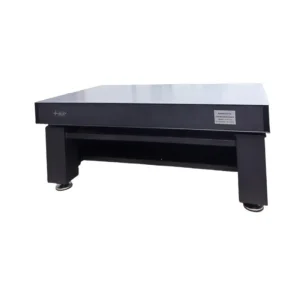
Precision low-frequency solutions reaching down to 1.2 Hz natural frequency for metrology, laboratory optical tables, and industrial HVAC infrastructure.