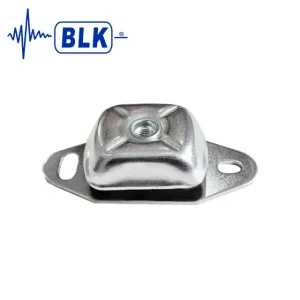
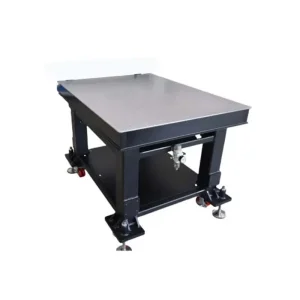
Featured Machinery Vibration Isolation Products
Direct factory supply of precision spring isolators, elastomeric mounts, pneumatic platforms, and heavy-duty vibration dampers engineered for continuous industrial operations.
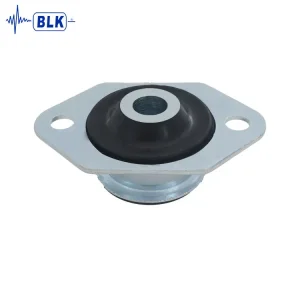
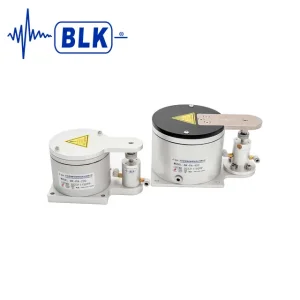





Global Commercial & Industrial Machinery Vibration Control Status
Navigating the global dynamics of industrial vibration control, factory pricing structures, and total cost of ownership (TCO) optimization.
In modern industrial manufacturing, unwanted mechanical vibration presents one of the most significant threats to equipment longevity, operational precision, and facility structural integrity. Uncontrolled dynamic forces generated by rotating and reciprocating machinery—such as heavy-duty HVAC chillers, power transformers, high-speed CNC metal stamping presses, and semiconductor lithography tools—lead to premature fatigue failure, severe acoustic noise pollution, and compromised work tolerances. As global manufacturing transitions toward Industry 4.0 standards, demand for factory-direct, highly engineered machinery vibration dampers has reached an unprecedented peak.
Procurement departments and plant engineering directors are tasked with navigating complex global supply networks to source low-cost yet uncompromised anti-vibration solutions. The market challenge lies in distinguishing between superficial "low-price" offerings from intermediaries and true cost efficiencies achieved through direct OEM/ODM factory sourcing. Specialized manufacturing ecosystems, such as those in Kunshan, China, leverage advanced automated vulcanization, high-speed CNC spring winding, and robotized welding to produce ISO 9001-certified vibration isolators at competitive unit costs without compromising dynamic performance.
TCO Optimization
Procurement price accounts for less than 15% of total machinery life-cycle costs. Quality dampers eliminate downtime and premature bearing replacement.
Direct Factory Sourcing
Eliminating middle-tier supply markups allows direct engineering customization, reliable lead times, and transparent material batch testing.
Strict Quality Compliance
Certified production hubs utilize 900-hour salt spray Dacromet surface treatments and dynamic spectrum verification for extended operational lifespan.
Information Gain Insight for Buyers
When requesting quotes for low-price machinery vibration dampers, always verify the static-to-dynamic stiffness ratio ($K_d / K_s$). Low-cost rubber mounts using recycled fillers often exhibit severe dynamic stiffness hardening, reducing vibration isolation efficiency by up to 40% under real thermal and mechanical loads.
Mechanics of Machinery Vibration Isolation & Physics Principles
Mathematical modeling of dynamic transmissibility, natural frequencies, and elastomeric damping dynamics for structural system design.
Vibration isolation is governed by the principles of single-degree-of-freedom (SDOF) and multi-degree-of-freedom (MDOF) dynamic systems. The primary goal of installing a machinery vibration damper is to isolate the energy generated by a disturbing excitation frequency ($f_d$ or $\omega$) from propagating into the supporting foundation or building structure.
1. Dynamic Transmissibility Formula
The system's isolation efficiency is determined by its force transmissibility ($T$), defined as the ratio of the force transmitted to the foundation to the force generated by the operating machine:
T = \sqrt{ \frac{1 + (2 \zeta r)^2}{(1 - r^2)^2 + (2 \zeta r)^2} }
Where: r = Frequency Ratio ($f_d / f_n$), \zeta = Damping Ratio ($c / c_c$), f_n = System Natural Frequency.
For effective vibration isolation, the ratio $r = f_d / f_n$ must exceed $\sqrt{2} \approx 1.414$. When $r < 1.414$, the system operates in the amplification zone, increasing dynamic forces transmitted to the floor. High-performance engineering designs aim for a frequency ratio of $r \ge 3.0$, yielding theoretical isolation efficiencies greater than 90% to 99%.
2. Natural Frequency Calculations
The natural frequency ($f_n$) of a spring-mounted or elastomeric-mounted isolated load is inversely proportional to the static deflection ($\delta_s$) under gravity:
f_n = \frac{1}{2\pi} \sqrt{\frac{g}{\delta_s}} \approx \frac{5}{\sqrt{\delta_s \text{ (in cm)}}} \text{ Hz}
This mathematical relationship explains why steel spring mounts—which accommodate larger static deflections (e.g., 25mm to 50mm)—achieve ultra-low natural frequencies down to 3–5 Hz, making them ideal for low-speed machinery such as 300–1200 RPM pumps and chillers. Conversely, compact rubber vibration isolators, providing 2mm to 8mm deflection, yield higher natural frequencies (8–15 Hz) suitable for high-speed equipment like 1800+ RPM motors and smaller compressors.
| Damper Technology | Natural Frequency ($f_n$) | Isolation Efficiency | Damping Ratio ($\zeta$) | Primary Industrial Application |
|---|---|---|---|---|
| Pneumatic Air Mounts (BK-PA Type) | 1.5 Hz – 2.5 Hz | 98% – 99.8% | 0.05 – 0.12 | Semiconductor Lithography, CMM Metrology, Electron Microscopes |
| Open Steel Spring Mounts (ME/MA Type) | 3.0 Hz – 5.0 Hz | 90% – 97% | 0.01 – 0.03 | Heavy HVAC Chillers, Cooling Towers, Large Diesel Generators |
| Viscous Damped Springs (BK-RT Type) | 3.5 Hz – 6.0 Hz | 92% – 98% | 0.15 – 0.25 | Machinery with Heavy Transient Startup Resonance (Pumps, Fans) |
| Elastomeric Rubber Mounts (BKH/BKVV) | 8.0 Hz – 15.0 Hz | 80% – 92% | 0.05 – 0.15 | Electric Motors, Small Air Compressors, Hydraulic Units |
| Polymer Damping Pads (BK-PM/BKTS) | 12.0 Hz – 25.0 Hz | 70% – 88% | 0.10 – 0.20 | Foundation Pads, Heavy Metal Stamping Presses, Acoustic Retrofits |
Understanding Machinery Vibration Damper Pricing & Factory Cost Structures
Deconstructing material selection, manufacturing processes, and supplier evaluation criteria to secure true direct factory pricing.
When searching for "Low Price Machinery Vibration Damper Factories," procurement engineering teams must analyze the total cost breakdown of damper manufacturing. A quote that appears significantly below market average often points to compromises in raw metal quality, improper rubber vulcanization cycles, or lack of dynamic testing. Understanding the cost drivers allows buyers to negotiate factory-direct pricing while safeguarding mechanical reliability.
1. Metallurgy & Spring Steel
High-tensile Grade 60Si2Mn or 50CrVa spring steel undergoes specialized heat treatment to ensure infinite fatigue life under repetitive cyclic loads. Lower-grade carbon steel springs sags over time, reducing working deflection.
2. Elastomeric Compound Integrity
Virgin natural rubber (NR) and high-grade Neoprene/EPDM compounds maintain consistent durometer hardness (40 to 70 Shore A) across wide temperature ranges (-20°C to +80°C). Fillers like recycled rubber reduce initial costs but accelerate dynamic degradation.
3. Corrosion Protection Systems
Standard paint finishes rust rapidly in damp HVAC plant rooms or outdoor coastal settings. Quality factories apply Dacromet plating or hot-dip galvanizing, passing 900-hour salt spray corrosion tests without structural degradation.
4. Precision Machining & Quality Control
In-house CNC machining, automated robotic welding, and dynamic spectrographic testing add minimal baseline manufacturing overhead while eliminating field failure rates.
Factory Direct vs. Trading Intermediaries: Procurement Cost Matrix
The table below provides a procurement overview comparing direct manufacturing plants (e.g., Bellking Vibration Reduction Equipment Co., Ltd.) against conventional trading entities.
| Evaluation Criterion | Direct Manufacturing Plant (e.g. Bellking) | Third-Party Sourcing / Trading Company |
|---|---|---|
| Unit Price Baseline | Factory Direct Cost (No middleman markup; 20–35% lower cost) | Includes 25–45% distribution and agent markups |
| Customization Turnaround | Fast (3 to 5 business days for CAD/engineering approval) | Slow (Weeks of communication back-and-forth) |
| Quality Testing Verification | In-house dynamic testing, salt spray, ISO 9001 certified reports | Relies on non-verified resold certificate sheets |
| Engineering & Sizing Support | Dedicated dynamicists providing FEA & frequency matching | Catalog sales only; limited technical depth |
| Lead Time for Standard Stock | Immediate dispatch within 24 hours | Subject to third-party inventory holds |
Localized Application Scenarios & Real-World Engineering Case Studies
Deploying specialized machinery vibration dampers across mission-critical facilities, semiconductor fabs, sub-stations, and heavy industrial plants.
Sub-2Hz Precision Isolation for Metrology Tools
Challenge: Micro-vibrations from nearby foot traffic and HVAC ducts caused measurement errors on high-magnification optical inspection equipment inside a semiconductor cleanroom.
Solution: Installation of BK-PA Type Precision Air Mounts featuring active pneumatic leveling and ultra-low natural frequency (1.7 Hz). Vibration transmission was reduced by 99.2%, maintaining cleanroom ISO Class 1 compliance.
Roof Chiller & Cooling Tower Retrofit
Challenge: Low-frequency hum and structural vibration from twin 120-ton roof chillers transmitted down 15 floors of a commercial office tower, generating tenant noise complaints.
Solution: Engineering specialized ME/MA Type Open Spring Vibration Isolators combined with concrete-filled steel inertia bases. Transmitted vibration levels dropped by 24 dB, eliminating structural acoustic transmission.
Substation Transformer Humming Suppression
Challenge: Magnetostrictive core hum (100 Hz / 120 Hz fundamental frequency) from 110kV oil transformers resonated through substation floor slabs into adjacent residential zones.
Solution: Custom-engineered Low-Creep Transformer Anti-vibration Mounts designed for heavy static loads and high ambient thermal exposure. Achieved a noise reduction of over 18 dBA at boundary walls.
Dynamic Impact Damping for 500-Ton Stamping Press
Challenge: Severe transient shock forces caused by high-speed stamping presses damaged foundation concrete and disrupted nearby CNC lathe accuracy.
Solution: Multi-layer polymer dampeners combined with BK-RT Type Damped Isolation Platforms, absorbing high transient shock energy and extending press die life by 35%.
Global Compliance, Quality Control & Technical Support
Meeting international engineering standards to ensure effortless project sign-offs and long-term operating safety.
Industrial machinery installations must conform to stringent international building codes, environmental noise directives, and structural safety standards. Procuring machinery vibration dampers from an ISO 9001:2015 certified manufacturer ensures that all supplied products comply with global regulatory frameworks:
- ISO 9001:2015 Quality Management Systems: Strict quality control spanning raw material spectral analysis, spring force-deflection testing, and finished assembly inspection.
- DIN 4150-3 (Structural Vibration in Buildings): Engineered to limit structural vibration velocity ($mm/s$) below structural damage thresholds across commercial and industrial environments.
- ASHRAE Equipment Vibration Isolation Guidelines: Fully compliant with ASHRAE standards for HVAC rotating equipment mounting, deflection tolerances, and restraint specifications.
- RoHS & REACH Environmental Compliance: Elastomeric compounds manufactured without restricted heavy metals or toxic plasticizers, safeguarding indoor air quality and worker health.
Verified Manufacturing Capabilities & Scale
Direct factory metrics reflecting over a decade of continuous engineering development and project execution.
Technology Roadmap: Next-Generation Machinery Vibration Control
How IoT integration, smart sensor arrays, and advanced materials are shaping the future of industrial vibration suppression.
1. Smart Dampers with IoT Sensors
Embedding tri-axial MEMS accelerometers directly inside rubber and spring mounts enables real-time dynamic vibration monitoring, predictive maintenance alerts, and automated fatigue reporting via industrial protocols (Modbus, MQTT).
2. Hybrid Passive-Active Isolation Systems
Combining reliable low-cost passive spring isolators with high-speed electromagnetic active actuators to cancel sub-Hz vibration frequencies in high-precision nano-fabrication facilities.
3. Eco-Friendly Bio-Polymer Mounts
Developing bio-based elastomers and fully recyclable synthetic polymer matrix pads to lower carbon footprints while maintaining high tear resistance and low compression set.
Frequently Asked Questions (FAQ) on Sourcing & Sizing Dampers
Technical guidance from application engineers to help you evaluate products, verify specifications, and place factory-direct orders.
How do I choose between spring isolators, rubber mounts, and pneumatic air mounts?
Rubber Mounts (8–15 Hz natural frequency): Best suited for higher-speed equipment (>1800 RPM), small motors, fans, and compressors requiring compact vibration isolation.
Pneumatic Air Mounts (1.5–2.5 Hz natural frequency): Required for ultra-sensitive precision instruments, optical benches, CMMs, and semiconductor tools where sub-Hz to 2Hz vibrations must be suppressed.
Why is direct factory pricing significantly lower than localized distributor quotes?
What technical parameter inputs are required for dynamic sizing?
- Total operating weight of the machine (including fluids or workpieces).
- Number and physical layout of mounting points.
- Equipment operating speed (RPM) or dominant forcing frequency (Hz).
- Position of the equipment Center of Gravity (CG) if unbalanced.
- Environmental conditions (indoor, outdoor, chemical exposure, marine salt spray).
How does surface finish impact damper service life in outdoor applications?
Can non-standard or custom dimensions be produced for existing equipment retrofit?
More High-Performance Vibration Dampers & Pads
Explore our complete range of specialized vibration control mounts, elastomeric pads, and anti-vibration solutions.