Featured NBR & Elastomeric Vibration Mounts
Engineered for oil resistance, dynamic fatigue durability, and high structural isolation efficiency.





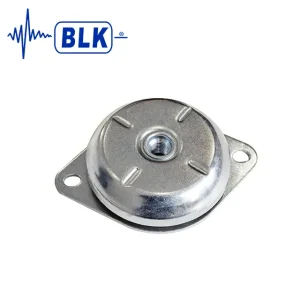
1. Macro Industrial Landscape & Global Demand for NBR Mounts
Evaluating the shift toward high-precision automated systems, strict acoustic environmental compliance, and cost-optimized vibration control sourcing.
Mechanical Resonance Mitigation
As modern industrial machinery operates at higher speeds and cycles, micro-vibrations lead to premature tool wear, bearing degradation, structural fatigue, and noise pollution exceeding ISO 14001 acoustic limits. Direct-fit NBR anti-vibration mounts absorb dynamic energy and decouple mechanical harmonics.
Supply Chain Cost Optimization
Procurement managers are replacing expensive European/North American OEM mounts with high-spec factory-direct NBR mounts from certified Asian manufacturers. Sourcing from direct OEM factories cuts procurement overhead by 30% to 50% without compromising elastomer density or bond tensile strength.
Petrochemical & Oil Resistance
Standard Natural Rubber (NR) degrades rapidly when exposed to industrial lubricants, hydraulic fluids, and diesel. Nitrile Butadiene Rubber (NBR) maintains its physical structural integrity, shore hardness, and damping capabilities under continuous hydrocarbon exposure.
In the contemporary industrial ecosystem, NBR Rubber Vibration Mounts (Nitrile Butadiene Rubber Isolators) represent an irreplaceable component tier across manufacturing, HVAC, power generation, automotive, and marine heavy engineering. The global industrial vibration isolation market is experiencing an unprecedented expansion driven by automation, Industry 4.0 ultra-precise machining requirements, and stringent occupational safety standards regarding noise, vibration, and harshness (NVH).
Acquiring low-price NBR rubber vibration mounts directly from qualified manufacturers allows engineering procurement teams to optimize capital expenditure while maintaining rigorous structural reliability standards. Nitrile elastomer technology balances mechanical resiliency, static deflection parameters, shear resistance, and exceptional resistance to mineral oils, greases, and fuels—making it superior to standard EPDM or Natural Rubber variants in harsh factory environments.
2. Material Science & Elastomer Roadmap: NBR vs. Other Polymers
Understanding polymer chemistry, Acrylonitrile (ACN) content selection, and viscoelastic behavior under cyclic dynamic loads.
| Elastomer Type | Chemical Name | Oil & Fuel Resistance | Damping Loss Factor (tan δ) | Operating Temp (°C) | Cost Efficiency |
|---|---|---|---|---|---|
| NBR (Nitrile) | Acrylonitrile Butadiene | Excellent (High ACN) | 0.15 - 0.35 (High) | -30 to +120 | Optimal (Factory Direct) |
| NR (Natural Rubber) | Polyisoprene | Poor (Swells easily) | 0.05 - 0.15 (Low) | -40 to +80 | Low |
| EPDM | Ethylene Propylene Diene | Moderate (Non-mineral) | 0.10 - 0.20 (Medium) | -40 to +150 | Medium |
| CR (Neoprene) | Chloroprene | Good | 0.12 - 0.25 (Medium-High) | -35 to +100 | Higher |
| VMQ (Silicone) | Vinyl Methyl Silicone | Fair | 0.08 - 0.18 (Low) | -60 to +230 | High Cost |
Acrylonitrile (ACN) Ratio Optimization
The mechanical performance and environmental resistance of an NBR vibration mount are fundamentally dictated by its Acrylonitrile (ACN) content, which typically ranges from 18% to 50%:
- Low ACN (<30%): Provides superior low-temperature flexibility (glass transition temperature $T_g$ down to -50°C), but moderate resistance to oils.
- Medium ACN (33% to 38%): The ideal industrial benchmark balance utilized in our BK-MT, BKHQ, and BKDJ series—delivering high dynamic fatigue life alongside robust petroleum resistance.
- High ACN (>45%): Maximum resistance to aggressive fuels and hydraulic fluids, ideal for specialized oilfield and subsea pumping mounts.
Viscoelasticity & Damping Theory
Vibration isolation relies on elastomeric viscoelastic properties. When mechanical energy from rotating machinery (chillers, pumps, diesel compressors) impacts the mount, the elastomer undergoes cyclic strain. The energy converted into thermal dissipations is defined by the loss factor ($\tan \delta$). NBR exhibits a naturally higher loss factor than Natural Rubber, allowing it to rapidly suppress transient resonance peak amplitudes during machine startup and shutdown cycles.
3. Engineering Sizing & Calculation Framework
How application engineers accurately select NBR mounts based on natural frequency, static deflection, and disturbance excitation.
Key Mathematical Formulas
fn = (1 / 2π) * √(k / m)
fn ≈ 5 / √(δs) [where δs is static deflection in cm]
2. Frequency Ratio (R):
R = fd / fn [fd = equipment disturbance frequency]
3. Transmissibility (T):
T = 1 / | (R² - 1) | (Ignoring damping for conservative estimate)
4. Isolation Efficiency (η):
η = (1 - T) * 100%
To achieve effective isolation, the disturbance frequency ratio (R = fd / fn) must exceed √2 (approx. 1.41). For high-grade industrial systems, engineers design for R ≥ 3 to 5, which achieves greater than 90% to 96% isolation efficiency.
Step-by-Step Mount Selection Guide
- Determine Total Operating Weight (W): Sum up the dead weight of the equipment, fluids, piping, and inertia base.
- Identify Load Support Points (N): Calculate the load per mounting position:
P = W / N(Adjust for asymmetrical Center of Gravity). - Determine Operating Speed (RPM / Hz): Equipment running at 1,750 RPM generates a disturbance frequency
fd = 1750 / 60 = 29.16 Hz. - Target Isolation Efficiency: Select an NBR mount Shore A hardness (e.g., 45, 55, or 65 Durometer) that yields static deflection
δsnecessary to bringfnbelow 10 Hz.
4. Hyper-Localized Industrial Application Scenarios
Tailored vibration isolation configurations deployed across specialized global industrial sectors.
Automotive CNC & Robotic Cells
High-speed robotic arm movements and CNC gantry indexing send transient shockwaves through factory floors. Matrix NBR mounts (BK-MT) isolate adjacent coordinate measuring machines (CMMs) from floor vibration, preserving sub-micron quality control tolerances.
Commercial HVAC Chillers & Cooling Towers
Roof-mounted air-cooled chillers transmit structure-borne hum into tenant spaces below. Hybrid NBR spring mounts (BK-DS / BK-DSR) eliminate continuous low-frequency hum while surviving continuous solar UV and oil leak exposure from compressor sumps.
Marine Propulsion & Auxiliary Gensets
Marine auxiliary generators run in confined, oily engine rooms subject to roll, pitch, and yaw. Bellking heavy-duty NBR mounts feature fail-safe interlocks to contain engine movement during adverse sea states while dampening shaft vibrations.
5. Precision OEM/ODM Customization & FEA Modeling
State-of-the-art compression molding, rubber-to-metal bonding primers, and Finite Element Analysis (FEA).
FEA Strain Analysis
Using ANSYS strain modeling, our engineering team optimizes geometric stress distribution within the NBR core, preventing corner shear stress concentration and extending fatigue lifespan beyond 10,000,000 stress cycles.
Chemlok® Vulcanized Bonding
Rubber-to-metal bond failure is a primary cause of cheap mount breakdown. We utilize multi-stage grit blasting, silane chemical washing, and Chemlok® adhesive primer systems to ensure metal-rubber bond strength exceeds the tensile tear limit of the rubber itself.
Custom Compound Tailoring
Need conductive anti-static rubber, flame-retardant UL94-V0 compliance, or low-temperature flexibility down to -40°C? Our compound laboratory formulates custom NBR recipes to meet non-standard industrial specifications within 3 to 5 business days.
6. Quality Assurance & Industry Standards Compliance
Standardized testing protocols ensuring every batch meets rigorous mechanical engineering specifications.
Purchasing direct from our ISO 9001 certified manufacturing plant guarantees full traceability and adherence to international materials testing standards:
- ASTM D2000 Material Classification: NBR compounds standardized under the BG/BK classification system, defining durometer range, tensile strength (10 to 15 MPa), elongation at break (>350%), and heat age testing.
- ISO 815 Compression Set Testing: Verified compression set under constant deflection (<20% set after 22 hours at 100°C), preventing long-term mount sagging under heavy equipment load.
- Corrosion Protection: Metal housing studs, top plates, and base plates undergo electro-galvanization or Dacromet coating, enduring over 900 hours of continuous salt spray (ASTM B117) for outdoor HVAC or offshore deployments.
- RoHS & REACH Compliance: Free from heavy metals, polycyclic aromatic hydrocarbons (PAHs), and restricted phthalates, meeting modern European environmental standards.
7. Frequently Asked Questions (FAQ)
Direct answers to common procurement, engineering, and installation questions regarding NBR rubber mounts.
Why choose NBR rubber mounts over natural rubber or neoprene?
How does buying direct from an OEM manufacturer impact unit pricing?
What is the typical operating service life of an NBR vibration mount?
Can Bellking manufacture non-standard custom NBR mounts from customer drawings?
How do I prevent mount leveling issues on uneven factory floors?
What lead times and shipping options are available for export orders?
Explore More Anti-Vibration & Isolation Systems
Complete catalog solutions including spring hangers, optical platforms, and heavy inertia bases.





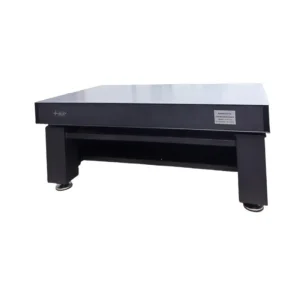
High-Quality BK-DT Type Low-Frequency High-Damping Optical Vibration Isolation Platform Factory, Manufacturer
View Product Specs