
Standard & Custom Vibration Isolators
Precision-engineered mechanical spring mounts, cone mounts, rubber feet, and optical isolation platforms manufactured under ISO 9001 certified quality control.





The Global Industrial Status of Premium Vibration Isolation
As industrial machinery accelerates in velocity and semiconductor manufacturing pushes sub-nanometer boundaries, controlling structural vibration has shifted from a maintenance luxury to a vital operational mandate.
Critical HVAC & Acoustic Regulations
Modern commercial architecture demands compliance with stringent international acoustic standards (ASHRAE, ISO 3744, ISO 10816). Unmitigated motor, chiller, and pump vibrations propagate through concrete floors as structure-borne noise. Premium spring and rubber mounts isolate up to 99% of energy at source, safeguarding structural integrity and occupant comfort.
Micro-Vibration in High-Tech Fab Lines
In semiconductor lithography, electron microscopy (SEM/TEM), and optical laser laboratories, micro-tremors from nearby foot traffic or HVAC ducting disrupt nanometer measurements. Pneumatic air mounts and damped optical platforms achieving natural frequencies as low as 1.7 Hz are required to satisfy VC-C to VC-G vibration criterion curves.
Power Generation & Transformer Protection
Heavy electrical transformers generate incessant low-frequency hum due to magnetostriction (100Hz/120Hz harmonics). Purpose-engineered transformer anti-vibration mounts prevent resonance transfer into substation foundations, extending transformer core longevity and suppressing noise pollution in adjacent communities.
The Economics of Vibration Mitigation
Uncontrolled machinery dynamic forces cause micro-fatigue in bearings, premature structural weld failure, and pipe joint ruptures. Global engineering field studies demonstrate that investing less than 2% of equipment procurement budget in dynamic isolators reduces emergency maintenance downtime by over 64% over a 10-year operating cycle.
The Mechanics of Transmissibility & Natural Frequency
Effective isolation selection requires mathematically matching system excitation frequencies ($f_d$) against the isolator's natural frequency ($f_n$).
Transmissibility Ratio ($T$) Equation
The efficiency of a vibration isolator is quantified by the Transmissibility Ratio ($T$), defined as the ratio of transmitted force to input forcing vector:
Where r = f_d / f_n (Frequency Ratio), and ζ is the Damping Ratio. Isolation only occurs when r > √2 (≈ 1.414). Below this threshold, amplification occurs, dangerously worsening machine stress at resonance (r = 1).
Static Deflection ($d$) Calculation
For helical steel spring isolators, the natural frequency ($f_n$) is governed directly by static deflection ($d$, in millimeters) under gravitational load:
To achieve a low natural frequency of 3.0 Hz (ideal for slow-speed chillers running at 1,000 RPM), the isolator must yield a static deflection of approximately 25 mm (1 inch).
| Equipment Operating Speed (RPM) | Excitation Frequency (f_d) | Recommended Isolator Type | Target Isolator f_n | Achievable Isolation Efficiency |
|---|---|---|---|---|
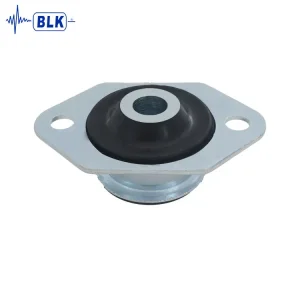
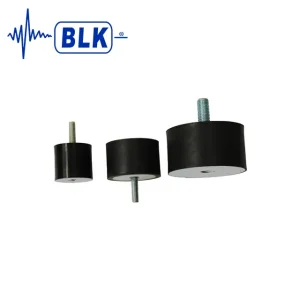
| 3,600 RPM (High-speed motor/fan) | 60.0 Hz | Rubber Feet / BKVD Cone Mounts | 8.0 – 12.0 Hz | 95.0% – 98.2% |
| 1,750 RPM (Standard HVAC Pump) | 29.2 Hz | MA / MD / MC Spring Mounts | 3.5 – 5.0 Hz | 97.0% – 99.1% |
| 1,150 RPM (Low-speed Compressor) | 19.1 Hz | BK-DS Damped Spring Mounts | 3.0 – 4.0 Hz | 95.5% – 98.0% |
| < 600 RPM (Variable speed / Precision) | < 10.0 Hz | BK-PF Precision Air Mounts | 1.7 – 2.5 Hz | 96.0% – 99.4% |
Why Chinese Factories Lead global Vibration Control Sourcing
Over the last decade, advanced manufacturing centers in Kunshan, Jiangsu have unified raw steel supply chains, automated spring coiling, and precision elastomeric molding to deliver premium performance at accessible factory prices.
Integrated Metallurgical Clusters
Proximity to high-grade spring steel (60Si2Mn / 50CrVa alloy) mills allows Chinese OEMs to procure fatigue-resistant raw materials with minimal freight overhead. Every batch undergoes strict stress-relieving heat treatment and shot-peening to ensure 100,000+ deflection cycle life without permanent sag.
Dacromet Surface Coating Leadership
Rather than standard electro-galvanizing that fails coastal outdoor environments within 2 years, Chinese specialized manufacturers apply Dacromet micro-layer coating. This zinc-aluminum flake surface protection easily passes 900+ hour neutral salt spray corrosion testing (ASTM B117 standards).
Low Margin, High Volumetric Scale
Equipped with robotic welding units and automated CNC machining, factories produce over 100,000 units annually. Economies of scale allow manufacturers to sell premium-grade damped spring isolators and pneumatic mounts at 30% to 55% lower prices compared to Western legacy brands.
Localized Application Scenarios & Sector Solutions
Different industrial applications demand customized isolator characteristics — from elastomeric oil resistance to dynamic inertia damping bases.
Chillers, Pumps & Rooftop AHUs
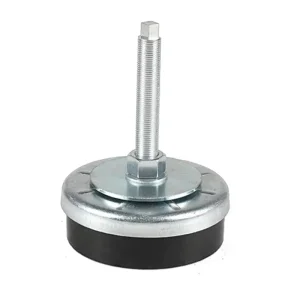
Floor-mounted centrifugals and reciprocating chillers produce low-frequency harmonic vibrations. Open or enclosed spring isolators (like MA, MD, MC types) with rubber bottom cups absorb both vertical dynamic forcing and high-frequency acoustic flutter. For suspended water pipes and inline fans, HR Type rubber hangers prevent sound transmission through floor slabs.
Photolithography & Optical Metrology
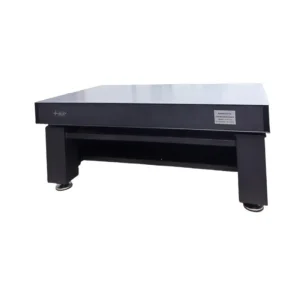
Sub-micron inspecting equipment requires active or passive ultra-low frequency isolation. BK-PF precision air mounts equipped with pneumatic level-sensing valves maintain perfect planarity while decoupling ambient floor vibration down to 1.7 Hz, ensuring reliable imaging under heavy cleanroom operation.
Stamping Presses & Forging Hammers
Transient shock impulse forces from metal punch presses damage building foundations. BK-DS damped spring mounts combined with high-density polymer pads (BK-PM series) dissipate massive kinetic energy spikes, suppressing shock recoil and preserving surrounding machinery accuracy.
Substation Dry & Oil Transformers
Substation transformers installed near residential zones emit endless low-frequency tonal noise (100–400 Hz). Specialized transformer vibration mounts utilize engineered high-damping elastomer compounds capable of carrying multi-ton loads while eliminating hum propagation into ground soil.
Standard Procurement Specifications for Enterprise Buyers
Ensure zero RFQ errors by verifying these critical technical parameters prior to issuing purchase orders to manufacturers.
1. Load Rating & Reserve Margin
Calculate static operating weight including fluid fill (for chillers/pumps). Select isolators where nominal weight sits between 50% and 80% of maximum rated capacity to account for dynamic starting surges and uneven weight distribution.
2. Environmental & Chemical Resistivity
Specify rubber durometer (Shore A 45 to 70) and polymer type based on exposure: Neoprene for oil/grease contact; EPDM for outdoor UV and ozone; Natural Rubber for optimum dynamic resilience under temperature-controlled indoor setups.
3. Seismic & Wind Restraints
For high-rise rooftop installs or earthquake-prone zones, request housed spring mounts equipped with integrated vertical and lateral limit stops (all-directional seismic restraints) to prevent equipment tipping during extreme loads.
Next-Generation Trends in Industrial Vibration Control
How intelligent sensors, smart damping materials, and hybrid active-passive systems are shaping the future of anti-vibration engineering.
IoT Sensors & Predictive Maintenance
Integration of wireless MEMS accelerometers inside isolator housings allows real-time FFT spectrum analysis. Facility managers receive predictive alerts before spring fatigue or rubber degradation causes machinery misalignment.
Magnetorheological (MR) Viscous Damping
Adaptive fluid isolators adjust dynamic stiffness within milliseconds in response to external impulse shocks, delivering zero-settling-time performance for fast automated robotic motion stages.
Eco-Resilient Recyclable Elastomers
Transitioning from petroleum-heavy synthetic rubbers to bio-based thermoplastic vulcanizates (TPVs) that offer superior hysteresis loss properties while meeting global Net-Zero carbon mandates.
Precision Platforms & Specialty Isolation Systems
Explore our complete dynamic damping suite designed for micro-vibration, desktop platforms, air-mount leveling, and structural pads.







Frequently Asked Questions (FAQ)
Direct technical guidance from our application engineering team regarding selection, lead times, warranties, and custom design processes.